
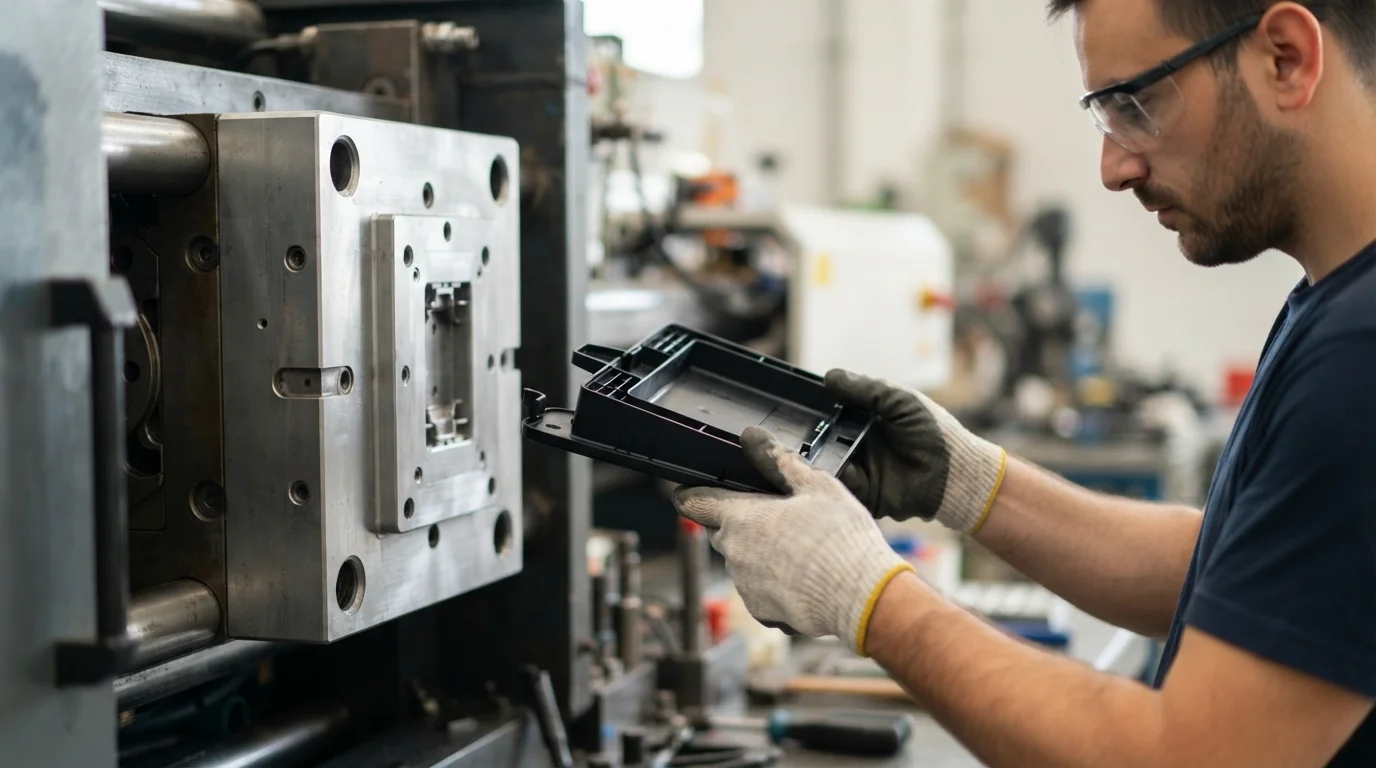
Accelerating product development schedules requires validating functional hardware designs using production-intent engineering polymers. Additive manufacturing techniques like 3D printing provide fast conceptual models, but photopolymers fail to replicate the mechanical toughness, heat resistance, and chemical immunity of injection molded thermoplastics. Specifying professional Prototypen-Spritzguss bridges the gap between R&D checks and series production, allowing engineers to test functional parts with exact material properties. JUCHENG delivers rapid prototype tooling and low-volume bridge production, producing functional components strictly according to customer CAD specifications.
Inhaltsverzeichnis
7-10 Business Days T1 Sample Delivery via Rapid Tooling
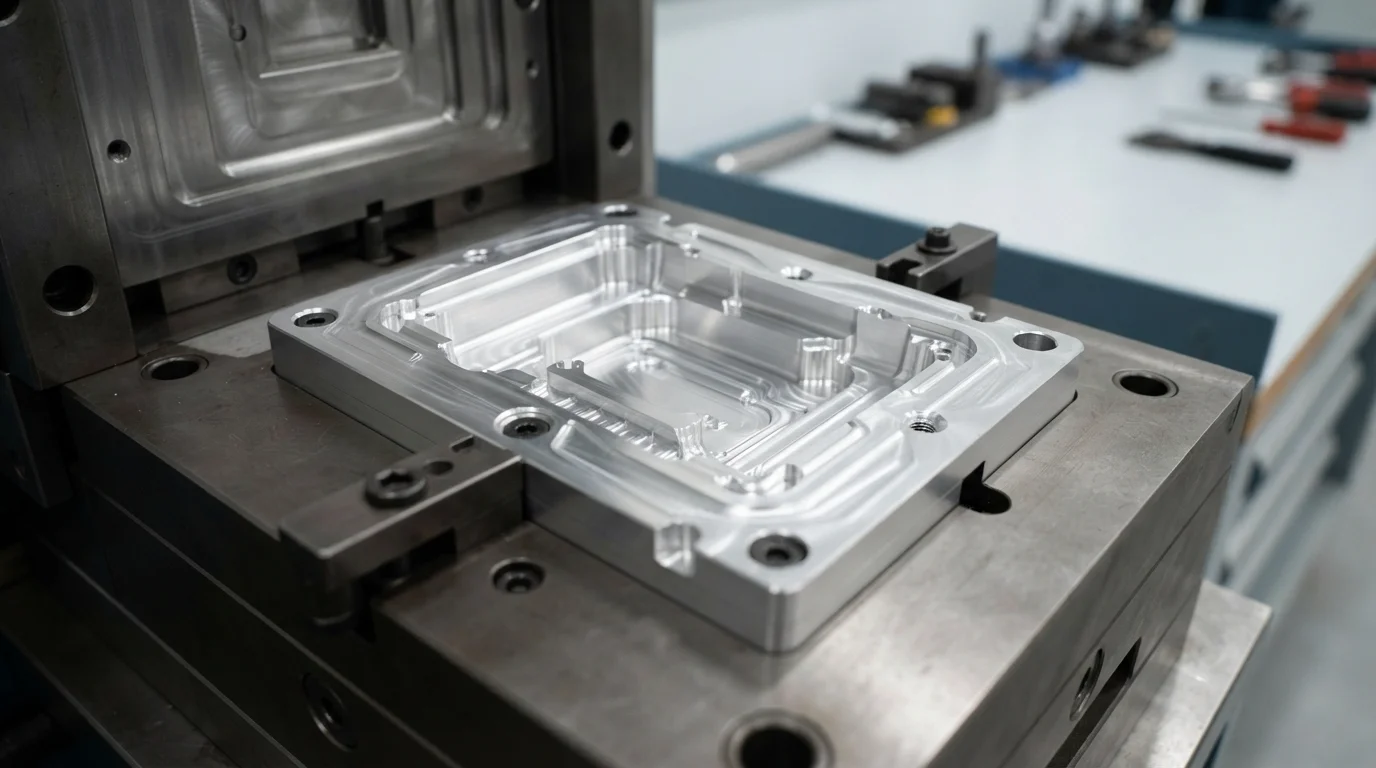
Delivering fast-turn prototype components relies on modular master unit die (MUD) frames and rapid toolmaking protocols. Machining custom core inserts from high-strength Al7075 aluminum or pre-hardened P20 soft steel cuts mold fabrication timelines drastically. High-speed CNC milling cuts aluminum cavities up to three times faster than processing hardened tool steels, enabling T1 sample delivery in 7 to 10 business days. Reusing master bolster frames eliminates the high capital cost of raw steel plates, making low-volume prototype runs highly economical.
Rapid prototyping tooling workflow steps include:
- MUD frame integration—Installing custom cavity inserts into standardized master unit die bases eliminates bolster plate machining costs.
- High-speed aluminum milling—Cutting Al7075-T6 billet cores rapidly compresses tool fabrication timelines.
- Automated T1 trial molding—Injecting production-intent resins generates functional sample parts for physical validation within days.
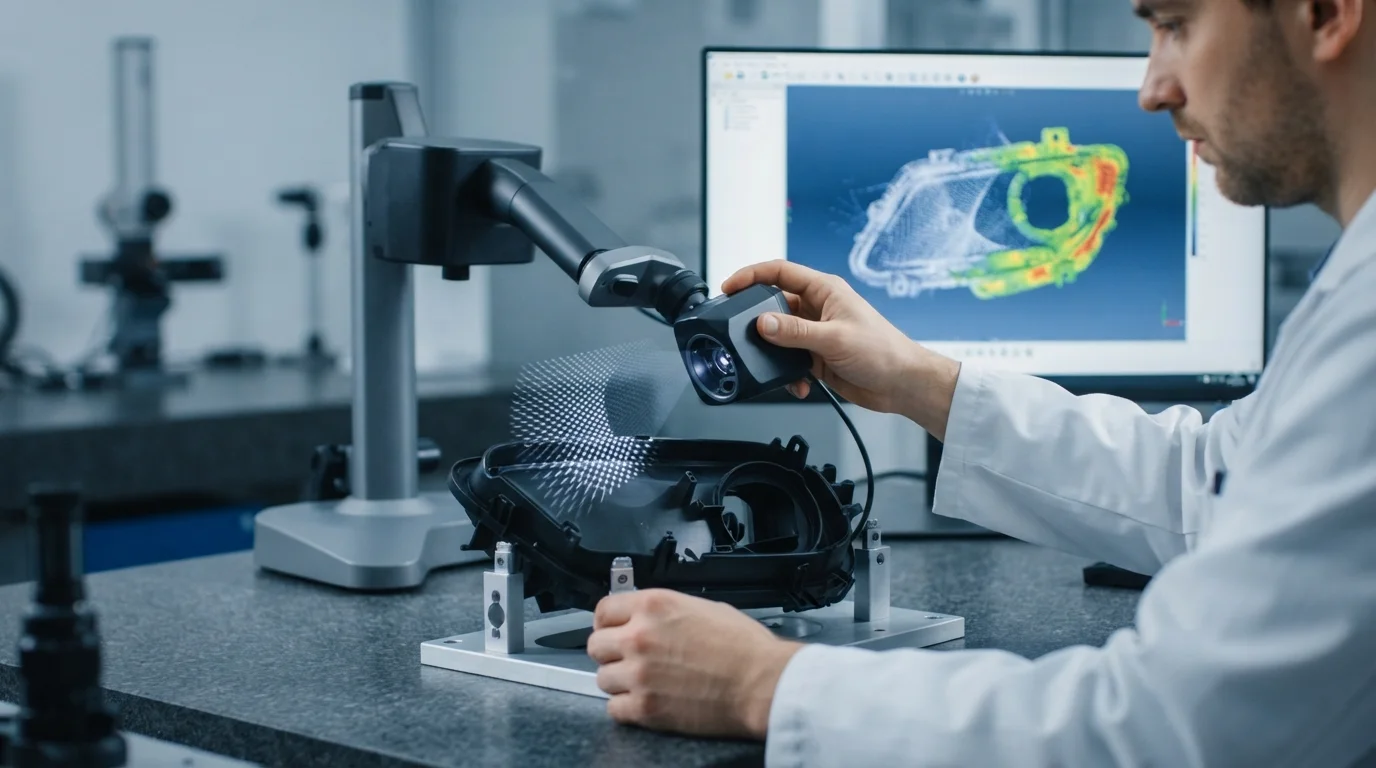
- Dimensional verification reporting—Measuring first article samples verifies critical tolerances before committing to high-cavitation tooling.
Production-Grade Plastics (PEEK, PC, ABS, PA66) for Functional Testing
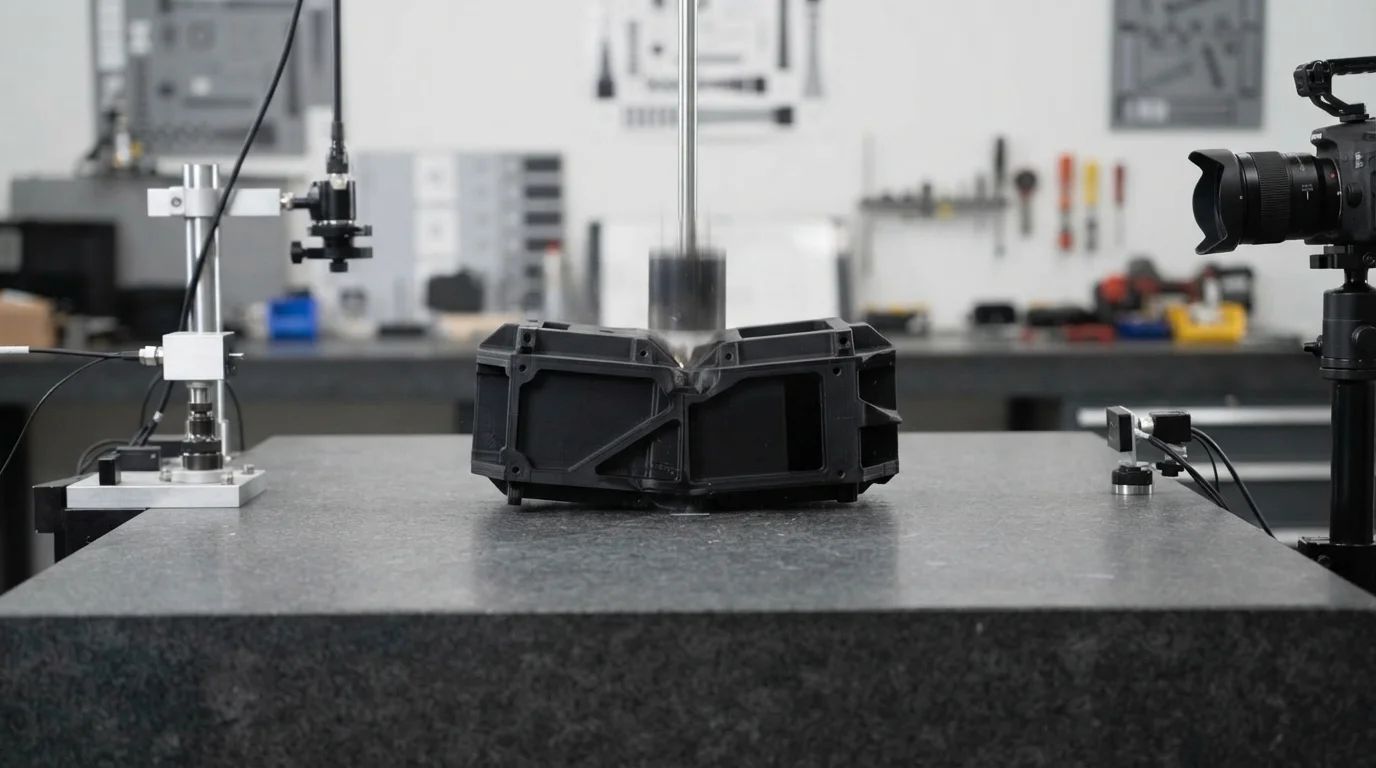
Evaluating physical snap-fits, dynamic vibration resistance, and thermal deflection requires testing components molded from actual production polymers. Prototype tooling processes the complete spectrum of engineering thermoplastics, including ABS, Polycarbonat (PC), PA66, and super-polymers like PEEK. Injecting glass-reinforced or flame-retardant resins into rapid molds delivers prototypes identical in molecular density and physical strength to mass-produced parts. Empowering design teams to perform valid drop tests, fluid pressure bursts, and sterile bio-burden audits prevents costly late-stage engineering changes.
| Prototype Injection Resin | 3D Printing Alternative | Tensile Modulus (MPa) | Wärmeformbeständigkeit (°C) | Primärer funktionaler Nutzen |
|---|---|---|---|---|
| PC / ABS (Bayblend FR3010) | SLA Rigid Photopolymer | 2,400 MPa | 110°C | Real-world impact testing & ultrasonic welding validation |
| PA66-GF30 (Zytel 70G33L) | SLS Sintered Nylon 12 | 8,500 MPa | 240 °C | Automotive under-hood thermal & vibration testing |
| PEEK (Victrex 450G) | FDM Filament PEEK | 3,800 MPa | 160°C | Implantable clinical trials & high-voltage aerospace insulation |
Low-Volume Bridge Production (100 to 5,000 parts) before High-Cavitation Tools
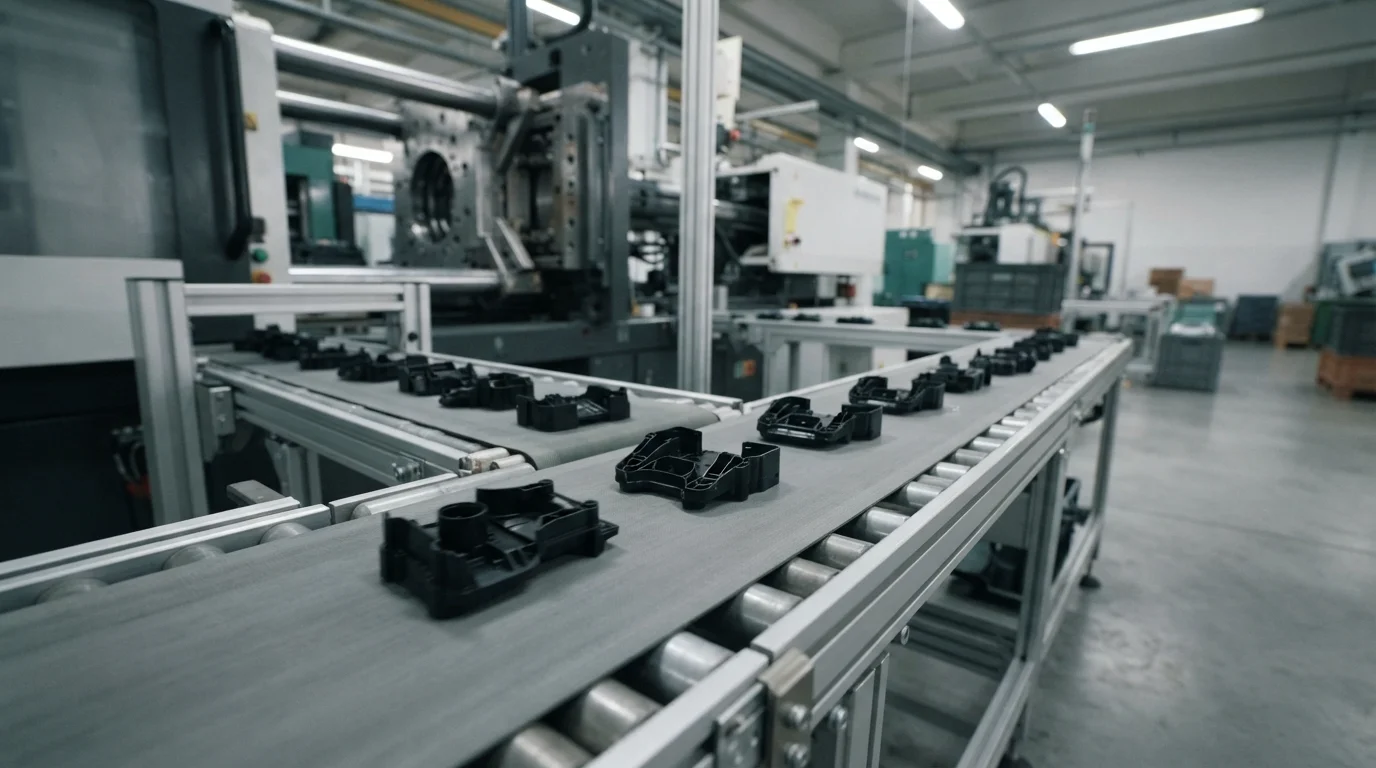
Filling early market demand or supporting clinical pilot trials requires flexible bridge manufacturing options. Low-volume Brückenproduktion supplies 100 to 5,000 production-grade parts, generating revenue while multi-cavity hardened steel tools undergo fabrication. Capturing real-world molding parameters—such as exact resin shrinkage, gate freeze time, and cavity pressure—informs final production mold design. Eliminating tooling risks during early bridge runs guarantees that multi-cavity steel molds achieve first-time production success.
Häufig gestellte Fragen (FAQs)
Why is prototype injection molding superior to 3D printing for functional testing?
3D printing utilizes photopolymers or sintered powders that lack the isotropic mechanical strength and heat resistance of molded engineering thermoplastics. Prototype injection molding injects production-intent resins like PEEK, PC, or glass-filled Nylon under standard cycle pressures, producing parts with identical physical, thermal, and electrical properties to mass-produced hardware.
What is the difference between aluminum rapid molds and P20 steel molds?
Aluminum molds (Al7075-T6) offer faster CNC machining speeds and superior thermal conductivity, making them ideal for quick-turn prototype runs of 100 to 2,000 parts using unfilled resins. Pre-hardened P20 soft steel molds provide higher wear resistance against abrasive glass-filled or flame-retardant polymers, extending tool life up to 10,000 shots.
How does prototype tooling help optimize high-volume production mold design?
Molding parts in a rapid prototype tool collects real-world processing data, including actual polymer shrinkage rates, knit line formations, and cooling behavior. Analyzing this physical molding data allows engineers to refine gate locations and pre-compensate core steel dimensions before cutting expensive multi-cavity production molds.