
The fastest useful mold is not always the simplest possible mold. Rapid injection molding design should remove avoidable tooling work while preserving the interfaces the samples must prove. A simplified latch, deleted rib, or relocated seam can make the tool faster to build but leave the prototype unable to answer the product team’s real question.
Start by classifying features as function-critical, appearance-critical, or negotiable. Then review the tool consequences of each feature. This creates a design discussion about what may change, rather than a blanket instruction to remove complexity and hope the part still works.
Protect the interfaces that give the prototype its value
Mark mating surfaces, locating features, connector openings, fastener positions, and the assembly datum scheme. These details define whether the sample can represent the product. If a prototype exists to validate a sealed enclosure, simplifying the sealing land defeats the purpose even if the outer shape remains correct.
Appearance can be functional to the project as well. A market-review sample may need a representative texture or seam position, while an internal mechanical trial may not. Document the difference before changing the finish specification. The appropriate simplification depends on the decision the build supports.
A scoped rapid injection molding design review should list preserved requirements alongside proposed changes. Approval becomes clearer when the buyer can see both the time-saving proposal and the evidence that would be lost if it is accepted.
Reduce tool motion before deleting product function
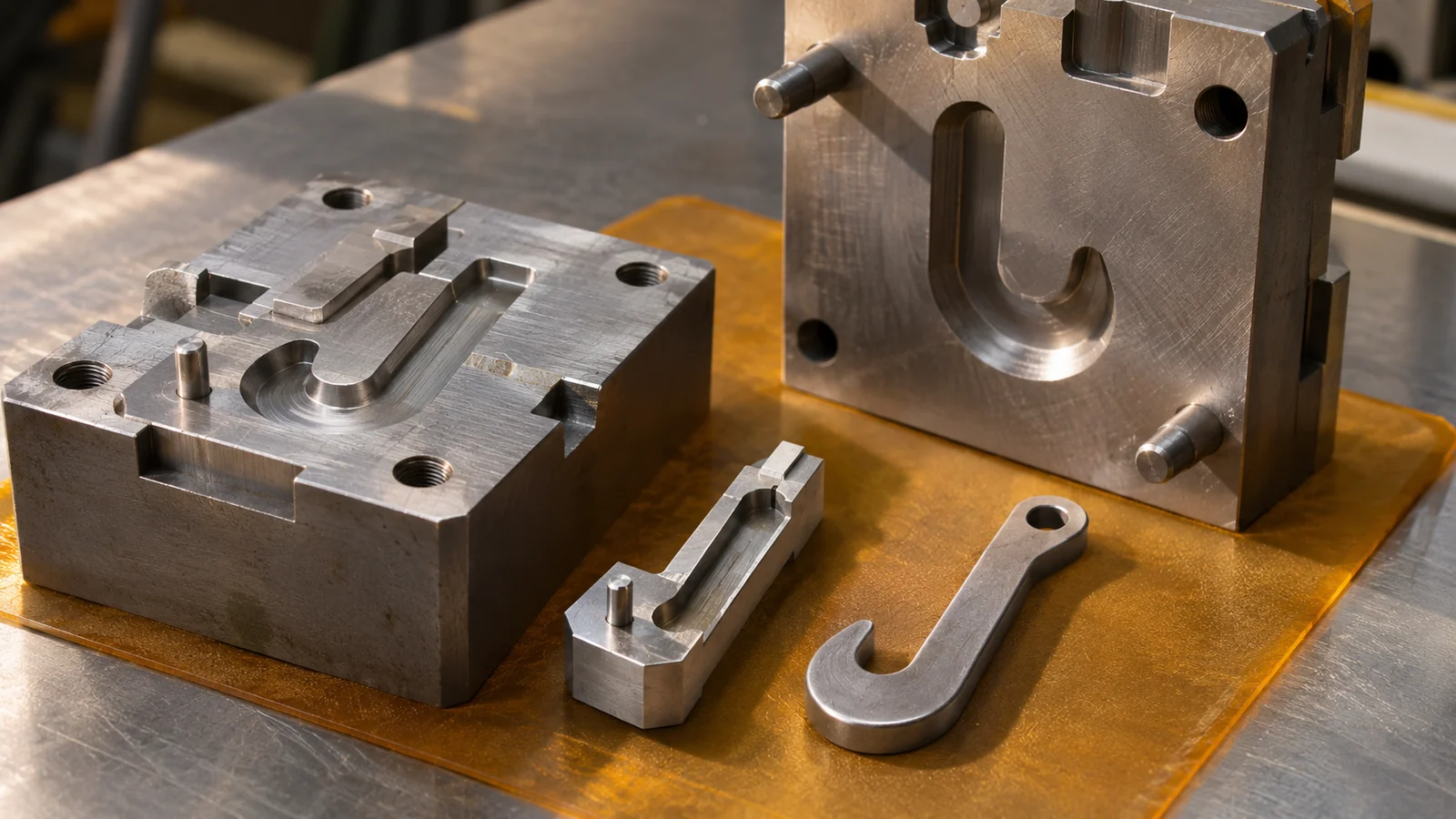
Undercuts can require side actions, lifters, hand-loaded inserts, or a different release strategy. Sometimes a local opening beneath a hook allows a simpler shutoff. Sometimes moving the parting line changes tool access. Neither option is automatically suitable: the revised feature must still meet load, appearance, and assembly needs.
A hand-loaded insert can be practical for a small sample run when handling, repeatability, and witness marks are accepted. It may be unsuitable for the intended production cadence. State that boundary explicitly so a prototype construction choice is not mistaken for a proven production process.
| Proposed simplification | Potential benefit | Check before approval |
|---|---|---|
| Open access under a hook | May allow a straight-pull shutoff | Strength, dirt entry, appearance, and assembly access |
| Replace an automatic action with a pickout | May reduce mechanism construction | Sample quantity, handling, witness marks, and production relevance |
| Use a replaceable local insert | Can isolate a likely design revision | Insert support, parting witness, cooling, and revision scope |
| Relax a hidden finish requirement | May reduce polishing or texture work | Release, friction, sealing, and inspection requirements |
Thin the heavy intersection, not the whole part
Uniform nominal sections and gradual transitions help control filling and cooling, but a universal wall value is not a design solution. Review the resin, flow distance, feature depth, loading, and tool access together. A wall that is moldable in one grade may not be appropriate in another.
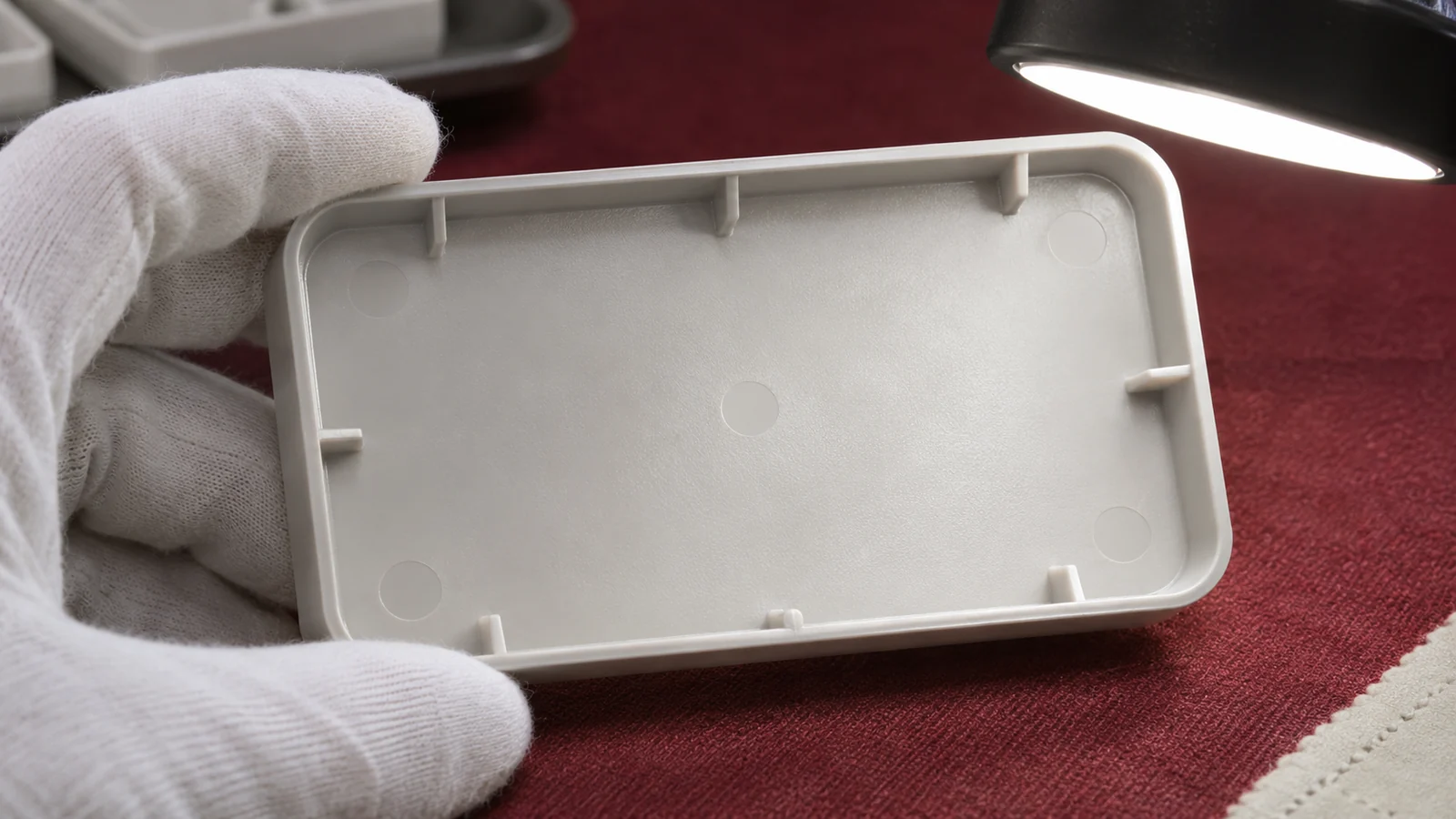
Look behind cosmetic faces for solid bosses, stacked ribs, and thick corners. Core out unnecessary mass and use a reviewed supporting geometry instead. Do not thin a screw boss or latch root simply until sink disappears; assembly loading and release must also remain acceptable.
For a hypothetical electronics cover, a thick mounting tower beneath the main appearance face may be negotiable in location but not in mounting height. Moving its support ribs and separating the heavy junction can be more useful than reducing the entire cover wall. This is a design illustration, not an account of a company trial.
Gate and ejector decisions belong in the first review
A fast tool still needs somewhere to introduce the melt and apply ejection force. Agree on acceptable gate vestige, ejector witness, parting line, and draft before machining begins. A late demand for an unmarked face can force a tooling change that no rushed machining schedule can erase.
Texture affects release, and deep ribs need practical tool access. Review how a proposed finish changes draw requirements and whether the finishing operation can reach the cavity. A high-gloss exterior also places greater demands on tool surface preparation and defect acceptance than a hidden internal bracket.
Use the DFM analysis to label each advisory by consequence: tool access, filling, cosmetic risk, release, or assembly. A list of colored CAD warnings is less useful than an explanation of what fails if a warning is ignored.
Freeze a small set of decisions before the tool starts
Rapid injection molding design is most effective when the project makes timely choices. Issue the approved CAD revision, exact resin or agreed candidates, critical dimensions, cosmetic map, and sample objective together. Keep unresolved items visible rather than allowing different emails to become competing specifications.
- Confirm which features the samples must validate.
- Approve draw direction and any manual or moving tool elements.
- Accept gate, ejector, parting-line, and surface-finish locations.
- Define likely revisions and their tool-change route.
- Agree on sample quantity and the measurements required before release.
A tool trial then checks the approved design, not a shifting target. Record any remaining deviation and identify whether it limits the test conclusion. The objective is useful samples sooner—not an unsupported promise that every feature can be molded on an accelerated schedule.
Questions about design shortcuts
Can a surface be polished after the first trial?
Sometimes, but the required texture, stock allowance, access, and effect on dimensions must be reviewed in advance. Do not assume a rough first surface can always be converted to the final finish without consequence.
Is aluminum required for a rapid tool?
No. Tool material is a project choice involving resin, wear, mechanisms, finish, output, and schedule. The word rapid describes the delivery strategy, not a universal construction specification.
Can I approve only the exterior and decide the internal features later?
That approach can be risky because internal bosses, ribs, and release features influence the exterior and the mold. Separate genuinely independent revisions from changes that affect filling, cooling, or the parting line.