
Injection molding lead time is not a single clock that starts when a purchase order is issued. It is the sum of design decisions, tool construction, material readiness, trial feedback, and the time needed to approve a stable part. A project can move quickly through machining and still lose weeks if the drawing, resin grade, inspection criteria, or revision owner is unclear.
For buyers, the useful question is not “How many days does molding take?” but “Which unresolved decision is most likely to hold the next milestone?” This guide maps the schedule by decision point, so the team can reduce avoidable waiting without treating validation as expendable.
In this article
- Why the schedule behaves like a chain
- The milestones that shape lead time
- Five delay signals to catch early
- What buyers can do before the tool starts
- Frequently asked questions
Why the schedule behaves like a chain
Each phase hands a decision to the next. Tooling cannot be finalized around a parting line, gate, or side action that is still changing; a trial cannot be judged against acceptance criteria that have not been agreed; and production approval cannot rely on a sample made from a resin grade that differs from the intended material.
This is why a single “tool build” estimate can be misleading. It may describe the shop’s fabrication window, but not design clarification, material procurement, trial scheduling, corrective work, inspection, or customer approval. A realistic plan identifies those handoffs instead of hiding them inside one number.
For a project using plastic injection molding, the part geometry and production intent should be reviewed together. A geometry change that looks small on a CAD screen can alter shutoffs, cooling access, ejection, or the inspection plan.
The milestones that shape lead time
Use milestones to locate schedule risk, not to imply that every project follows an identical duration. The sequence below is typical, but overlap and timing depend on the part, tool architecture, material availability, and approval responsibilities.
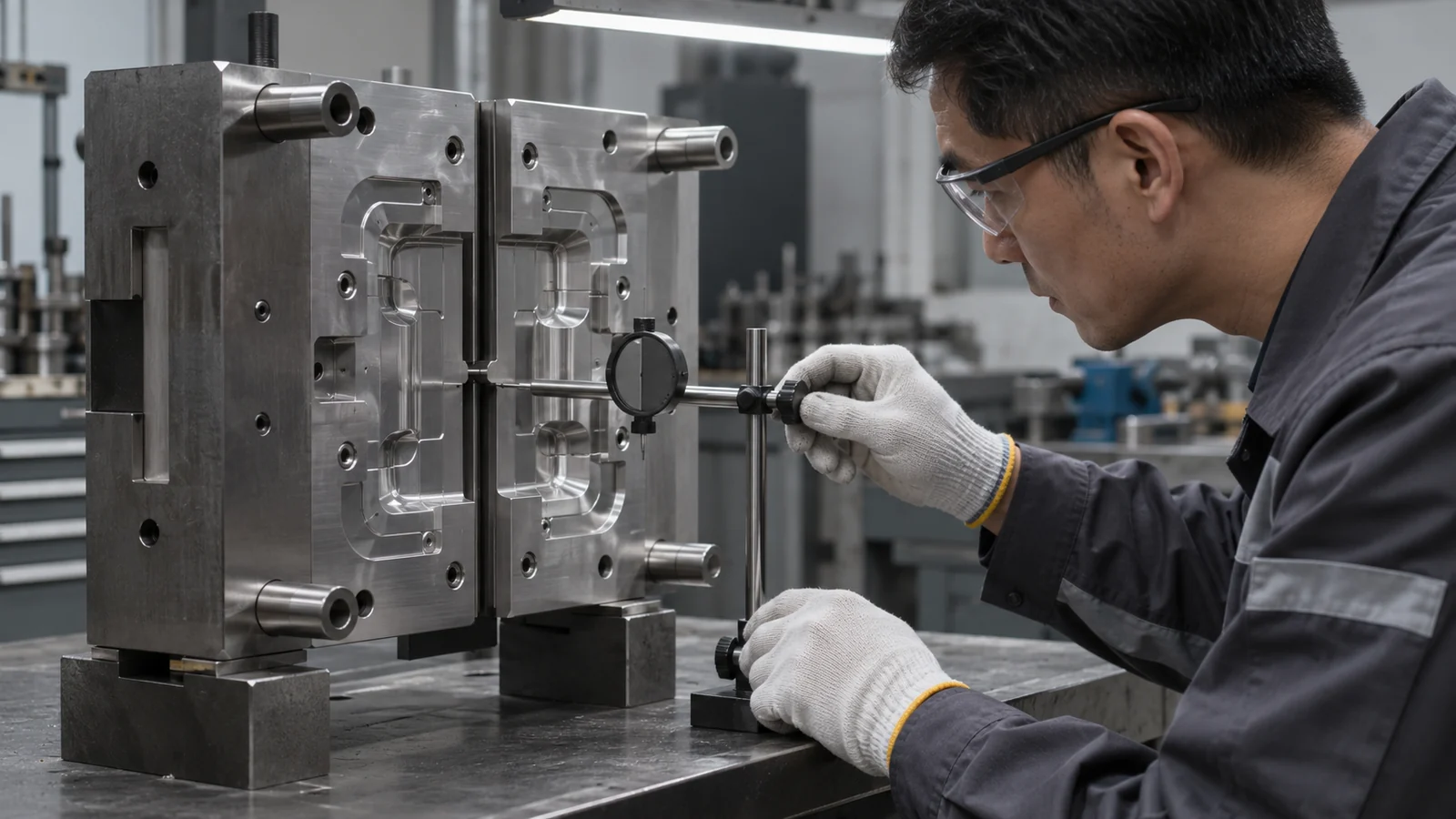
- Design and manufacturability review. Confirm the latest CAD and drawing revision, critical dimensions, draft, wall transitions, gate constraints, cosmetic zones, and any undercuts. Unresolved geometry at this point often returns later as tool rework.
- Tool concept and specification. Agree on cavity count, core and cavity approach, ejection strategy, surface expectations, and the intended production volume. The injection mold design should reflect how the part will be made and checked, not just whether the mold can close.
- Steel and purchased components. Availability of suitable steel, hot-runner components, standard mold-base parts, and special inserts can affect the critical path. Confirming the bill of materials early makes schedule assumptions visible.
- Tool build and first trial. Machining, fitting, assembly, and the initial molding trial reveal whether the tool fills, packs, cools, and releases the part as intended. A first trial is a learning milestone, not automatic proof of production readiness.
- Correction and validation. Changes may be needed to steel, venting, cooling, or process settings. The mold trial and validation plan should define what evidence is required before approval.
- Release to production. Final approval may depend on dimensional reports, appearance samples, material traceability, packaging, and signed-off revisions. Slow review cycles can extend the calendar even after the tool is capable of molding acceptable parts.
Five delay signals to catch early
- Design inputs disagree. The CAD model, 2D drawing, and written specification show different revisions or requirements.
- Critical features are not identified. The team does not know which dimensions or surfaces determine fit, sealing, assembly, or appearance.
- Material is named too broadly. A family name is supplied without the exact grade, color, reinforcement, or approved source needed for the project.
- Approval ownership is unclear. Samples circulate, but no person or team is responsible for accepting dimensions, cosmetics, and function.
- Changes arrive after steel decisions. Gate, parting-line, or side-action changes are requested after the tool concept is already committed.
These are not reasons to skip engineering review. They are reasons to bring the right information forward, while changes are still easier to evaluate.
What buyers can do before the tool starts
A short, complete handoff is often more valuable than a long email thread. Before the schedule is committed, provide:

- the controlled 3D model and drawing revision;
- the exact resin grade, color, and any permitted alternatives;
- annual demand, expected order pattern, and intended tool life assumptions;
- critical-to-function dimensions and how the part interfaces with mating components;
- cosmetic standards, texture references, and areas that must remain free of gate or ejector marks;
- inspection method, sample approval owner, and required documentation;
- packaging, labeling, and shipping constraints that affect release.
If some decisions are not final, list them as open items with an owner and due date. That makes schedule risk explicit and helps the project team distinguish a true manufacturing delay from a waiting-for-approval delay.
Frequently asked questions
Can the molding cycle time tell me the project lead time?
No. Cycle time describes the interval for producing a shot once the mold is running. Project lead time also includes design, tooling, trials, corrections, approvals, and production planning.
Does a simpler part always mean a faster tool?
Not necessarily. A relatively simple part may still need a demanding surface finish, tight fit, special resin, or a complex inspection plan. Geometry is only one schedule driver.
Can design changes be made during the tool build?
Sometimes, but the impact depends on which surfaces and components are already complete. Changes affecting parting lines, shutoffs, gates, cooling, or side actions should be reviewed for both cost and schedule before approval.
What should a supplier include in a lead-time estimate?
Ask which milestones are included, what assumptions apply, when the first trial is planned, how correction cycles are handled, and what customer approvals are needed. A date without those boundaries is difficult to compare with another quote.