
A mold that has been cleaned is not necessarily a mold that is ready to run. Injection mold preventive maintenance needs a defined inspection scope, a record of what changed, and a restart check against the part requirements. Without those three elements, “maintenance complete” can hide a worn feature or an unexplained adjustment.
For a buyer or production engineer managing repeat orders, the useful question is not simply how often the mold is serviced. It is whether the plan detects the tool’s relevant risks early enough, preserves traceability, and returns a controlled tool to production. The plan below concerns the mold—not the press’s electrical or hydraulic maintenance.
Establish the baseline and the triggers for each mold
Start with a unique tool identity and the current approved drawings. Add the cavity arrangement, moving components, resin and finish requirements, and the features that govern part acceptance. A checklist copied from a simpler mold may omit a slide, sealing surface, or delicate core that makes this tool different.
Retain reference samples or suitable inspection records for critical features. Note the condition under which they were measured and any known limitations. A photograph can document a visible surface, but it cannot replace a dimension or functional test where those define acceptance.
In a custom mold making program, maintainability starts before the first production run. Access to replaceable items, identification of wear components, and an agreed service record make later decisions less dependent on whoever happens to remember the tool’s history.
A calendar is useful for planning, but it cannot describe every tool’s exposure. Production cycles, batch frequency, resin reinforcement, deposits, water condition, storage, and moving mechanisms all influence inspection needs. Set the starting interval with the responsible toolmaker, then review it against actual observations rather than inventing a universal shot count.
Condition changes need a separate response. Increasing flash, difficult ejection, a cooling imbalance, or recurring component replacement should trigger investigation even when scheduled service is not due. They are signals to preserve evidence, not automatic proof that the cavity steel must be repaired.
A documented injection mold preventive maintenance plan should state who can authorize an inspection and how a production concern is handed over. Separate tool condition from setup or material changes so the maintenance action addresses the right cause.
Make the checklist describe an observation, not just an action
“Clean mold” is an action label. “Vent condition inspected, deposits recorded, approved cleaning method used, and surface rechecked” creates a more useful service history. The detail should be proportionate to the risk; the objective is a repeatable judgment, not paperwork for its own sake.
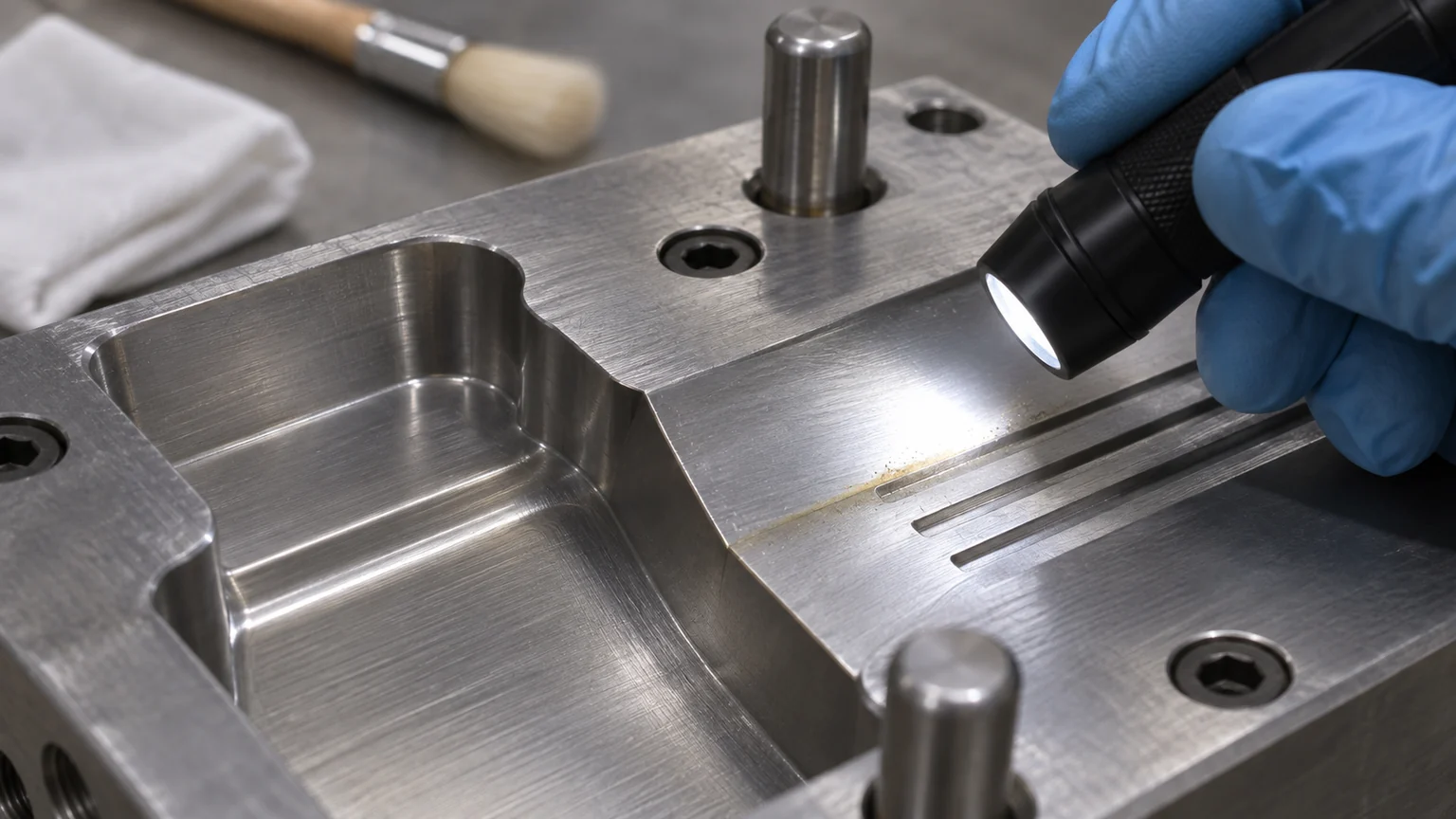
Slide Products’ maintenance guidance includes inspection, cleaning, storage, and record keeping. Adapt those categories to the tool and the approved materials. Solvents, lubricants, and protective products must be suitable for the finish, resin, and product requirements; a generic cleaning recommendation is not permission to use any chemical.
| Inspection area | Record before intervention | Define the release check |
|---|---|---|
| Parting surfaces and shutoffs | Damage, deposits, flash location, and cavity identity | Condition and relevant sample-part acceptance |
| Ejection and moving features | Abnormal contact, wear, return behavior, and prior failures | Approved movement and component condition |
| Cooling circuits | Leaks, restrictions, or changes from the established baseline | Agreed leak and operating checks |
| Cavity finish and vents | Surface changes and deposit location | Cleanliness and preservation of the specified finish |
| Storage preparation | Condition, protection used, and outstanding work | Identified tool with a clear return-to-service status |
All work must follow the applicable isolation, handling, lifting, and toolmaker procedures. This checklist defines the information to retain; it is not a teardown or lockout instruction for untrained personnel.
Include storage in the operating history
A mold can deteriorate between production batches as well as during them. Record when it was removed from service, the condition and protection applied, any outstanding work, and the checks needed before its next installation. A storage tag should distinguish a ready tool from one awaiting repair without relying on a verbal handover.
When production returns after a long gap, review changes to the material, drawing, acceptance reference, and maintenance procedure. The last successful batch may have used a different revision or conditioning requirement. Confirm the current baseline before using old samples as the release standard.
If the tool is moved between facilities, preserve this history with the tool documentation. Physical receipt of a protected mold is not proof that the receiving team has the approved setup information, spare-component identification, or acceptance criteria needed to restart it responsibly.
Separate routine care from a tool change
Cleaning or approved lubrication is different from polishing a critical surface, replacing a component, welding, or machining. Those interventions can change part geometry or appearance. Record the affected component and drawing revision, and decide what inspection is required before the modified tool returns to production.
Keep removed components or suitable evidence when they explain a recurring problem. Replacing a pin repeatedly without examining alignment or support can conceal a construction issue. A useful record connects the symptom, observation, action, and outcome instead of counting every replacement as an isolated success.
The distinction also improves discussions about mold life expectancy. Scheduled replacement of a wear item is not necessarily the end of the complete tool, while a tool that still cycles may no longer produce acceptable parts. Service history helps identify which condition actually applies.
Close maintenance with a controlled restart
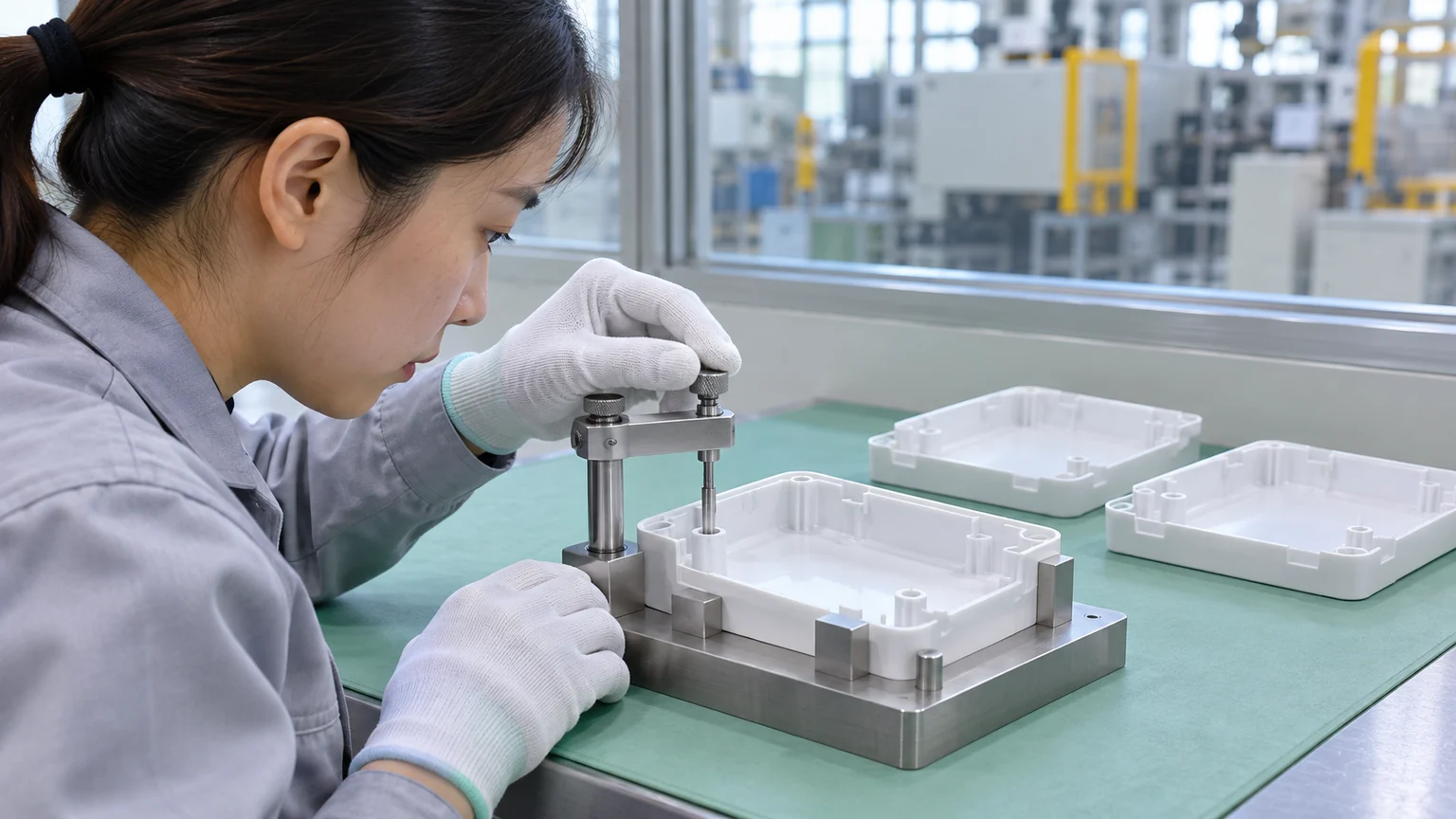
Before restart, confirm the completed work, outstanding restrictions, and any required approvals. Check that the correct components and mold revision are identified, protective materials have been addressed under the approved procedure, and the tool is released by the responsible personnel. A production operator should not have to infer readiness from a tool sitting beside the press.
The required sample checks depend on the intervention. Work affecting a cosmetic face needs appearance review; replacement near a critical dimension may need measurement; work on a moving feature may require checking its resulting geometry and part condition. Use a proportionate mold validation scope rather than assuming either no check or a complete requalification is always required.
- Confirm the tool identity, revision, and authorized work scope.
- Record observations before cleaning or replacement removes the evidence.
- Identify changed components and any effect on acceptance features.
- Complete the agreed restart and sample checks.
- Review the next inspection trigger using the observed condition.
For injection mold preventive maintenance, the important final record is not simply a date. It is a defensible statement of condition and readiness, supported by the work and checks actually completed. That makes the next production batch a controlled restart rather than a test of whether the last service happened to be sufficient.
Maintenance planning questions
Should every mold follow the same maintenance interval?
No. Start from the toolmaker’s recommendations and actual operating duty, then refine the plan from condition and service history. Different materials, mechanisms, and production patterns can justify different triggers.
Does a defect always mean maintenance is overdue?
No. Material, setup, handling, and process changes can create similar symptoms. Preserve the relevant production records and samples before assigning the cause to wear or deposits.
Who should decide whether a serviced tool can run?
The organization should define that responsibility in its operating procedures. Tooling, production, and quality may have different checks to complete. The release record should show the required approvals rather than assuming a cleaning task authorizes production.