
PEI-SABIC LNP Thermocomp EC006
SABIC LNP THERMOCOMP EC006 is a PEI compound containing 30% carbon fiber with electrically conductive characteristics. The properties below reference SABIC Asia-region data with their test methods. Mechanical, electrical, dimensional and manufacturing requirements are reviewed for the actual component.
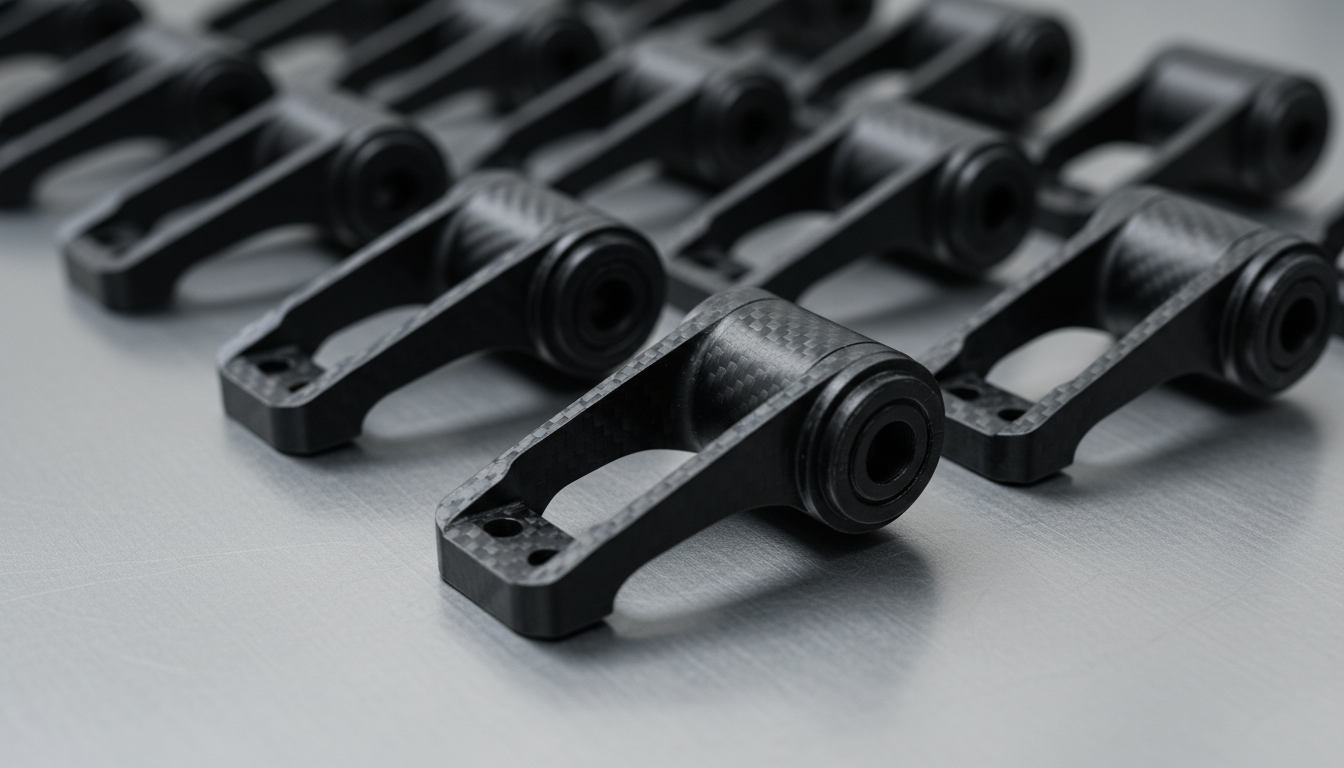
SABIC LNP THERMOCOMP EC006: 30% carbon-fiber PEI
EC006 is a polyetherimide compound containing 30% carbon fiber, described by SABIC as electrically conductive. Confirm the full grade designation: EC006, EC006E, EC006APQ and EC006AQW have different descriptions and must not be treated as interchangeable.
Source: SABIC EC006 technical data, Asia region, displaying revision 04/02/2026, checked on 29 September 2026. The original revision format is retained. Regional data and test methods can differ; use the agreed material documentation for purchasing.
Selected Asia-region properties
| Property | Typical value | Method / condition |
|---|---|---|
| Density | 1.38 g/cm³ | ISO 1183 |
| Tensile modulus | 20,200 MPa | 1 mm/min; ISO 527 |
| Tensile stress at break | 183 MPa | ISO 527 |
| Flexural stress | 269 MPa | ISO 178 |
| Flexural modulus | 17,930 MPa | ISO 178 |
| HDT | 217°C | 1.8 MPa, flatwise; ISO 75/Af |
| Molding shrinkage, 24 hours | 0.10% flow / 0.39% cross-flow | ISO 294 |
| Surface resistivity | 1 × 10²–1 × 10⁶ Ω | ASTM D257 |
The same regional source lists a tensile stress at break of 196 MPa under ASTM D638. That is a different test reference from the ISO value above. State the method when comparing values. Typical specimen data do not define the allowable load of a finished bracket or housing.
Conductivity requires a part-level specification
Surface resistivity and volume resistivity describe different measurements and have different units. The value above is surface resistivity. Do not relabel it as Ω·cm or assume that it establishes EMI shielding performance for an assembled enclosure.
For an electrical application, define the characteristic to be tested, measurement locations, contact arrangement, conditioning and acceptance range. Part geometry and assembly interfaces must be considered. For a structural application, define the load, temperature exposure, fluids, dimensional requirements and any required validation before selecting the material.
Processing reference and tool-development review
SABIC’s Asia data lists drying at 150°C for 4–6 hours, maximum moisture 0.02%, melt temperature 360–400°C and mold temperature 140–180°C. These are general processing guidelines. A processing melt temperature is not a material melting-point measurement.
Review the drawing for flow direction, wall transitions, gate location, knit lines, ejection and surfaces that control fit. A single shrinkage value cannot establish tool compensation throughout a fiber-filled part. Record process conditions and trial measurements, including flow-related dimensions and any warpage requirement.
Confirm tooling, material-handling and inspection arrangements for the actual project. A simulation or a generic tooling description does not guarantee zero warpage, a fiber-free surface or equivalence to a metal component under every load.
Prepare an EC006 part enquiry
- Controlled drawing, model, part number and revision.
- Full resin grade, region-specific material specification and permitted substitutions.
- Quantity, loads, environmental exposure and critical dimensions.
- Electrical requirements stated as measurable characteristics where applicable.
- Material records, inspection scope, packaging and destination.
Part size and production conditions require a drawing-based review. Confirm any application-specific material or quality documentation before manufacture.
Properties
| Density, Asia data (ISO 1183) | 1.38 g/cm³ |
| Tensile modulus, 1 mm/min (ISO 527) | 20,200 MPa |
| Tensile stress at break (ISO 527) | 183 MPa |
| Tensile strain at break (ISO 527) | 1.1 % |
| Flexural stress (ISO 178) | 269 MPa |
| Flexural modulus (ISO 178) | 17,930 MPa |
| Izod notched, +23°C (ISO 180/1A) | 5 kJ/m² |
| Processing melt temperature (general guideline) | 360–400 °C |
| HDT, 1.8 MPa, flatwise (ISO 75/Af) | 217 °C |
| Mold shrinkage, flow, 24 h (ISO 294) | 0.10 % |
| Mold shrinkage, cross-flow, 24 h (ISO 294) | 0.39 % |
| Surface resistivity (ASTM D257) | 1.0E+02 – 1.0E+06 Ω |
| Maximum part size | Drawing review required N/A |
| Minimum part size | Drawing review required N/A |