
Carbon Fiber (CF)

Carbon Fiber (CF) reinforced resins—utilizing 10% to 40% carbon fibers in matrix polymers like PEEK, PA66, and PPS—represent the absolute pinnacle of metal-replacement plastics, offering an unrivaled strength-to-weight ratio, dimensional stability, and electrical conductivity (for ESD or EMI shielding). However, molding these composites introduces extreme abrasive wear on barrels, severe anisotropic shrinkage (warpage), and highly vulnerable weld lines where fibers fail to bridge. At Jucheng Precision, an ISO 9001 and IATF 16949 certified manufacturer, we resolve these issues with CPM powder metallurgy mold steels, scientific gate optimization, and pressurized high-temperature tooling. We provide a comprehensive, free DFM analysis within 24 hours to analyze fiber orientation, ensuring high-strength aerospace components verified by Zeiss CMM inspection.

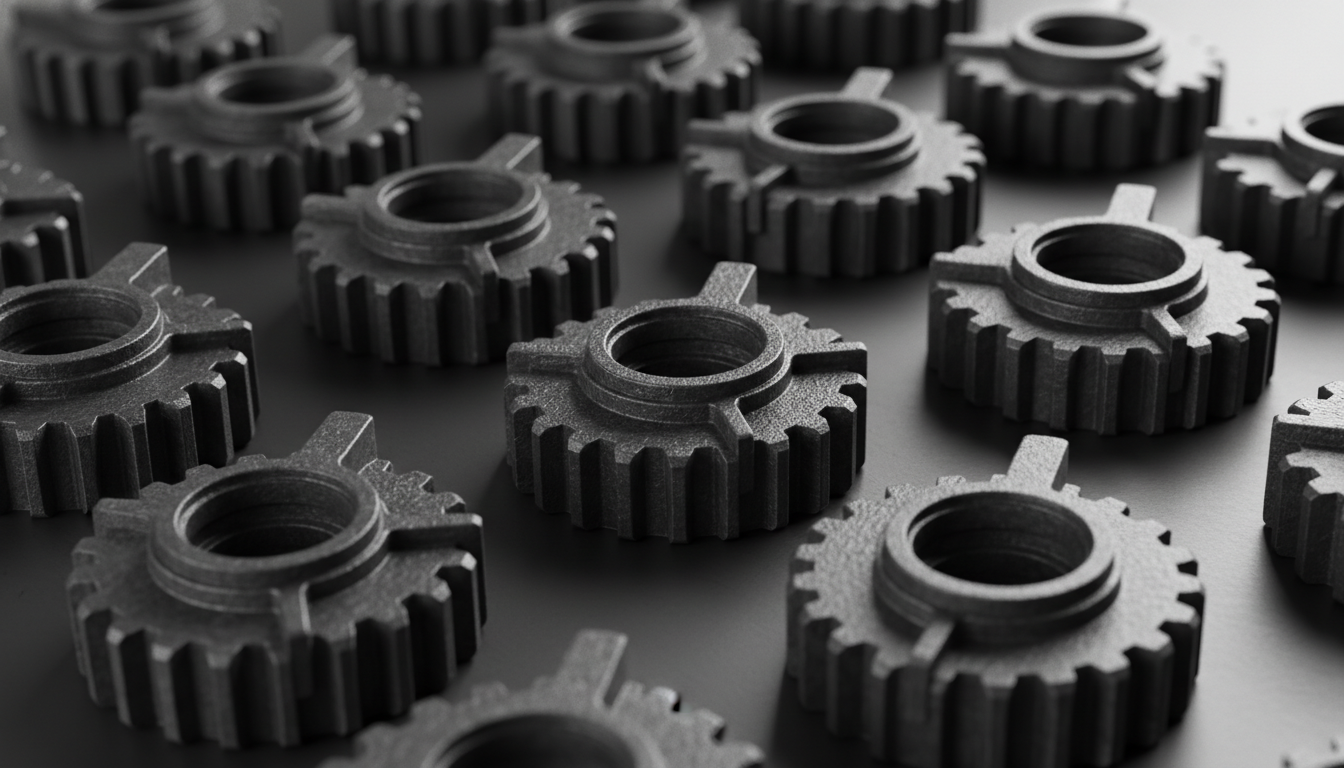
Precision-injection-molded-PEEK-CF30-structural-aerospace-gears-and-robotic-arm-joints-1

Our available materials

PA-BASF Ultramid A3WC8

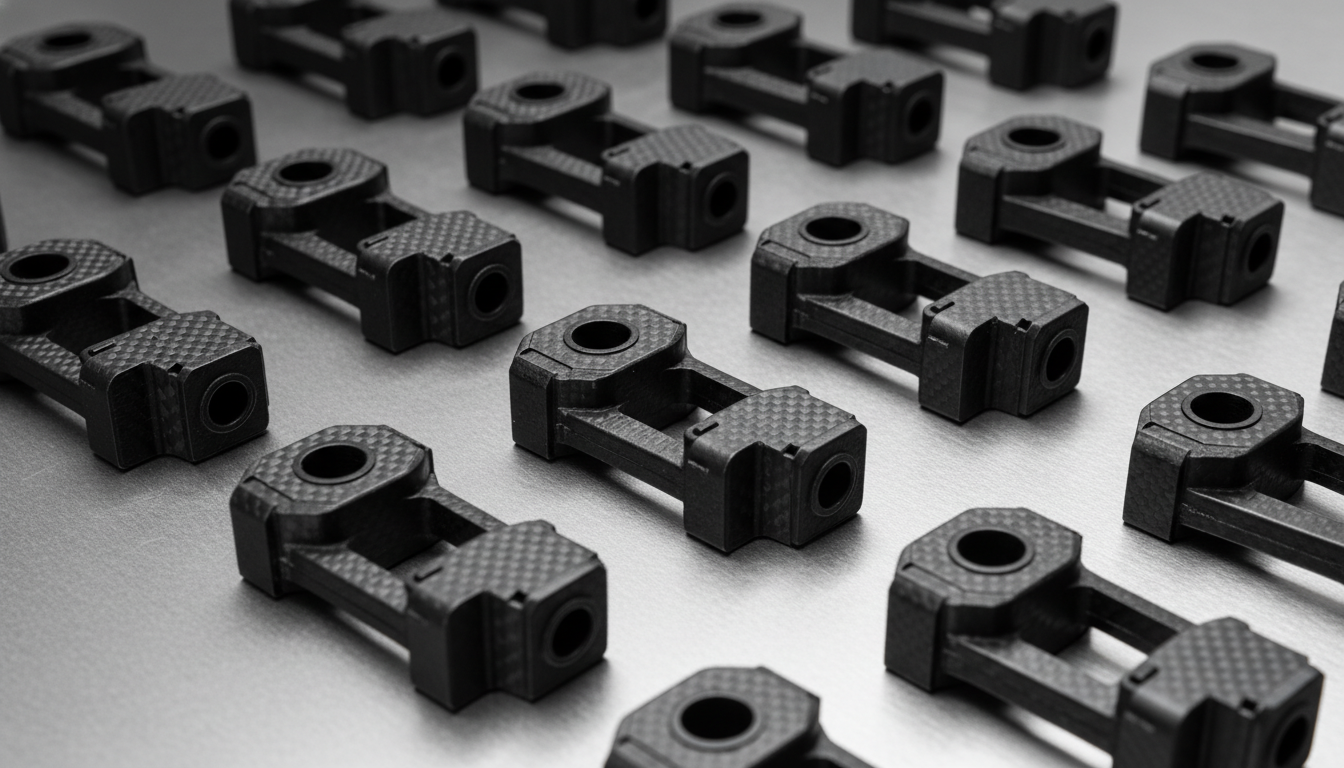
To substitute heavy die-cast zinc and aerospace-grade aluminum alloys in load-bearing structural mechanisms without compromising thermal or chemical stability, BASF’s Ultramid A3WC8 leverages a 40 wt.% short carbon fiber reinforced, heat-stabilized polyamide 66 (PA66-CF40) matrix. Boasting a density of 1.28 g/cm³ and a melting point of 262°C, this high-performance composite provides an exceptional tensile modulus of 23,500 MPa alongside inherent electrostatic dissipation (ESD). Jucheng Precision, operating under IATF 16949 and ISO 9001 certified frameworks, specializes in molding Ultramid A3WC8. Supported by our 5-axis CNC-machined S136 stainless steel toolings, we control its anisotropic shrink variables (0.1%-0.4%) to deliver flat, structurally flawless components verified by Zeiss CMM.
READ MORE

PA-DuPont Zytel 70C30HS

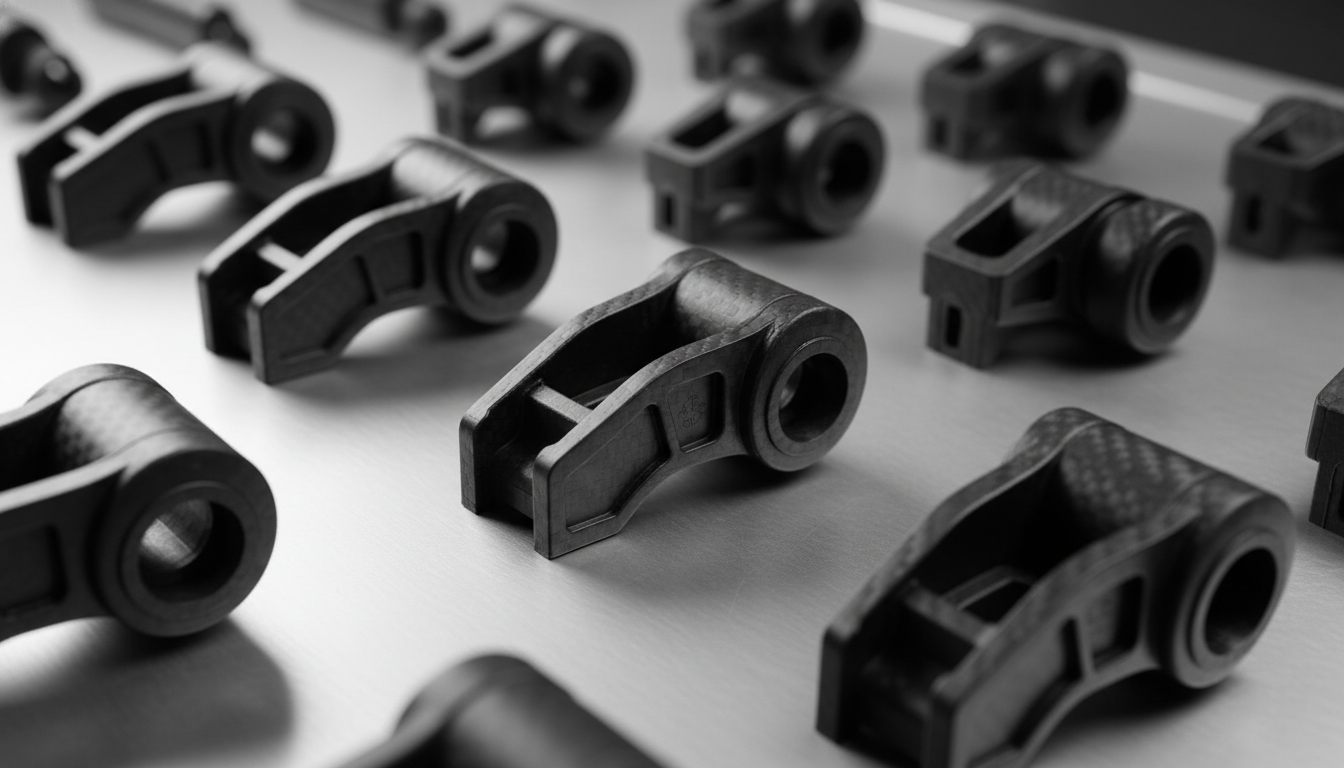
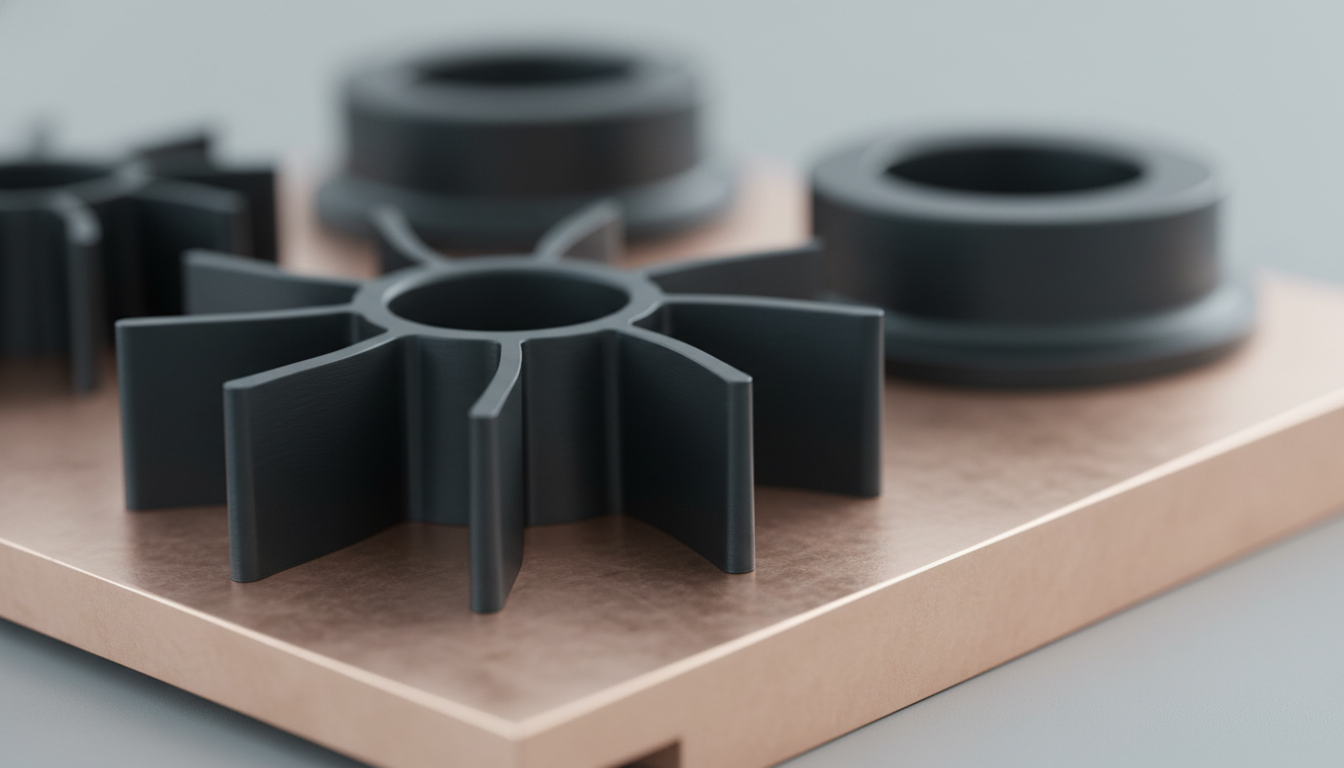
To substitute structural aluminum and zinc castings in high-load dynamic mechanisms without adding weight, Celanese’s Zytel 70C30HS (formerly DuPont) offers an advanced 30% carbon fiber reinforced, heat-stabilized polyamide 66 (PA66-CF30) matrix. Featuring a low density of 1.28 g/cm³ and a melting point of 262°C, this high-performance grade provides an exceptional tensile modulus of 20,000 MPa alongside inherent electrostatic dissipation (ESD) and near-zero wear. Jucheng Precision, operating under IATF 16949 and ISO 9001 certified frameworks, specializes in molding Zytel 70C30HS. Supported by our 5-axis CNC-machined CPM tool cavities and pressurized mold temperature controllers, we control its anisotropic shrink variables (0.1%-0.4%) to deliver flat, structurally flawless components verified by Zeiss CMM.
READ MORE

PEI-SABIC LNP Thermocomp EC006

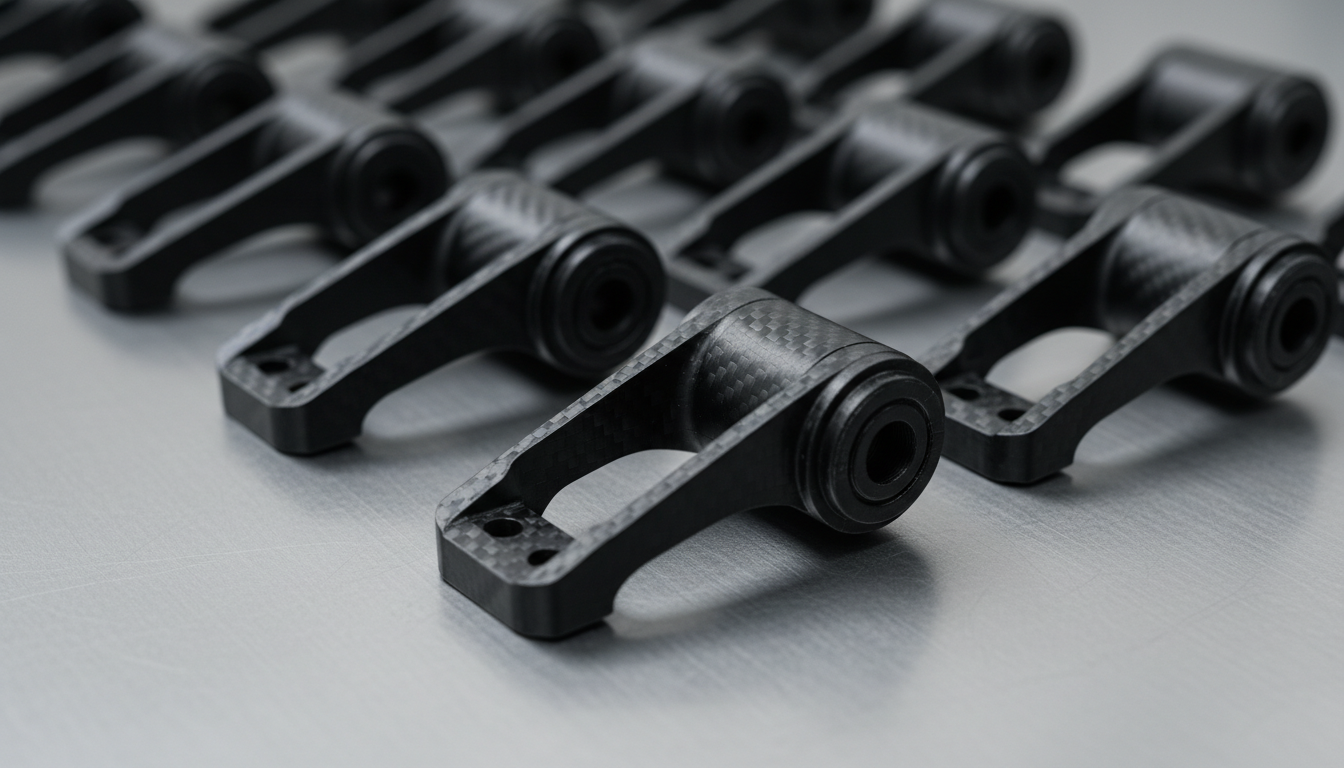
To substitute heavy die-cast zinc and aerospace-grade aluminum alloys in load-bearing structural mechanisms without adding weight or losing structural rigidity, SABIC’s LNP™ THERMOCOMP™ Compound EC006 provides an uncompromising solution. This 30% carbon fiber reinforced polyetherimide (PEI-CF30) grade delivers a massive dry-as-molded (DAM) tensile modulus of 20,200 MPa and an ultimate tensile strength of 215 MPa. Jucheng Precision, operating under IATF 16949 and ISO 9001 certified systems, specializes in high-temperature molding of EC006. Utilizing 5-axis CNC-machined H13 steel toolings, we control its highly anisotropic shrinkage (0.1% parallel, 0.5% perpendicular) and prevent surface fiber-floating, delivering defect-free parts verified by Zeiss CMM.

READ MORE

PPS-Solvay Ryton CF30

Sustaining extreme dynamic wear resistance, mechanical stiffness, and chemical inertness in harsh industrial and aerospace environments without adding weight requires a premier structural composite, which Syensqo’s Ryton CF30 (formerly Solvay) delivers through its 30% carbon fiber reinforced polyphenylene sulfide (PPS) matrix. Featuring an optimized density of 1.45 g/cm³ and a heat deflection temperature (HDT) of 265°C, this high-performance grade provides a massive tensile modulus of 21,000 MPa alongside inherent electrostatic dissipation (ESD). Jucheng Precision, under IATF 16949 and ISO 9001 frameworks, specializes in precision molding of Ryton CF30. Utilizing 5-axis CNC-machined S136 stainless steel toolings, we control its anisotropic shrink variables (0.1%-0.3%) to deliver dynamic sliding components verified by Zeiss CMM.

READ MORE

Common Carbon Fiber Reinforced Grades We Mold

We process premium-grade carbon-fiber reinforced polymers (typically 10% to 40% CF load) designed for extreme weight reduction, metal-replacement, and ESD control:

CF-Reinforced Class Typical Brand & Grade Key Characteristics & Advantages
PEEK-CF30
(High-Performance CF)
• Victrex PEEK 450CA30 (30% CF)
• Solvay KetaSpire KT-820 CF30
• Evonik Vestakeep 4000-CF30
Unmatched strength-to-weight ratio, continuous thermal resistance up to 260°C, and exceptional wear resistance. Perfectly replaces titanium and aluminum in aerospace brackets and oil seals.
PA66-CF30
(Engineering Nylon CF)
• BASF Ultramid A3WC30 (30% CF)
• Sabic LNP Thermocomp PA66 CF
Extremely high flexural modulus and tensile strength (exceeding 200 MPa). Lighter than glass-filled alternatives. Excellent choice for UAV/drone arms, robotic joints, and racing sports gear.
PPS-CF30
(Semi-Crystalline CF)
• Solvay Ryton CF30 (30% CF)
• Toray Torcon CF grades
Combines PPS’s complete chemical insolubility with carbon fiber’s low coefficient of thermal expansion (CLTE) and wear resistance. Suited for structural chemical valves and rotary seal wear rings.

Applicable Molding Processes for CF Resins

Because carbon fibers significantly restrict melt relaxation, advanced molding and tooling design are necessary:

Molding Process Process Suitability & Application
Standard Injection Molding Excellent. Configured with hardened PM-steel screws to mold lightweight structural brackets, heavy-duty gear sets, and aerospace connectors.
Insert Molding Excellent. Highly utilized to encapsulate precision metal bushings and mounting studs, providing high torque resistance in ultra-rigid carbon-filled parts.
Precision Micro-Molding Good. Highly optimized for small, lightweight gears in advanced robotics and radiolucent micro surgical tool connectors.

Carbon Fiber (CF) Injection Molding Technical Guide

Carbon fibers are extremely abrasive and exhibit highly directional flow orientation. Managing mold wear and part warpage is a critical engineering challenge:

  • Premium CPM Powder Metallurgy Molds: Carbon fiber acts as an aggressive grinding agent under high injection pressures. Jucheng’s tooling division uses hardened powder metallurgy tool steels (such as CPM-9V or H13 treated to 54–56 HRC) along with PVD ceramic coatings to guarantee mold longevity.
  • Mitigating Anisotropic Warpage: Carbon fiber exhibits nearly zero shrinkage along the flow path but significant shrinkage perpendicular to it. Our engineers conduct detailed Moldflow simulations during our free 24-hour DFM phase to optimize gate layouts and prevent structural warping.
  • Weld Line Structural Recovery: Carbon fibers cannot easily cross knit/weld lines, making these joints a vulnerable structural point. We strategically place gates to shift weld lines to low-stress areas or utilize sequential valve gating.
  • Melt High Temperature Profile: Melt and mold temperatures are kept higher (especially for PEEK-CF, requiring pressurized oil-heaters up to 180°C/356°F) to lower viscosity, optimize fiber distribution, and prevent cosmetic surface roughness.

Key Application Industries for Molded CF Components

  • Aerospace & Defense: Lightweight structural engine brackets, satellite antenna mounts, UAV/drone frames, optical camera brackets, and aircraft interior fittings.
  • Robotics & High-End Industrial: Robotic arm articulation joints, pneumatic grippers, lightweight structural slides, semiconductor wafer handling grippers, and wear-resistant gears.
  • Motorsports & Automotive (IATF 16949 Certified): Lightweight engine valves, racing car suspension linkages, high-wear transmission gear sets, and specialized sensor housings.
  • Medical & Radiography (ISO 13485 Compliant): Radiolucent surgical targeting guides, orthopedic instruments, implantable frames, and non-magnetic laboratory cassettes.

Material Properties

Density (PA66-CF30) 1.25 - 1.29 g/cm³
Tensile Strength at Yield (PA66-CF30) 210 - 275 MPa
Tensile Elongation at Break 1.5 - 2.5 %
Flexural Modulus (PA66-CF30) 18,000 - 22,000 MPa
Izod Impact Strength (Notched, 23°C) 70 - 110 J/m
Melting Temperature 260 - 265 °C
Heat Deflection Temperature (HDT @ 1.8 MPa) 245 - 255 °C
Linear Mold Shrinkage (Flow Direction) 0.05 - 0.15 %
Linear Mold Shrinkage (Transverse Direction) 0.40 - 0.60 %
Surface Resistivity (Conductive Grade) 1.0E+02 - 1.0E+06 Ohm/sq
Maximum Part Size 800 x 600 mm
Minimum Part Size 0.5 x 0.5 mm