
Selecting the correct polymer encapsulation process during early CAD design phases dictates whether an assembly meets mechanical strength, sealing, and cost targets. Product development teams frequently confuse multi-material molding techniques, particularly when deciding between placing pre-formed metal elements into a mold cavity or layering flexible elastomers over rigid plastic frames.
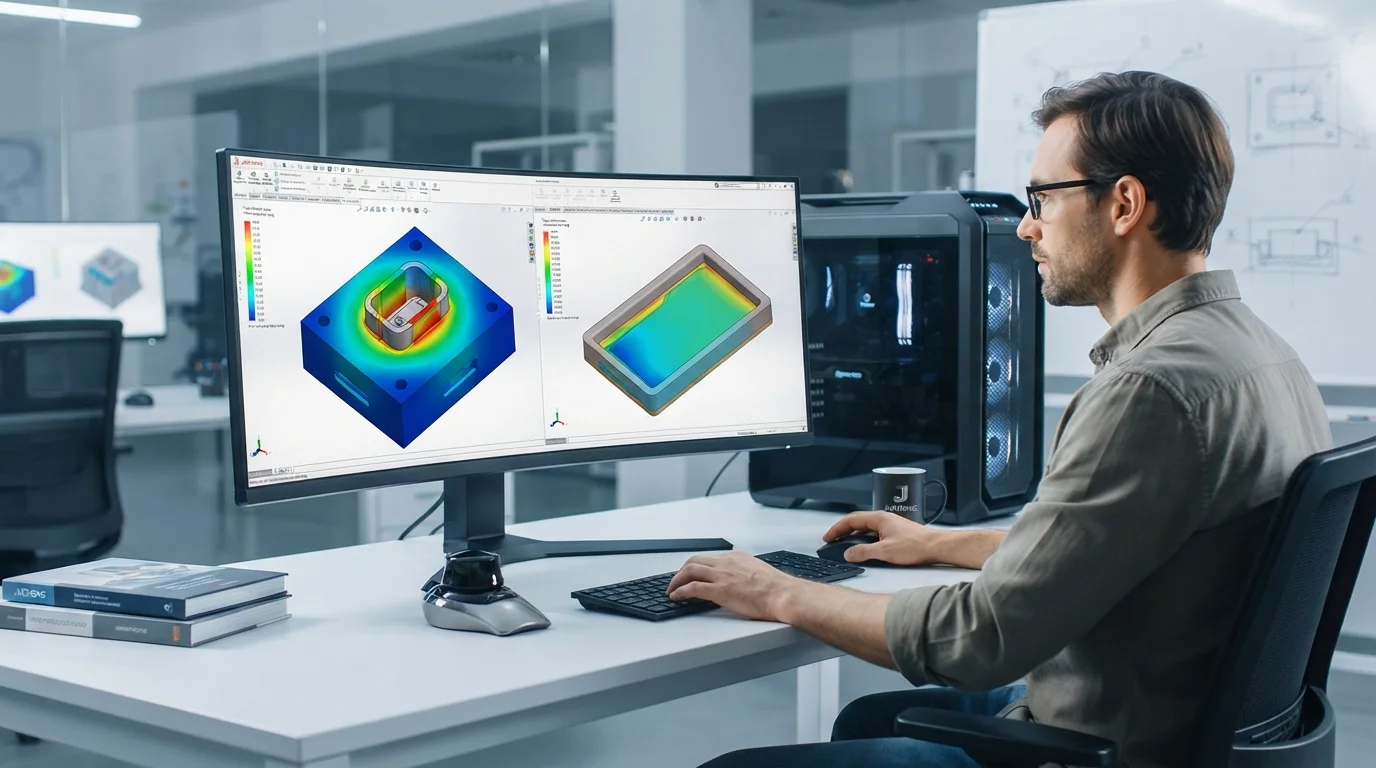
Understanding the fundamental differences between metal-plastic encapsulation and soft-on-hard polymer overmolding prevents tooling redesigns and ensures optimal material bonding. Evaluating substrate compatibility, mold core mechanics, and cycle time trade-offs enables engineers to select the proper manufacturing route. This technical comparison analyzes structural definitions, tooling architectures, and application selection criteria.
目錄
Core Structural Differences: Plastic-on-Metal vs. Soft-on-Hard Resin
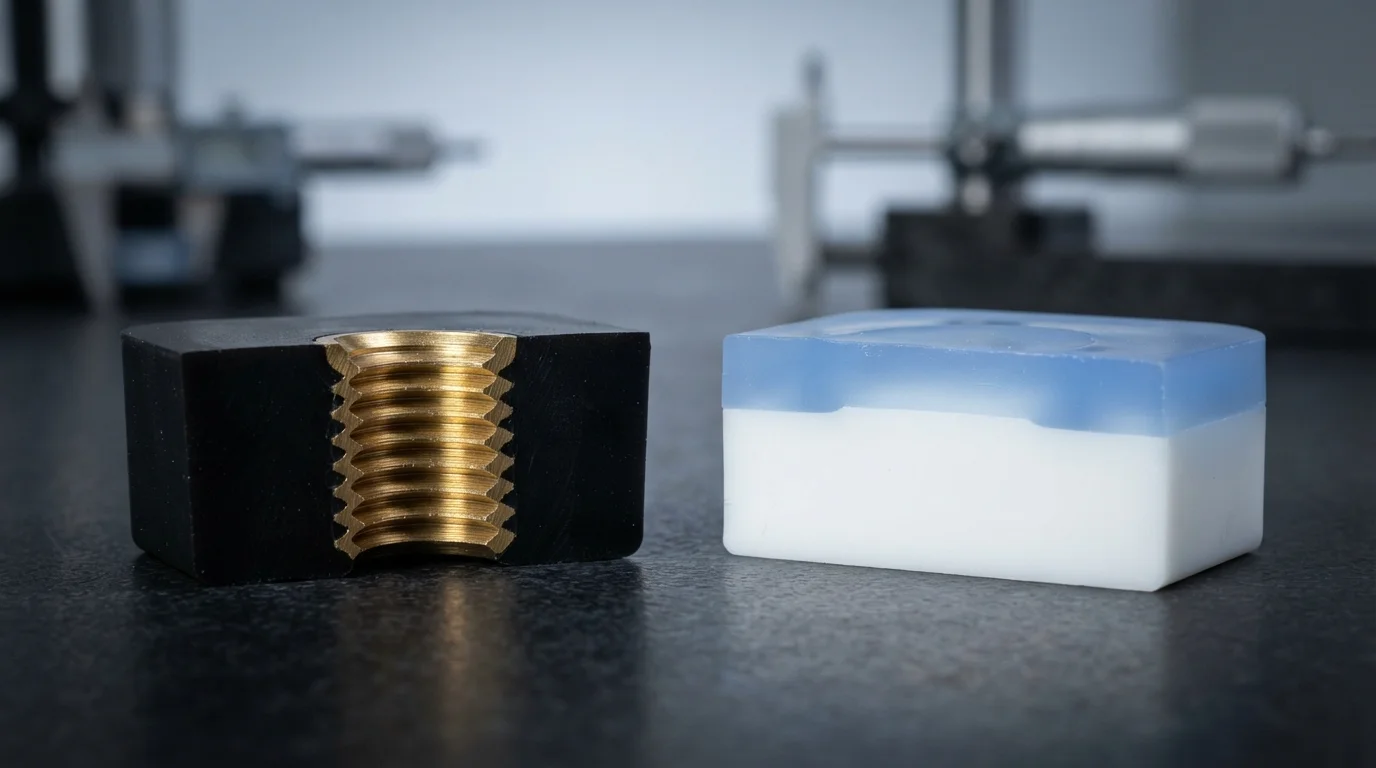
Analyzing overmolding vs insert molding begins with defining the substrate material and primary functional goals. Custom insert molding places pre-formed non-plastic substrates—such as brass threaded studs, copper busbars, or electronic sensors—directly inside the mold cavity prior to polymer injection. Molten plastic encapsulates the metal insert during a single injection shot, creating a permanent mechanical interlock upon cooling.
Conversely, overmolding layers a secondary thermoplastic or elastomeric resin over an existing plastic component. Primary injection molds the rigid plastic chassis from materials like ABS, 聚碳酸酯(PC), or PA66. Secondary injection then molds a flexible polymer like TPE 或 TPU over the rigid frame, producing soft-touch grips, ergonomic handles, or integrated waterproof gaskets.
Tooling Design, Bonding Chemistry, and Cycle Time Comparison
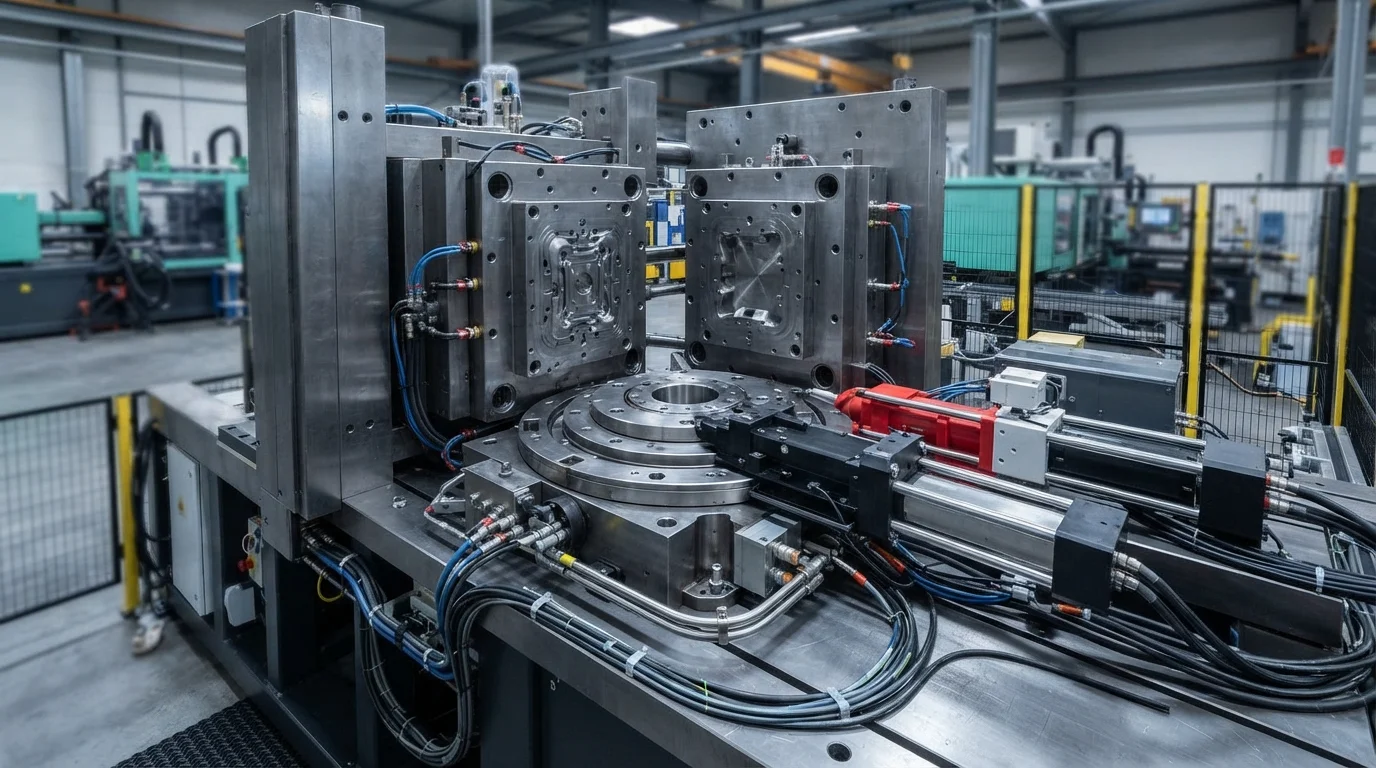
Tooling configurations and bonding mechanisms vary significantly between these two molding methodologies. Insert mold bases feature specialized core locating pins, magnets, or vacuum ports to hold metal inserts firmly against tool steel, preventing displacement under high-velocity melt flow. Overmolding tools utilize specialized shut-off steel boundaries to control soft rubber flow lines, often employing dual-shot rotary platens or 2K transfer molds.
Interfacial adhesion mechanics also differ fundamentally between the two processes. Insert encapsulation relies on mechanical interlocking, where shrinking resin locks firmly into knurled grooves or undercuts machined into the metal insert. Overmolding relies primarily on chemical fusion, where the hot second-shot resin melts the outer skin layer of the rigid plastic substrate to form an entangled molecular boundary.
| Process Metric | Custom Insert Molding | Custom Elastomeric Overmolding | Primary Engineering Recommendation |
|---|---|---|---|
| Substrate Material Type | Pre-formed metals (Brass, Copper, Steel) | Rigid thermoplastics (ABS, PC, PA66) | Select insert molding for high torque/pull-out fasteners |
| Interfacial Adhesion Type | Pure Mechanical Knurled Interlocking | Chemical Molecular Fusion (Interdiffusion) | Select overmolding for IP67 seals & soft-touch grips |
| Tooling Core Complexity | Locating pins & floating shut-off steel | Rotary platens or 2K transfer cavities | Insert molding offers lower initial NRE for low volumes |
Which Process Fits Your 3D Design? Engineering Selection Matrix
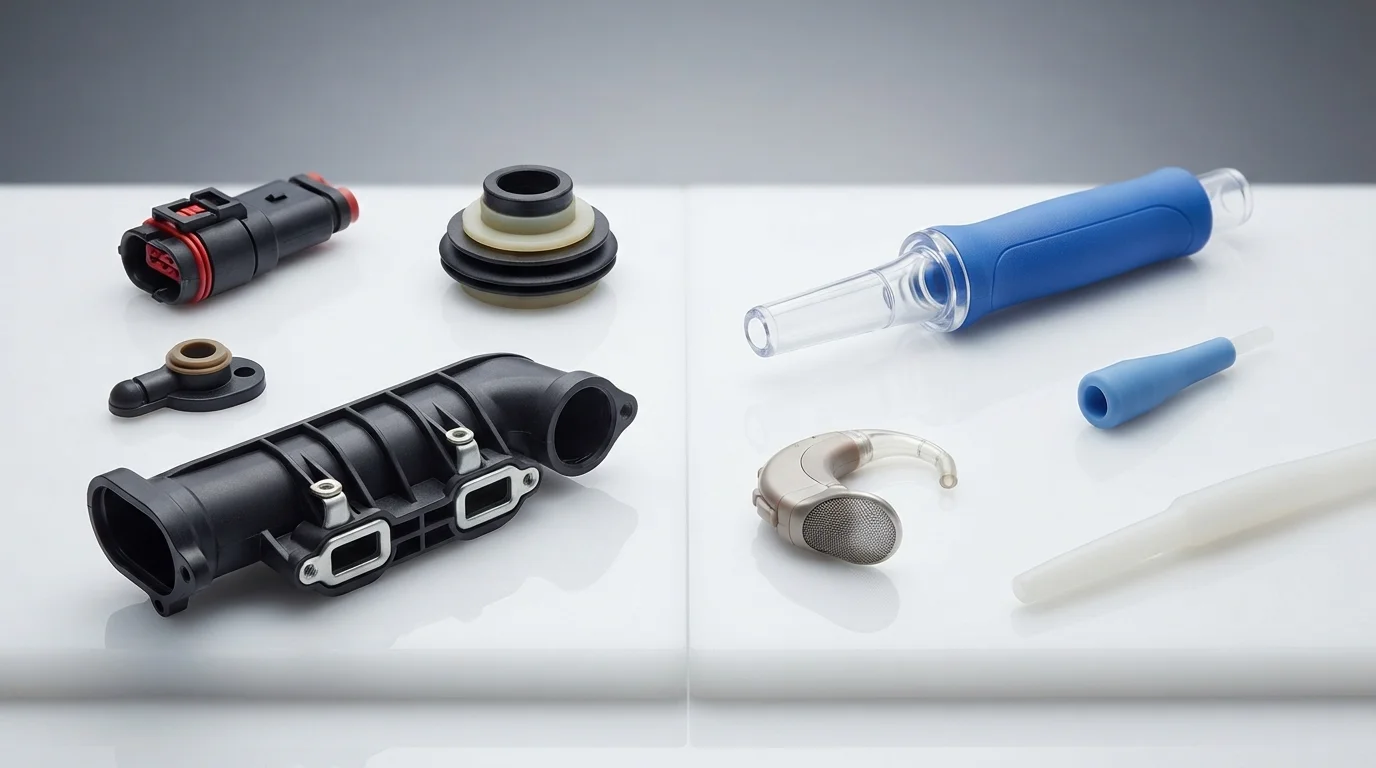
Selecting between the two processes depends on the primary functional requirements of the 3D part geometry. Projects requiring high thread pull-out force, high-voltage electrical isolation, or metallic electrical conduction strictly demand insert encapsulation. Components requiring tactile ergonomics, vibration dampening, IP67 fluid sealing, or multi-color surface cosmetics benefit most from elastomeric overmolding.
Understanding overmolding vs insert molding guides manufacturers in selecting the correct insert molding method for volume production. Conducting an early 24-hour DfM review validates shut-off land geometry, draft angles, and substrate wall thicknesses before cutting tool steel.
Frequently Asked Questions (FAQs)
Can overmolding and insert molding be combined in a single component?
Combining both processes is widely performed in complex electromechanical hardware. A metal brass insert is first overmolded with rigid glass-filled nylon to form the structural body, and a soft TPE elastomer is subsequently overmolded onto the exterior to create an ergonomic grip or waterproof seal.
Which process offers lower upfront tooling costs for low-volume production?
Insert molding generally offers lower initial tooling costs for low-volume runs because it utilizes single-shot mold bases with hand-loaded loose cores. Overmolding often requires two separate mold tools or complex 2K rotary platen tooling, which increases initial non-recurring engineering expenses.
How do chemical bonding requirements differ between overmolding and insert molding?
Insert molding relies entirely on mechanical retention, as molten plastic cannot chemically bond with metal inserts. Overmolding depends on chemical interdiffusion between compatible resin families, requiring substrate preheating and melt temperature matching to prevent edge peeling.