
Integrating pre-formed metal components directly into molded plastic structures provides superior mechanical strength and spatial consolidation. Traditional post-mold installation techniques like heat-staking or ultrasonic insertion often yield inconsistent pull-out resistance and localized stress concentration. Specifying professional insert molding encapsulates metallic contacts, threaded studs, and electronic pins directly during the primary injection cycle. JUCHENG operates automated manufacturing cells, producing high-reliability encapsulated hardware strictly according to customer technical drawings.
目錄
Encapsulating Threaded Brass Inserts, Copper Busbars & Electronic Pins
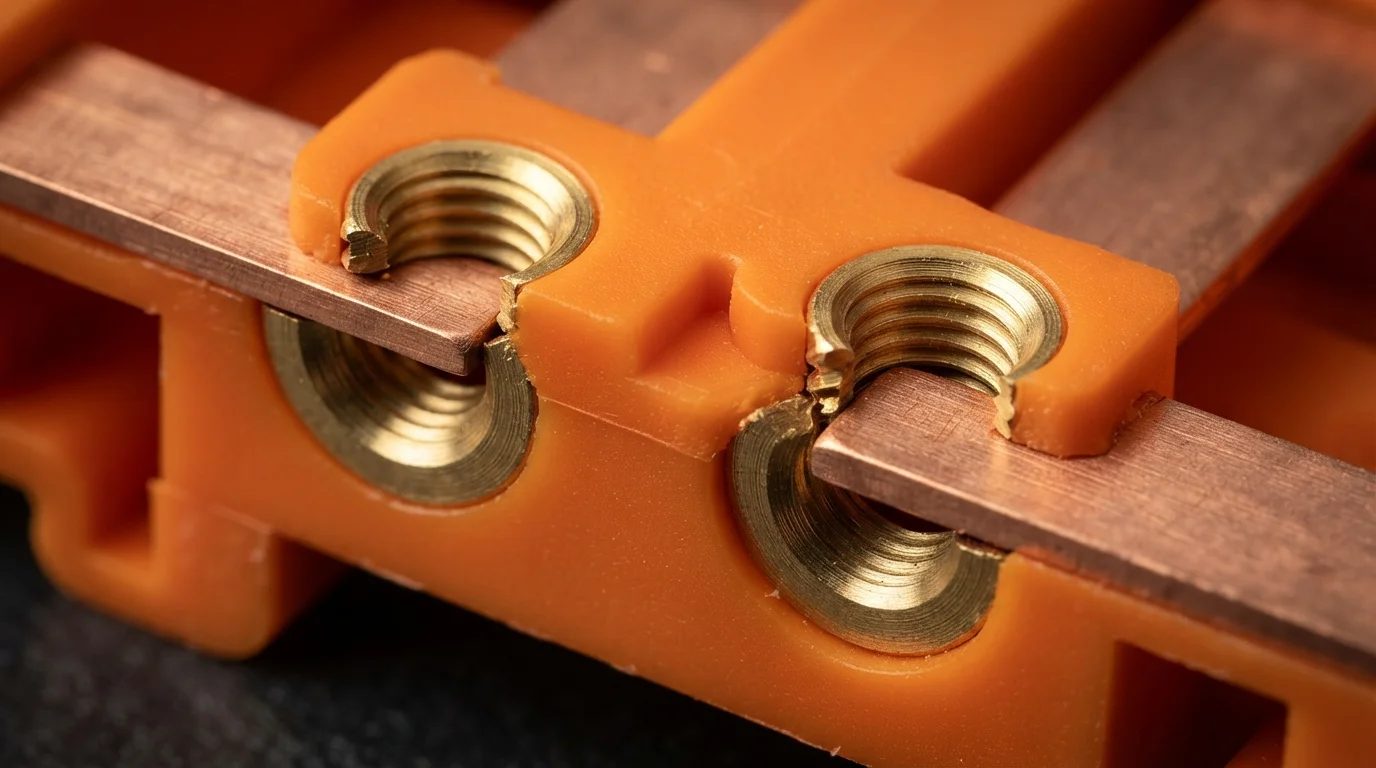
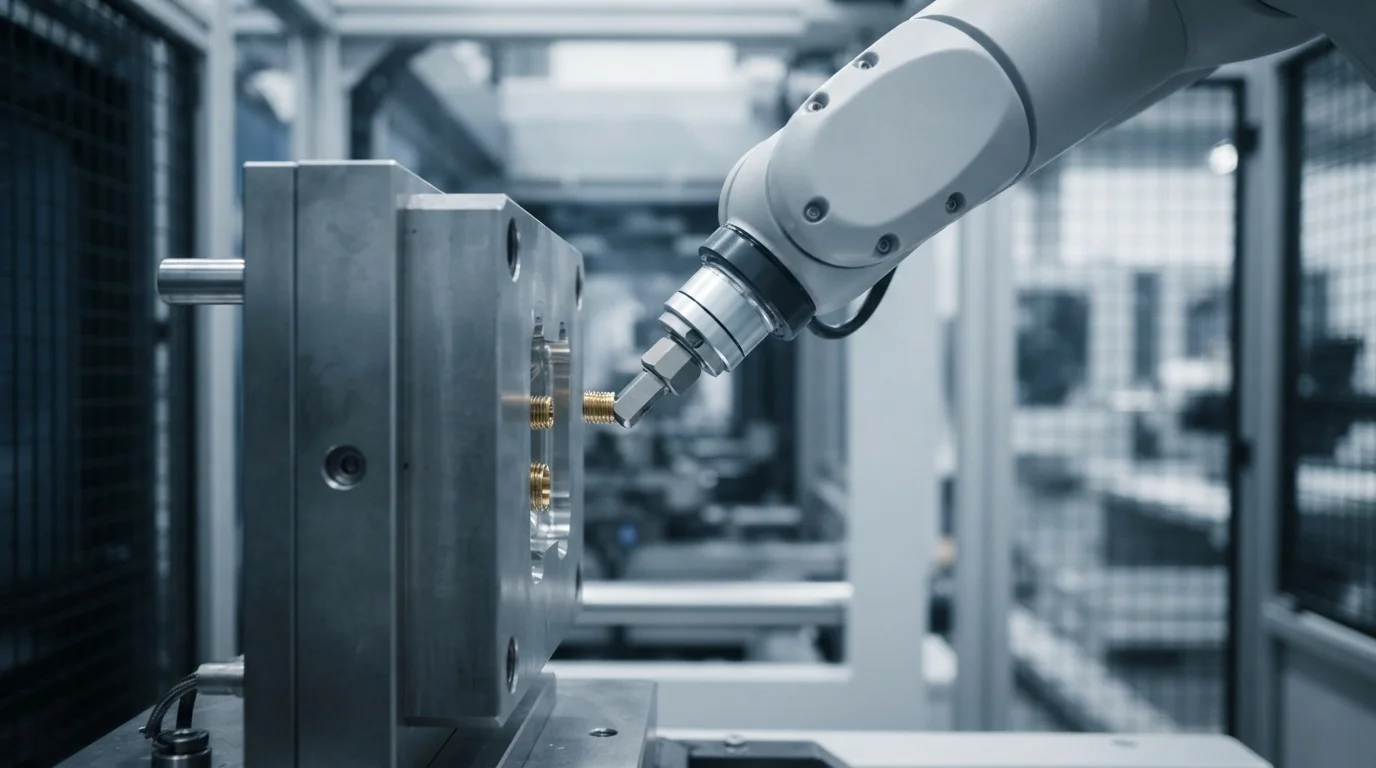
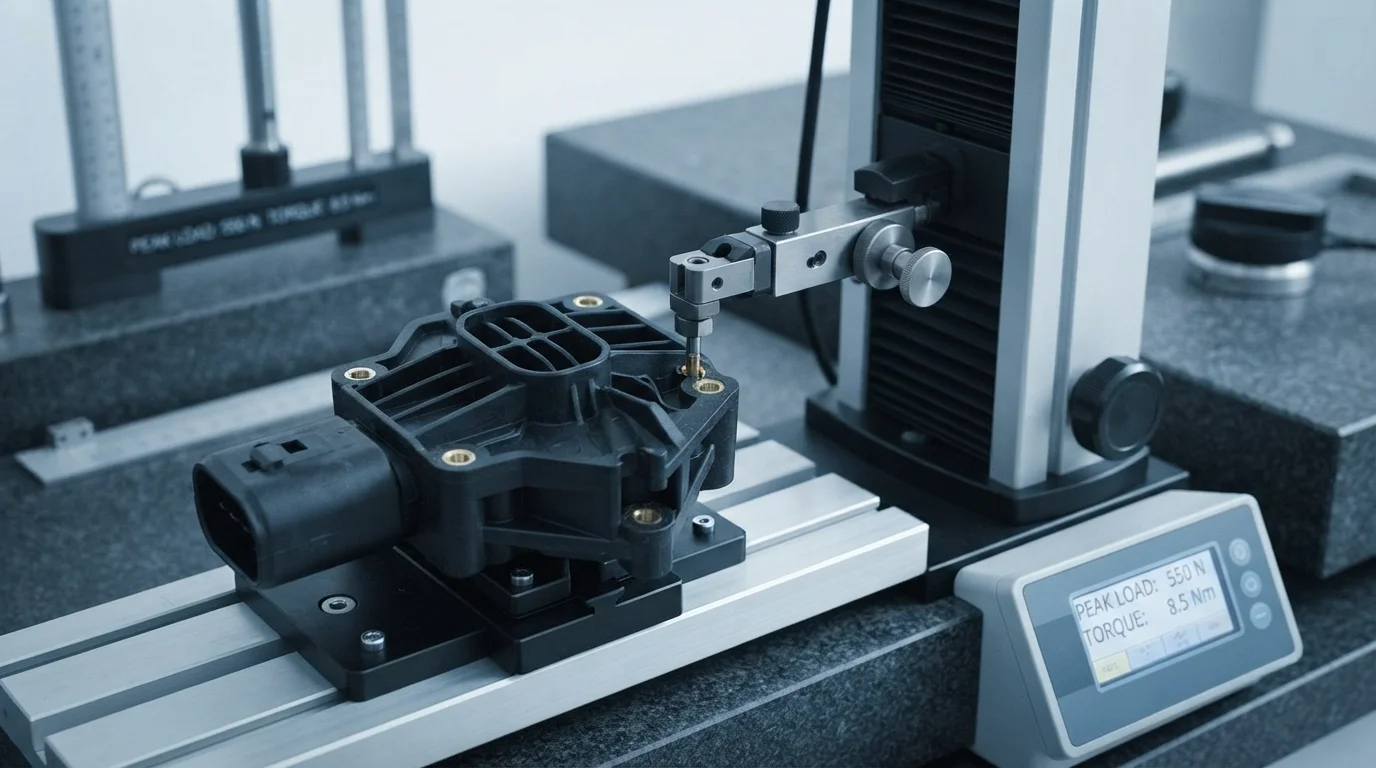
Encapsulating metallic elements like brass thread inserts, copper busbars, and stamped electronic terminals directly inside plastic provides significant performance advantages. Molten resin flows completely around knurled metal profiles, creating a permanent mechanical interlock upon cooling. In-mold encapsulation yields substantially higher pull-out force 和 rotational torque strength compared to secondary heat-staking. Eliminating manual secondary installation steps reduces assembly labor while guaranteeing exact insert positioning. Automated robotic loading arms place metal inserts into core cavities with sub-millimeter precision prior to every injection cycle.
Precision insert encapsulation standards include:
- Automated insert placement—Utilizing robotic end-of-arm tooling ensures precise, repeatable positioning inside the mold core.
- Knurled profile interlocking—Flowing molten resin into aggressive metal knurling maximizes torsional torque resistance.
- Preheating metal inserts—Warming metal contacts to 100°C before molding reduces localized thermal shock during polymer injection.
- Flash-free shut-off sealing—Precision steel shut-off lands clamped under dynamic pressure prevent plastic leakage onto active contact terminals.
CTE Mismatch Control & Preventing Thermal Stress Cracking
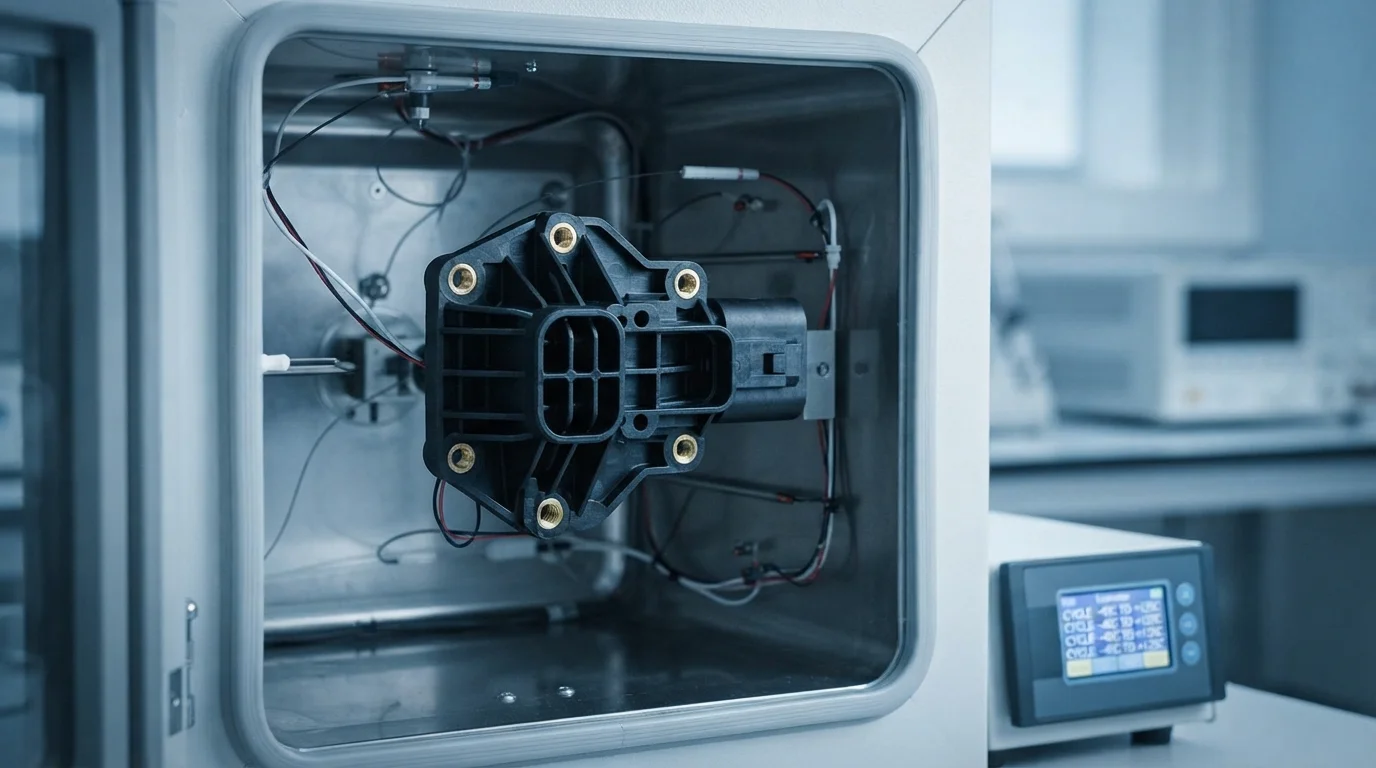
Managing the CTE mismatch between rigid metals and surrounding polymers represents the primary engineering challenge in insert encapsulation. Copper and brass expand at 16.5 to 18.5 ppm/K, whereas engineering plastics experience significantly higher thermal expansion rates. During thermal shock cycling, this expansion differential induces localized tensile stresses inside the polymer wall. Selection of high-elongation resins like PA66, PBT, or PC/ABS prevents micro-crack formation around sharp metal corners. Preheating metal inserts prior to molding reduces initial temperature gradients, promoting stress-free polymer solidification.
| Metal Insert Material | Metal CTE (ppm/K) | Recommended Polymer Resin | Polymer CTE (ppm/K) | Stress Mitigation Strategy |
|---|---|---|---|---|
| Brass (C36000) | 18.5 | PC/ABS Alloy (Bayblend) | 60 – 75 | Preheat brass inserts to 100°C; round sharp edges |
| Copper (C11000) | 16.5 | PA66-GF30 (Zytel) | 25 – 35 | Glass fiber reinforcement aligns polymer CTE with copper |
| Stainless Steel (304) | 17.3 | PBT-GF30 (Valox) | 30 – 40 | Maintain 85°C mold temperature for stress relaxation |
High-Voltage Creepage Isolation for EV & Aerospace Cables
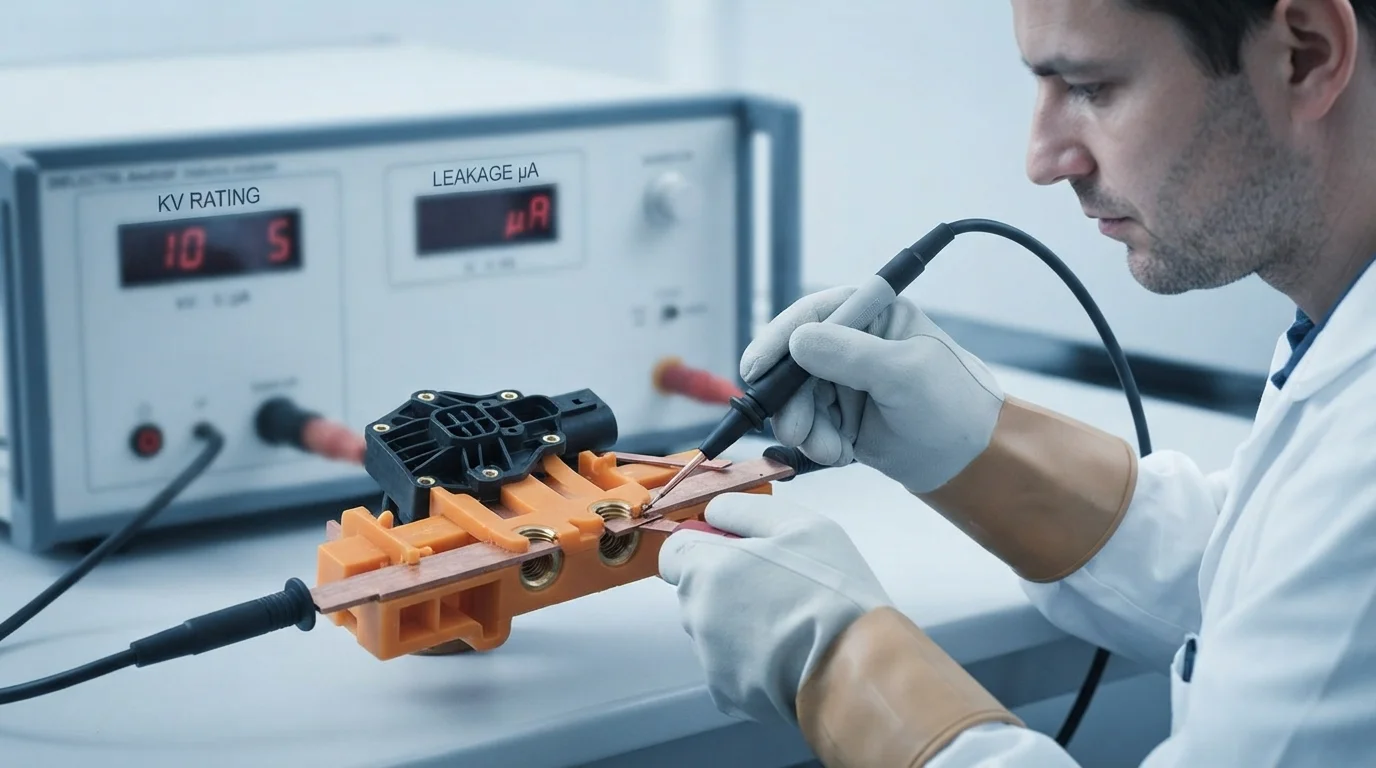
High-voltage electrical platforms in electric vehicles and aircraft demand reliable dielectric encapsulation along metal contacts. Designing insulated busbar connectors requires strict compliance with international isolation standards such as IEC 60664-1. Elevated labyrinth ribs molded directly along the metal-plastic boundary extend physical creepage and clearance distances. Hermetic sealing lands prevent moisture, salt spray, and atmospheric particulate ingress from forming conductive tracking paths. Utilizing high CTI resins ensures that the encapsulated busbars maintain complete electrical isolation under continuous 800V operational loads.
Frequently Asked Questions (FAQs)
Why does insert molding provide higher torque strength than ultrasonic heat-staking?
Insert molding forces molten plastic to flow deeply into knurled grooves and undercuts under high injection pressure. Cooling plastic shrinks directly around the metal geometry, creating a seamless mechanical interlock. Secondary heat-staking merely melts local wall surfaces, leaving internal micro-gaps that lower torque resistance.
How do you prevent micro-cracking around brass inserts during temperature cycling?
Preventing thermal stress cracking requires matching resin elongation properties and preheating metal inserts before injection. Preheating inserts to 100°C lowers the temperature gradient during molding, allowing the resin to cool uniformly around the metal core.
What materials are best for encapsulating high-voltage copper busbars?
Glass-filled Polyamide 66 (PA66-GF30) and Polybutylene Terephthalate (PBT) are preferred for high-voltage busbar encapsulation. These resins combine high mechanical stiffness, excellent heat deflection, and comparative tracking index (CTI) ratings exceeding 600V.