
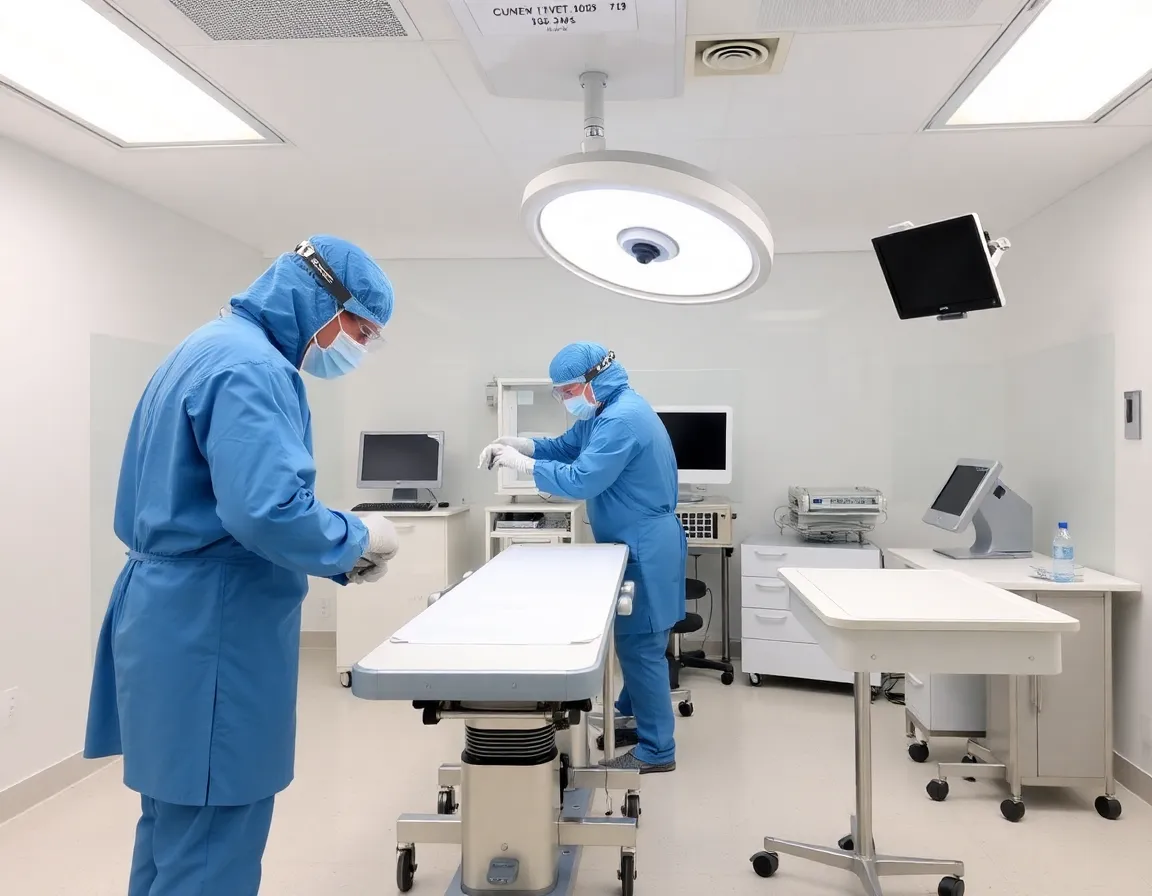
The Rise of China in Cleanroom Plastic Manufacturing
In the intricate world of precision manufacturing, the term "cleanroom" evokes images of sterile environments, filtered air, and meticulous protocols. When combined with plastic fabrication, it represents the pinnacle of contamination control. Over the past two decades, cleanroom plastic manufacturing China has evolved from a low-cost alternative into a global powerhouse, supplying critical components to industries where a single particle of dust can render a product useless. This transformation is not accidental; it is the result of massive infrastructure investment, adoption of international standards, and a deep understanding of polymer science. Today, Chinese manufacturers are not just participants in the global supply chain—they are often the primary architects of the sterile components that keep the world’s most sensitive technologies running.
The term "cleanroom" itself refers to a controlled environment where pollutant concentration is regulated to specific limits. In the context of plastic manufacturing, this means that the entire production process—from resin drying to injection molding and packaging—must occur within a space that filters airborne particulates, controls humidity, and manages static electricity. The shift in China from standard industrial parks to dedicated cleanroom facilities marks a significant maturation of the sector. Companies in regions like Suzhou, Shenzhen, and Dongguan have invested billions in ISO Class 7 and Class 8 cleanrooms, alongside a growing number of ISO Class 5 facilities for the most demanding applications.
Understanding the Cleanroom Plastic Manufacturing Process
To appreciate the value of cleanroom plastic manufacturing China offers, one must understand the technical rigor involved. It is not simply about manufacturing plastic in a clean space; it is about ensuring that the plastic itself does not become a source of contamination. This begins with raw material selection. Manufacturers use virgin, medical-grade resins such as polycarbonate (PC), polypropylene (PP), and liquid silicone rubber (LSR). These materials are selected for their low outgassing properties and resistance to chemical degradation.
Injection Molding in Controlled Environments
The core of the process is cleanroom injection molding. The molding machines themselves are often enclosed in stainless steel housings to prevent rust and particulate shedding. The machinery uses specialized lubricants that are food-grade or medical-grade, ensuring that no volatile organic compounds (VOCs) are released during the high-heat process. Furthermore, the molds are constructed with hardened tool steel and polished to a mirror finish, minimizing the surface area where particles can accumulate. In a typical Chinese cleanroom facility, the molding process is fully automated, with robotic arms removing parts from the molds. This automation is critical, as it eliminates the risk of human-borne contamination during the extraction phase.
Post-Molding and Secondary Operations
After the plastic part is ejected, it is not immediately packaged. In advanced Chinese facilities, parts undergo a series of secondary operations within the same cleanroom envelope. These include deburring, ultrasonic cleaning, và laser marking. Ultrasonic cleaning tanks use deionized water to remove any microscopic flash or residues. The packaging process is equally critical; parts are often double-bagged in anti-static polyethylene films and vacuum-sealed inside the cleanroom. This "in-and-out" workflow ensures that the part never leaves the controlled environment until it is hermetically sealed, preserving its purity for transport to the end-user.
Key Advantages of Sourcing from Chinese Cleanroom Facilities
Why do global medical device companies, semiconductor fabs, and pharmaceutical giants choose to source from China for these high-stakes components? The answer lies in a combination of economic efficiency, technological capability, and logistical agility. The advantages are not merely about lower labor costs; they are about a holistic value proposition that has become increasingly difficult to ignore.
- Cost-Effectiveness at Scale: Chinese manufacturers have perfected the art of high-volume production. The capital expenditure for a cleanroom is enormous, but Chinese factories often operate multiple shifts, spreading the fixed costs over millions of units. This results in a per-unit cost that is often 30-40% lower than equivalent production in Europe or North America.
- Vertical Integration: Many Chinese cleanroom plastic manufacturers control the entire supply chain in-house. They produce their own molds, mix their own colorants, and even extrude their own plastic films for packaging. This vertical integration reduces lead times and allows for rapid iterative design changes.
- Advanced Mold Making: The tooling capability in China is world-class. Multi-cavity molds with hot-runner systems and complex gas-assist features are standard. This allows for the production of intricate geometries that are often required for medical connectors or microfluidic devices.
- Regulatory Compliance: Leading Chinese factories are certified to ISO 13485 (medical devices) and ISO 14644 (cleanroom standards). Many also hold FDA registration and EU CE marks, ensuring that products manufactured in China can be legally sold in the most regulated markets globally.
Material Science Expertise
Beyond the machinery, the expertise in material science is a significant advantage. Chinese cleanroom facilities have invested heavily in R&D for polymer modifications. They can tailor compounds to have specific properties, such as UV resistance, ESD (electrostatic discharge) protection, 或 radiopacity for X-ray visibility in surgical tools. This capability allows engineers to design parts that are lighter, stronger, and more biocompatible than what was previously possible.
Critical Applications and Industry Verticals
The output from cleanroom plastic manufacturing China is ubiquitous, though often invisible to the end consumer. These components are the unsung heroes of modern medicine and technology. The precision and purity achieved in these facilities directly impact patient safety and device reliability.
Medical Devices and Diagnostics
The medical sector is the largest consumer of cleanroom plastics. This includes disposable syringes, IV luer locks, surgical instrument handles, and housing for implantable devices. More complex applications include lab-on-a-chip devices used in diagnostics, where micro-channels must be perfectly formed to allow capillary action. In these products, the purity of the plastic is paramount; any leachable compounds could cause false test results or adverse biological reactions. Chinese manufacturers have become experts in producing these high-precision consumables, often for major Western brands who outsource their production.
Semiconductor and Electronics
The semiconductor industry requires plastics that do not outgas volatile materials that could contaminate silicon wafers. Chinese cleanrooms produce wafer carriers, chip trays, and chemical mechanical planarization (CMP) rings. These parts must be machined or molded to tolerances of a few microns. The use of PEEK (polyether ether ketone) and PTFE (polytetrafluoroethylene) is common, and Chinese facilities have mastered the processing of these high-temperature, high-performance plastics that are notoriously difficult to mold.
Pharmaceutical and Biotechnology
In pharmaceutical production, the risk of cross-contamination is a constant threat. Cleanroom plastic components such as stoppers, gaskets, and aseptic connectors are used to maintain the sterility of drug formulations. Chinese manufacturers provide these components with full traceability and lot-to-lot consistency. They also offer barrier films and bags used in single-use bioprocessing systems, which are essential for producing vaccines and gene therapies.
Best Practices for Engaging with Chinese Cleanroom Manufacturers
While the capabilities are impressive, successful sourcing requires a strategic approach. It is not enough to simply send a drawing and expect perfection. To maximize the benefits of cleanroom plastic manufacturing China offers, companies must adopt best practices in vendor qualification and collaboration.
Audit the Facility, Not Just the Brochure
Do not rely solely on ISO certificates. Conduct a physical audit to observe the air pressure differentials between zones, the gowning protocols for personnel, and the frequency of particle count monitoring. Ask to see the data logs for the past six months. A reputable manufacturer will be transparent about their contamination control metrics. Pay special attention to the airflow patterns—ensure that the molding machines are positioned to minimize cross-contamination between the raw material storage area and the production floor.
Define Specifications with Clarity
Ambiguity is the enemy of cleanroom manufacturing. When you send an RFQ, include detailed specifications for surface finish, biological safety (ISO 10993), and particulate matter limits. Specify the packaging requirements in detail—indicate whether you need Tyvek pouches, double-bagging, or nitrogen purging. The more granular your specification, the better the Chinese factory can replicate your requirements. It is also wise to agree on the testing methods upfront, such as USP Class VI testing or endotoxin level analysis.
Embrace Collaborative Design
The best Chinese cleanroom manufacturers employ skilled process engineers who can offer design for manufacturability (DFM) feedback. They can suggest modifications to the mold design that reduce cycle time or improve part release. By involving them early in the product development phase, you can avoid costly tooling revisions later. Many companies now use a "co-development" model where the Chinese partner contributes to material selection and mold flow analysis, resulting in a superior final product.
The Future of Cleanroom Plastic Manufacturing in China
The trajectory for this industry is decidedly upward. As global demand for personalized medicine, electric vehicles, and advanced electronics grows, so too does the need for specialized plastic components. China is currently investing in "smart cleanrooms" that utilize IoT sensors and AI-driven predictive maintenance to further reduce human intervention. These facilities are moving towards "lights-out" manufacturing, where the cleanroom is dark and fully automated, eliminating the primary source of contamination—people—entirely.
Moreover, there is a growing trend towards sustainability within Chinese cleanrooms. Manufacturers are developing closed-loop recycling systems for plastic scrap generated during production. While the strict purity requirements of medical devices make recycling challenging, advances in sorting and re-compounding technology are making it feasible to reuse "clean" scrap without compromising quality. This focus on green manufacturing will likely become a key differentiator in the coming years, aligning with the sustainability goals of multinational corporations.
In conclusion, cleanroom plastic manufacturing China has become synonymous with reliability, scalability, and technical sophistication. It is a testament to how far the Chinese manufacturing sector has come—from basic assembly to high-tech, contamination-free production. For any company looking to bring a medical device, semiconductor component, or pharmaceutical packaging solution to market, the Chinese cleanroom ecosystem offers an unrivaled combination of precision, purity, and price. The key to unlocking this potential lies in rigorous vetting, clear communication, and a willingness to treat the manufacturer as a true engineering partner. Those who do will find that the phrase "Made in China" now carries a new meaning: precision perfected under the most sterile conditions on earth.