
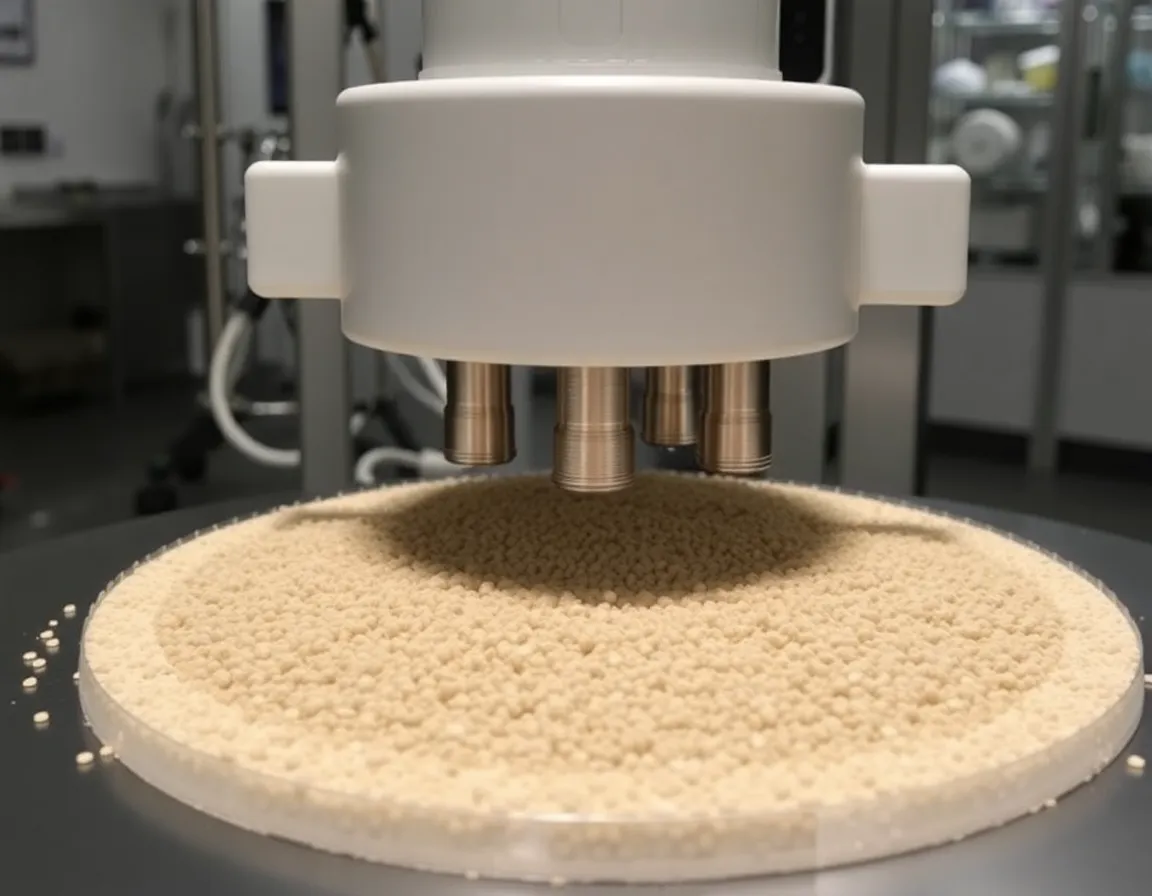
The Imperative of Purity in Precision Manufacturing
In the relentless pursuit of miniaturization, biocompatibility, and zero-defect production, the manufacturing landscape has undergone a seismic shift. Industries ranging from medical devices to advanced optics and aerospace no longer merely desire precision; they demand an environment where contamination is an afterthought, not a variable. This is where cleanroom molding transcends conventional injection molding. It is not simply a process performed in a controlled space; it is a holistic, validated system engineered to produce components with geometries measured in microns and surface integrity at the molecular level. A validated cleanroom molding process is the definitive answer to the question of how to achieve flawless precision parts when the cost of a single particle of dust can mean the difference between a life-saving implant and a catastrophic failure.
The core distinction lies in the word validated. While a standard cleanroom offers a filtered environment, a validated process proves—through documented, repeatable evidence—that every step, from raw material handling to final packaging, consistently yields parts within specification. This article delves into the architecture of this process, its operational mechanics, the tangible benefits it delivers, and the rigorous protocols that define best practice. For engineers and manufacturers, understanding this is not optional; it is the cornerstone of modern high-stakes production.
Deconstructing the Validated Cleanroom Molding Process
To appreciate the complexity of cleanroom molding, one must first abandon the notion that it is merely "molding inside a tent." It is a symbiotic integration of three distinct pillars: environmental control, xác nhận quy trình, và material science. Each pillar is interlocked; a failure in one compromises the integrity of the entire output.
Environmental Control: The ISO Class Hierarchy
The foundation is the controlled environment, defined by ISO 14644-1 standards. These classifications dictate the maximum allowable concentration of airborne particles per cubic meter. For precision medical components, ISO Class 7 or Class 8 (equivalent to Fed-Std-209E Class 10,000 or 100,000) is common, but for implantable devices or sensitive optical components, ISO Class 5 (Class 100) is the benchmark.
- HEPA/ULPA Filtration: High-Efficiency Particulate Air (HEPA) filters remove 99.97% of particles at 0.3 microns, while Ultra-Low Penetration Air (ULPA) filters achieve 99.999% efficiency at 0.12 microns. These are the first line of defense against airborne contamination.
- Positive Air Pressure: The cleanroom is maintained at a higher atmospheric pressure than adjacent areas. This ensures that when doors open, the airflow direction is outward, preventing unfiltered air from rushing in.
- Temperature & Humidity Stability: Precision molding is thermally sensitive. Fluctuations in temperature alter polymer viscosity and shrinkage rates. Validation locks these parameters to a tight tolerance (e.g., ±1°C and ±5% RH) to ensure dimensional repeatability.
The Validation Trinity: IQ, OQ, and PQ
A validated process is not assumed; it is proven. This proof is documented through a three-stage protocol that is the industry gold standard:
- Xác nhận lắp đặt (IQ): This verifies that the molding machine, auxiliary equipment (dryers, robots), and cleanroom infrastructure are installed correctly and meet manufacturer specifications. It checks utility connections, calibration certificates, and filter integrity.
- Xác nhận vận hành (OQ): This tests the process parameters under defined conditions. Engineers run the machine across the intended operating range (e.g., melt temperature, injection pressure, cycle time) to identify the boundaries where parts remain within tolerance. It proves the machine operates as intended in the cleanroom.
- Xác nhận hiệu suất (PQ): This is the final, most rigorous test. It involves running the process at the specific, locked parameters for a sustained period (often 24-72 hours) using production materials. The output parts are statistically analyzed (CpK, Cp) to prove that the process is stable and capable of producing 99.99% conforming parts over time. This is the "golden batch" that future production is measured against.
Material Handling and Drying
Most engineering resins used in precision parts—such as PEEK, LCP, and polycarbonate—are hygroscopic. They absorb moisture from the air, which, when subjected to high melt temperatures, causes hydrolysis. This degrades the polymer chain, resulting in brittle parts, surface splay, and internal voids. In a validated cleanroom process, material handling is automated and sealed. Desiccant dryers are used to reduce moisture content to below 0.02%, and the dried resin is conveyed directly to the molding machine via sealed, closed-loop systems, eliminating any chance of re-contamination.
Operational Mechanics: How the Process Achieves Flawlessness
Beyond the environmental shell, the molding process itself is optimized for precision. It is not enough to simply place a standard machine inside a cleanroom; the machine must be designed for minimal particulate generation and maximal control.
Servo-Electric vs. Hydraulic Presses
The choice of press is critical. Servo-electric molding machines are the preferred choice for cleanroom validation. Unlike hydraulic machines, which use oil and can leak or generate hydraulic vapor, servo-electric machines use electric motors. This offers three distinct advantages:
- Zero Hydraulic Contamination: No oil, no seals, no risk of lubricant aerosolizing into the cleanroom environment.
- Superior Repeatability: Servo motors provide precise, programmable screw position and injection speed, with repeatability within ±0.01mm. This is essential for maintaining consistent cavity pressure and part density.
- Energy Efficiency and Cleanliness: They generate less heat and require no cooling water for hydraulics, reducing the risk of condensation and microbial growth.
Automation and In-Situ Inspection
Human operators are the single largest source of contamination in a cleanroom. A validated process minimizes human intervention through robotic part removal 和 automated vision inspection. Robots with cleanroom-compatible (ISO Class 5) ratings remove parts from the mold and place them directly onto conveyor systems or into sealed trays. In-line inspection systems use high-resolution cameras and laser sensors to measure critical dimensions in real-time. If a part falls outside the tolerance band, the system automatically rejects it and signals the press to adjust parameters, preventing a run of defective parts. This closed-loop feedback is the essence of "flawless" production—it is not about finding defects later; it is about preventing them from ever occurring.
Mold Design for Cleanroom Compatibility
The mold itself must be engineered for the process. This includes using corrosion-resistant steels (like stainless 420 or H13 with PVD coating) to prevent rust and flaking. The mold must also be designed with adequate venting to allow trapped air to escape without creating flash. In a cleanroom, you cannot use standard mold releases or external lubricants, as these are volatile organic compounds (VOCs) that contaminate the environment. Therefore, the mold surface finish must be highly polished (SPI A-1 or A-2) to allow for clean ejection. Some advanced processes use vacuum venting systems to draw out air before injection, eliminating the need for chemical release agents entirely.
Strategic Benefits and High-Stakes Applications
The investment in a validated cleanroom molding process is substantial, but the return on investment is measured not just in financial terms, but in regulatory compliance, brand reputation, and patient safety.
Tangible Benefits: Beyond the Obvious
- Zero-Defect Yield: The primary benefit is a drastic reduction in scrap rates. Instead of a typical 2-5% rejection rate, validated processes achieve yields of 99.5% or higher, even for complex micro-molded parts.
- Regulatory Compliance: For medical devices (under FDA 21 CFR Part 820) and ISO 13485, validation is mandatory. A validated process provides the audit trail required to prove due diligence and product safety to regulatory bodies.
- Enhanced Material Properties: By preventing moisture absorption and thermal degradation, the process preserves the intrinsic mechanical strength, chemical resistance, and dielectric properties of the polymer. This results in parts that perform exactly as the material data sheet promises.
- Reduced Post-Processing: Because parts are molded cleanly without flash or contamination, secondary operations like deflashing, washing, or ultrasonic cleaning are often eliminated. This shortens the overall production lead time.
Where Flawlessness is Non-Negotiable
The applications for this technology are found where failure is not an option.
- Implantable Medical Devices: Components for pacemakers, neurostimulators, and drug-eluting stents require ISO Class 5 environments. Any biological or particulate contamination can cause inflammation, rejection, or embolisms. The validated process ensures the device remains sterile and inert.
- Diagnostic Microfluidics: Lab-on-a-chip devices rely on micro-channels that are fractions of a millimeter wide. A single dust particle can block the channel, rendering the diagnostic test invalid. Cleanroom molding ensures the optical clarity and dimensional fidelity of these polymer chips.
- Aerospace & Defense Optics: Lenses and housings for targeting systems and satellite communications require zero birefringence and surface roughness below 1nm. The controlled cooling and molding environment prevent internal stress and warpage.
- Pharmaceutical Delivery Systems: Pre-filled syringes, auto-injectors, and inhalers require precise tolerances to ensure correct dosing and airtight sealing. The cleanroom process prevents particulate contamination that could compromise the drug formulation.
Best Practices for Maintaining Validation Integrity
Validation is not a one-time event; it is a living system that requires constant vigilance. The following best practices are essential for maintaining the integrity of the process over the long term.
Routine Monitoring and Re-Validation
Environmental monitoring must be continuous. This includes using particle counters to sample the air on a scheduled basis, and settling plates to culture viable organisms. The molding machine's critical parameters—such as barrel temperature and injection pressure—should be monitored by the machine's control system and logged against the OQ/PQ limits. Most regulatory frameworks require re-validation at least annually or whenever a significant change is made to the tooling, material, or process. This is not a bureaucratic hurdle but a safety net.
Preventive Maintenance and Gowning Protocols
Cleanroom molding machines require specialized maintenance. When the tool is opened for maintenance, it must be done in a controlled manner to avoid contamination. All maintenance personnel must adhere to strict gowning protocols—wearing cleanroom suits, gloves, and face masks. Maintenance logs must document what was done, when, and by whom. Furthermore, the use of cleanroom-grade lubricants (e.g., perfluorinated greases) is mandatory for any moving part inside the controlled zone. These greases do not outgas and are resistant to high temperatures.
Kiểm soát Quá trình Thống kê (SPC)
The most advanced cleanroom molding facilities employ real-time SPC. This involves using control charts (X-bar and R charts) to track critical-to-quality (CTQ) characteristics. If a trend is detected—for example, a gradual drift in part weight—the system alerts engineers to make a minor adjustment before the part falls out of specification. This proactive approach is the hallmark of a mature, validated process. It transforms molding from a reactive "make and inspect" operation into a proactive "predict and prevent" science.
Conclusion: The Gold Standard for Tomorrow's Components
Cleanroom molding, when properly validated, is more than a manufacturing technique; it is a philosophy of quality. It acknowledges that in the world of micron-level tolerances, the invisible is more dangerous than the visible. By integrating advanced environmental controls, rigorous IQ/OQ/PQ validation, and automated precision machinery, manufacturers can achieve a level of consistency that is unattainable through conventional methods. The process eliminates the guesswork, replaces inspection with prevention, and provides the documented confidence required for the most demanding applications.
As technologies like 5G, autonomous vehicles, and personalized medicine evolve, the demand for flawless precision parts will only intensify. The companies that invest in and master the validated cleanroom molding process will not just meet these demands—they will define the standard for reliability and safety in the next generation of engineered products. It is not the easiest path to production, but it is unequivocally the most secure.