
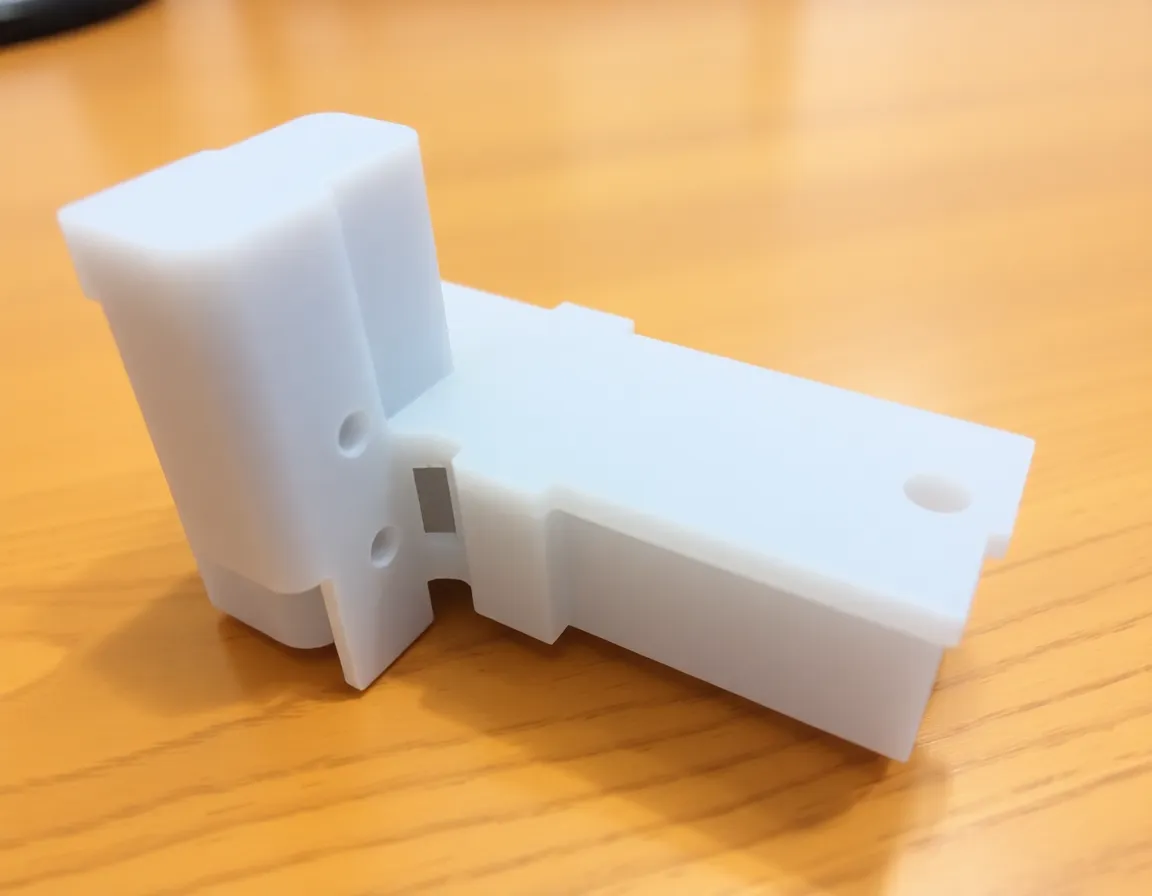
Understanding Smart Home Device Contract Molding
In the rapidly evolving landscape of consumer electronics, the smart home sector has emerged as a dominant force, with devices ranging from intelligent thermostats and security cameras to voice-activated assistants and automated lighting systems. For original equipment manufacturers (OEMs) and startups alike, the journey from a brilliant concept to a shelf-ready product is fraught with challenges, the most significant of which is manufacturing. This is where smart home device contract molding becomes a strategic game-changer. Contract molding is a business model where a specialized third-party manufacturer handles the entire plastic injection molding process—and often more—on behalf of the brand owner. This approach allows companies to bypass the massive capital expenditure of building their own factories, instead leveraging the expertise, machinery, and labor force of an established partner to produce high-quality components at scale.
The smart home industry is uniquely suited to this model due to its reliance on complex geometries, tight tolerances, and high-volume production runs. Unlike simple toys or basic containers, smart home devices often require multi-material molding, over-molding for soft-touch grips, and precise insert molding for electronic connectors. Contract molders specializing in this niche bring a wealth of engineering knowledge, ensuring that the plastic housings, buttons, and internal frames not only look premium but also protect sensitive electronics from heat, impact, and electromagnetic interference. By engaging a contract molder early in the design phase, brands can optimize their designs for manufacturability (DFM), reducing material waste and cycle times before a single production mold is even cut.
The financial logic is undeniable. Building a state-of-the-art injection molding facility requires millions of dollars in machinery, cleanroom environments, and skilled technicians. For a company focused on software, UI/UX, and ecosystem integration, tying up capital in physical manufacturing is a poor allocation of resources. Contract molding converts fixed costs into variable costs. You pay for what you produce, scaling up during peak demand (like the holiday season) and scaling down during quieter months without the burden of idle machinery. This flexibility is critical for smart home brands that must navigate unpredictable supply chain dynamics and rapid technology refreshes.
The Strategic Advantages of Outsourcing to a Contract Molder
Choosing to partner with a contract molder for your smart home devices is not merely a cost-cutting exercise; it is a strategic move to accelerate time-to-market and enhance product quality. The benefits extend far beyond simply "cheaper parts." Let’s dissect the core advantages that make this model indispensable for modern hardware companies.
Unlocking Economies of Scale and Supply Chain Efficiency
Contract molders operate on razor-thin margins by maximizing machine utilization across multiple clients. This means they purchase raw materials—such as ABS, polycarbonate, and flame-retardant plastics—in bulk quantities that a small brand could never match. These volume discounts are passed down, directly reducing your per-unit cost. Furthermore, established molders have deep relationships with tooling shops, often producing molds in-house or through trusted partners in low-cost regions. This vertical integration shortens lead times for mold fabrication from months to weeks. Additionally, many contract molders offer value-added services such as pad printing, laser etching, ultrasonic welding, and even full device assembly. By consolidating these steps under one roof, you eliminate the logistical nightmare of shipping parts between multiple vendors, reducing both freight costs and the risk of damage or loss.
Access to Advanced Technology and Material Science
The smart home sector demands cutting-edge materials. For example, a smart speaker requires a grille that allows sound to pass while blocking dust, and a security camera housing needs to withstand UV rays and extreme temperatures for outdoor use. Top-tier contract molders invest heavily in advanced injection molding machines with electric servo drives, which offer superior precision and energy efficiency compared to hydraulic machines. They also have expertise in specialized processes like gas-assisted injection molding for hollow, lightweight structures and in-mold electronics (IME) which integrates circuits directly into the plastic surface. This technological access is often impossible for a startup to acquire independently. By leveraging the molder’s R&D capabilities, you can experiment with bio-based plastics or antimicrobial additives without committing to massive inventory purchases, ensuring your product stays ahead of regulatory and consumer trends.
Risk Mitigation and Quality Assurance
Production defects are the silent killers of smart home launches. A single batch of warped housings can delay a launch by months and tarnish a brand’s reputation. Professional contract molders operate under strict quality management systems, often certified to ISO 9001 and IATF 16949 standards. They employ in-line automated vision inspection systems to detect cosmetic flaws, dimensional drift, and flash in real-time. This level of statistical process control (SPC) ensures that every part off the press meets the exact CAD specifications. Moreover, contract molders carry liability insurance and are responsible for their own machinery and labor. If a mold breaks or a machine malfunctions, they bear the cost of repair, not you. This risk transfer is a subtle yet powerful financial shield, protecting your company from catastrophic, unplanned capital outlays.
How the Contract Molding Process Works for Smart Devices
Understanding the workflow of contract molding helps you manage expectations and collaborate effectively. It is not a simple "send a file, get parts" transaction. The process is a rigorous, iterative collaboration that requires clear communication and technical diligence. Below is a breakdown of the typical lifecycle, from concept to mass production.
Design for Manufacturability (DFM) and Prototyping
The journey begins with a DFM review. The contract molder’s engineers will analyze your 3D model, looking for potential issues such as undercuts that require complex side-actions, wall thickness variations that cause sink marks, and sharp corners that create stress fractures. They will suggest modifications to reduce cycle time and improve structural integrity. Once the design is finalized, the molder creates a rapid prototype using 3D printing or a soft tool (aluminum mold) to produce a limited run of functional parts. This stage is crucial for testing the fit of PCBs (printed circuit boards), the tactile feel of buttons, and the acoustic performance of enclosures. It is far cheaper to fix a design flaw at this stage than to modify a hardened steel mold later.
Tooling, Validation, and Pilot Production
After prototype approval, the molder cuts the production tool—a hardened steel mold designed to withstand hundreds of thousands of cycles. This is the most expensive and time-consuming part of the project. Simultaneously, the molder procures the approved resins and begins machine setup. The next phase is EVT (Engineering Validation Test) and DVT (Design Validation Test). During these runs, the molder produces a small batch of parts (50-200 units) under production conditions. These parts are measured using coordinate measuring machines (CMM) to verify tolerances. The brand then assembles these into fully functional devices to test drop performance, thermal dissipation, and Wi-Fi signal penetration through the plastic. Only after these tests pass does the molder move to PVT (Production Validation Test), a larger run that simulates full-scale manufacturing, allowing for the fine-tuning of cycle times and automation parameters.
Mass Production and Supply Chain Logistics
Once PVT is successful, the molder enters full-rate production. Modern facilities use MES (Manufacturing Execution Systems) to track every part, from the raw material lot to the final packaged unit. This traceability is vital for warranty claims and recalls. The molder manages the inventory of raw materials, ensuring a consistent supply of color masterbatches and additives. Many contract molders also handle drop-shipping directly to your distribution centers or even to retail partners. This end-to-end service means you can operate a global hardware business from a small office, relying on the molder’s logistics network for warehousing and fulfillment. This seamless integration allows you to focus on firmware updates, marketing, and customer support, while the physical product flows effortlessly to the market.
Best Practices for Selecting and Working with a Contract Molder
Not all contract molders are created equal. Choosing the wrong partner can lead to quality issues, missed deadlines, and intellectual property theft. To maximize the benefits of contract molding, you must adopt a rigorous vetting process and cultivate a partnership based on transparency and mutual growth. Here are the critical best practices to follow.
Evaluating Technical Capability and Industry Experience
Look for a molder that has a proven track record in the consumer electronics or smart home sector. Ask for case studies involving similar devices—do they have experience with thin-wall molding for sleek wearables, or large-format molding for smart displays? Evaluate their cleanroom capabilities if you have medical-grade or high-optical-clarity components. Inquire about their automation levels. A molder that uses robotic arms for part removal and in-mold labeling is significantly more efficient than one relying on manual labor. Furthermore, check their geographic location. A molder in Mexico or Eastern Europe may offer shorter shipping times to North American or EU markets, respectively, compared to a traditional Asian supplier, though possibly at a higher unit cost. Balance cost against logistics and tariffs.
Protecting Your Intellectual Property (IP)
Your product design is your lifeblood. Before sharing your CAD files, ensure the molder signs a comprehensive NDA (Non-Disclosure Agreement). Inquire about their internal security protocols. Do they restrict access to tooling areas? Do they have secure servers for digital data? Reputable molders will segregate their client projects to prevent cross-contamination of ideas. Additionally, clarify mold ownership upfront. In most contracts, you pay for the mold, so you should own the physical tool. This allows you to move the mold to a different molder if your current partner’s performance declines. Ensure this is explicitly stated in the contract to avoid hostage situations where you cannot leave without abandoning your tooling investment.
Establishing Clear Communication and KPIs
Successful contract molding requires treating the molder as an extension of your own engineering team. Establish weekly calls, share upcoming demand forecasts, and be transparent about your cost targets. Define clear Key Performance Indicators (KPIs) beyond just price. These should include On-Time Delivery (OTD) rate, parts per million (PPM) defect rates, and response time to engineering change requests. Insist on a robust Quality Agreement that outlines who is responsible for what in the event of a field failure. Finally, negotiate payment terms that align with milestones—e.g., 30% upfront for tooling, 40% at tool approval, and 30% at PPAP (Production Part Approval Process) sign-off. This protects your cash flow and incentivizes the molder to hit critical deadlines.
Future Trends in Smart Home Contract Molding
The contract molding industry is not static; it is evolving to meet the demands of the next generation of smart home devices. Sustainability is a massive driver. Consumers are increasingly demanding eco-friendly products, and savvy molders are investing in recycled resins and biodegradable polymers. Look for partners who can process post-consumer recycled (PCR) plastics without compromising structural integrity. Another trend is the integration of Industry 4.0 technologies. Smart factories use IoT sensors on molding machines to predict maintenance needs, reducing unplanned downtime. This data-driven approach also enables "lot size one" manufacturing, where a single mold can produce customized variations without changing tooling, allowing for regional product variations (e.g., different plug configurations or colorways) at no extra cost.
Furthermore, the rise of AI-driven mold design is shortening development cycles. Simulation software can now predict plastic flow, cooling, and warpage with incredible accuracy, reducing the number of physical trial-and-error iterations. This means your time-to-market can shrink by 20-30% compared to traditional methods. As smart home devices become more integrated with AI and edge computing, the physical housings will need to accommodate more sensors and heat-generating processors. Contract molders are responding by developing advanced thermal management solutions, such as over-molding with thermally conductive plastics that draw heat away from chips without needing metal heat sinks. By partnering with a forward-thinking molder, you position your brand at the forefront of these innovations, ensuring your products are not only cheaper to build but also more advanced than the competition.
In conclusion, smart home device contract molding is the undisputed engine for scaling hardware businesses efficiently. It offers a pathway to professional-grade quality, rapid scalability, and significant cost reduction, all while allowing you to retain your focus on innovation and user experience. By understanding the process, vetting partners meticulously, and embracing emerging trends, you can transform your manufacturing from a bottleneck into a competitive advantage. In a market where speed and agility are paramount, the right contract molding partnership is not just a vendor relationship—it is the foundation of your growth strategy.