
Aluminum Injection Mold / Aluminum Tooling
Accelerating time-to-market and drastically reducing initial tooling costs without sacrificing production-grade part quality requires high-performance aluminum tooling. Aluminum injection mold manufacturing utilizes aircraft-grade 7075-T6 or QC-10 aluminum alloys to produce functional prototypes and low-volume production parts in as fast as 10 business days. Aluminum offers four times the thermal conductivity of steel, enabling faster heat extraction and reducing injection cycle times by up to 30%. At Jucheng Precision, our experienced engineering team specializes in 5-axis CNC-milled aluminum molds, delivering tight-tolerance prototype parts verified by Zeiss CMM inspection.
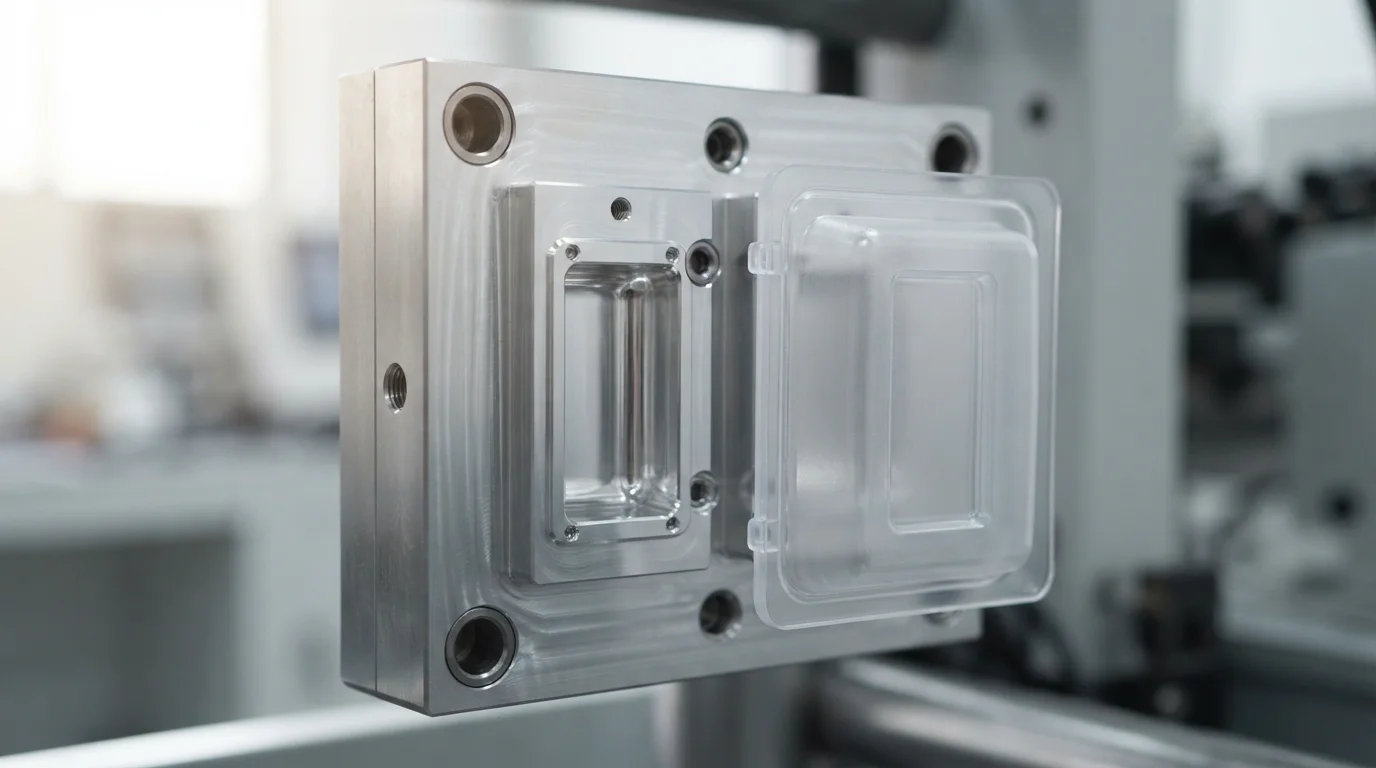
High-speed Aluminum Injection Mold / Aluminum Tooling solutions designed for rapid product validation and low-volume bridge production. Utilizing aircraft-grade 7075-T6 or QC-10 aluminum alloys, our aluminum molds deliver production-grade plastic parts in as fast as 10 business days while cutting upfront tooling costs by up to 50%.
Aluminum Alloy Grades & Tooling Performance Matrix
We machine high-strength aluminum alloys to balance rapid CNC milling speeds against tool shot life and thermal cooling efficiency:
| Aluminum Tool Alloy | Brinell Hardness (HB) | Thermal Conductivity | Guaranteed Shot Life |
|---|---|---|---|
| QC-10 / 7075-T6 Aluminum | 150 – 160 HB | 130 – 160 W/(m·K) (4x faster cooling than steel) | 10,000 to 100,000+ Shots |
| 6061-T6 Aluminum | 95 – 105 HB | 160 – 170 W/(m·K) | 1,000 to 10,000 Shots (Prototype) |
| P20 Steel Comparison | 300 HB (30 HRC) | 29 – 34 W/(m·K) | 250,000+ Shots |
Aluminum Tooling Process & Resin Compatibility
Aluminum molds process a wide range of production-grade thermoplastics, providing real physical sample validation:
| Process Category | Recommended Resins | Prototyping & Pilot Production Advantage |
|---|---|---|
| Prototype Injection Mold Tooling | ABS, Polycarbonate (PC), Polypropylene (PP) | Fast 10-day turnaround for 100 to 1,000 functional parts. Allows easy CNC re-machining if CAD modifications are required. |
| Low Volume Injection Molding Bridge Runs | Polyamide (PA/Nylon), Thermoplastic Elastomer (TPE) | Fulfills pilot market demand (1,000 to 10,000+ parts) with low upfront tooling capital while mass production steel molds are being built. |
Aluminum Mold Manufacturing & Rapid Cooling Blueprint
Executing precision aluminum tooling requires deep technical control over high-speed CNC cutting and thermal expansion:
1. Rapid 5-Axis CNC Milling (50% Faster Lead Time)
Aluminum alloys exhibit 100% machinability ratings, allowing our 5-axis CNC centers to mill core and cavity inserts at ultra-high feed rates. This eliminates lengthy EDM electrode burning schedules and compresses toolmaking lead times to as fast as 10 business days.
2. High Thermal Conductivity (4x Faster Cooling vs Steel)
With a thermal conductivity of 130–160 W/(m·K), aluminum dissipates heat four times faster than tool steel. This drastically shortens the cooling phase of the molding cycle, reducing overall press operating times by 20% to 30%.
3. Master Unit Die (MUD) Frame Integration
To optimize cost efficiency during Custom Mold Making, aluminum core inserts are designed to fit directly into standardized MUD master frames. This avoids building standalone steel mold bases for short-run prototype parts.
4. Ejection & Surface Finishing Options
Aluminum cavities support paper-polished finishes up to SPI B-1, as well as light Mold-Tech textures. Generous draft angles (minimum 1.5° to 2°) and guided ejector plates prevent tool wall scuffing during automated part release.
Key Application Fields for Aluminum Injection Tooling
- Medical & Healthcare Prototypes (ISO 13485): Functional surgical tool trial parts, diagnostic cassette prototypes, and inhaler housing pilot runs.
- Automotive Pre-Series (IATF 16949): Functional under-the-hood sensor covers, dashboard trim verification, and climate control ducting samples.
- Consumer Product Launches: Smart home device enclosures, power tool housing prototypes, and cosmetics packaging pilot testing.
Material Properties
| Density (7075-T6 Aluminum) | 2.81 g/cm³ |
| Hardness (QC-10 / 7075-T6) | 150 - 160 HB (Brinell) |
| Tensile Yield Strength (7075-T6) | 500 - 540 MPa |
| Ultimate Tensile Strength | 570 MPa |
| Thermal Conductivity (23°C) | 130 - 160 W/(m·K) |
| Coefficient of Thermal Expansion | 23 10⁻⁶/K |
| Machinability Rating (Relative to Steel) | 100 % |
| SPI Polishing Surface Capability | SPI B-1 (Paper Polish) - |
| Tool Shot Life Expectancy | 10,000 - 100,000 Cycles |
| Linear Mold Shrinkage Compensation | 0.40 - 2.50 % |
| Maximum Part Size | 1000 x 800 mm |
| Minimum Machining Tolerance | +/- 0.01 mm |