
서브밀리미터 플라스틱 성형 은 “작다'는 개념이 구체적인 형상과 측정 가능한 기능으로 전환된 후에야 실현 가능합니다. 부품이 폭 몇 밀리미터에 불과하더라도 0.15mm 벽, 깊고 좁은 슬롯, 또는 프로젝트를 좌우하는 실링 엣지를 포함할 수 있습니다. 반대로, 단순한 비율의 서브밀리미터 부품은 어려운 미세 형상으로 가득 찬 더 큰 부품보다 오히려 쉬울 수 있습니다.
올바른 질문은 보편적인 최소 크기가 아닙니다. 가장 어려운 형상이 허용 가능한 공정 윈도우 내에서 툴링, 충전, 벤팅, 이형, 핸들링, 측정이 가능한지 여부입니다.
실제로 서브밀리미터인 것 정의하기
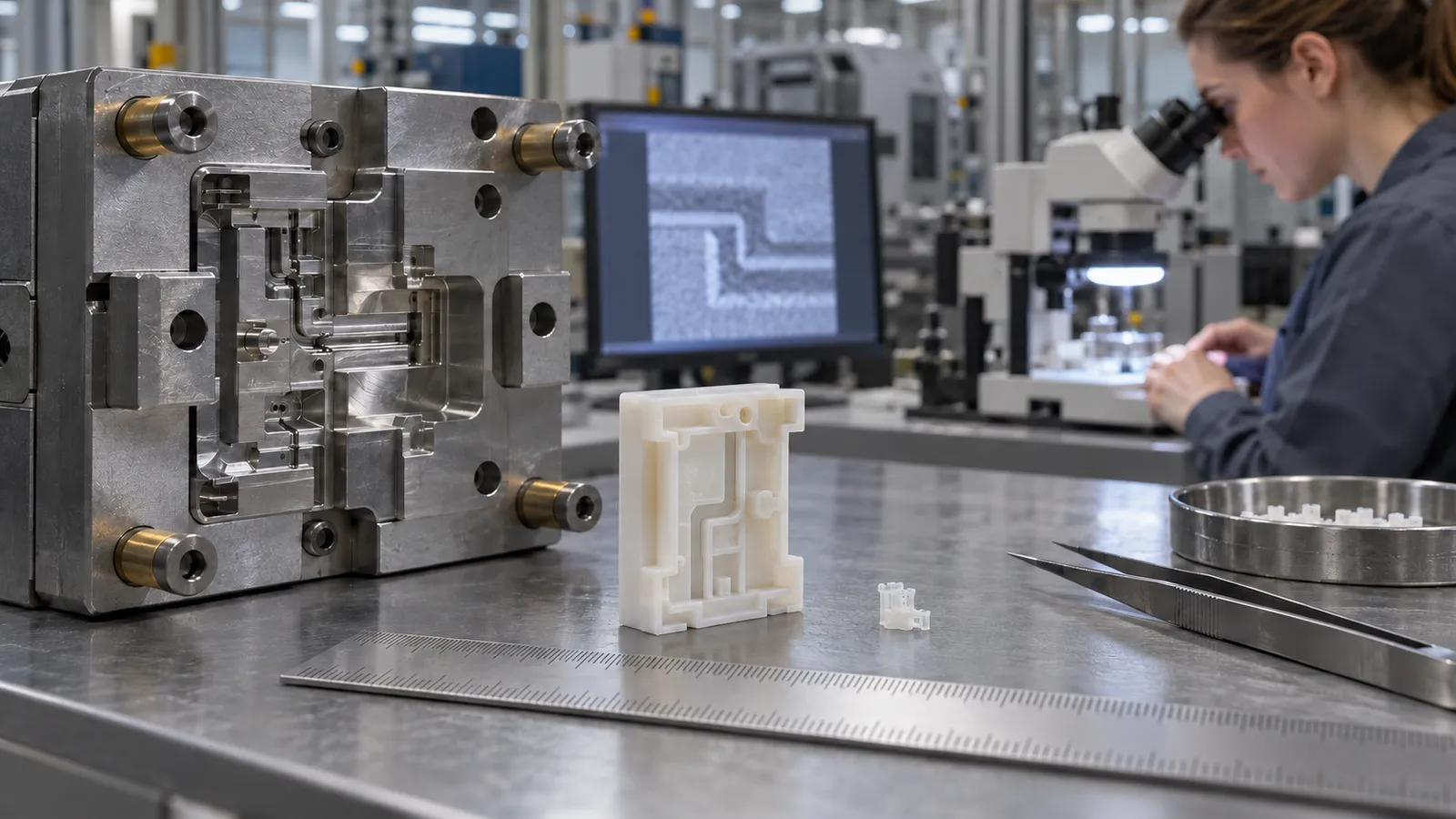
전체 질량과 외형 치수를 나열한 후, 가장 작은 벽, 리브, 홀, 핀, 홈, 게이트, 벤트, 셧오프, 허용 플래시를 식별합니다. 가장 긴 유동 거리를 가장 작은 단면에 추가합니다. 이러한 세부 사항은 규모가 제조 문제를 변화시키는 지점을 드러냅니다.
다음은 기능적 맥락입니다. 단순히 간극을 제공하는 좁은 슬롯은 유체를 계량하는 채널과 위험도가 다릅니다. 광학 정렬에 사용되는 작은 보스는 장식용 텍스처와 다른 기준면과 검사 전략이 필요합니다. 각 미세 형상을 기능성, 조립, 실링, 광학, 비중요로 표시합니다.
마지막으로 허용 가능한 상태를 정의합니다. “플래시 없음'은 측정 가능하지 않습니다. 플래시가 금지된 위치, 허용되는 위트니스 존, 검사 배율을 명시합니다. 버, 게이트 자국, 이젝터 마크에도 동일하게 적용됩니다.
하나의 최소 수치가 아닌 형상비를 사용하십시오
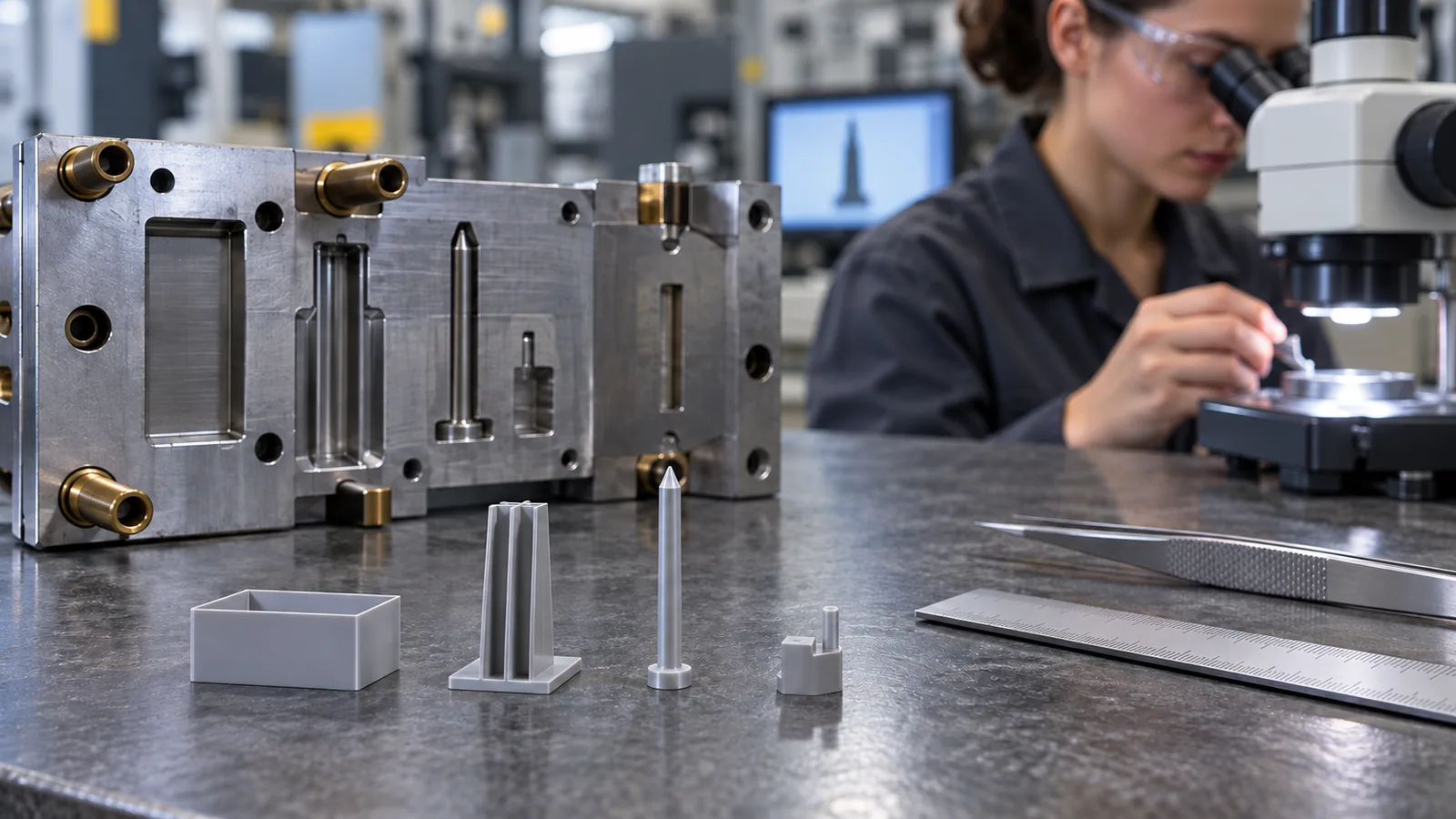
제조 가능성은 유동 길이 대 두께, 리브 높이 대 폭, 핀 직경 대 길이, 구배 대 접촉 깊이와 같은 관계에 따라 달라집니다. 길고 가느다란 강재 형상은 휘거나 부러질 수 있습니다. 깊은 플라스틱 벽은 냉각 중 코어를 물어붙을 수 있습니다. 형상비가 없는 공칭 치수는 이러한 영향을 숨깁니다.
| 형상 | 유용한 관계 | 일반적인 실패 방향 |
|---|---|---|
| 얇은 벽 | 유동 길이 대 벽 두께 | 조기 응고, 헤지테이션, 배향 |
| 깊은 리브 또는 슬롯 | 깊이 대 폭 및 구배 | 미충전, 갇힌 가스, 드래그 |
| 가느다란 코어 핀 | 지지되지 않은 길이 대 직경 | 휨, 편심, 파손 |
| 미세 셧오프 | 접촉 면적, 각도, 압력 및 마모 | 플래시, 미스매치, 유지보수 드리프트 |
가장 어려운 흐름 경로를 먼저 테스트하십시오
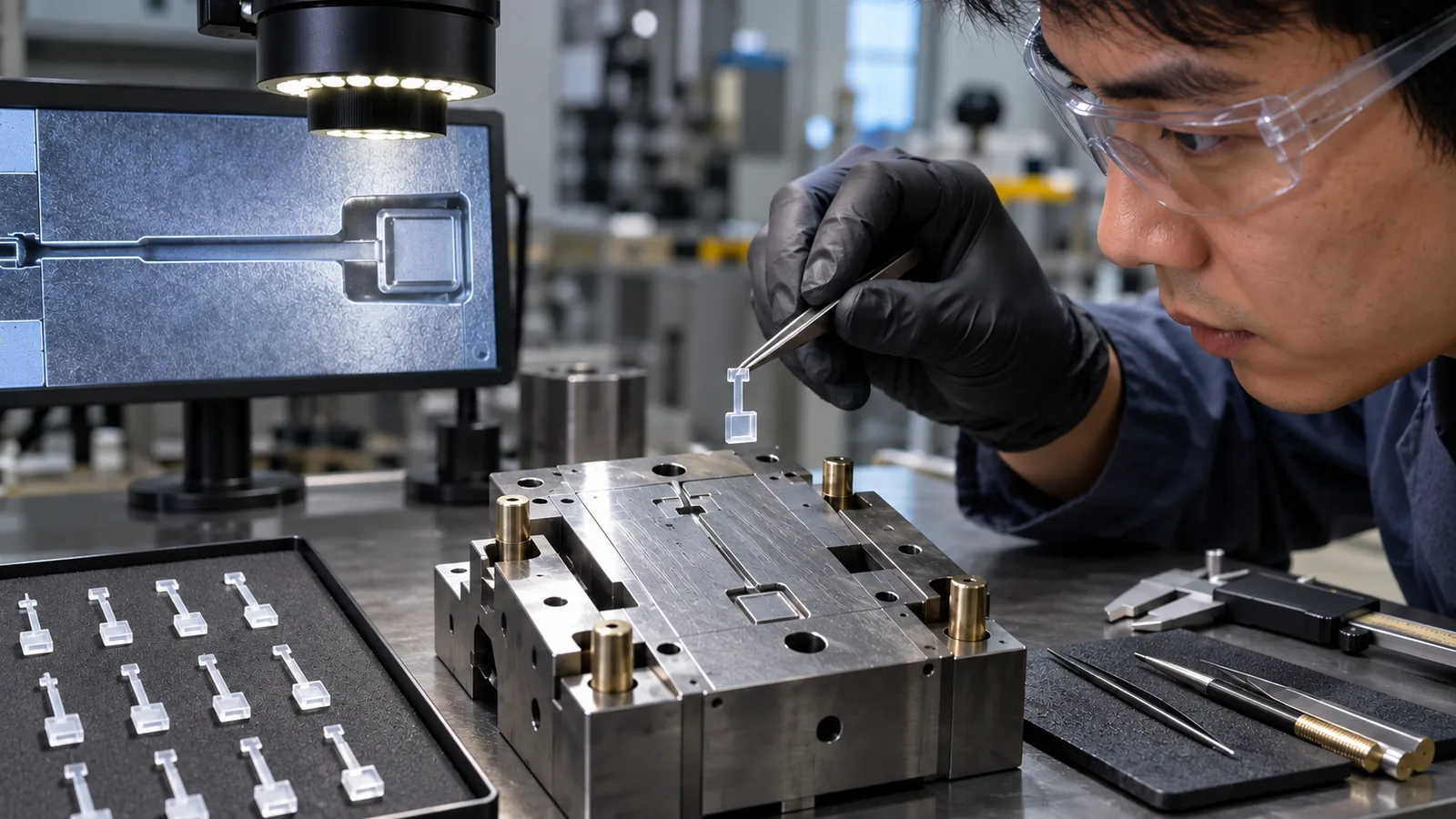
타당성 검토는 열을 잃거나, 가스를 가두거나, 불균형한 압력 요구를 생성할 가능성이 가장 높은 형상을 분리해야 합니다. 게이트 위치와 러너 부피는 작고 안정적인 샷이 해당 형상에 도달하는지에 영향을 미칩니다. A 몰드 플로우 해석 는 예상 충진 순서와 에어 트랩을 비교할 수 있지만, 물리적 시험을 통해 복제성과 플래시 마진을 여전히 확인해야 합니다.
숏 샷 증거, 가능한 경우 캐비티 압력, 그리고 형상 수준의 현미경 검사를 사용하십시오. 마지막으로 충진되는 마이크로 형상이 다른 영역이 플래시될 때만 개선된다면, 설계의 허용 범위는 좁습니다. 교정 경로는 단순히 압력을 높이는 것이 아니라 벽 전환, 게이트, 벤트, 금형 온도, 재료 또는 캐비티 레이아웃을 포함할 수 있습니다.
공급 시스템도 중요합니다. 작은 부품이 상대적으로 큰 러너 뒤에 위치할 수 있으며, 이는 재료 사용과 열 이력에 영향을 미칩니다. 러너 전략은 이론적 스크랩만이 아니라 샷 반복성과 유지보수와 함께 평가해야 합니다.
공차 전에 측정 전략을 설계하십시오
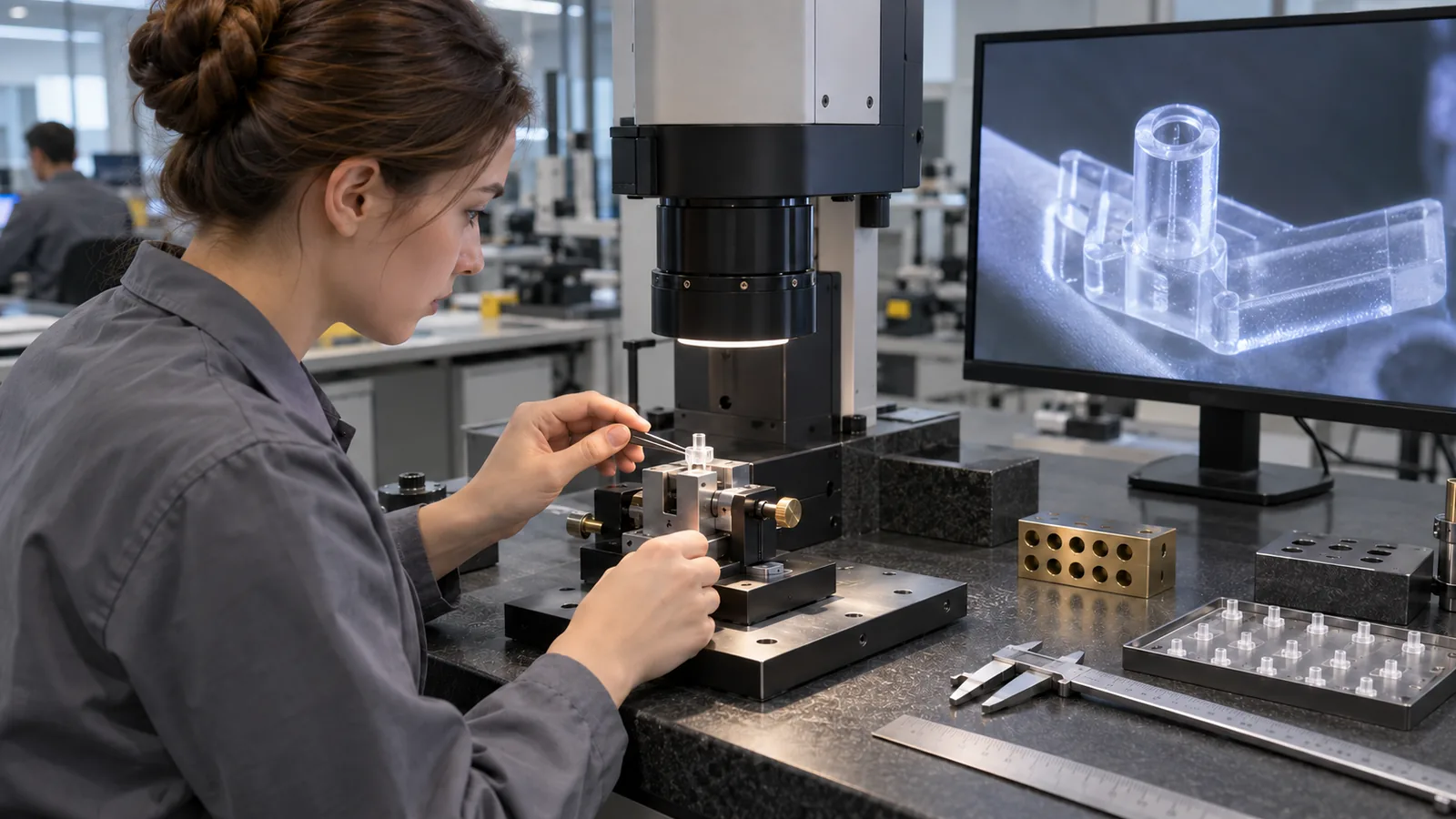
형상을 반복 가능하게 위치시키고 측정할 수 없다면 공차는 가치가 거의 없습니다. 광학 방법은 초점, 에지 임계값, 반투명도 및 부품 방향의 영향을 받을 수 있습니다. 접촉 방법은 얇은 형상을 변형시킬 수 있습니다. CT 또는 기타 고급 방법은 접근하기 어려운 형상에 도움이 될 수 있지만 여전히 분해능과 데이텀 규칙이 필요합니다.
- 기능적 데이텀과 구속 조건을 식별하십시오.
- 적절한 불확도로 공차를 분해할 수 있는 방법을 선택하십시오.
- 에지, 프로파일 및 필터링 규칙을 정의하십시오.
- 대표적인 성형 표면에서 반복성을 연구하십시오.
- 캐비티별로 그리고 지정된 컨디셔닝 시간 후에 측정하십시오.
- 치수를 조립 또는 기능 시험과 상관시키십시오.
Do not tighten a dimension to compensate for an undefined assembly. Build the tolerance chain first, then allocate limits to the features that truly control function.
Decide Whether Standard or Micro Molding Fits
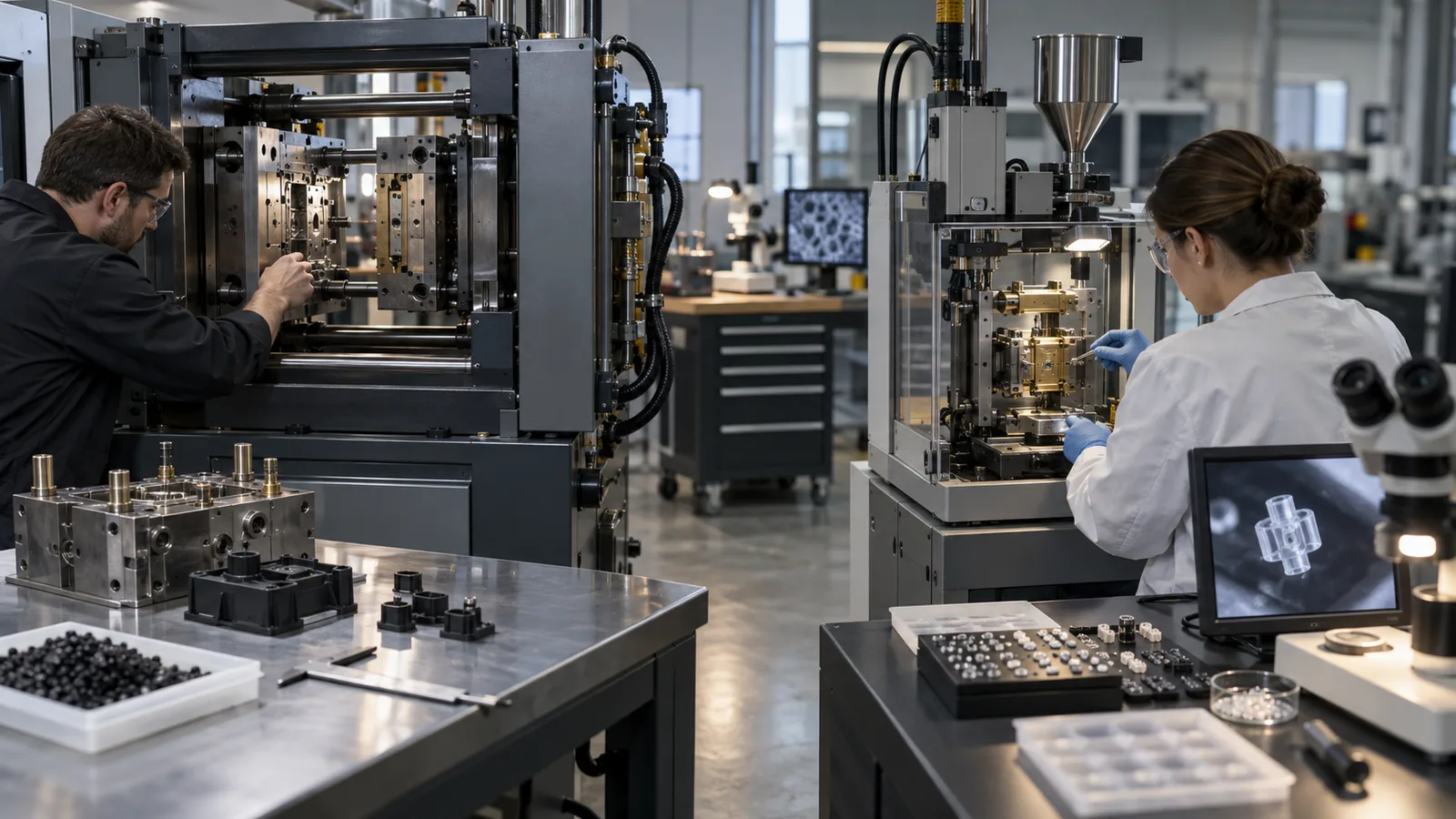
Some sub-millimeter features can run in a well-designed conventional precision mold. Others need dedicated small-shot metering, specialized tooling, controlled handling, or advanced metrology. The decision depends on shot-to-runner ratio, feature scale, material, tolerance, annual volume, and automation needs.
Prototype tooling can answer a focused feasibility question, but it should reproduce the critical gate, vent, surface, and feature conditions. A simplified tool that removes the hardest geometry may produce attractive samples without reducing production risk.
The 마이크로 사출 성형 route becomes more compelling as small shot control, microfeatures, gentle release, cavity-specific traceability, and automated part handling dominate the project.
Build a Feasibility Package for Tooling
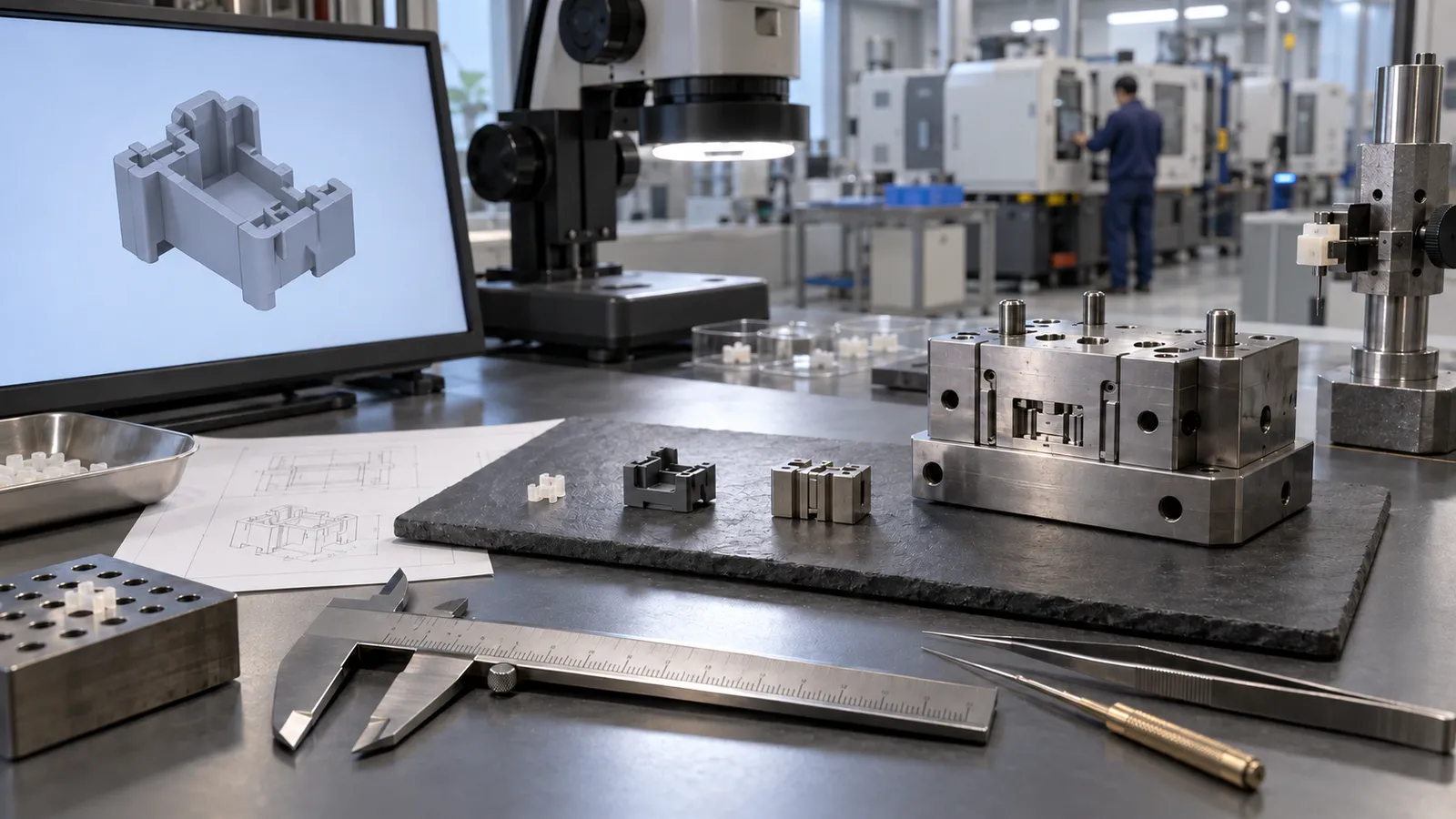
A useful RFQ contains native 3D data, a dimensioned drawing, material grade or performance requirements, annual and lot volume, functional datums, mating parts, acceptable witness areas, cleanliness, packaging, and inspection expectations. Highlight the hardest feature rather than expecting the reviewer to infer it.
Ask for a response that identifies assumptions and risks. Gate concept, parting line, shutoffs, ejector zones, steel-safe dimensions, expected measurement method, and trial plan should be visible before tooling commitment. If a dimension cannot be guaranteed as drawn, it is better to resolve the mechanism early than to negotiate around failed samples.
For low-volume learning, the 프로토타입 사출 성형 route may shorten the evidence cycle when its tool design still represents the functional features.
Include the intended packaging concept as well. A part that passes cavity inspection but cannot be separated, oriented, counted, or shipped without damage has not passed production feasibility.
자주 묻는 질문

What is the minimum moldable plastic feature?
There is no universal number. Geometry, material, flow distance, tool construction, venting, release, tolerance, and inspection determine feasibility together.
Does a smaller part always cost less?
No. Tool precision, handling, inspection, runner strategy, and low shot utilization can dominate cost even when resin consumption is small.
Can 3D printing replace a molding trial?
It can test fit or fluid paths, but it may not reproduce molded orientation, shrinkage, gate effects, surface replication, or production material behavior.
Why are deep micro slots difficult?
They combine rapid cooling, trapped-air risk, fragile tool steel, and strong release contact. Width alone does not describe the challenge.
What should be steel-safe?
Dimensions likely to need controlled adjustment after first trials should be reviewed for a steel-safe strategy, provided the change direction and datum relationship permit it.