
熱暴走の伝播は、現代の電気自動車(EV)バッテリーシステムにおいて深刻な課題となっています。.
隣接するセルを隔離することで、壊滅的な連鎖火災を防ぎます。.
高電圧の絶縁と機械的分離を実現するために、パッケージングエンジニアはカスタム設計されたプラスチックスペーサーに依存しています。.
JUCHENG射出成形は、複雑な2Dスケッチや3D CADデータを高精度な構造部品に変換する、ハイエンドな受託製造を提供します。.
当社は、自動車のティア1ブランドが生産を安全に拡大できるよう、部品を製造しています。.
目次
EV熱暴走緩和における絶縁スペーサーの役割
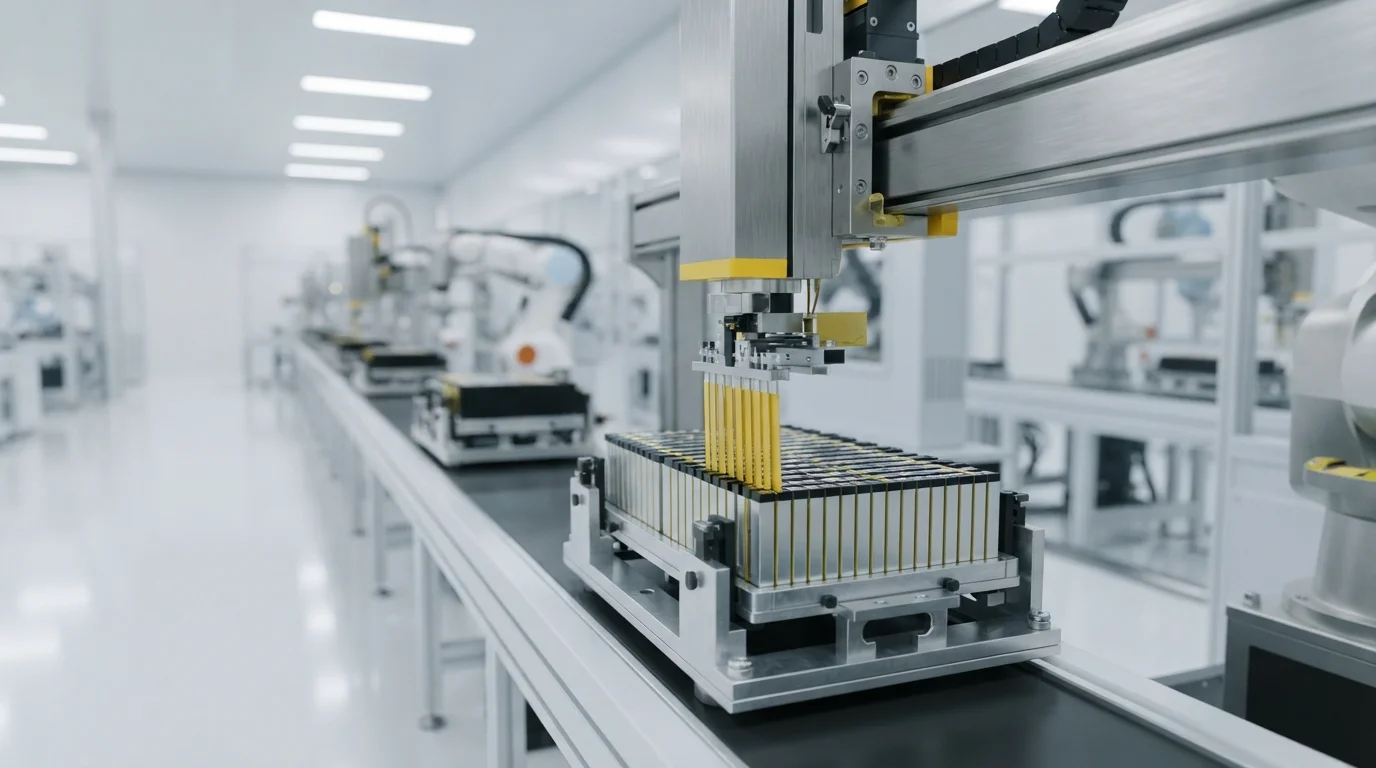
堅牢な 電気自動車バッテリースペーサー の設計には、ポリマーの物理的絶縁特性の理解が必要です。.
セルモジュールアセンブリは、連続的な充放電中に動的な膨張を経験します。.
この膨張を破損なく吸収するために、カスタム配合された 電気自動車バッテリースペーサー は、一貫した機械的圧力と高電圧の絶縁を提供します。.
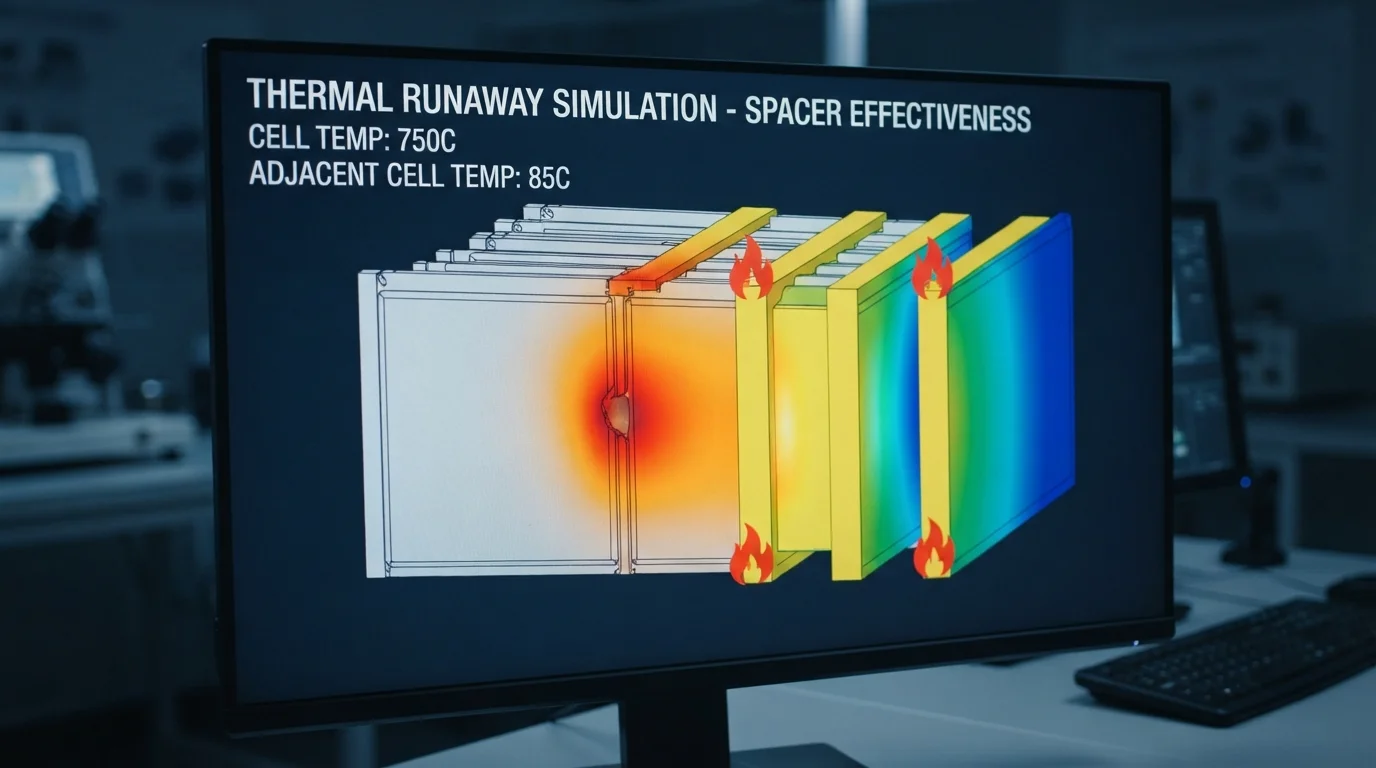
さらに、物理的な隔離により熱暴走の伝播が止まり、故障したセルから隣接するセルへの熱の移動が防止されます。.
保護用スペーサーの主要な物理パラメータには以下が含まれます:
- 絶縁破壊強度—絶縁材料は、高電位試験の数千ボルトに耐え、故障しないことが必要です。.
- 熱抵抗—ポリマーは、極端な局所温度でも構造剛性を維持し、隣接する角柱型セルフレームを支える必要があります。.
- 圧縮弾性—弾性性能により、スペーサーがセルの膨張を吸収し、均一な圧縮力を維持できます。.
- 耐薬品性—樹脂は、長期間にわたってバッテリー電解液の化学薬品への曝露に耐え、劣化しないことが必要です。.
構造剛性は、車両の航続距離を最適化するために、重量目標とのバランスも取る必要があります。.
鋼製部品を軽量プラスチックキャリアに置き換えることで、モジュール設計が簡素化され、機能スペースが最大化されます。.
カスタム成形されたエラストマーまたは構造用ポリマースペーサーを使用することで、高速道路の振動中にセル端子にひずみが生じるのを防ぎます。.
この物理的な隔離により、モジュールのパッケージングコストが最小限に抑えられ、自動車チームは厳しいコスト目標を達成できます。.
超薄肉射出成形能力(≤1.0 mm)
Injecting ultra-thin polymer components presents severe processing difficulties.
High-viscosity melt often solidifies before fully packing the mold cavity, resulting in partial parts or short shots.
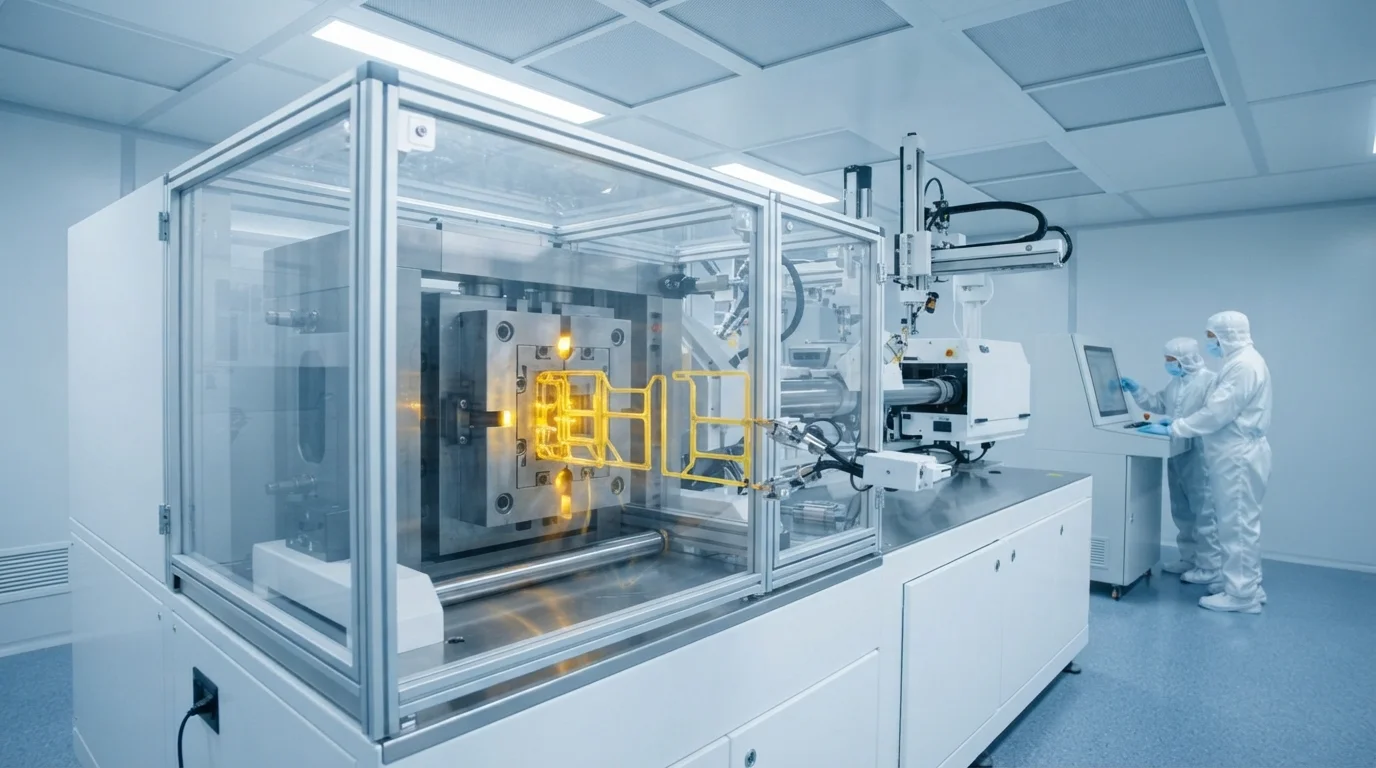
To overcome this, JUCHENG utilizes high-speed, high-pressure injection molding machines with fast-response hydraulic systems.
Our machinery delivers precise melt pressure to pack thin-wall profiles under 1.0mm consistently.
Thin-walled 電気自動車バッテリースペーサー require precise mold venting to let trapped air escape.
Without proper venting, compressed air creates diesel-burning effects, leaving burn marks on the polymer.
Our tooling designers integrate micro-vents measuring 0.015mm to 0.02mm, ensuring clean parts without flash.
Such design steps secure high yield rates for massive volume automotive orders.
Optimizing our manufacturing sequence involves several critical steps:
- Flow velocity tuning—Adjusting injection speed profile parameters guarantees that the melt front fills micro-details concurrently.
- Tool surface heating—Utilizing dynamic mold temperature controls keeps the gates open and prevents premature solidification.
- Cavity pressure tracking—Monitoring real-time transducer data inside the tool detects partial fills instantly.
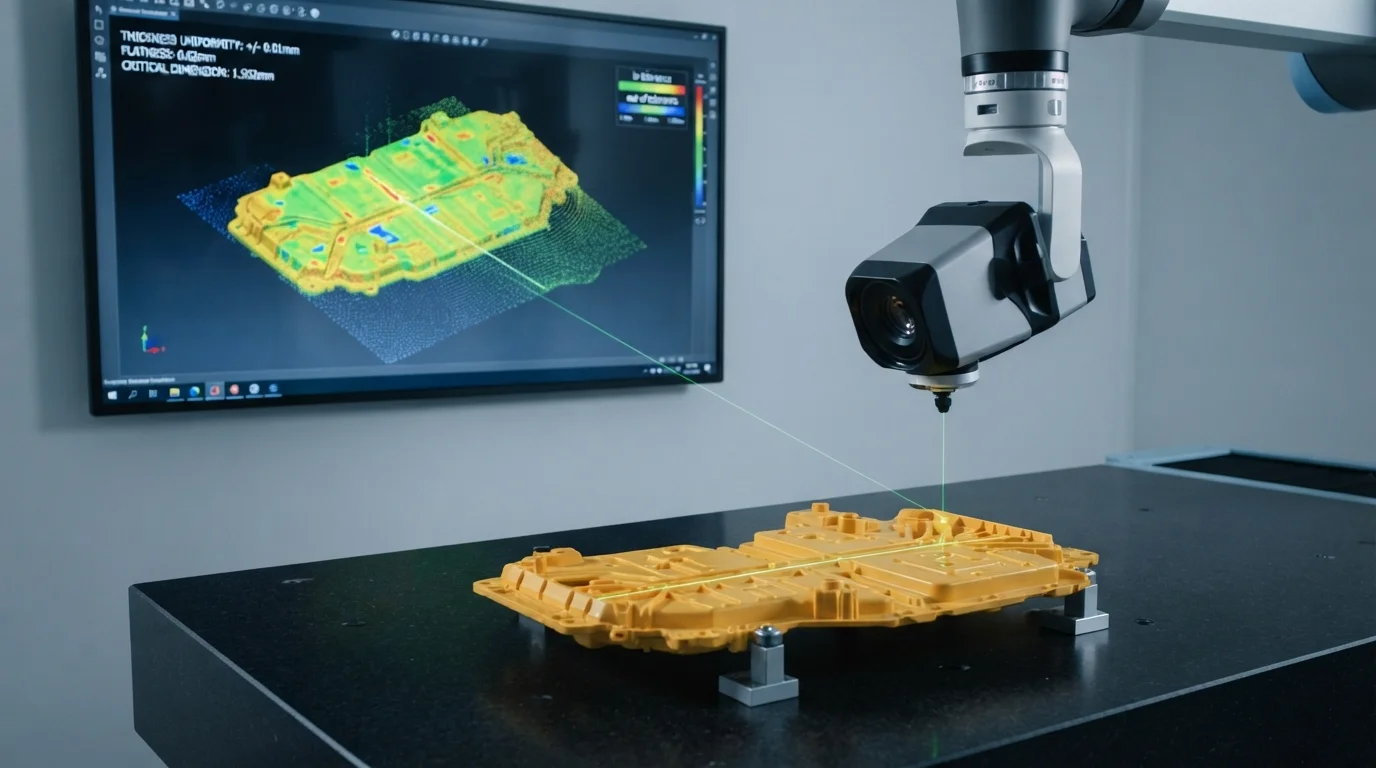
- Optical measurement verification—Employing laser scanners validates the physical thickness of every molded part.
Ultimately, these high-insulation 電気自動車バッテリースペーサー are critical internal components for stabilizing カスタムEV用プラスチックバッテリーハウジング during rapid acceleration.
Our factory maintains strict quality tracking on every production lot.
精密工具とIATF 16949認証の品質システムを組み合わせることで、JUCHENGは信頼性の高い製造ソリューションを提供します。.
よくある質問(FAQ)
How do you manage short shots in ultra-thin spacers?
Short shot prevention requires optimizing melt and mold temperatures.
We use rapid heat-cycle molding to maintain mold core warmth during injection, permitting easy flow.
Additionally, using high-flow resin variants reduces injection resistance, allowing the melt to pack out tight-tolerance geometries.
What materials offer the best balance of thinness and flame retardancy?
Materials like flame-retardant PC/ABS or custom PBT blends offer excellent dielectric properties at 0.8mm wall thicknesses.
These resins maintain mechanical toughness while meeting standard UL94 V-0 criteria.
We carefully review materials during design to balance physical strength and regulatory compliance.
Can spacers be overmolded directly onto cell frames?
Dual-shot injection molding permits the hard frame and elastomeric spacers to be molded concurrently.
This is a robust solution that eliminates secondary assembly labor.
Our multi-material rotary presses bond elastomeric sealants directly onto glass-filled nylon carriers seamlessly.