
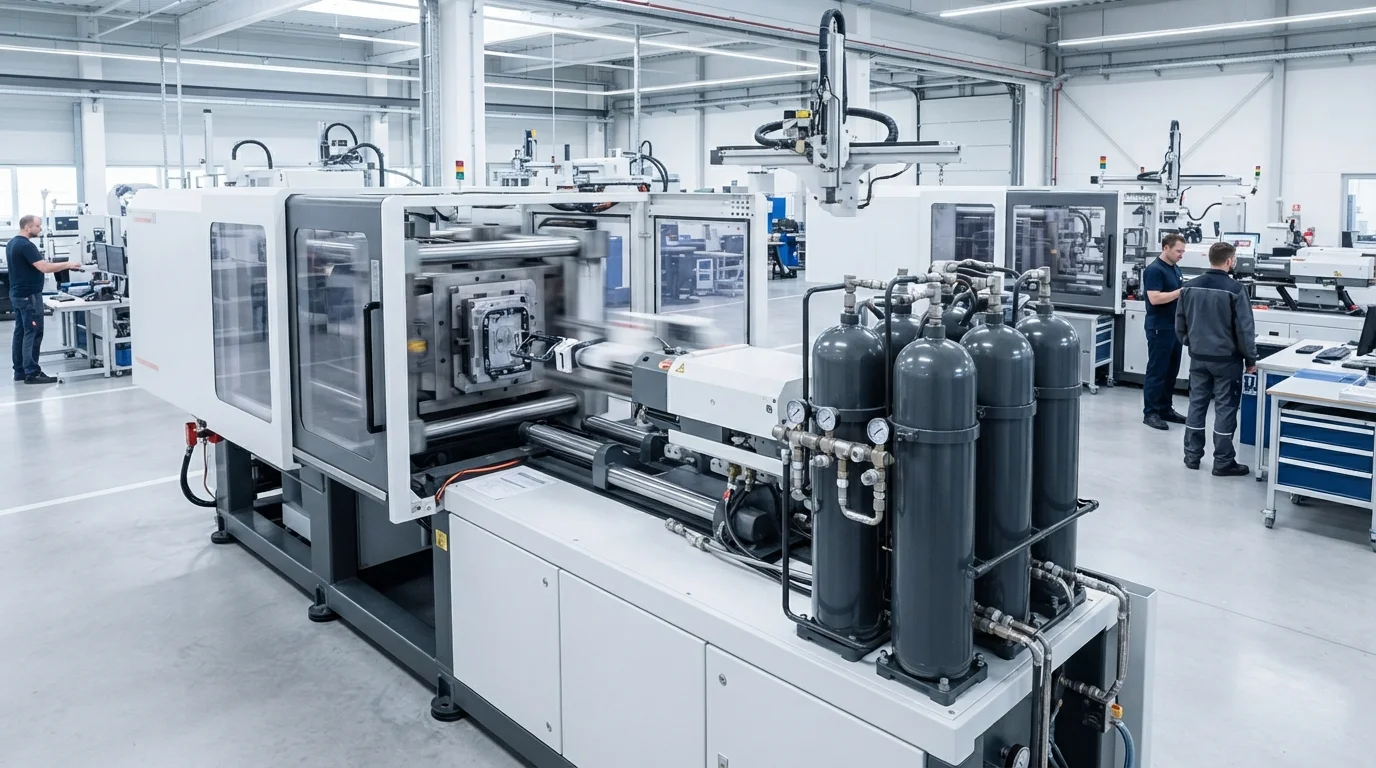
Manufacturing lightweight electronics enclosures, medical microfluidic cards, and electric vehicle battery spacers requires molding polymer walls thinner than 0.8 mm. Standard injection molding machinery cannot fill such thin cross-sections because molten plastic cools and freezes before reaching the end of the cavity. Specifying high-speed Dünnwand-Spritzguss overcomes these physical flow limits by utilizing accumulator-assisted presses capable of ultra-fast injection speeds. JUCHENG operates specialized high-speed production cells, producing structural thin-walled components strictly according to customer CAD files.
Inhaltsverzeichnis
High L/T Ratio Flow & Accumulator-Assisted Injection Presses
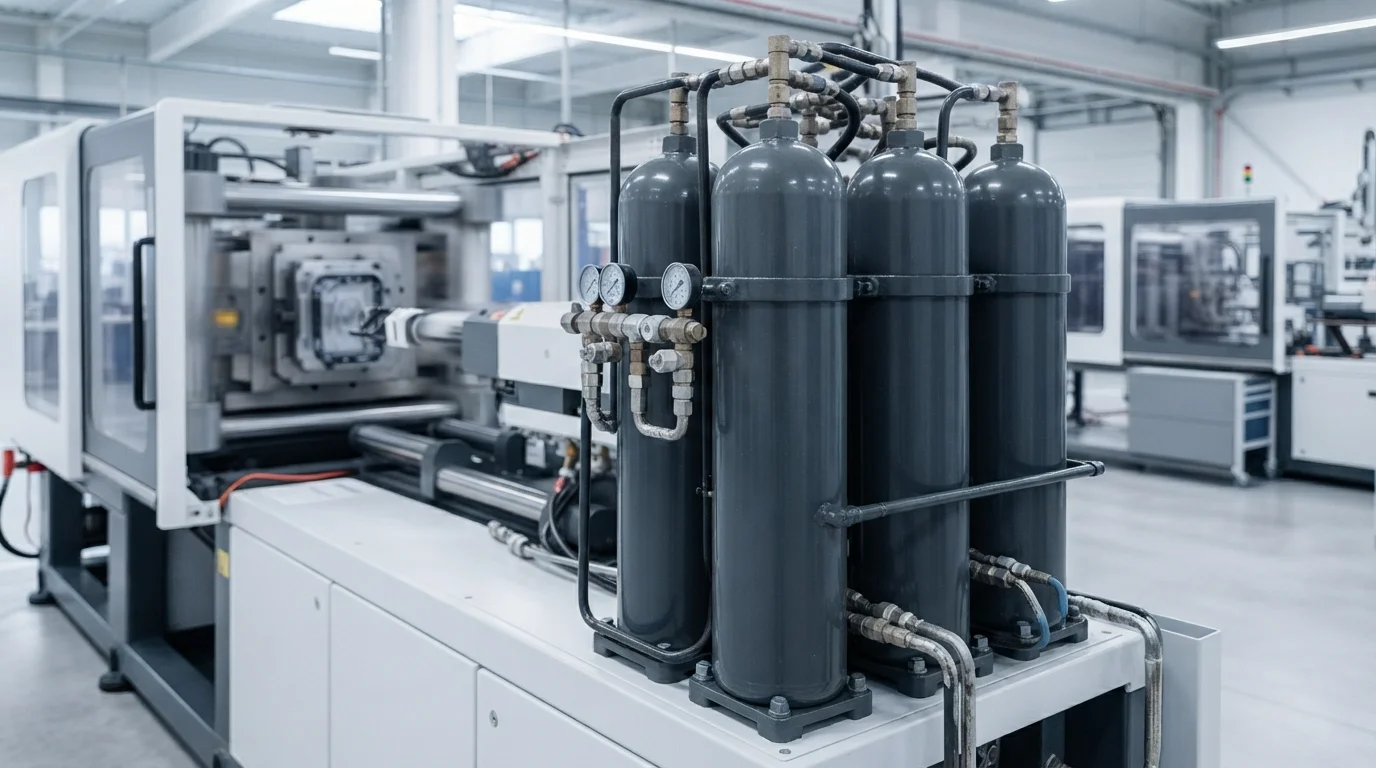
Achieving complete cavity filling in ultra-thin parts depends on the L/T ratio, which compares flow length to nominal wall thickness. When L/T ratios exceed 150:1 or 200:1, molten polymer experiences rapid heat loss to the cold steel mold cavity walls. Preventing premature melt freezing demands filling times faster than 0.5 seconds. Our production facility utilizes high-speed injection molding machinery fitted with hydraulic nitrogen accumulators. Nitrogen accumulators deliver instantaneous injection velocities up to 1,000 mm/sec, packing thin cavities before the polymer boundary layer solidifies.
Betriebsstandards für Hochgeschwindigkeitspressen umfassen:
- Accumulator pressure boost—Das Ablassen von Druckstickstoff treibt Hydrauliköl sofort an und liefert eine extreme Einspritzbeschleunigung.
- Ultra-schnelle Füllgeschwindigkeit—Das Einspritzen von Schmelze mit Geschwindigkeiten über 800 mm/s verhindert das vorzeitige Einfrieren der Grenzschicht.
- Dynamische Regelung mit geschlossenem Regelkreis—Die Überwachung von Druckaufnehmern gewährleistet einen sofortigen Umschaltpunkt von Geschwindigkeit auf Druck und verhindert so eine Überfüllung der Kavität.
- Hohe Schließkraftstabilität—Das Zusammenhalten der Formhälften unter extremen Spitzeneinspritzdrucken verhindert Gratbildung an der Trennebene.
Hochfließfähige Kunststoffe & Entlüftungsdesign der Form
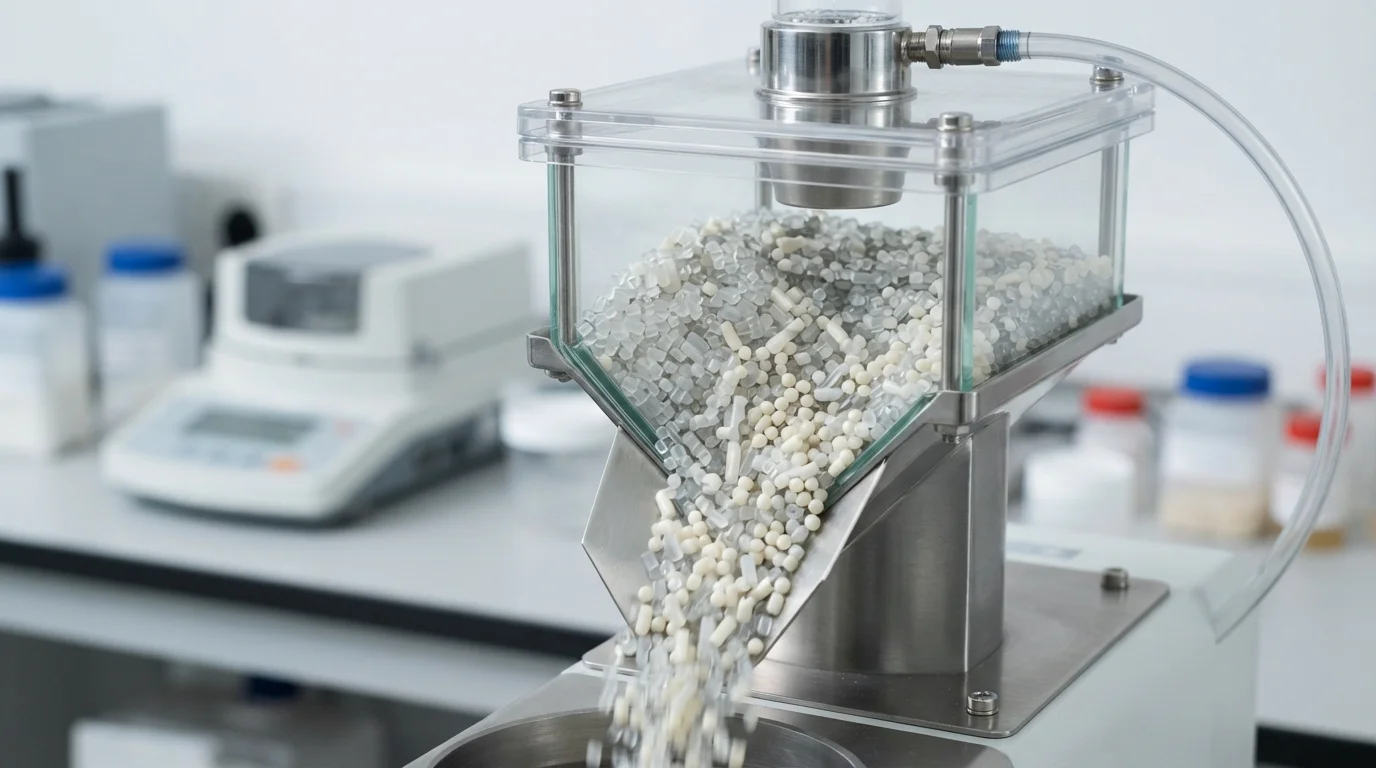
Die Materialauswahl spielt eine entscheidende Rolle bei der Hochgeschwindigkeits-Polymerverarbeitung. Die Formulierung hochfließfähiger Harze erfordert die Auswahl von Polymeren mit einem hohen Schmelzflussindex (MFI), um die Viskosität unter hohen Scherraten zu senken. Zu den gängigen Thermoplasten, die in Dünnwandanwendungen verarbeitet werden, gehören Flüssigkristallpolymer (LCP), hochfließfähiges Polycarbonat (PC), und 30% glasfaserverstärktes PA66. Hohe Einspritzgeschwindigkeiten komprimieren Luft in dünnen Kavitäten schnell, was zu Diesel-Effekten (Verbrennungseffekten) führt, wenn das Gas nicht entweichen kann. Die Integration von vakuumunterstützter Kavitätsentlüftung und Mikroentlüftungsschlitzen mit einer Größe von 0,015 mm bis 0,02 mm ermöglicht das Entweichen von Luft, ohne dass Kunststoffgrat entsteht.
| Polymerharz-Typ | MFI-Bereich (g/10min) | Min. Wanddicke (mm) | Max. L/T-Verhältnis | Primäre Dünnwandanwendung |
|---|---|---|---|---|
| LCP (Vectra E130i) | 30 – 70 | 0.20 mm | 250:1 | Micro electronic connectors |
| High-Flow PC (Lexan 141R) | 25 – 60 | 0.60 mm | 180:1 | Mobile device frames & housings |
| PA66-GF30 (Zytel 70G33L) | 20 – 45 | 0.80 mm | 160:1 | EV battery module spacers |
Preventing Short Shots, Warpage, and Sink Marks
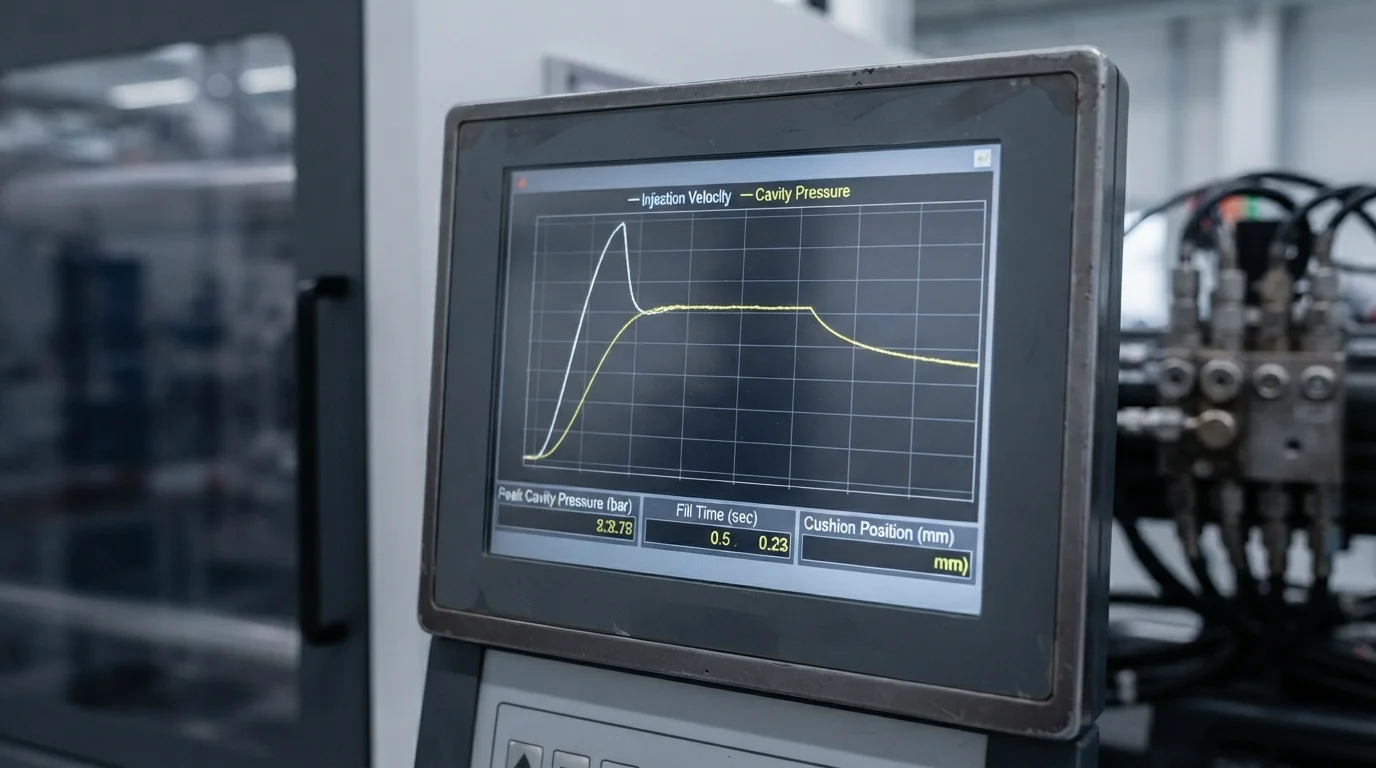
Process stability during high-speed molding relies on scientific molding methodology. Executing Entkoppeltes Spritzgießen isolates high-speed filling from packing and holding stages, maintaining precise cavity pressure balance. Preventing short shots requires maintaining precise melt temperature control and drying resins thoroughly before processing. High shear rates generated during fast filling reduce polymer viscosity dynamically, improving flow through thin channels. Controlling cooling circuit layouts ensures uniform heat extraction across thin ribs, eliminating post-mold warpage.
Quality control protocols for thin-walled parts include:
- Cavity transducer logging—Monitoring real-time cavity pressure curves ensures consistent pack density across every shot.
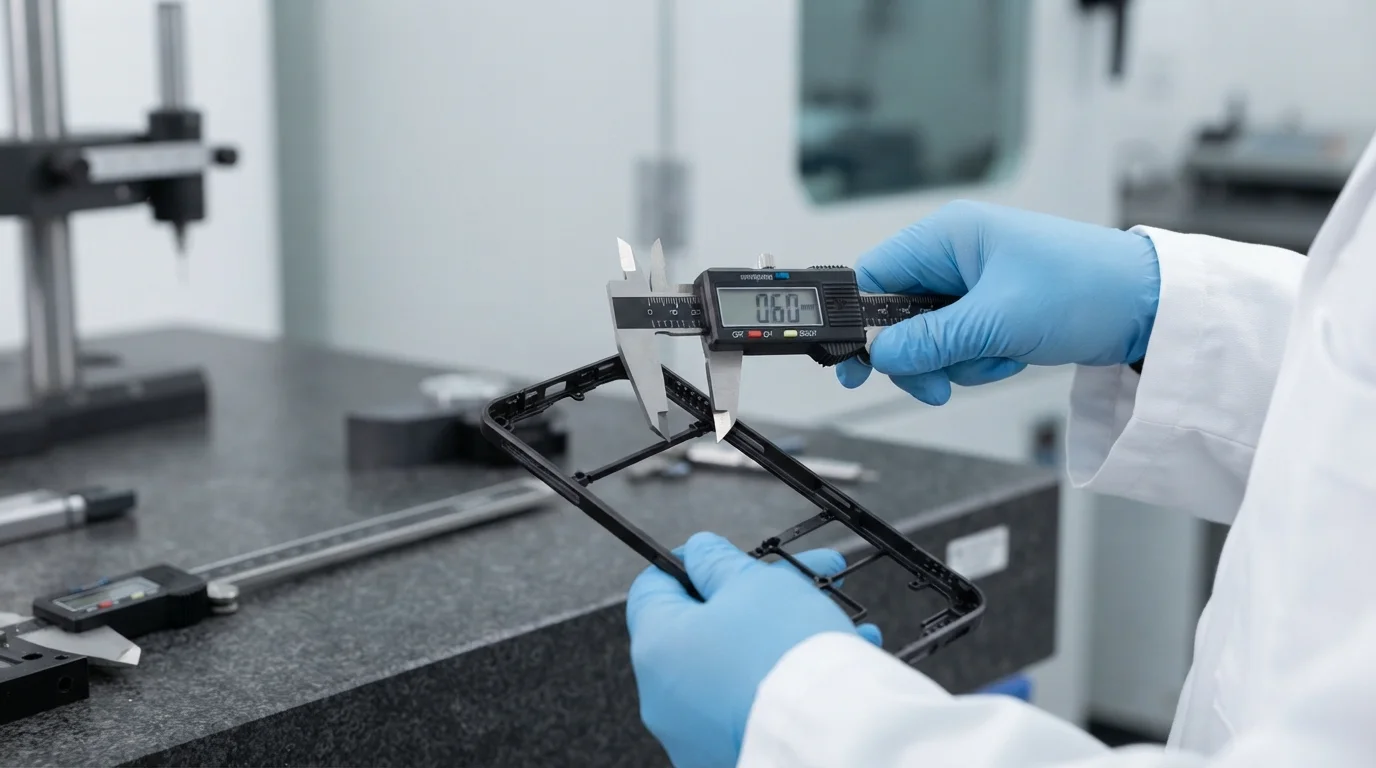
- Laser optical scanning—Verifying part flatness and wall thickness dimensions using non-contact optical inspection.
- Desiccant moisture testing—Maintaining raw material moisture below 0.02% to prevent hydrolytic degradation and splay.
Häufig gestellte Fragen (FAQs)
What is an L/T ratio in thin wall injection molding?
Flow length to wall thickness (L/T) ratio calculates how far molten plastic must travel relative to part thickness. Higher L/T ratios above 150:1 require accumulator-assisted high-speed injection presses to fill the mold before the polymer freezes.
How do accumulator-assisted presses differ from standard injection molding machines?
Accumulator-assisted machines utilize pressurized nitrogen tanks to supply instant hydraulic oil volume, reaching injection speeds over three times faster than standard presses. Fast injection speeds prevent thin-walled polymer sections from cooling prematurely during cavity fill.
How do you prevent diesel burn marks in thin wall mold cavities?
Preventing diesel burns requires integrating precision micro-venting slots measuring 0.015 mm to 0.02 mm along the parting line. Vacuum-assisted cavity evacuation draws air out of the tool before injection, preventing compressed gas from igniting.