
Accelerating product development schedules requires moving quickly from digital CAD concepts to functional, production-grade plastic parts. Traditional steel production molds require months of toolmaking and high capital NRE investments, creating long lead-time barriers for early market entry. Utilizing quick-turn soft tooling provides engineering teams with an agile manufacturing pathway, delivering functional molded parts in days using production-intent thermoplastics. This technical guide reviews rapid mold material selection, cost-lead-time trade-offs, and 24-hour DfM validation protocols.

Table of Contents
5-Axis CNC Cut Aluminum (5052/7075) & P20 Steel Rapid Molds
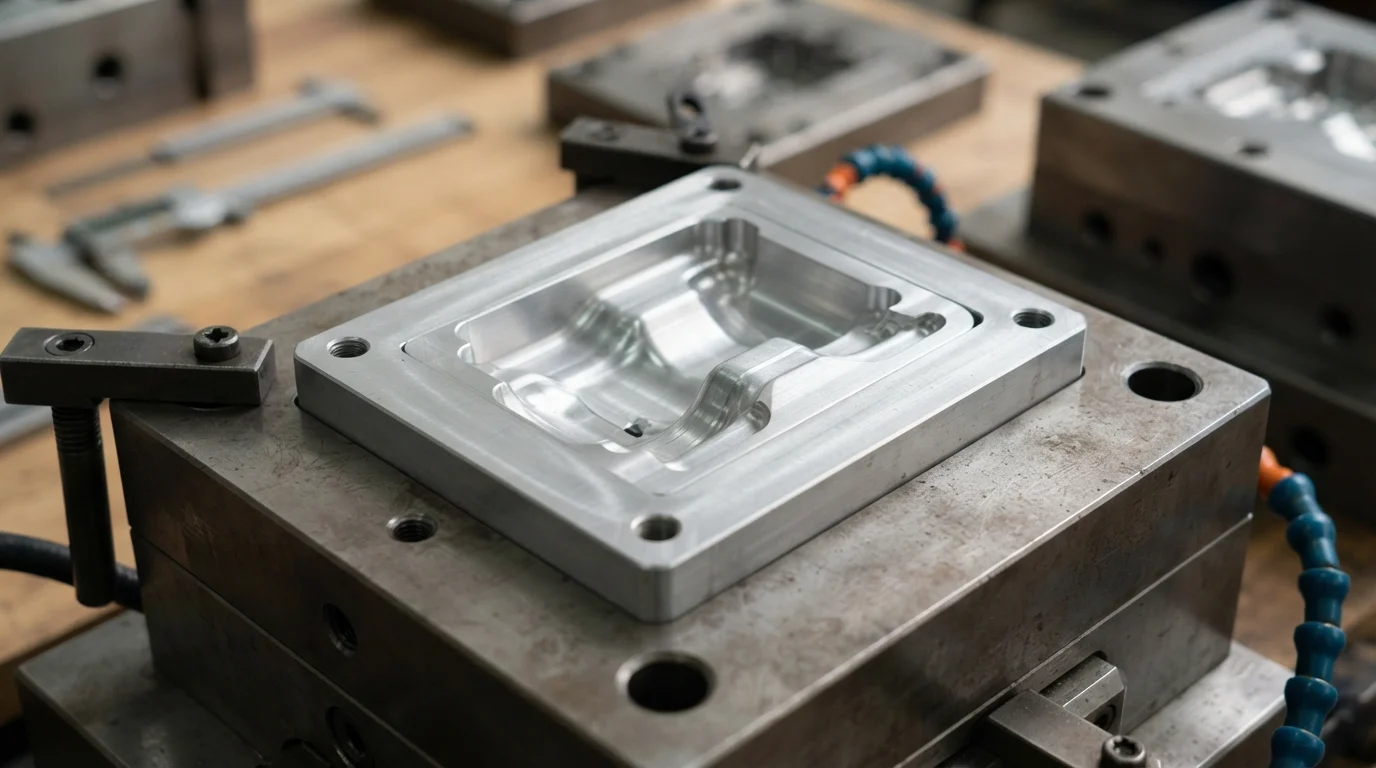
Executing fast-turn rapid injection molding projects utilizes machinable tool materials like high-strength Al7075 aluminum or pre-hardened P20 soft steel. Machining aluminum cores allows toolmakers to cut mold cavities up to three times faster than processing hardened stainless steels, delivering T1 sample parts in 7 to 10 business days. Utilizing rapid tooling inserts housed within modular master unit die (MUD) frames eliminates the cost and time needed to machine raw steel bolster plates. Aluminum mold cores provide superior thermal conductivity, cooling polymer parts rapidly and reducing cycle times during low-volume bridge runs. Pre-hardened P20 steel offers higher wear resistance against abrasive glass-filled or flame-retardant resins, extending tool lifespans up to 10,000 cycles.
Rapid soft tooling manufacturing advantages include:
- MUD bolster frame integration—Installing custom core inserts into standard master unit die bases avoids raw steel plate machining costs.
- Al7075 aluminum cavity cutting—Milling high-strength aluminum alloys rapidly compresses mold fabrication lead times.
- Pre-hardened P20 steel option—Selecting P20 soft steel provides abrasive wear resistance for glass-filled or flame-retardant polymers.
- Fast-turn T1 sample delivery—Injecting production-intent resins generates functional sample parts for physical validation in 7 to 10 days.
Rapid Tooling vs. Production Tooling Cost & Lead Time Analysis

Comparing tooling classes allows product development teams to optimize upfront NRE capital against production volume requirements. Rapid mold options serve as an ideal bridge for volumes ranging from 100 to 10,000 parts, generating early revenue while high-cavitation steel production tools undergo fabrication. Supporting low-volume bridge production allows medical and automotive OEMs to perform pilot market launches and clinical trial audits without waiting months for hardened steel tooling. Table 1 below outlines key cost, lead time, and life cycle differences between rapid molds and production tools:
| Tooling Parameter Metric | Rapid Aluminum Tooling | Pre-Hardened P20 Steel Tooling | Hardened Production Steel Tooling (Class 101) |
|---|---|---|---|
| Mold Core Material | Al7075-T6 High-Strength Aluminum | P20 Pre-Hardened Tool Steel | S136 Stainless / H13 Tool Steel |
| Tool Fabrication Lead Time | 5 to 10 Business Days | 10 to 15 Business Days | 4 to 8 Weeks |
| Upfront Capital Cost (NRE) | Low ($1,500 – $5,000 USD) | Moderate ($3,000 – $8,000 USD) | High ($15,000 – $50,000+ USD) |
| Guaranteed Mold Lifetime | 1,000 to 2,500 Shots | 5,000 to 10,000 Shots | 1,000,000+ Shots Guaranteed |
Instant RFQ Analysis & DfM Review within 24 Hours

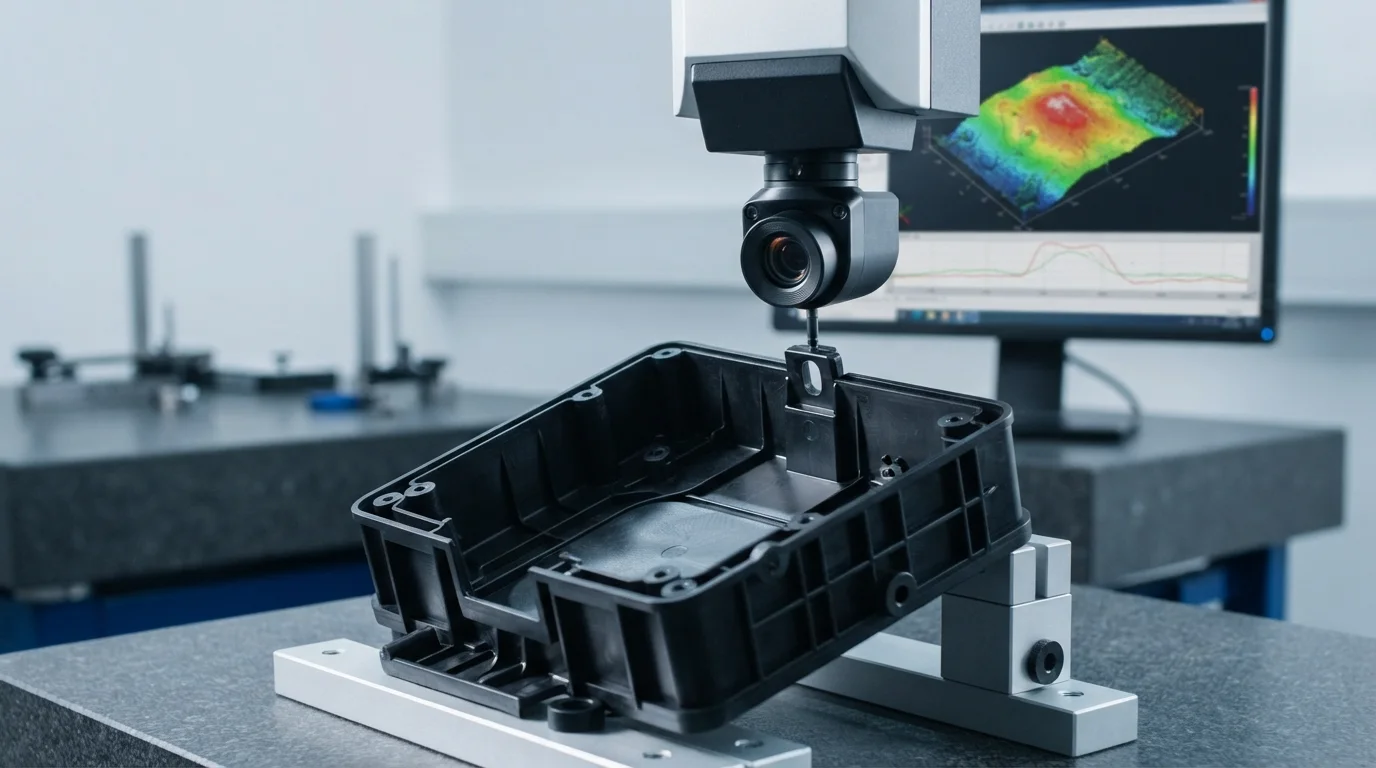
Submitting 3D CAD files triggers a comprehensive Design for Manufacturability (DfM) analysis delivered within 24 hours. Engineering reviews evaluate nominal wall thickness uniformity, draft angles, gate locations, and parting line feasibility to ensure clean part ejection. Identifying manufacturing risks before cutting metal prevents expensive tool modifications and long project delays. Executing rapid injection molding backed by certified quality management systems guarantees First Article Inspection (FAI) compliance and complete material traceability on every order.
Frequently Asked Questions (FAQs)
What is the typical lead time for rapid injection molding T1 samples?
Rapid aluminum and soft steel molds deliver functional T1 prototype samples in as fast as 7 to 10 business days. Machining modular core inserts from Al7075 aluminum bypasses long steel hardening cycles, allowing rapid trial molding. Complex geometries with side-action slides or hand-loaded inserts may require 10 to 12 business days.
How does rapid injection molding differ from standard production molding?
Rapid injection molding utilizes pre-hardened soft steels or aluminum alloys housed inside modular master unit die (MUD) frames, optimizing lead time and NRE capital for 100 to 10,000 parts. Standard production molding uses fully hardened steel (such as H13 or S136) built into custom full-sized bolster bases designed to survive millions of cycles.
Can production-grade engineering plastics be used in rapid molds?
Rapid molds process the complete spectrum of production-grade engineering thermoplastics, including ABS, PC, PA66, PEEK, and Ultem. Injecting actual production resins allows engineering teams to perform valid physical stress tests, thermal evaluations, and agency compliance audits before investing in high-volume production steel tooling.