
Accelerating product development schedules requires moving quickly from digital CAD concepts to functional, production-grade plastic parts. Traditional steel production molds require months of toolmaking and high capital NRE investments, creating long lead-time barriers for early market entry. Utilizing quick-turn soft tooling provides engineering teams with an agile manufacturing pathway, delivering functional molded parts in days using production-intent thermoplastics. This technical guide reviews rapid mold material selection, cost-lead-time trade-offs, and 24-hour DfM validation protocols.

جدول المحتويات
5-Axis CNC Cut Aluminum (5052/7075) & P20 Steel Rapid Molds
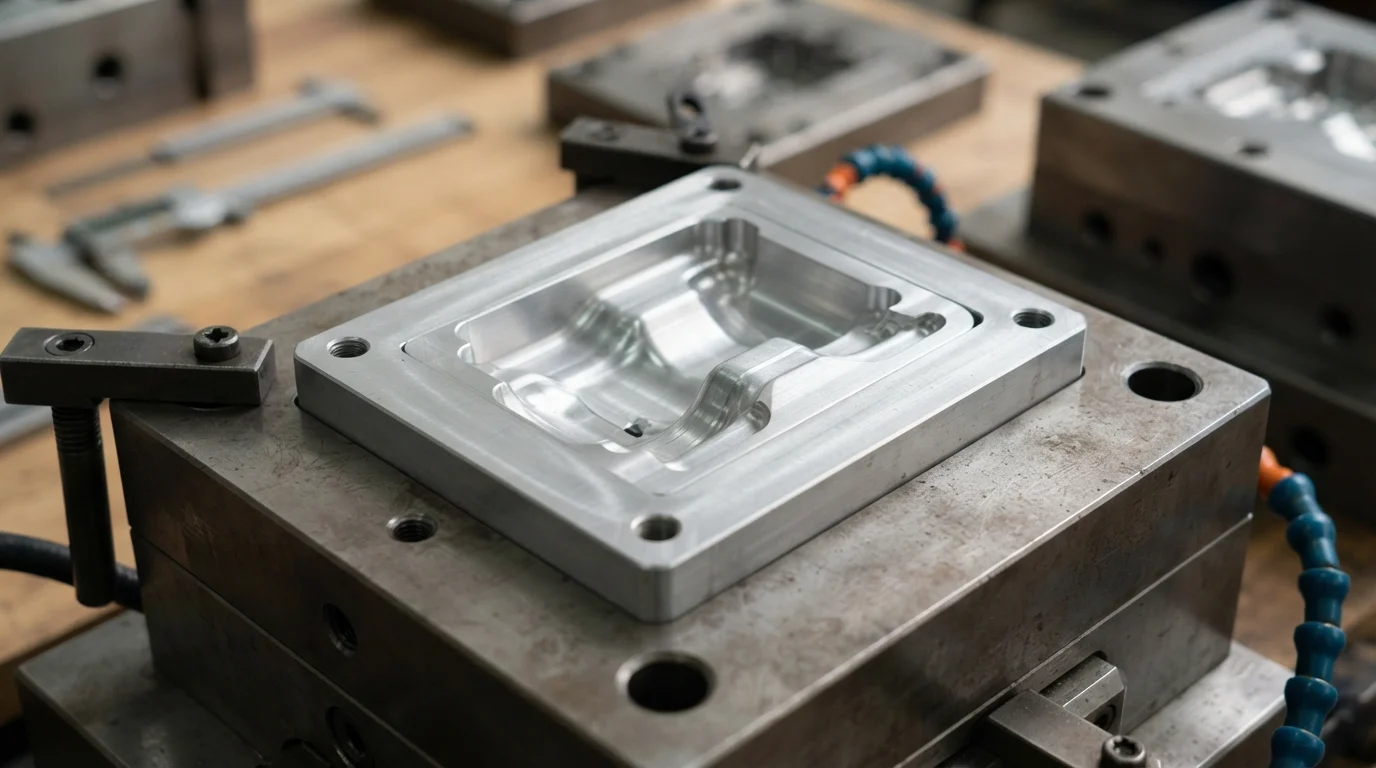
Executing fast-turn rapid injection molding projects utilizes machinable tool materials like high-strength Al7075 aluminum or pre-hardened P20 soft steel. Machining aluminum cores allows toolmakers to cut mold cavities up to three times faster than processing hardened stainless steels, delivering T1 sample parts in 7 to 10 business days. Utilizing الأدوات السريعة إدراجات مدمجة داخل إطارات قوالب الوحدة الرئيسية المعيارية (MUD) تلغي تكلفة ووقت تصنيع ألواح الفولاذ الخام الداعمة. توفر قلوب قوالب الألمنيوم موصلية حرارية فائقة، مما يبرد الأجزاء البلاستيكية بسرعة ويقلل أوقات الدورات أثناء عمليات الإنتاج القصيرة الحجم. يوفر فولاذ P20 المقسى مسبقًا مقاومة أعلى للتآكل ضد الراتنجات الكاشطة المملوءة بالزجاج أو المثبطة للهب، مما يطيل عمر الأدوات حتى 10,000 دورة.
تشمل مزايا تصنيع الأدوات اللينة السريعة ما يلي:
- دمج إطار MUD الداعم—تركيب إدراجات أساسية مخصصة في قواعد قوالب الوحدة الرئيسية القياسية يتجنب تكاليف تصنيع ألواح الفولاذ الخام.
- قطع تجويف الألمنيوم Al7075—طحن سبائك الألمنيوم عالية القوة بسرعة يقلص بشكل كبير من المهل الزمنية لتصنيع القوالب.
- خيار فولاذ P20 المقسى مسبقًا—اختيار فولاذ P20 اللين يوفر مقاومة تآكل كاشطة للبوليمرات المملوءة بالزجاج أو المثبطة للهب.
- تسليم سريع لعينات T1—حقن راتنجات مخصصة للإنتاج يولد أجزاء عينات وظيفية للتحقق المادي خلال 7 إلى 10 أيام.
تحليل التكلفة والمهلة الزمنية بين الأدوات السريعة وأدوات الإنتاج

مقارنة فئات الأدوات تسمح لفرق تطوير المنتجات بتحسين رأس المال الهندسي غير المتكرر الأولي مقابل متطلبات حجم الإنتاج. تعمل خيارات القوالب السريعة كجسر مثالي للأحجام التي تتراوح من 100 إلى 10,000 قطعة، مما يدر إيرادات مبكرة بينما تخضع أدوات الإنتاج الفولاذية عالية التجويف للتصنيع. دعم الإنتاج الافتتاحي منخفض الحجم يسمح لمصنعي المعدات الأصلية في المجالين الطبي والسيارات بإجراء إطلاقات تجريبية للسوق وعمليات تدقيق التجارب السريرية دون الانتظار لأشهر للحصول على أدوات فولاذية مقساة. يوضح الجدول 1 أدناه الاختلافات الرئيسية في التكلفة والمهلة الزمنية ودورة الحياة بين القوالب السريعة وأدوات الإنتاج:
| معامل أداء الأدوات (متري) | أدوات الألمنيوم السريعة | أدوات فولاذ P20 المقسى مسبقًا | أدوات فولاذ الإنتاج المقسى (الفئة 101) |
|---|---|---|---|
| مادة قلب القالب | ألمنيوم عالي القوة Al7075-T6 | فولاذ الأدوات P20 المقسى مسبقًا | فولاذ مقاوم للصدأ S136 / فولاذ الأدوات H13 |
| مدة تصنيع الأدوات | 5 إلى 10 أيام عمل | 10 إلى 15 يوم عمل | 4 إلى 8 أسابيع |
| التكلفة الرأسمالية المقدمة (NRE) | منخفضة ($1,500 – $5,000 دولار أمريكي) | متوسطة ($3,000 – $8,000 دولار أمريكي) | High ($15,000 – $50,000+ USD) |
| Guaranteed Mold Lifetime | 1,000 to 2,500 Shots | 5,000 to 10,000 Shots | 1,000,000+ Shots Guaranteed |
Instant RFQ Analysis & DfM Review within 24 Hours

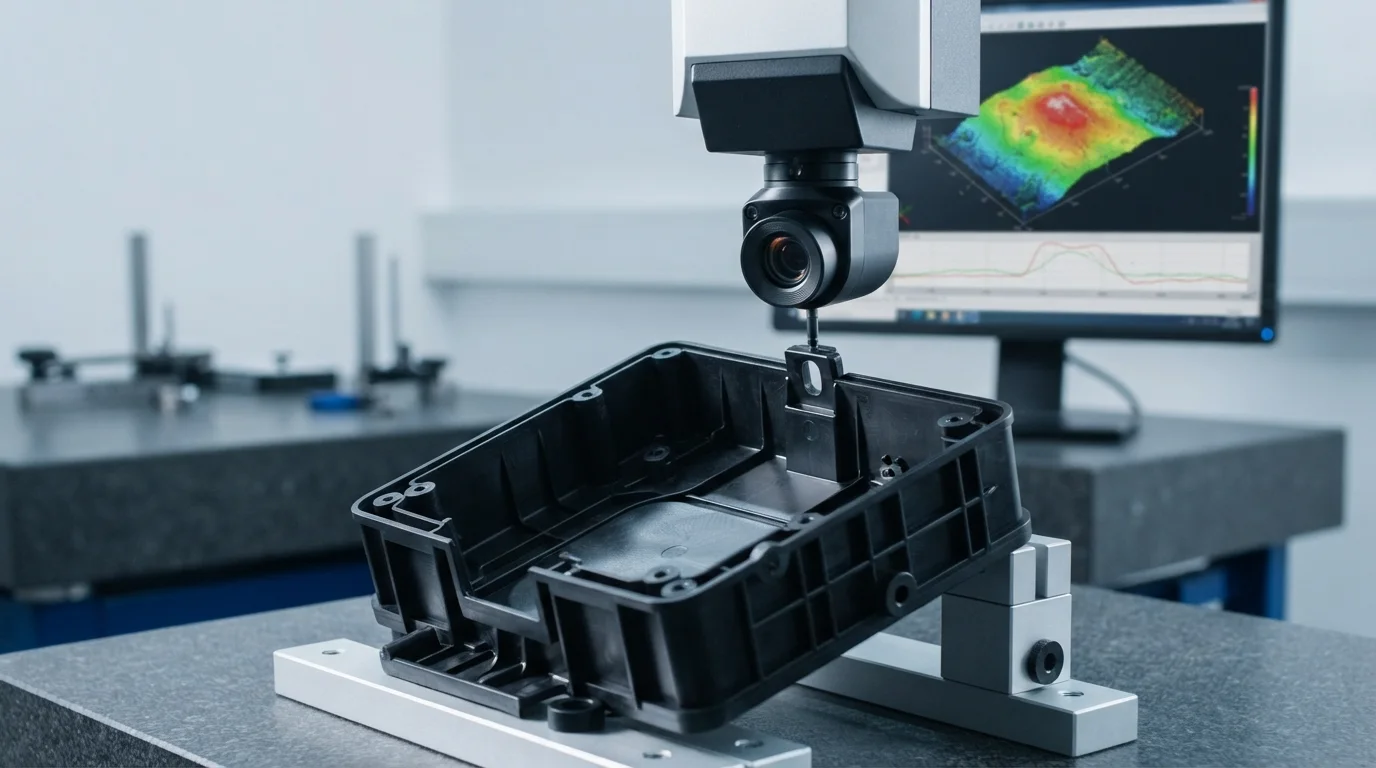
Submitting 3D CAD files triggers a comprehensive Design for Manufacturability (DfM) analysis delivered within 24 hours. Engineering reviews evaluate nominal wall thickness uniformity, draft angles, gate locations, and parting line feasibility to ensure clean part ejection. Identifying manufacturing risks before cutting metal prevents expensive tool modifications and long project delays. Executing rapid injection molding backed by certified quality management systems guarantees First Article Inspection (FAI) compliance and complete material traceability on every order.
الأسئلة الشائعة (FAQs)
What is the typical lead time for rapid injection molding T1 samples?
Rapid aluminum and soft steel molds deliver functional T1 prototype samples in as fast as 7 to 10 business days. Machining modular core inserts from Al7075 aluminum bypasses long steel hardening cycles, allowing rapid trial molding. Complex geometries with side-action slides or hand-loaded inserts may require 10 to 12 business days.
How does rapid injection molding differ from standard production molding?
Rapid injection molding utilizes pre-hardened soft steels or aluminum alloys housed inside modular master unit die (MUD) frames, optimizing lead time and NRE capital for 100 to 10,000 parts. Standard production molding uses fully hardened steel (such as H13 or S136) built into custom full-sized bolster bases designed to survive millions of cycles.
Can production-grade engineering plastics be used in rapid molds?
Rapid molds process the complete spectrum of production-grade engineering thermoplastics, including ABS, PC, PA66, PEEK, and Ultem. Injecting actual production resins allows engineering teams to perform valid physical stress tests, thermal evaluations, and agency compliance audits before investing in high-volume production steel tooling.