
Injection molding production ramp-up is the controlled move from first molded samples to a process that can repeatedly make parts against the approved requirements. A successful first shot is a useful milestone, not a production release: the team still has to resolve tool or process issues, confirm critical features, and agree what evidence demonstrates readiness.
The safest ramp-up uses decision gates instead of a calendar promise. At each gate, the team asks what has been proven, what remains open, and who can accept the next risk. This keeps a promising sample from being mistaken for a stable production process.
In this article
- Why a T1 sample is not the finish line
- Four readiness gates
- Read the signals before increasing output
- What belongs in the production handoff
- FAQ
Why a T1 sample is not the finish line
“T1” commonly describes an early tool trial, but teams may use the label differently. The important point is what the trial tested. It may show that the tool can close and fill, while leaving open questions about dimensions, appearance, cooling balance, ejection, cycle stability, or material traceability.
Do not approve a process from a few visually acceptable pieces if the drawing calls out dimensions or functions that have not been checked. A part can look clean yet fail at assembly; a dimension can pass in one location while variation across cavities remains unknown. The mold trial and validation plan should match the project’s actual acceptance needs.
Four readiness gates
| Gate | Question to answer | Evidence to review |
|---|---|---|
| Tool and design | Does the tool reflect the approved part and production intent? | Controlled CAD and drawing, tool changes, cavity identification, open engineering items |
| Process learning | Can the team identify which settings influence the critical responses? | Trial records, material condition, fill and pack observations, cooling and ejection notes |
| Part acceptance | Do samples meet the dimensions, function, and appearance requirements? | Inspection results, approved samples, cavity-to-cavity findings, disposition of deviations |
| Production release | Can the released setup and checks be repeated by the production team? | Process documentation, material controls, inspection plan, packaging and traceability rules |
These gates are a planning framework, not a universal qualification standard. The evidence and acceptance limits must come from the drawing, customer requirements, risk level, and applicable industry controls.
Read the signals before increasing output
A ramp-up should pause when a result is unstable or not understood. Repeated short shots, flash, sink, warpage, sticking, or color variation may point to different causes; increasing output before the cause is isolated can create more suspect inventory without adding useful knowledge.
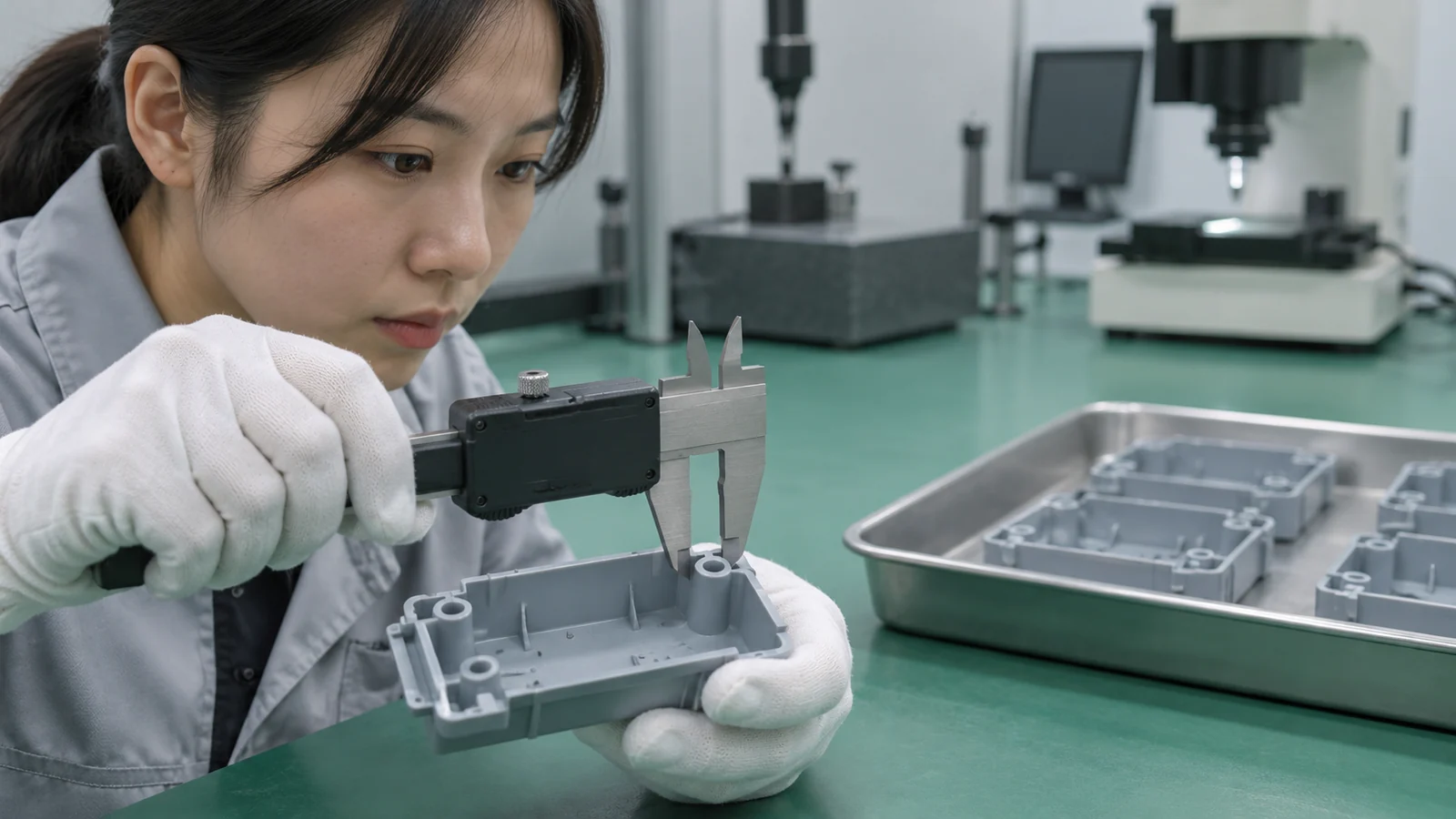
- By cavity. Separate measurements and visual observations by cavity when the mold has more than one cavity. An average can hide a single cavity that behaves differently.
- By feature. Focus on dimensions tied to fit, sealing, load, or assembly. Confirm that the chosen datum scheme and measurement method are repeatable.
- By process condition. Record material lot and handling, setup changes, and the conditions under which the samples were made. Do not compare parts from different conditions as if they were one trial.
- By defect pattern. Look for location and repetition. A defect that follows one cavity, one flow path, or one ejection feature is more informative than a general pass/fail label.
Where the project is moving to higher-volume production, the release plan should also consider expected run length, inspection frequency, material replenishment, and how process drift will be detected.
What belongs in the production handoff
Before regular orders begin, make sure the people who run, inspect, and receive the parts share the same current instructions. A useful handoff includes:
- approved part and tool revisions, with unresolved changes closed or formally dispositioned;
- resin grade, color, lot handling, and any restrictions on regrind or substitutions;
- the released process window or setup instructions established through project validation;
- critical dimensions, inspection locations, sampling approach, and reaction plan if a check fails;
- appearance samples or references, packaging orientation, labeling, and traceability requirements;
- ownership for reviewing deviations and approving engineering or process changes.
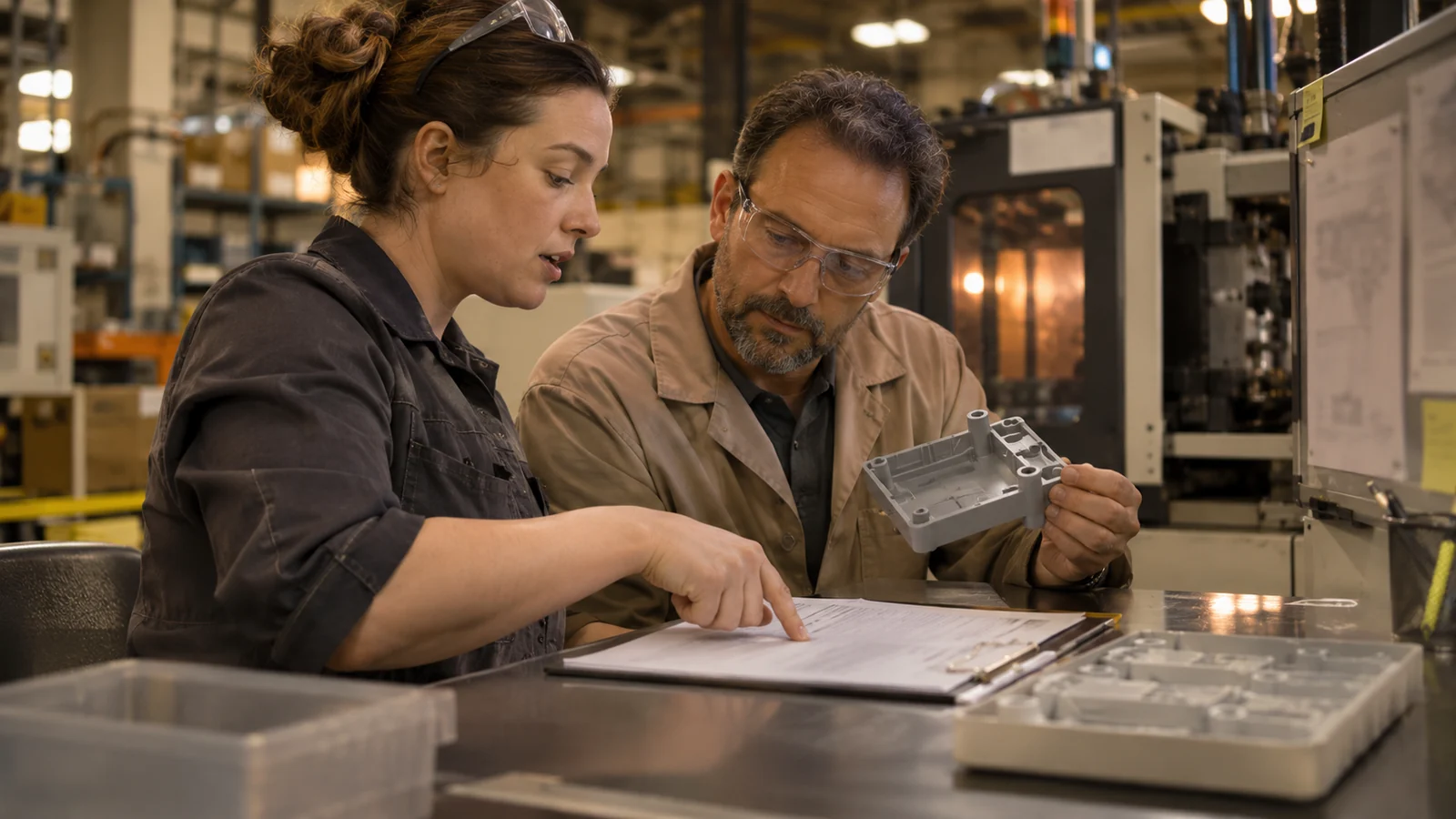
These controls connect plastic injection molding decisions made during design and trials to the quality system that supports ongoing production. The quality control process should explain how nonconforming parts are contained and how corrective action is verified.
FAQ
How many trial rounds are required before production?
There is no fixed number that fits every project. The process is ready when the agreed design, quality, and repeatability evidence is satisfactory and remaining deviations are resolved or formally accepted.
Can a first-off sample be used for customer approval?
It can be submitted if the customer’s approval process allows it, but the sample should be identified by tool, cavity, material, revision, and trial condition. The approval should state what it does and does not qualify.
Should production volume increase gradually?
Output should increase according to the project’s risk and the evidence collected. If the process, inspection method, or material supply is still changing, a controlled step-up may reveal issues before they affect a larger lot.
What is the most useful sign that ramp-up is complete?
The team can reproduce conforming parts using the released instructions, detect meaningful variation with the agreed checks, and respond to a deviation without relying on undocumented operator judgment.