
A housing and a loaded bracket can share the same operating temperature yet need different polymers. Paying for a higher thermal rating does not resolve that difference in function. The useful answer to PEEK vs Ultem is not that PEEK is “better.” PEEK is the stronger choice when heat, aggressive chemicals and sustained mechanical load converge. Ultem, the best-known PEI family, is often the smarter purchase when flame performance, electrical insulation, dimensional predictability and lower material cost meet the real requirement.
In this comparison:
- The fastest selection rule
- Heat under load
- Chemicals and sterilization
- Shrinkage and tooling
- Cost and validation
Start with the failure you cannot accept
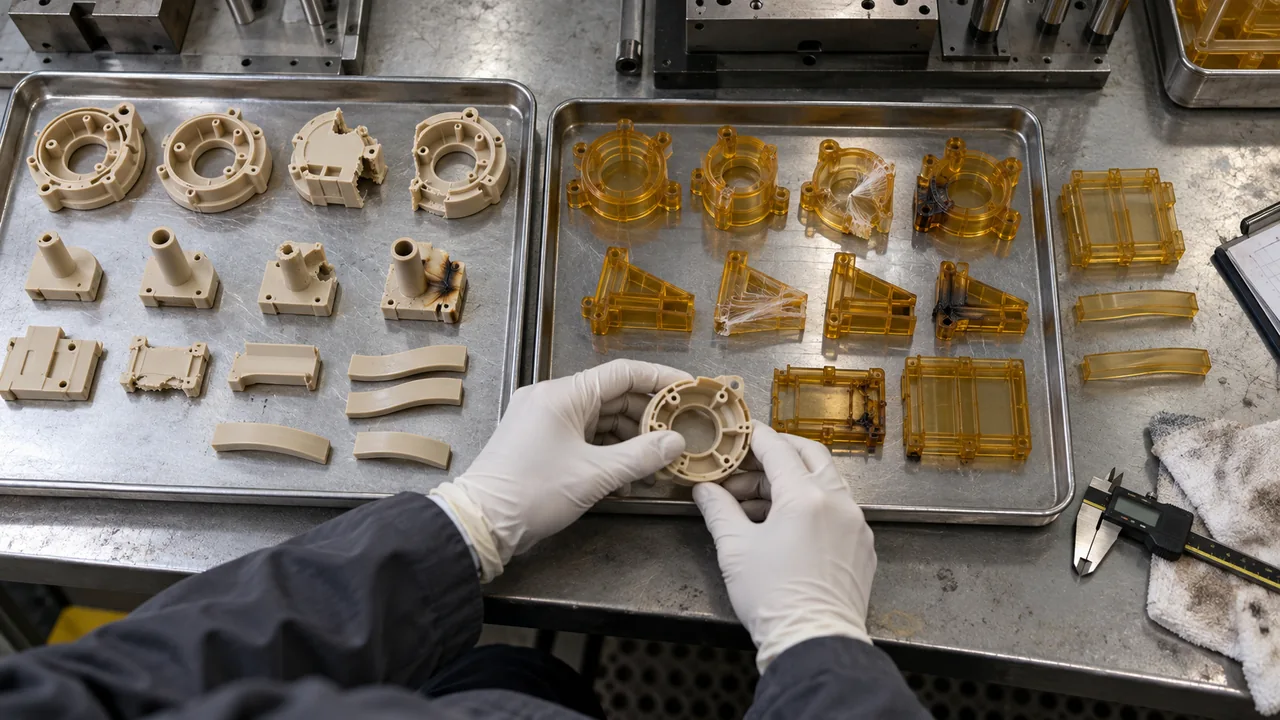
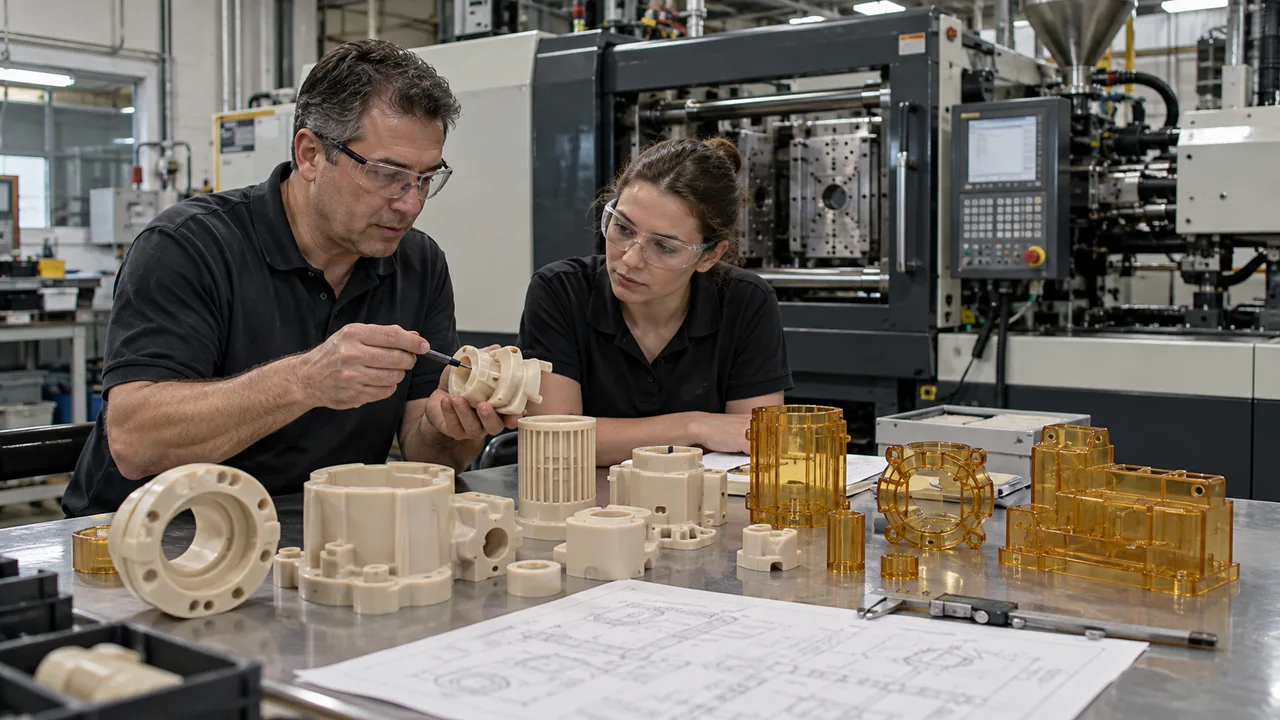
Choose PEEK first when a component must retain mechanical properties near the upper end of high-performance thermoplastics, resist broad chemical exposure or survive demanding wear and fatigue. Choose Ultem first when the part needs inherent flame resistance, low smoke, electrical performance or stable dimensions from an amorphous polymer. Ultem identifies a PEI product family, while PEEK covers grades with different fillers, flow levels and approvals. The commercial decision must therefore compare two exact grades, not an amber sample against a beige sample. List certification, color, reinforcement and traceability requirements before requesting prices. Start the review with a component function, such as holding an electrical contact, maintaining a fluid seal or surviving repeated cleaning.
If both appear technically viable, the decision should move to grade availability, certification, molding risk and total qualified cost. That is more useful than comparing two generic property columns. Then name the unacceptable change: displacement, cracking, lost insulation or wear. PEEK and PEI can both meet many demanding applications, so a family-level preference is an incomplete specification. The useful question is which exact grade and molded geometry retain that function with enough margin for normal production variation.
Which material handles heat under load better?
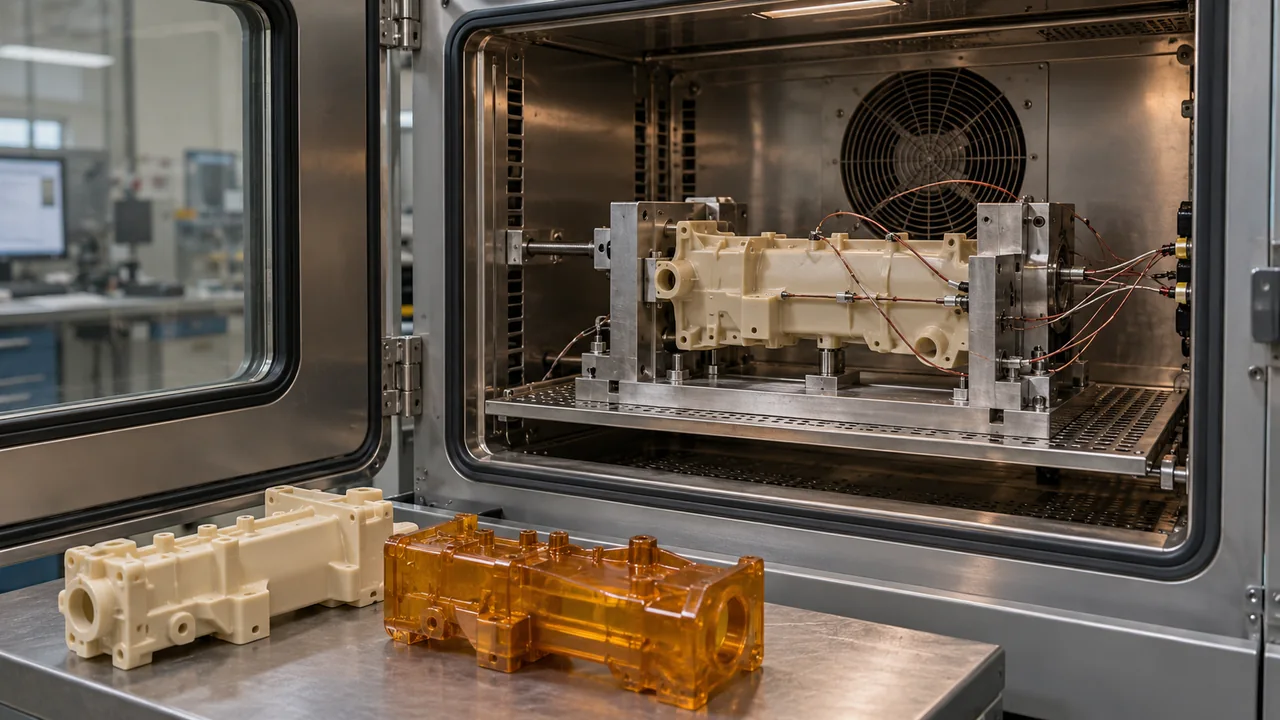
PEEK generally preserves useful structural performance at higher temperatures than PEI. But a maximum-temperature figure does not predict whether a boss relaxes, a snap arm cracks or a sealed joint loses compression. Load magnitude, duration, reinforcement and geometry determine the result. A short temperature excursion and a ten-year loaded condition are not equivalent. PEEK may justify its premium where a joint must retain compression or a bearing feature must resist creep, while PEI may remain fully adequate for an unloaded housing. Test the actual section thickness and load direction after thermal aging. Compare property retention at the working temperature rather than ranking room-temperature tensile numbers.
Ultem can still be the correct option for aerospace interiors, electrical components and sterilizable housings when the actual duty cycle stays inside the selected grade’s limits. Do not specify PEEK merely because the environment is described as “hot.” A lightly loaded housing and a preloaded structural bracket impose different demands on the same resin. Reinforcement may reduce creep but also change impact response, shrinkage and the weakest direction. For a bolted component, record how much load remains after heat exposure; for a locating feature, record displacement while the operating load is still applied. The table separates material structure from product requirements, but neither column defines a universal winner. PEI’s amorphous behavior avoids a crystallization variable, yet reinforcement and residual stress still affect dimensions.
PEEK and Ultem at the decision level
| Question | PEEK | Ultem/PEI |
|---|---|---|
| Polymer structure | Semi-crystalline | Amorphous |
| Primary advantage | High-temperature strength and chemical resistance | Flame performance and predictable shrinkage |
| Typical color | Natural beige or filled black | Amber transparent or filled opaque |
| Molding concern | Crystallinity and very high mold temperature | Moisture, molded-in stress and chemical exposure |
Do not generalize chemical resistance

PEEK has broad chemical resistance, while Ultem’s performance depends more strongly on the fluid, temperature and molded stress state. That does not make Ultem fragile; it means the exact environment matters. Cleaning agents, fuels, lubricants, disinfectants and thread-locking compounds should be named before the material is released. Chemical screening should include molded-in stress from filling, packing, inserts and assembly. A fluid that appears harmless on an unstressed coupon can initiate cracking around a press fit or screw boss. Expose assembled molded parts to the real cleaner, lubricant or disinfectant at service temperature. A cleaner used only during maintenance can be more decisive than the main operating fluid. PEEK’s chemical and thermal capabilities are valuable only if they address the product duty cycle. Keep the grade designation, supplier datasheet version and test method beside any comparison figures so purchasing does not approve an unsupported combination of properties.
Repeated steam sterilization also needs grade-level verification. A medical-grade designation, biocompatibility record and successful cycle test are separate requirements. Specify concentration, dwell time, rinsing and whether the component is loaded during contact. For sterilized products, distinguish material suitability from the device’s own approval and validation. Repeated-cycle evaluation should look for changes in dimensions, retained strength and assembly function, not simply discoloration or visible surface damage. Neither family should receive a blanket chemical or medical guarantee.
How the molding plan changes
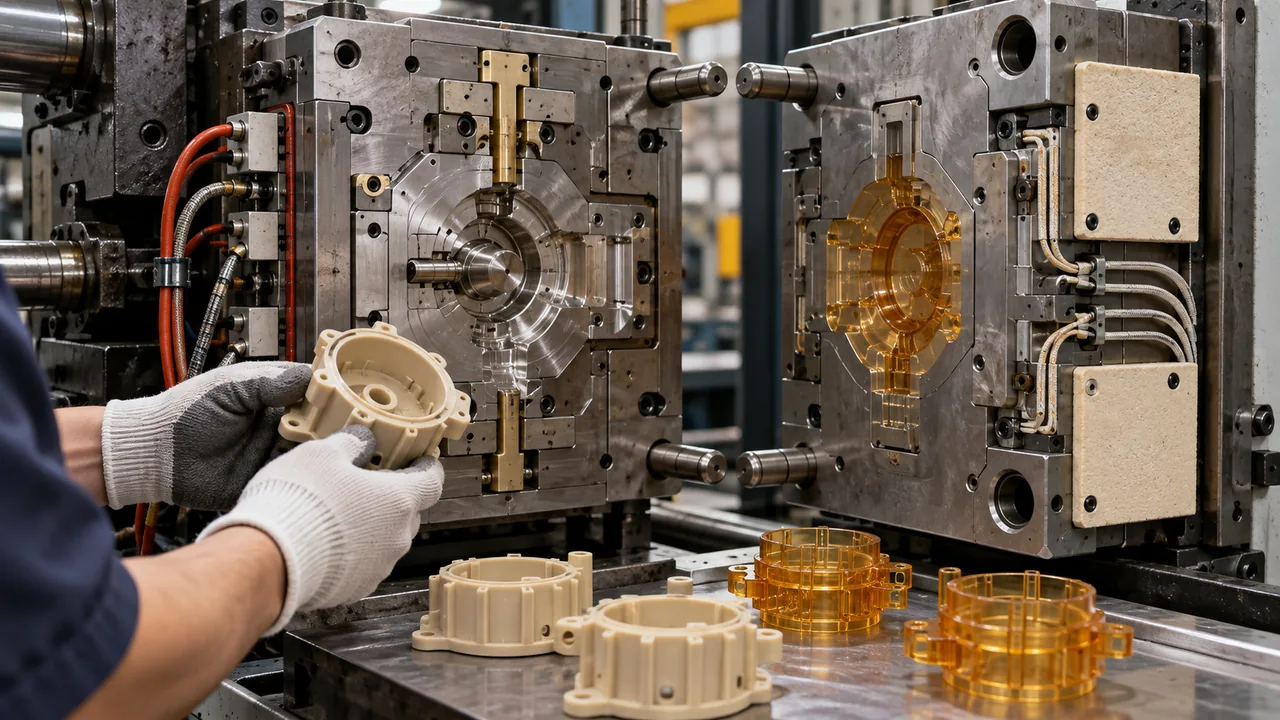
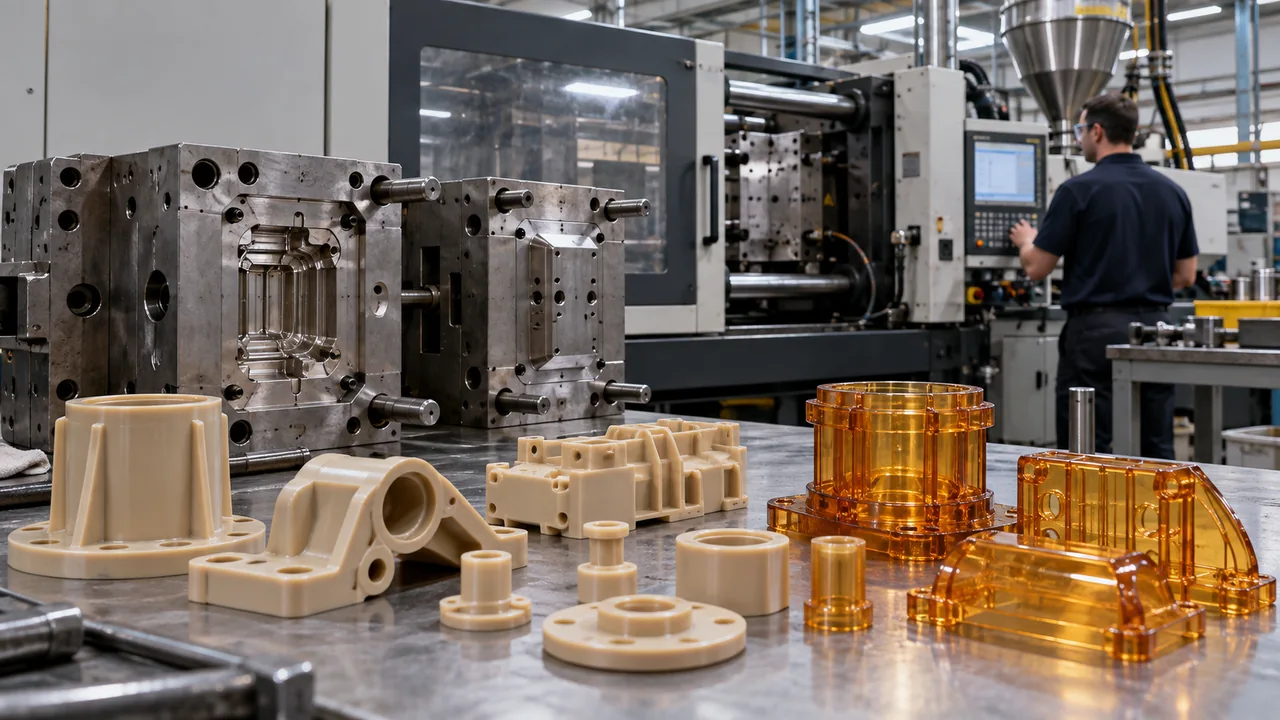
PEEK needs a thermal system capable of supporting crystallization throughout the cavity. Ultem is amorphous, so crystallinity is not the control variable, but inadequate drying and excessive residual stress can still create splay, cracking or dimensional drift. Both materials need careful residence-time control and tooling designed for elevated temperatures. PEEK processing focuses on uniform crystallization and avoiding excessive melt history; PEI processing focuses on dryness, residual stress and stable filling. Transferring the same parameter philosophy between them can produce a visually acceptable part with poor field durability. Define separate setup limits and restart procedures for the chosen grade. A tool developed for one material needs a documented review before running the other.
Our High-Temperature Polymer Molding process treats resin, tool heating, gate design and validation as one system. Review the available PEEK grades and PEI/Ultem grades only after the functional boundary conditions are written down. Consider gate freeze, packing response, venting, heating capacity and ejection at the required cycle point. Amorphous PEI and semi-crystalline PEEK also call for different interpretations of post-mold dimensional change. Keep setup and restart records grade-specific; copying the same temperature philosophy can hide residual stress in one material or produce an unsuitable morphology in the other.
When is PEEK worth the premium?
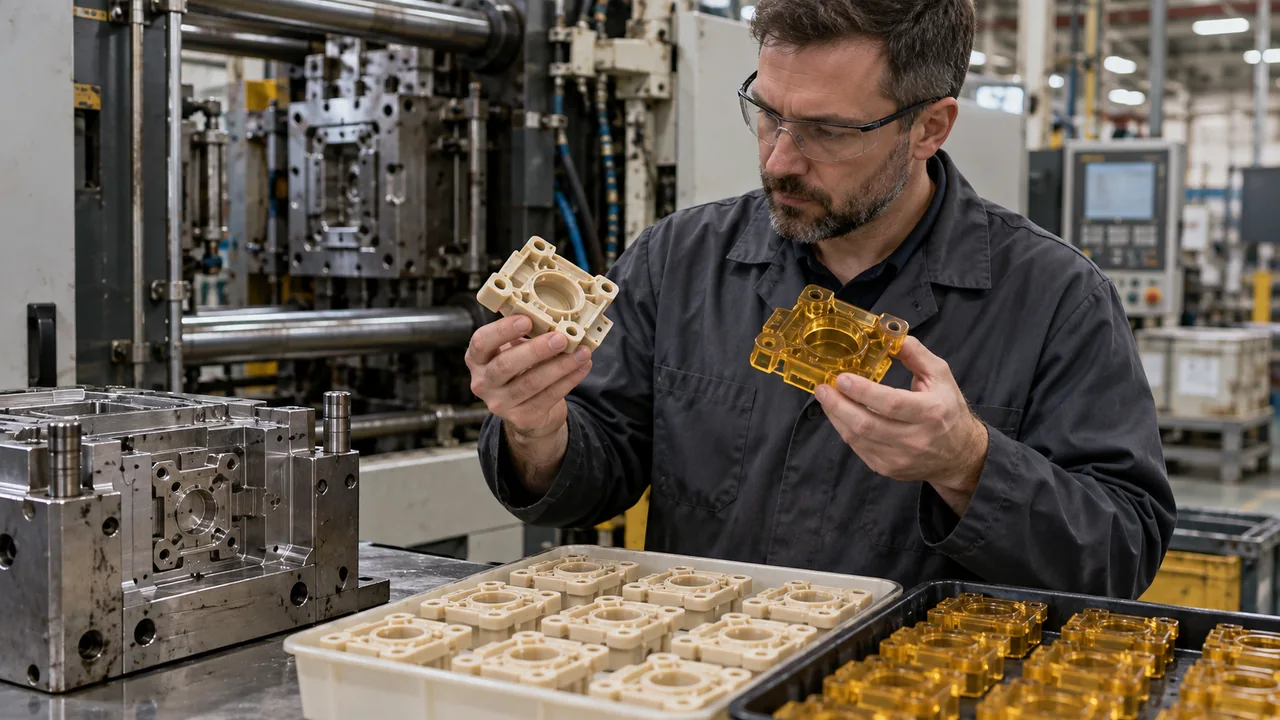
PEEK earns its cost when it prevents a known Ultem failure: excessive creep, loss of strength at temperature, chemical attack, fatigue or wear. If Ultem already passes those requirements, upgrading to PEEK can add resin cost and molding complexity without adding customer value. Tool heating, purge consumption, inspection frequency and startup scrap can outweigh a simple resin-price comparison. PEI often wins when its performance margin is adequate, whereas PEEK wins when it removes a documented failure or secondary metal component.
Compare total qualified cost, including tooling temperature capability, scrap during process development, cycle time, inspection and failure risk. A less expensive resin is not cheaper if it creates repeated field returns; a premium resin is not economical if the design never uses its capability. Compare cost at approved yield and annual volume, not at theoretical shot weight.
Frequently asked questions
Is Ultem the same material as PEEK?
No. Ultem is a SABIC trade name used for PEI grades. PEI is amorphous; PEEK is semi-crystalline and belongs to the PAEK family. Both names cover multiple grades, so the polymer description is only the beginning of the specification. Verify fillers, flow characteristics and required approvals before comparing manufacturing quotations.
Which material is easier to hold dimensionally?
Ultem often offers more predictable isotropic shrinkage, while reinforced grades and part geometry can change the result. PEEK dimensions depend strongly on crystallinity and cooling history. Set the measurement age and conditioning state for both candidates. An initial dimensional comparison does not demonstrate capability after thermal cycling or assembly load.
Can PEEK and Ultem use the same mold?
Sometimes, but it should not be assumed. Shrinkage, heating, gating, venting and ejection requirements must be reviewed for the exact grades. Document the mold review and qualify a separate process for each material. Existing steel dimensions and thermal interfaces may constrain the substitution even if both grades fill the cavity.