
Electroplating
Electroplating on plastic builds a metal finish after the nonconductive substrate has received a suitable preparation and conductive treatment. The process depends strongly on resin grade and the selected plating system. For a molded component, the review should connect appearance and service requirements with the substrate, rack locations, masking boundaries and the complete coating stack.
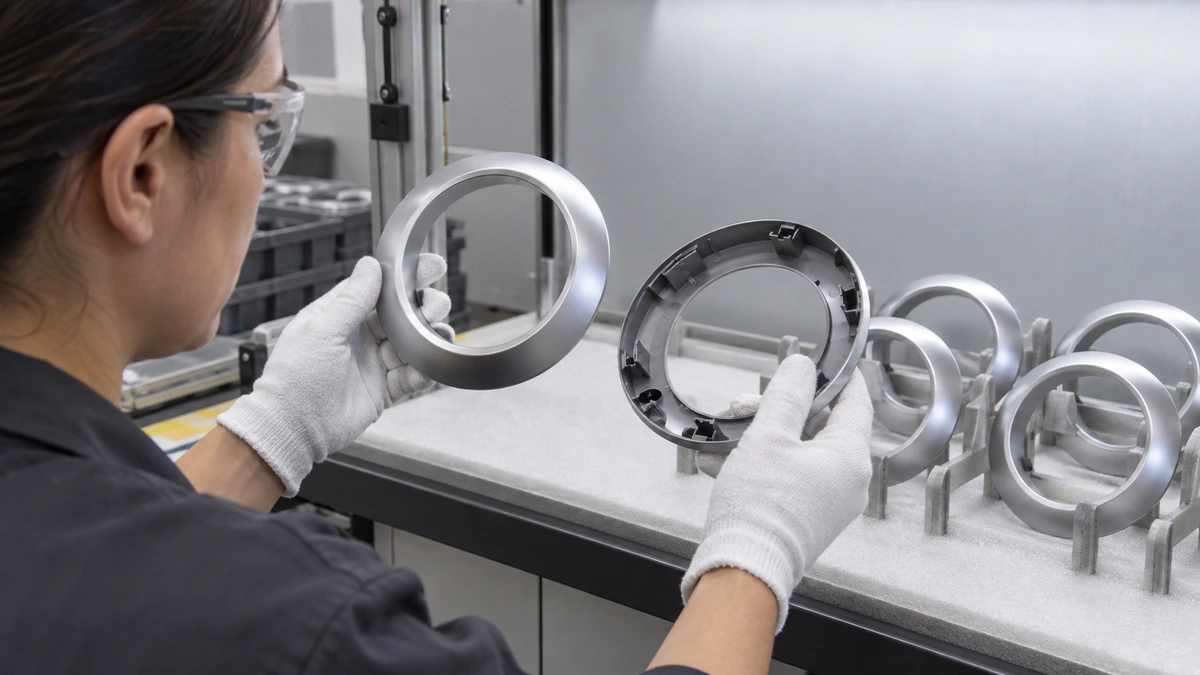
Select a plateable substrate before the mold is finalized
ABS and suitable PC/ABS grades are common candidates, but a generic polymer name is not sufficient to approve plating. Other polymers require specifically matched processes. Confirm the exact resin, color and additives with the proposed finishing route before making a material substitution.
The molded surface also matters. Local stress, contamination or surface defects can undermine a finish even where the basic polymer is compatible. Finishing should be considered in the plastic injection molding specification rather than added as an undefined cosmetic request.
Make the drawing useful to the plater
- Identify significant visible surfaces and acceptable rack or contact locations.
- Mark areas that must remain unplated, including fits or electrical isolation zones.
- Define the required final dimensions after the complete coating stack.
- State the intended environment and applicable customer finish specification.
Recesses, sharp edges and local geometry can influence distribution and appearance. Discuss difficult regions early instead of assuming identical coverage everywhere.
Appearance and durability need separate approval
| Requirement | Appropriate review |
|---|---|
| Decorative finish | Color, gloss and surface defects against an approved reference |
| Adhesion | Agreed adhesion evaluation on the specified substrate |
| Thermal exposure | Performance of the polymer-metal system after conditioning |
| Corrosive environment | Required exposure test and acceptance criteria |
An attractive first sample does not establish long-term environmental performance. Testing must reflect the intended product, including cleaning chemicals and thermal changes where relevant. Confirm restricted-substance documentation against the actual supplied finish; the word “chrome” alone does not identify the chemistry or compliance status.
Questions before production
Can a molded part change resin after finish approval?
Not without reviewing compatibility and repeating relevant validation. A nominally similar grade may have a different plating response.
Will plating hide sink marks?
A reflective surface can make defects more noticeable. Correct the substrate rather than relying on the coating to conceal them.
Request a finish-specific review
Compare related surface finishes and provide CAD, resin grade, finish standard and expected quantity. A project quotation should identify the required coating system and acceptance scope, not merely state “plated.”