
Fastening external covers, structural brackets, or printed circuit boards onto plastic housings requires high-durability threaded connection points. Tapping threads directly into raw thermoplastic bosses creates weak joints prone to thread stripping, stress cracking, and thread fatigue under repeated maintenance cycles. Incorporating metallic threaded fasteners into plastic bosses provides robust internal threads capable of accepting standard machine screws.
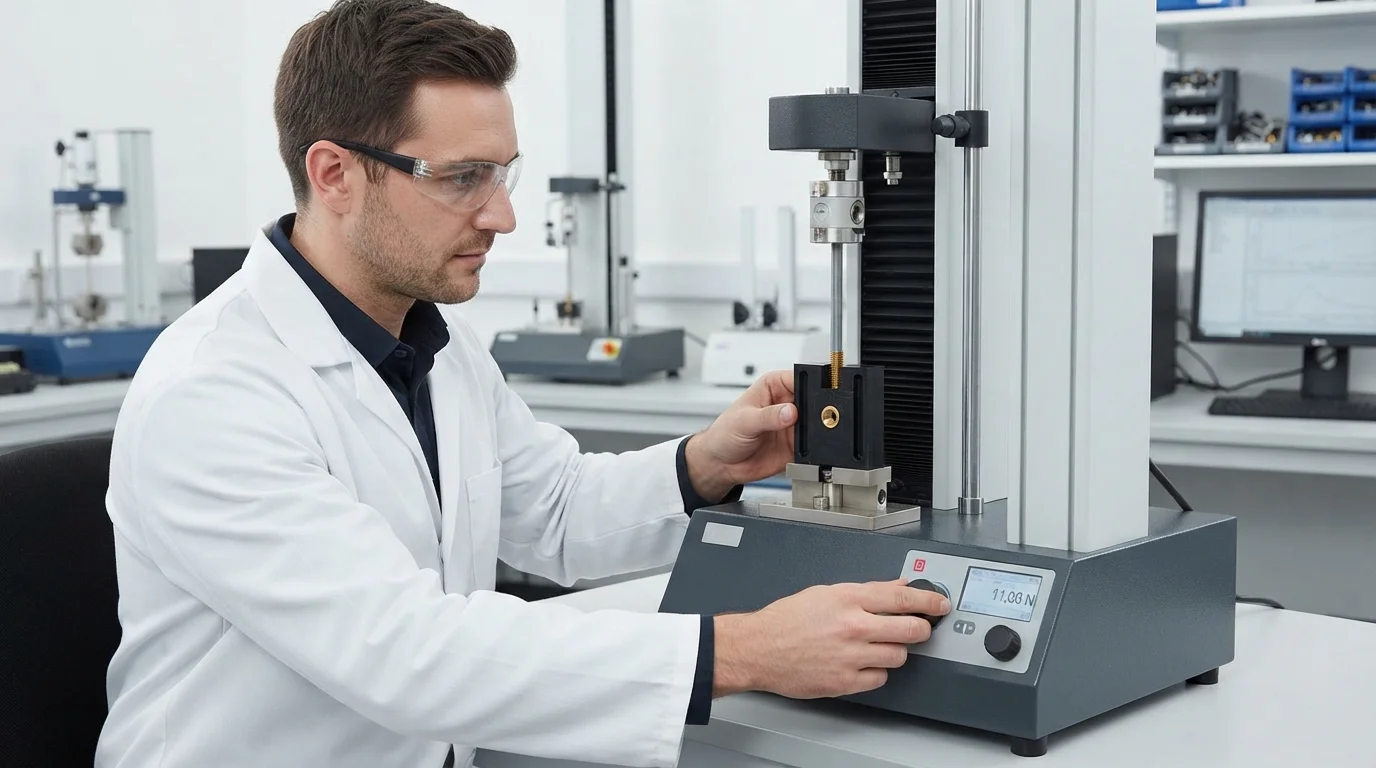
Engineers must choose between pre-placing metal fasteners into the mold core before injection or installing inserts after molding using ultrasonic insertion or a heated tip. Selecting between primary in-mold encapsulation and secondary thermal insertion impacts initial tooling budgets, unit labor costs, and joint mechanical load limits. This technical comparison analyzes structural differences, torque resistance physics, and production economics.
Table of Contents
In-Mold Inserts vs. Post-Molding Heat-Staked Fasteners
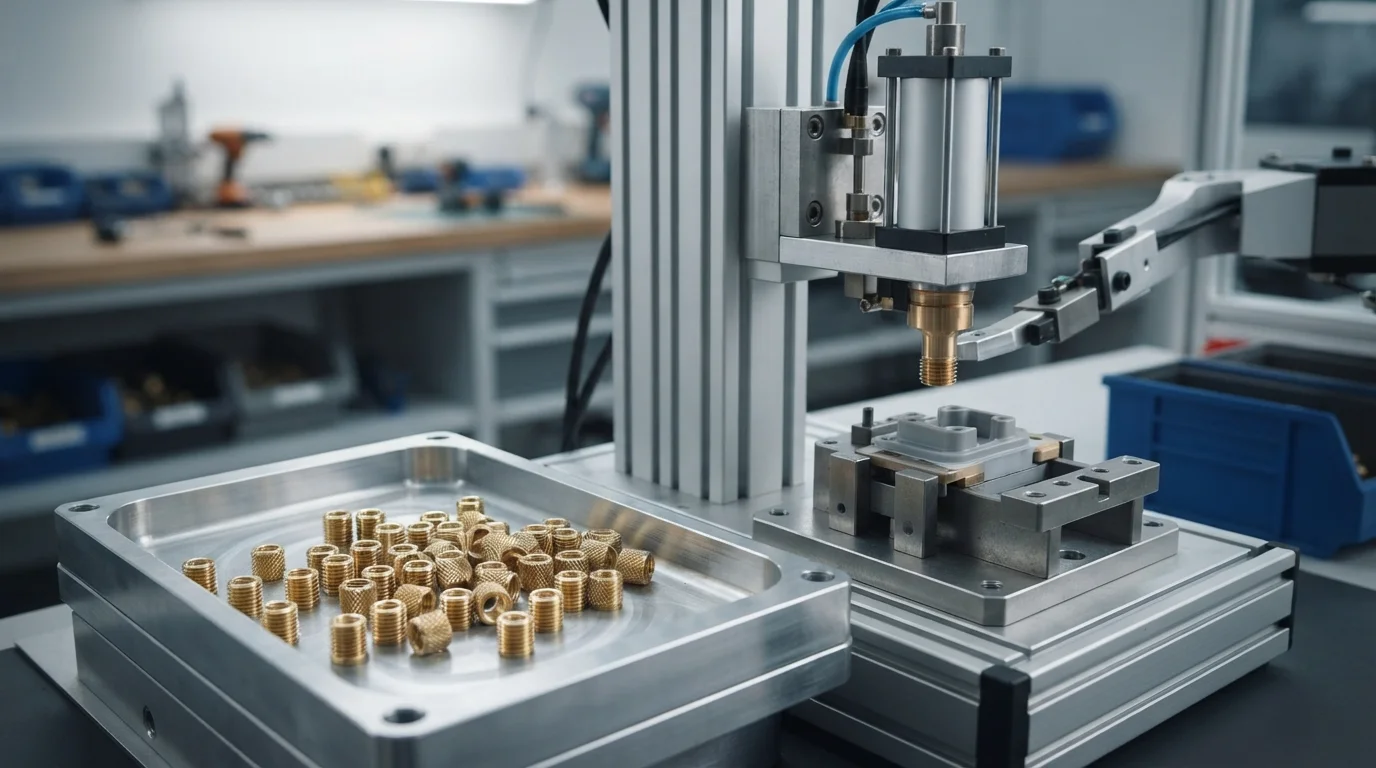
Comparing insert molding vs heat staking requires evaluating the physical installation mechanics of each process. Pre-placing threaded brass or stainless steel fasteners inside the mold cavity before resin injection characterizes primary in-mold encapsulation. Molten thermoplastic flows around the insert’s retention features and can form a mechanical interlock as it cools.
Post-molding heat staking installs an insert with a heated tip after the boss is molded. Ultrasonic insertion instead uses vibration to heat the plastic locally. In either process, softened resin can flow into the insert’s retention features and solidify around them. Verify the hole design and installation with the selected insert.
Torque Resistance & Pull-Out Force Testing Comparison
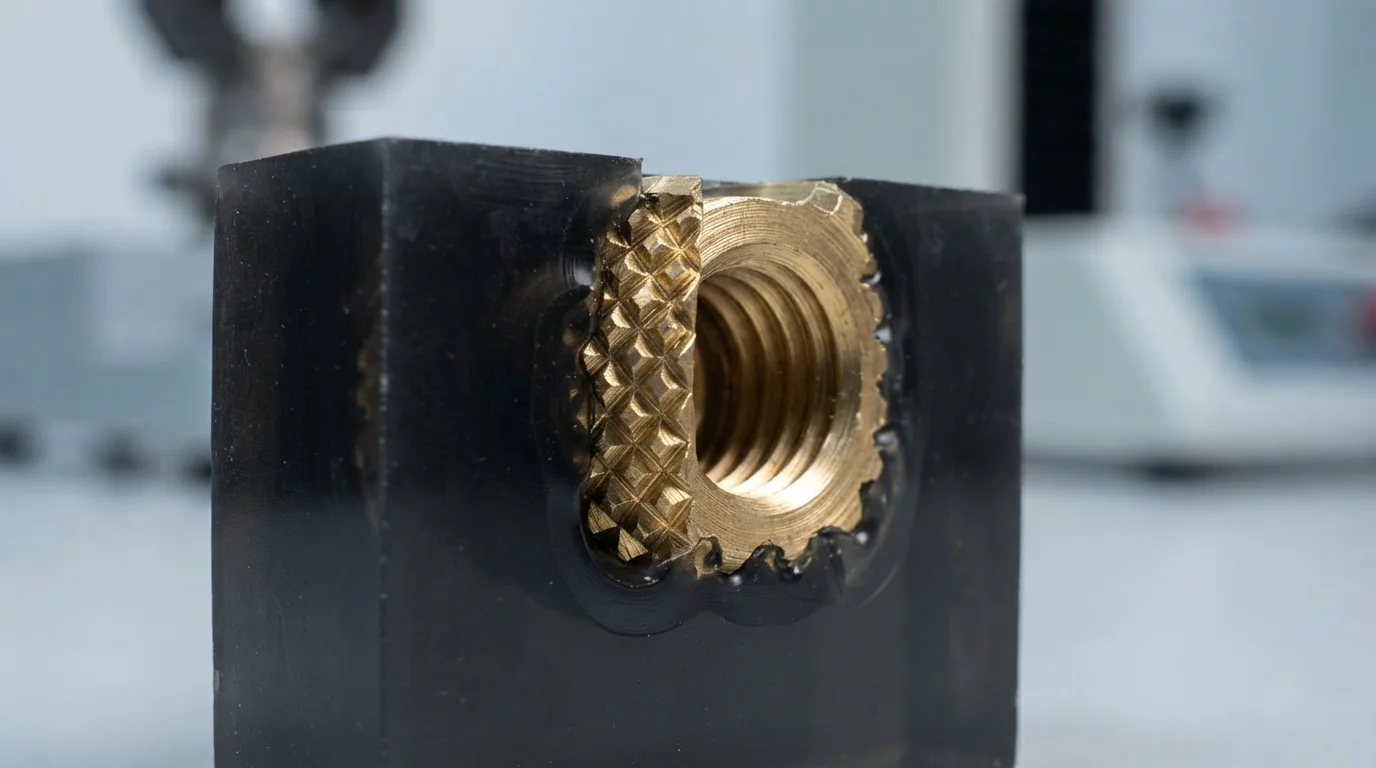
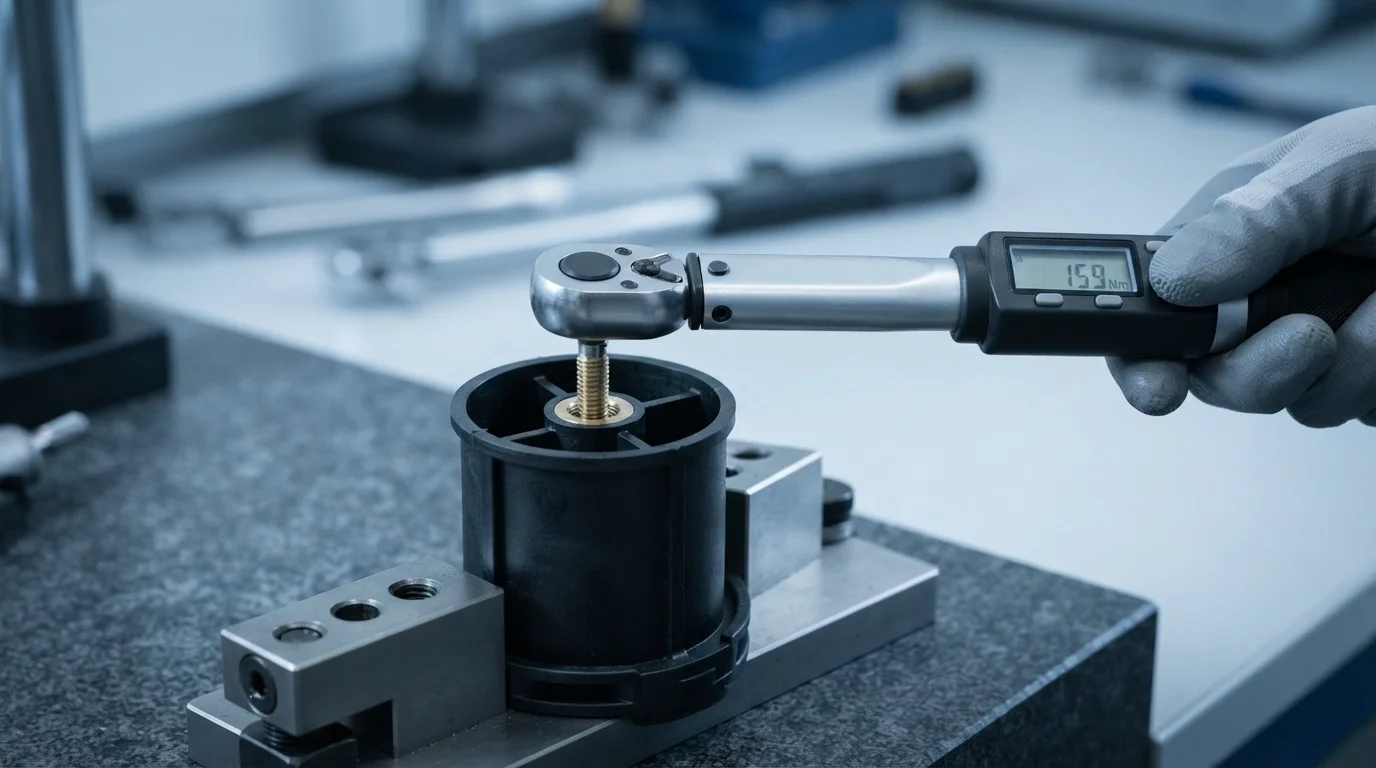
With in-mold placement, molten ABS, polycarbonate (PC), or PA66 can flow around the insert’s retention features. Measure pull-out force and rotational torque resistance on representative parts with the selected resin, boss, insert and mating hardware.
A post-mold insert is not inherently shallow or weaker. Compare heat or ultrasonic insertion with insert molding using the same resin and comparable bosses and load conditions. Use the correct insert and installation settings for each route, and test against the same retention requirements.
| Mechanical & Process Parameter | Primary In-Mold Insert Encapsulation | Post-Molding Heat / Ultrasonic Staking | Engineering Recommendation |
|---|---|---|---|
| Axial Pull-Out Resistance | Depends on the insert and molded joint | Depends on the insert and installed joint | Measure axial pull-out on representative parts |
| Rotational Torque-Out Resistance | Depends on insert geometry and resin fill | Depends on boss design and installation | Measure torque-out in the actual assembly |
| Secondary Assembly Labor Cost | Account for loading and inspection | Account for insertion and inspection | Compare cost per conforming part at the quoted volume |
Low-Volume Prototyping vs. High-Volume Production Economics
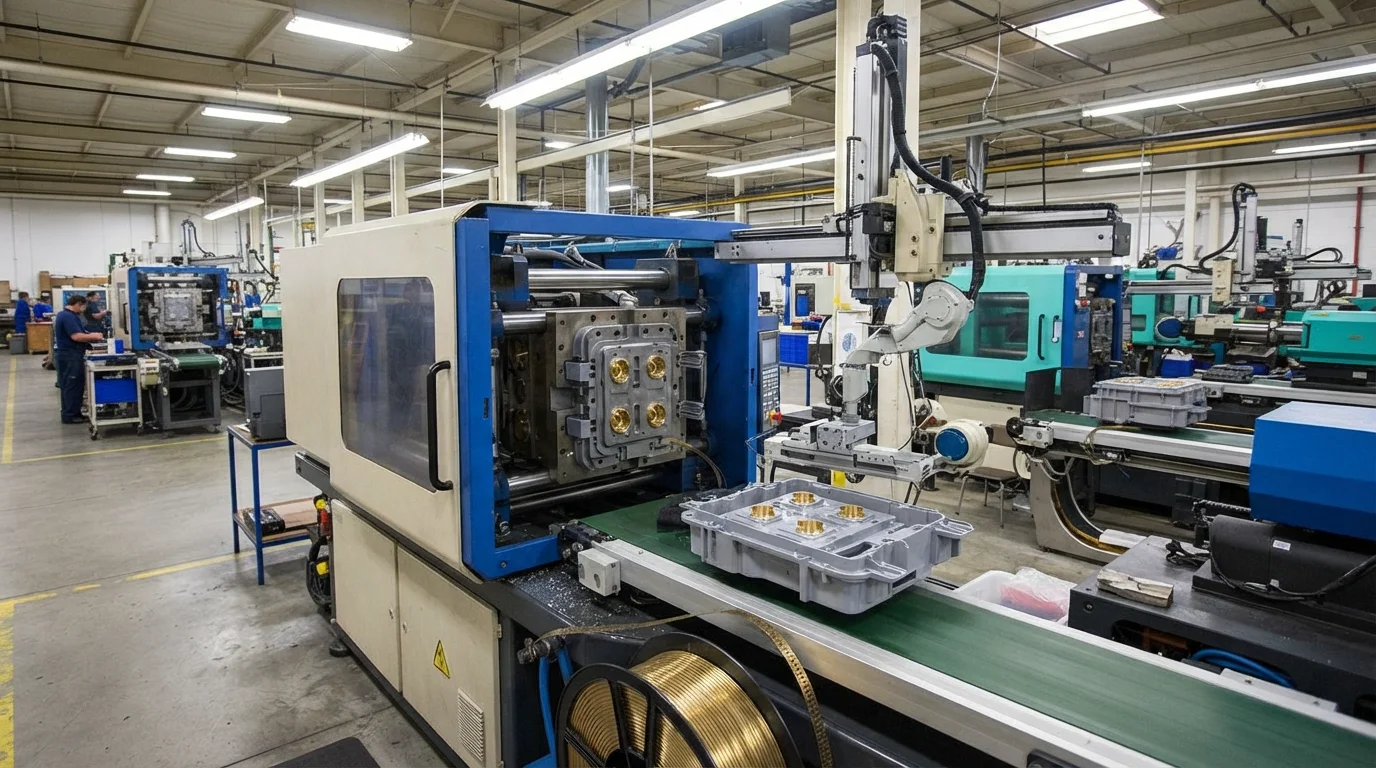
Evaluating project economics requires balancing upfront non-recurring engineering tooling budgets against unit assembly labor costs. Post-mold insertion can simplify the molding tool, but adds an installation step that can be manual or automated. Include its fixtures, cycle, labor and yield in the comparison.
In-mold pre-placement increases initial mold engineering precision requirements to prevent plastic flash on active threads. In-mold placement can remove a separate insertion step but adds loading and may change the molding cycle. Compare tooling amortization, placement, machine time, labor, inspection and yield per conforming part at the quoted volume. There is no universal break-even quantity.
Frequently Asked Questions (FAQs)
Why does insert molding achieve higher pull-out force than heat staking?
Not necessarily. Either route can meet the retention requirement when the insert, resin, boss and installation are matched to the application. Compare pull-out and torque-out on representative assemblies with the intended hardware and service conditions.
When is heat staking preferred over insert molding for plastic fasteners?
Heat staking can make sense if post-mold installation simplifies the tool or avoids slow in-mold loading. Confirm joint retention, then compare actual installation and molding time, tooling and yield for the quoted quantity.
How do you prevent plastic from leaking into internal threads during in-mold insertion?
Preventing plastic ingress into threaded blind or through-holes relies on precision mold core locating pins and tight shut-off land steps. Locating pins seal the internal thread opening firmly against tool steel, blocking molten polymer from entering during high-pressure packing.