
Automotive structural designers and industrial packaging engineers face continuous pressure to reduce component mass without compromising mechanical bending stiffness. Solid plastic parts with thick walls suffer from localized thermal shrinkage, creating unsightly surface sink marks, high internal stress, and long cooling delays. Injecting physical blowing agents into molten thermoplastics creates internal gas pressure that counteracts volumetric contraction while trimming part weight. This technical guide reviews physical supercritical fluid processing, cavity pressure reduction mechanics, and structural polymer applications.
目錄
Microcellular Foaming (MuCell) Technology for Weight Reduction
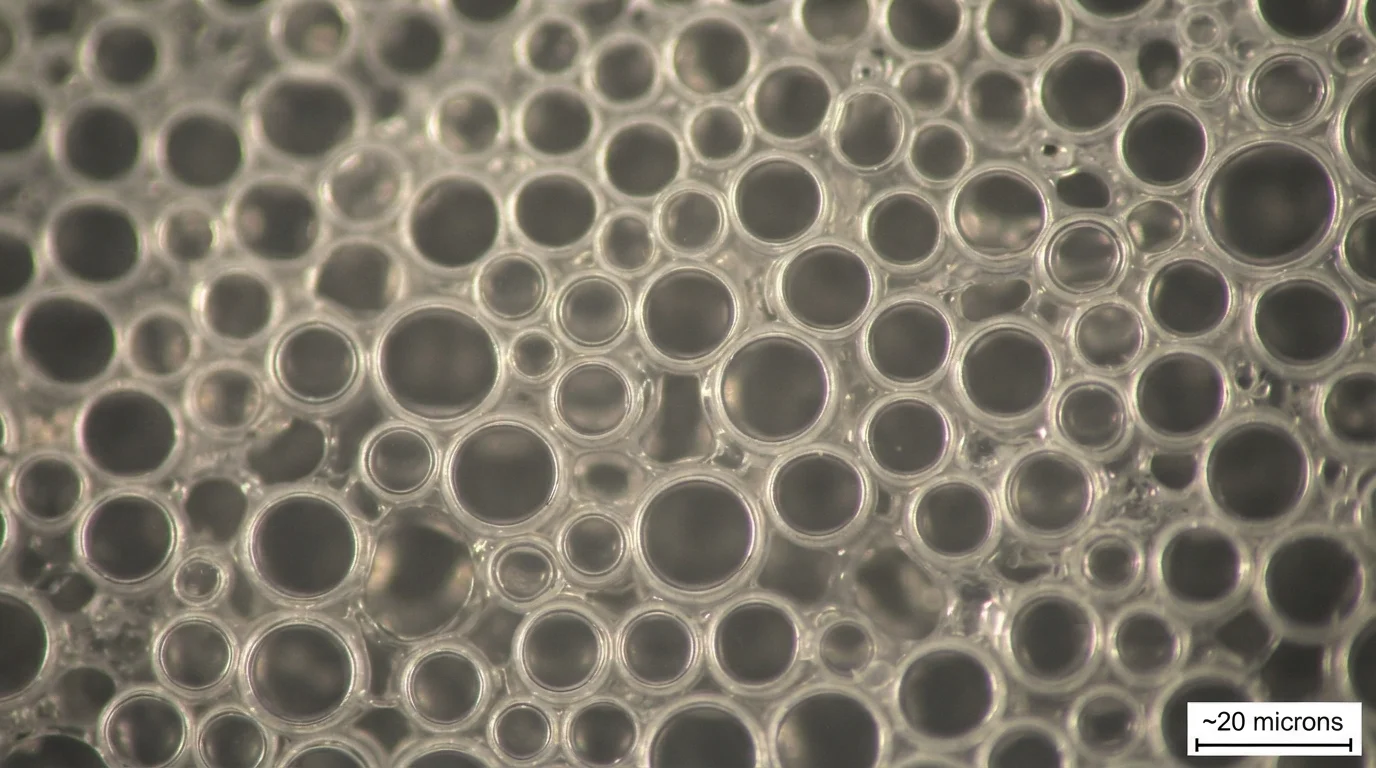
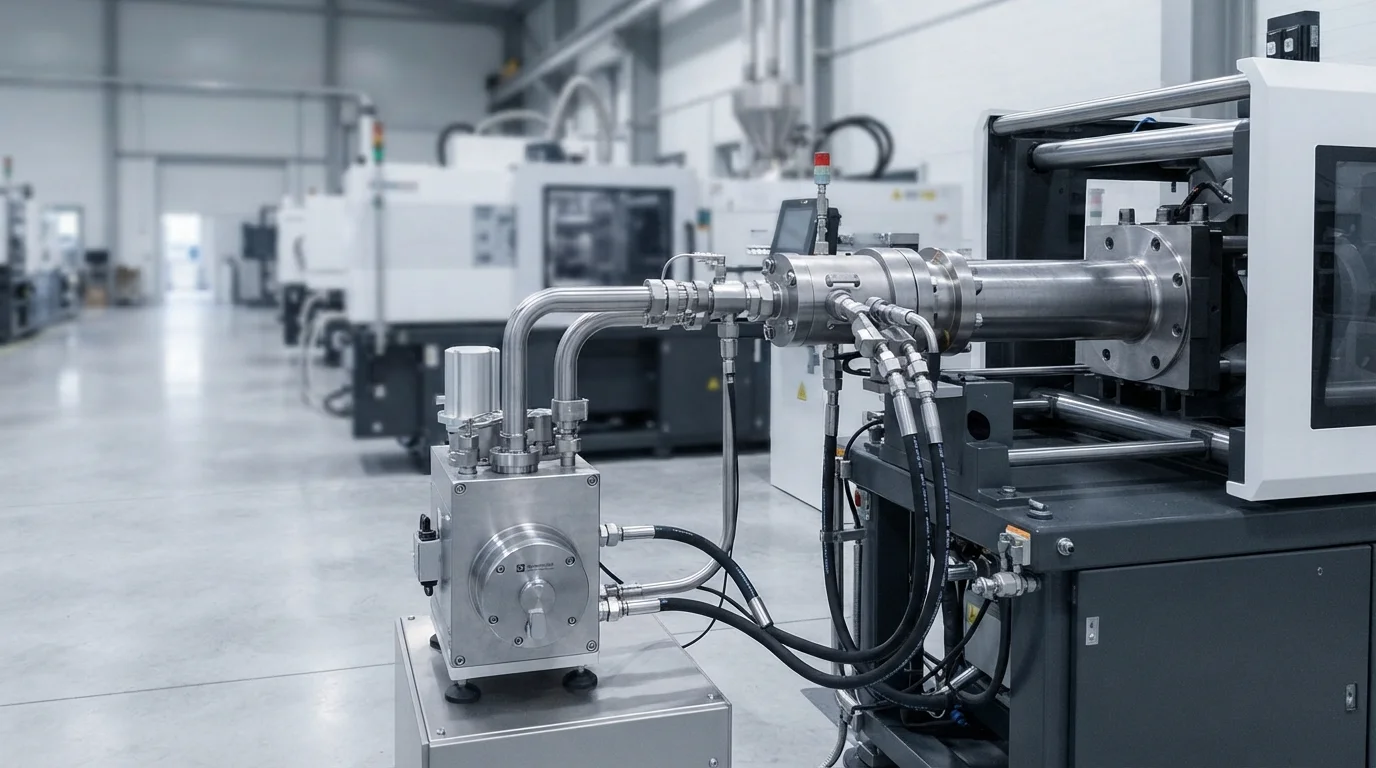
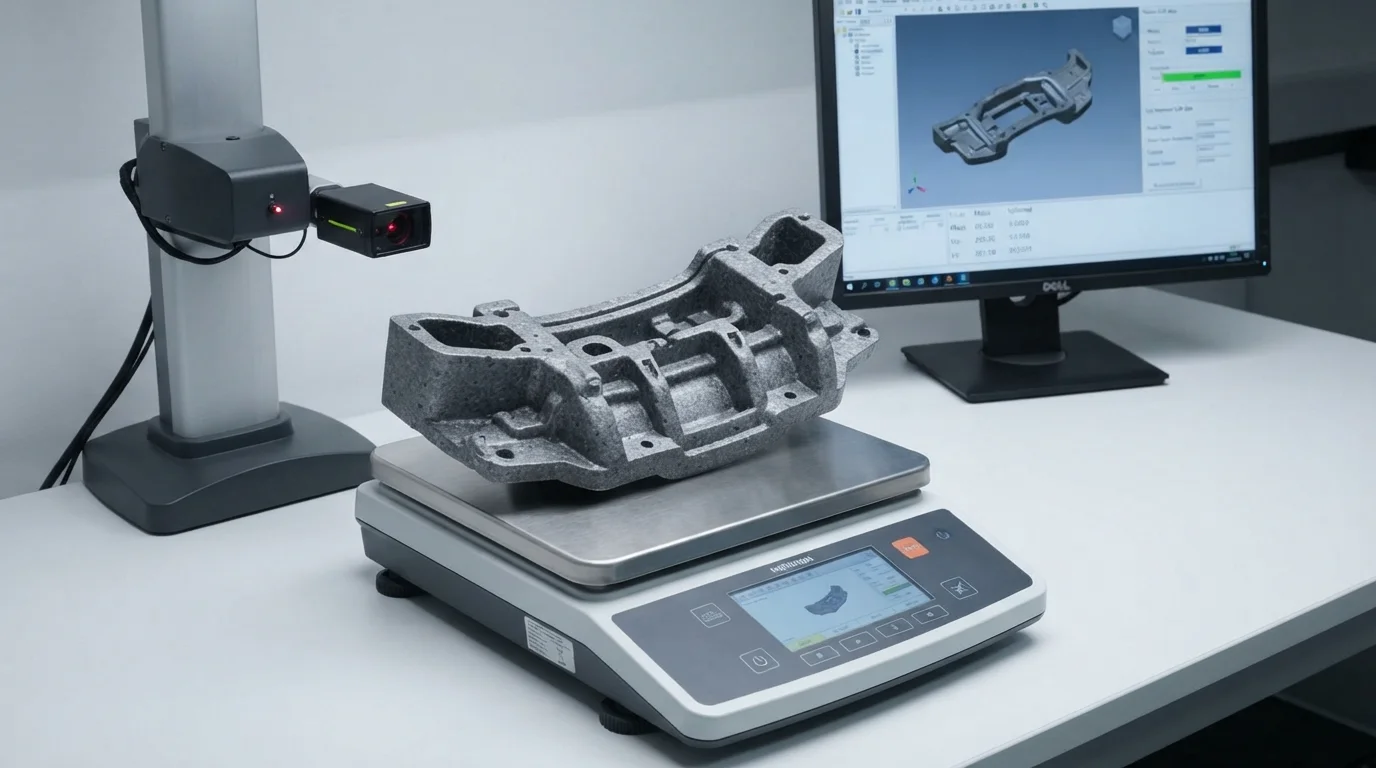
Executing physical foam injection molding utilizes MuCell technology to dissolve supercritical fluid into the polymer melt. Injecting supercritical nitrogen or carbon dioxide into the machine barrel at 15 to 25 MPa forms a single-phase polymer-gas solution. As the single-phase solution enters the mold cavity and experiences a rapid pressure drop, billions of microcellular foaming cells nucleate instantly. Creating closed micro-bubbles measuring 5 to 50 microns reduces component weight by 10% to 20% while maintaining structural moment of inertia. Physical supercritical foaming leaves zero chemical byproduct residues, preserving raw material purity and recyclability.
Supercritical foaming process sequence includes:
- Supercritical fluid delivery—Injecting nitrogen gas in its supercritical state ensures complete dissolution into the polymer melt.
- Single-phase solution mixing—Mixing gas and molten resin under high barrel pressure creates a homogeneous polymer-gas solution.
- Microcell nucleation—Dropping pressure as the melt enters the cavity triggers rapid nucleation of billions of micro-bubbles.
- Internal cavity expansion—Expanding gas bubbles push molten resin outward against mold walls, creating a solid skin and foamed core.
Eliminating Sink Marks & Reducing Internal Mold Cavity Pressure
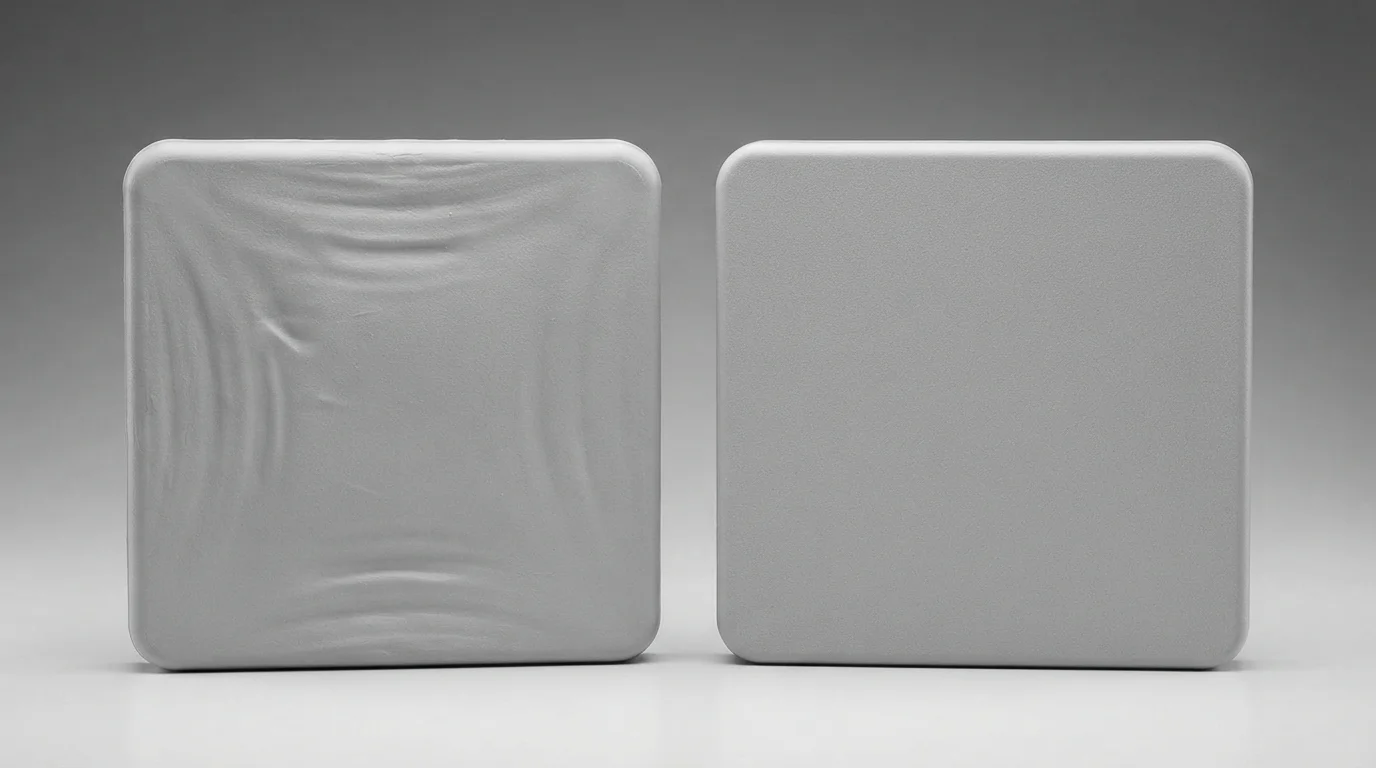
Expanding micro-bubbles generate continuous self-packing pressure from inside the part core throughout the cooling phase. Internal gas expansion pushes cooling polymer against cavity steel, completely eliminating surface sink marks over thick structural ribs. Lowering melt viscosity via dissolved gas permits foam injection molding at 30% to 50% lower cavity pressures than solid molding. Reduced cavity pressure eliminates molded-in stress and minimizes part warpage, allowing smaller clamping tonnage presses to mold large structural covers.
Structural Polymer Foaming for Large Enclosures & Automotive Components
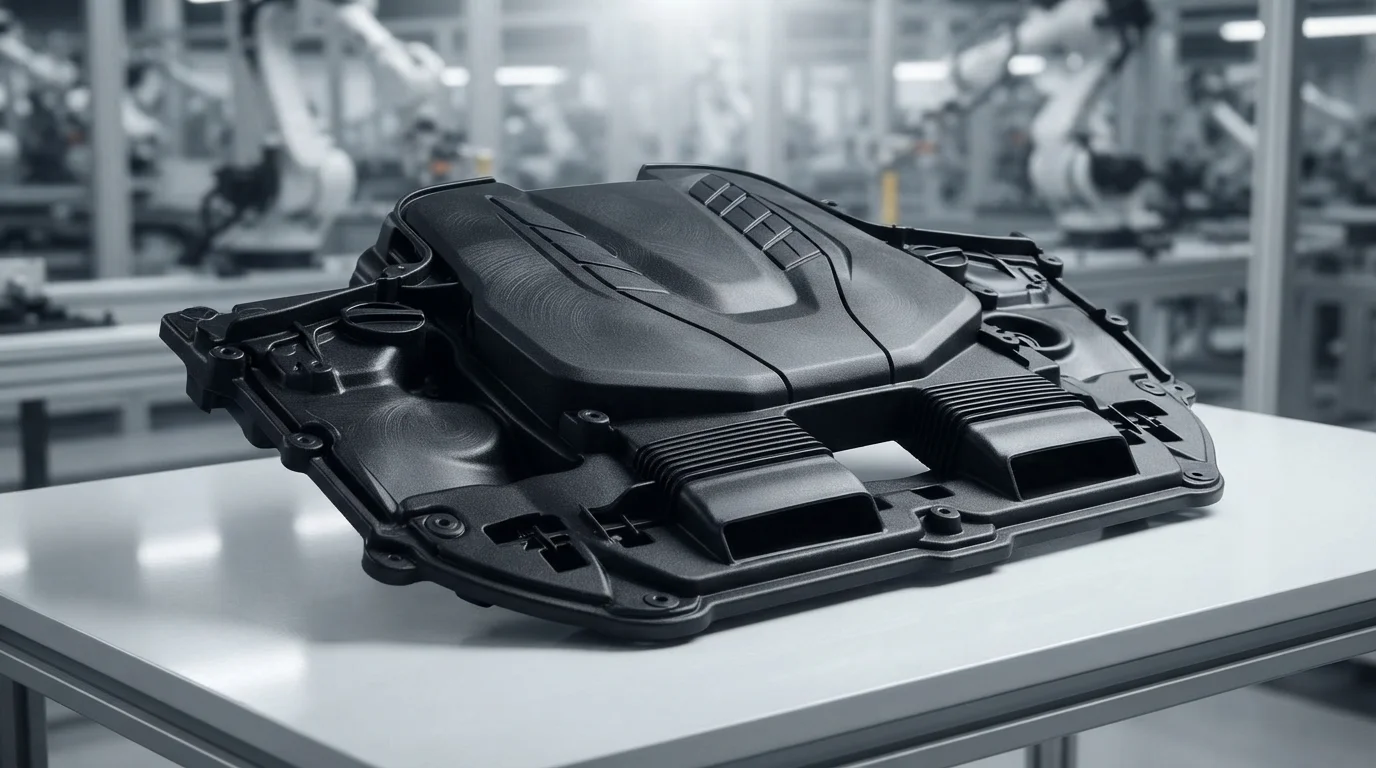
Structural foaming operates effectively across a wide spectrum of engineering resins, including glass-filled PA66-GF30, polypropylene (PP), PC/ABS, ,以及 PBT. Automotive engine covers, dashboard supports, and industrial enclosure panels gain maximum structural stiffness per unit mass through microcellular processing. Combining weight reduction with warpage-free dimensional stability accelerates component qualification in demanding e-mobility platforms. Deploying advanced process controls during foam injection molding delivers consistent part weight and mechanical fatigue resistance. Engineers specifying foam injection molding for structural applications achieve significant material savings without sacrificing impact performance.
| Engineering Resin Grade | Gas Agent Type | Average Cell Size (μm) | Weight Reduction (%) | Primary Foamed Application |
|---|---|---|---|---|
| PA66-GF30 (Zytel 70G33L) | Supercritical Nitrogen (N2) | 10 – 25 μm | 12% – 18% | Automotive engine shrouds & rocker covers |
| Polypropylene (PP-HP500N) | Supercritical N2 / CO2 | 20 – 50 μm | 15% – 25% | Large interior door carriers & trunk liners |
| PC/ABS Alloy (Bayblend) | Supercritical Nitrogen (N2) | 15 – 30 μm | 10% – 15% | Electronic enclosure base plates |
Frequently Asked Questions (FAQs)
What is the difference between physical MuCell foaming and chemical blowing agents?
Physical MuCell foaming dissolves supercritical nitrogen or carbon dioxide gas directly into the melt, creating millions of uniform micro-bubbles measuring 5 to 50 microns. Chemical blowing agents rely on thermal powder decomposition, leaving chemical residues and creating larger, irregular gas voids that compromise mechanical strength. Physical foaming ensures higher dimensional stability and superior impact resistance.
Does foam injection molding create swirl marks on part surfaces?
Expanding gas bubbles reaching cold cavity walls can create faint silver swirl marks on unpainted appearance faces. Using elevated mold temperatures, rapid injection speeds, or gas counter-pressure tooling eliminates surface swirl, producing pristine cosmetic finishes. Automotive interior parts frequently painted or textured mask these microscopic flow lines completely.
How much weight reduction can be achieved with microcellular foaming?
Weight reduction typically ranges from 10% to 20% for structural engineering parts without sacrificing mechanical performance. Thin-walled parts achieve 8% to 12% mass reduction, while thick structural housings achieve up to 25% material savings. Material savings directly translate to lower part weight and reduced shipping costs.