
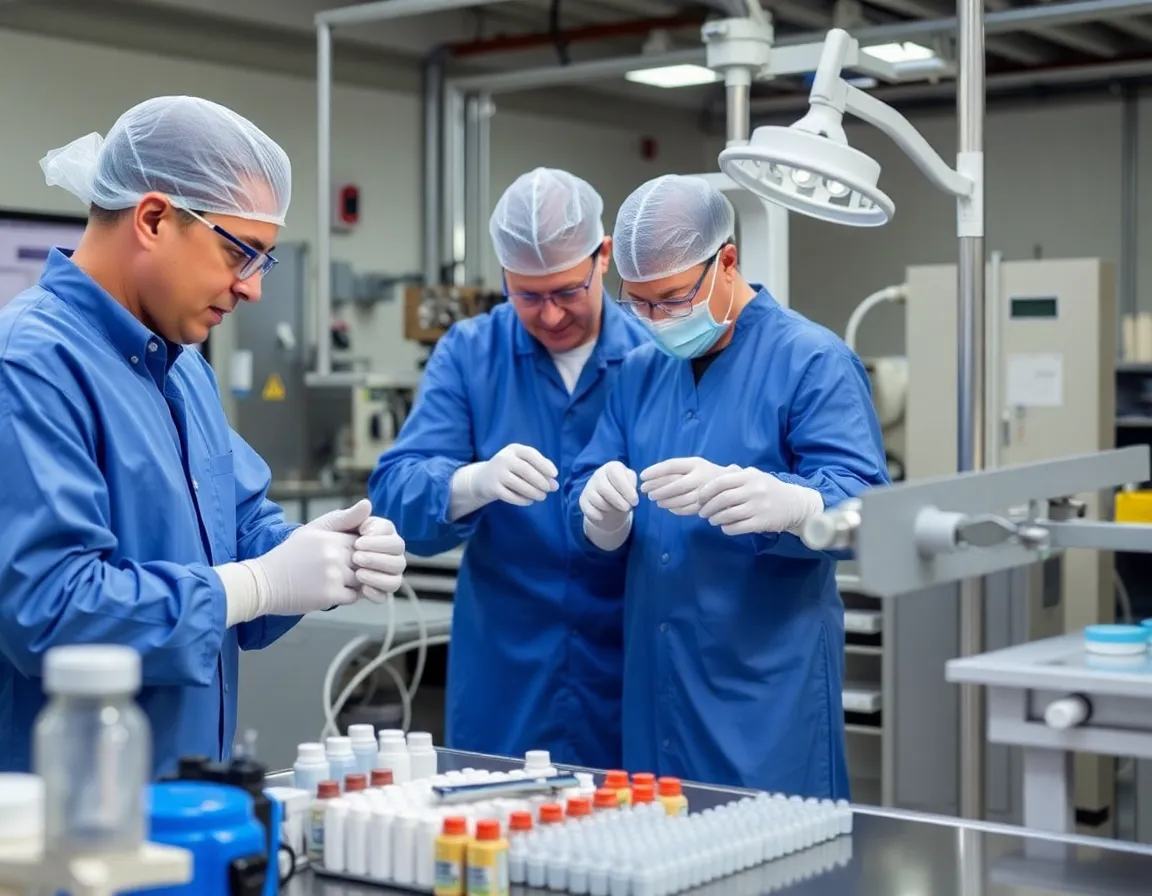
Introduction: The Critical Role of Precision in Medical Device Manufacturing
The medical device industry operates under a non-negotiable mandate: absolute precision and reliability. From implantable pacemakers to complex surgical robotics, the components that make up these life-saving devices must meet tolerances measured in microns. This is where precision machining for medical device hardware manufacturing becomes the cornerstone of innovation and patient safety. Unlike general machining, medical-grade precision machining involves advanced techniques, rigorous quality controls, and materials that must withstand the human body’s demanding environment. This article explores the intricacies of this specialized field, detailing how it works, its profound benefits, key applications, and the best practices that ensure excellence in every component produced.
What is Precision Machining in Medical Device Hardware Manufacturing?
Precision machining is a subtractive manufacturing process that removes material from a workpiece to create highly accurate components. In the context of medical device hardware manufacturing, this process is elevated to an art and science where dimensions are held to tolerances as tight as ±0.0001 inches (2.5 microns). This level of accuracy is essential for devices that must function flawlessly inside the human body or in critical surgical environments.
Core Machining Technologies
The medical hardware sector relies on several core technologies, each suited for specific applications:
- CNC Milling: Computer Numerical Control (CNC) milling uses rotating cutting tools to remove material from a stationary block. It is ideal for creating complex geometries, pockets, and features on flat or contoured surfaces. For medical devices, 5-axis CNC milling is often employed to produce intricate orthopedic implants and instrument housings.
- CNC Turning: In turning, the workpiece rotates while a stationary cutting tool shapes it. This process is perfect for cylindrical components such as bone screws, catheter fittings, and dental implant abutments. Swiss-type turning, a specialized form, is particularly valuable for producing tiny, long, and slender parts used in micro-surgery.
- Electrical Discharge Machining (EDM): EDM uses electrical sparks to erode material from a workpiece. It is indispensable for creating extremely hard materials (like titanium alloys) and for generating intricate cavities, sharp internal corners, and micro-holes that conventional cutting cannot achieve.
- Grinding and Lapping: These finishing processes achieve exceptional surface finishes and ultra-tight tolerances. They are critical for components that require smooth, friction-free surfaces, such as joint replacements and valve seats.
Materials Used in Medical Hardware
The choice of material is as critical as the machining process. Medical device hardware must be biocompatible, corrosion-resistant, and strong. Common materials include:
- Stainless Steel (304, 316L): Widely used for surgical instruments and implants due to its strength and corrosion resistance.
- Titanium and Titanium Alloys (Ti-6Al-4V): Preferred for implants (e.g., hip and knee replacements) because of their high strength-to-weight ratio and excellent biocompatibility.
- Cobalt-Chrome Alloys: Known for their wear resistance, often used in dental and orthopedic applications.
- Medical-Grade Polymers (PEEK, UHMWPE): Used for non-metallic implants and components requiring flexibility and low friction.
- Ceramics (Alumina, Zirconia): Employed in hip ball heads and dental crowns for their hardness and bio-inertness.
How Precision Machining Works for Medical Devices
The journey from raw material to a finished medical device component is a multi-stage, highly controlled process. It begins long before the machine starts cutting.
1. Design and Engineering for Manufacturability (DFM)
Medical device hardware manufacturing starts with a detailed digital design, typically using CAD (Computer-Aided Design) software. Engineers must consider not only the device’s functional requirements but also the manufacturability of the part. They analyze factors like tool access, material properties, and the need for specific surface finishes. Design for Manufacturability (DFM) is a collaborative effort between designers and machinists to optimize the part for efficient, high-quality production while minimizing waste and cost.
2. CAM Programming and Simulation
Once the CAD model is finalized, it is imported into CAM (Computer-Aided Manufacturing) software. Here, the machinist or programmer defines the tool paths, cutting speeds, feed rates, and tool selections. Modern CAM software includes powerful simulation tools that allow the programmer to visualize the entire machining process in a virtual environment. This step is vital for identifying potential collisions, verifying tool paths, and ensuring the part will meet specifications before any metal is cut. Simulation drastically reduces the risk of costly errors and material waste.
3. Machine Setup and Calibration
Setting up a precision CNC machine for medical work is a meticulous process. The workpiece must be securely fixtured, often using custom-designed workholding solutions to minimize vibration and deflection. The machine itself must be calibrated to ensure its axes are perfectly aligned. Tool holders are balanced, and cutting tools are measured with laser probes to verify their exact dimensions. This setup phase can take hours but is essential for achieving the required tolerances.
4. The Machining Process
With everything in place, the actual machining begins. The CNC machine follows the programmed instructions, executing a sequence of roughing and finishing passes. Roughing passes remove the bulk of the material quickly, while finishing passes use lighter cuts to achieve the final dimensions and surface finish. During this phase, coolant is often used to manage heat and flush away chips, preventing thermal expansion that could distort the part. For medical-grade components, the process is often monitored in real-time using sensors and probes that check dimensions mid-cycle.
5. Inspection and Quality Assurance
After machining, every critical feature of the component is inspected. This is the most rigorous step in medical device hardware manufacturing. Inspection methods include:
- CMM (Coordinate Measuring Machine): Uses a touch probe to measure dimensions with micron-level accuracy.
- Optical Comparators and Vision Systems: Non-contact methods for measuring complex profiles and verifying surface features.
- Surface Roughness Testers: Ensure the part’s surface meets specified Ra (average roughness) values, which is critical for implants and sealing surfaces.
- Material Certification: Each batch of material is traceable to its source, and certificates of conformance are provided to the customer.
Key Benefits of Precision Machining for Medical Hardware
The investment in precision machining yields significant advantages that directly impact patient outcomes and business success.
Uncompromising Quality and Safety
The most critical benefit is the assurance of quality. A failed medical device can have catastrophic consequences. Precision machining, combined with stringent inspection protocols, ensures that every component meets its design specifications. This reliability translates directly to patient safety, reducing the risk of device failure during surgery or long-term implantation.
Complex Geometries and Miniaturization
Modern medical devices are becoming smaller and more complex. Precision machining excels at producing intricate features like micro-threads, internal channels for drug delivery, and sharp cutting edges for surgical blades. Technologies like Swiss machining and micro-EDM allow manufacturers to create parts that are smaller than a grain of rice, enabling minimally invasive procedures and advanced diagnostic tools.
Material Versatility
Not all materials can be easily formed or cast. Precision machining can handle the full spectrum of medical-grade materials, from soft polymers to hardened stainless steel and brittle ceramics. This versatility allows device designers to choose the optimal material for a specific application without being limited by manufacturing constraints.
Repeatability and Scalability
Once a machining program is proven, it can be replicated thousands of times with consistent results. CNC machines are capable of producing identical parts 24/7, making precision machining highly scalable. This is crucial for medical device companies that need to ramp up production from prototypes to full-scale manufacturing while maintaining the same level of quality.
Reduced Waste and Cost Efficiency
While precision machining can be more expensive per part than some other methods (like injection molding), it offers significant cost advantages for low-to-medium volume production. There are no expensive molds or dies to create. Furthermore, advanced CAM software and toolpath optimization minimize material waste, which is particularly important when working with expensive materials like titanium. This makes precision machining a cost-effective solution for specialized medical devices and custom implants.
Applications in Medical Device Hardware Manufacturing
The reach of precision machining extends across virtually every category of medical devices. Here are some of the most prominent applications:
Orthopedic Implants and Instruments
This is one of the largest segments. Precision machining is used to create:
- Knee and Hip Replacements: Femoral components, tibial trays, acetabular cups, and femoral heads require complex curves and high-precision bearing surfaces.
- Spinal Implants: Pedicle screws, rods, and interbody cages must be machined to exacting standards to ensure proper alignment and fusion.
- Trauma Devices: Bone plates, screws, and intramedullary nails for fracture fixation are machined from strong, biocompatible metals.
- Surgical Instruments: Reamers, drills, saw guides, and screwdrivers used in orthopedic surgery are all precision-machined for reliability and tactile feel.
Cardiovascular Devices
The cardiovascular field demands micro-scale precision. Examples include:
- Stents and Stent Delivery Systems: While stents are often laser-cut, the delivery catheters and handles require precision-machined components.
- Pacemaker and Defibrillator Housings: Hermetically sealed titanium cases are machined to protect sensitive electronics from bodily fluids.
- Heart Valve Components: The frames and leaflets of mechanical and transcatheter valves are machined to exact dimensions for reliable function.
Dental Implants and Prosthetics
Dental hardware manufacturing relies heavily on precision machining for:
- Implant Abutments and Screws: These tiny components must match the patient’s anatomy and the implant system perfectly.
- Crowns and Bridges: While often milled from ceramic blocks, the underlying metal frameworks for bridges are precision-machined.
- Surgical Guides: Custom 3D-printed or machined guides that help dentists place implants with pinpoint accuracy.
Neurological and Surgical Robotics
As surgery becomes more automated and precise, the hardware must follow:
- Robotic Arm Components: Joints, actuators, and end-effectors for surgical robots require exceptional stiffness and positional accuracy.
- Deep Brain Stimulation (DBS) Leads: The thin, flexible leads and their connectors are machined to deliver electrical pulses to specific brain regions.
- Endoscopic Tools: Graspers, scissors, and biopsy forceps for minimally invasive procedures are machined from small diameter tubing.
Best Practices for Excellence in Medical Machining
Achieving excellence in medical device hardware manufacturing requires more than just advanced machines. It demands a culture of quality and continuous improvement.
1. Implement Rigorous Quality Management Systems (QMS)
Compliance with standards like ISO 13485 (Medical devices – Quality management systems) is non-negotiable. A robust QMS ensures that every process, from incoming material inspection to final shipping, is documented and controlled. It also includes procedures for corrective and preventive actions (CAPA), which are essential for identifying and eliminating root causes of defects.
2. Invest in Advanced Metrology and In-Process Inspection
Relying solely on post-process inspection is risky. Best-in-class manufacturers integrate in-process measurement using probes and laser systems. This allows for real-time adjustments, reducing scrap and ensuring that parts are within tolerance before the machine finishes. Statistical Process Control (SPC) is also used to monitor trends and predict potential quality issues before they occur.
3. Maintain a Clean and Controlled Environment
Medical device components, especially implants, must be free of contaminants. The machining area should be a controlled environment with proper air filtration, temperature control, and humidity management. Chips and coolant must be managed carefully to prevent cross-contamination between different materials. Cleanroom-compatible machining is often required for certain applications.
4. Prioritize Tooling and Cutting Strategy
The choice of cutting tools and their maintenance is critical. High-performance carbide or diamond-coated tools are preferred for their durability and ability to maintain sharp edges. Tool life must be monitored, and tools should be replaced proactively based on usage or tool-wear monitoring systems. Additionally, using optimized cutting strategies (e.g., trochoidal milling, high-efficiency milling) reduces heat buildup and tool stress, leading to better surface finishes and longer tool life.
5. Foster a Skilled Workforce and Continuous Training
Even with the most advanced automation, skilled machinists and programmers are the heart of precision machining. Companies must invest in ongoing training for their employees on the latest CAM software, machine technologies, and quality standards. A culture that encourages problem-solving and attention to detail is essential for maintaining the highest levels of excellence.
Conclusion
Precision machining is the silent enabler behind countless life-saving and life-enhancing medical devices. In the world of medical device hardware manufacturing, the difference between a successful procedure and a catastrophic failure often lies in a few microns. By combining advanced CNC technologies, rigorous quality control, and a deep understanding of biocompatible materials, precision machinists deliver components that meet the highest standards of safety, reliability, and performance. As medical technology continues to advance toward smaller, more complex, and more personalized devices, the role of precision machining will only grow in importance, ensuring that the hardware inside our bodies is as flawless as the science that designs it.