
PE-Dow LDPE 722
PE-Dow LDPE 722 is a highly flexible low-density polyethylene homopolymer produced by Dow, characterized by its heavily branched molecular structure that prevents tight crystal packing[1]. Featuring a density of 0.920 g/cm³ and a melt index of 8.0 g/10 min, this grade is the global benchmark for high-flexibility caps, snap-on lids, and medical squeeze packaging[2]. Jucheng Precision, utilizing ISO 9001 and IATF 16949 certified systems, excels in molding Dow 722 to achieve excellent seal integrity. Our 35+ advanced injection presses and in-house tooling ensure uniform wall thickness, managing LDPE’s high shrinkage rate (1.5%-2.5%) without physical sink marks.
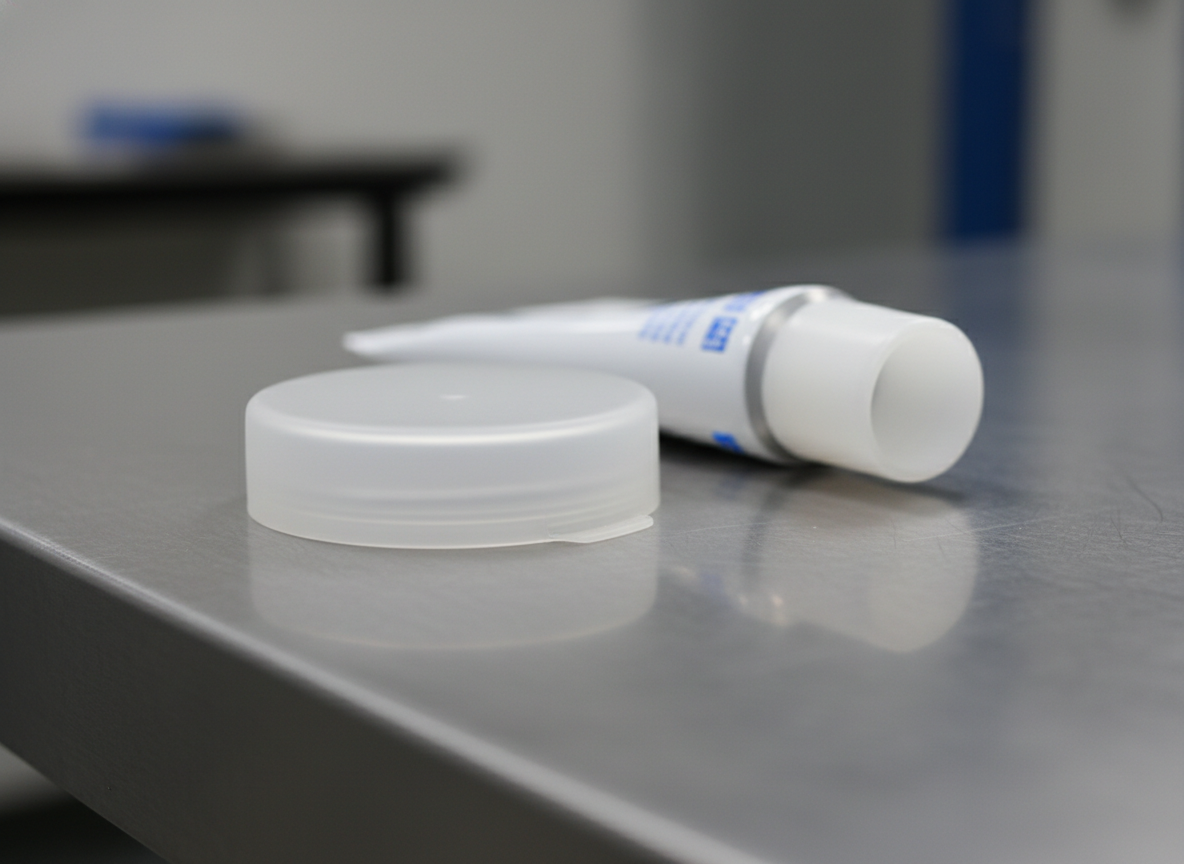
Dow LDPE 722 Mechanical and Flexibility Profile
DOW™ LDPE 722 is a broad molecular weight distribution homopolymer designed to offer maximum structural flexibility and impact resistance under low-load applications:
| Physical & Elastic Attribute | Dow 722 Nominal Value | Molding & End-Use Advantage |
|---|---|---|
| Structural Flexibility | Durometer Hardness 43 Shore D | Ensures a highly bendable, soft-touch material behavior, perfectly suited for snap-on lids, flexible containers, and squeezable caps. |
| Low-Temp Toughness | Brittleness Temperature -60°C | Maintains exceptional mechanical toughness and ductility in deep-freeze environments, avoiding brittle failure in frozen food packaging. |
| Melt Processability | Melt Flow Rate (MFR) 8.0 g/10 min | Features high flowability under low shear, allowing molten plastic to fill complex closure channels easily under reduced pressure. |
Elastomeric and Closure Process Adaptability for LDPE 722
With a low melting point (107°C), Dow LDPE 722 cools rapidly, supporting high-speed production cycles for seal-critical products:
| Process Application | Molding Compatibility & Execution Details |
|---|---|
| Flexible Caps & Snap-Lids | Excellent. Fully optimized for high-volume flexible cosmetic jar lids, secure snap-fit closures, and squeezable food caps. |
| Overmolding Substrates | Good. Can be molded over high-density structural polymers to provide localized flexible seals or dynamic sealing lips. |
| Co-Injection & Multi-Cavity | Excellent. Stable flow behaviors at low melt temperatures reduce energy consumption and shorten cycle times on multi-cavity runs. |
PE-Dow LDPE 722 Tooling & Shrinkage Management Guide
Dow LDPE 722 features highly branched polymer chains, resulting in unique shrinkage behaviors that demand specialized mold design:
- Managing High Volumetric Shrinkage: Due to its low crystallinity, LDPE exhibits a high mold shrinkage rate of 1.5% to 2.5%. Jucheng’s tooling engineers conduct rigorous DFM flow simulations to balance gate pressure, ensuring uniform packing to prevent dimensional sink marks.
- Low Melting Point Thermal Profiling: Because the melting temperature is low (107°C), processing melt temperatures are kept at 170°C–210°C (338°F–410°F). Cold mold temperatures (15°C–40°C / 59°F–104°F) are strictly maintained using water chillers to ensure quick solidifying.
- Ejection & Mold Release: Because molded LDPE 722 is highly flexible and slightly sticky when warm, deep ribs require polished draft angles (minimum 1.5°) and wide ejector pads. We use S136 stainless steel mold cavity inserts to prevent part scuffing.
- Living Hinge & Seal Design: The high elongation at break (500%) allows for molded-in flexible hinges. Our 5-axis CNC machining center cuts precise gates perpendicular to the flex axis to maximize mechanical tear resistance.
Key Application Fields for PE-Dow LDPE 722
- Consumer Goods & Closures: Flexible squeeze-bottle caps, soft snap-on container lids, dynamic dust plugs, and protective caps.
- Medical Device Packaging (ISO 13485 Compliant): Flexible syringe tip caps, squeezable vial dropper tips, medicine container covers, and sterile packaging barriers.
- Industrial Seals: Low-pressure dynamic sealing gaskets, chemical-resistant soft washers, expansion plugs, and wire terminal boots.
Properties
| Density | 0.918 - 0.920 g/cm³ |
| Melt Mass-Flow Rate (MFR) (190°C/2.16kg) | 8.0 g/10 min |
| Tensile Strength at Yield | 8.3 MPa |
| Tensile Elongation at Break | 500 % |
| Flexural Modulus | 220 MPa |
| Durometer Hardness (Shore D) | 43 - |
| Melting Temperature (DSC) | 107 °C |
| Peak Crystallization Temperature | 95.6 °C |
| Vicat Softening Temperature | 87.8 °C |
| Deflection Temperature Under Load (66 psi) | 37.2 °C |
| Brittleness Temperature | -60.0 °C |
| Linear Mold Shrinkage | 1.5 - 2.5 % |
| Maximum Part Size | 800 x 600 mm |
| Minimum Part Size | 1 x 1 mm |