
PC-Covestro Makrolon 2407
Covestro Makrolon 2407 is a low-viscosity, UV-stabilized polycarbonate with easy-release characteristics. Confirm the exact grade and color, then review manufacturer properties and processing conditions. Optical quality, outdoor performance, part size and inspection requirements are assessed for the actual component.
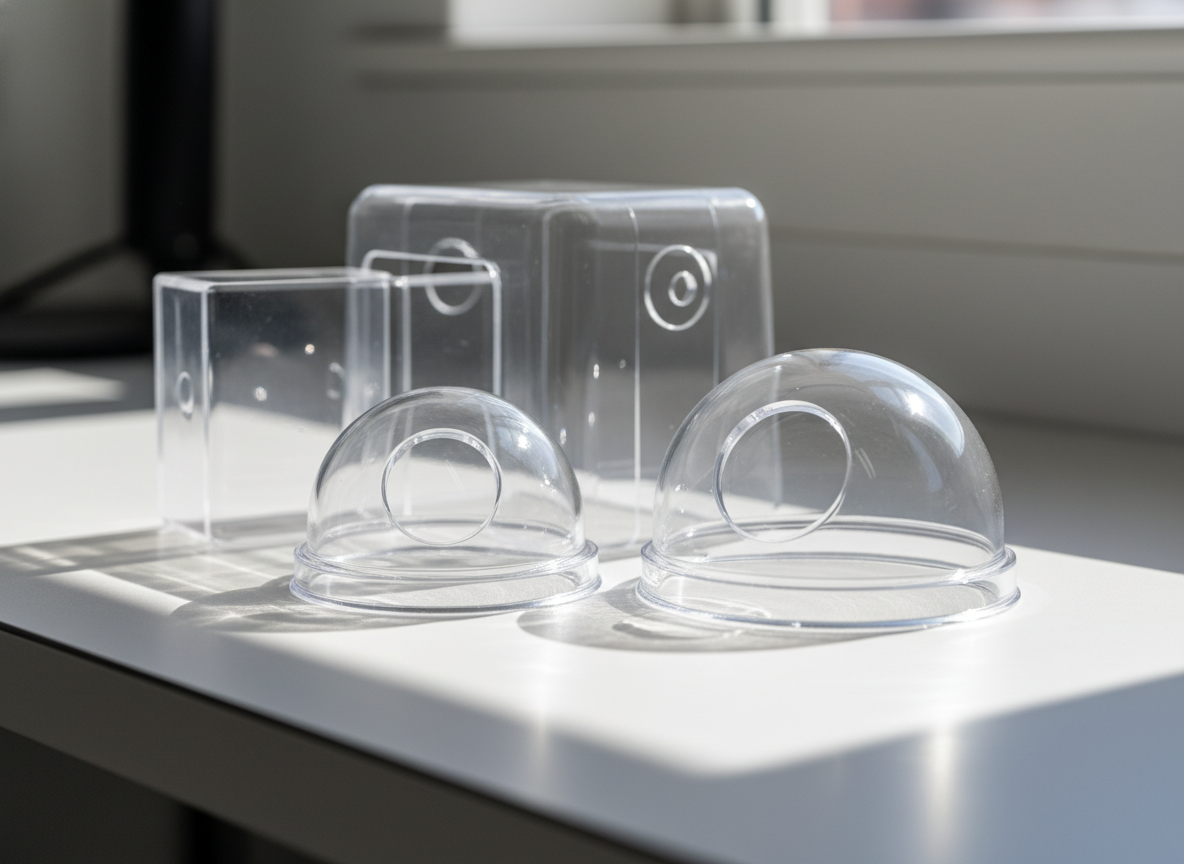
Covestro Makrolon 2407: grade identity and data source
Makrolon 2407 is a low-viscosity, UV-stabilized polycarbonate with easy-release characteristics, offered in transparent, translucent and opaque colors. This page refers to the base 2407 grade, not 2407 MAS056, DC or RW2407. Confirm the exact grade and color code on the purchase specification.
Reference: Covestro’s Makrolon 2407 product data and its ISO datasheet (edition 18 September 2023), checked on 29 September 2026. Values describe standardized specimens and do not guarantee finished-part performance.
Covestro identifies this base grade as a non-medical, non-food-contact grade. Do not assume suitability for a medical device or food-contact component. Confirm the exact grade and intended use with the material supplier and define the application-specific validation requirements.
Selected properties and conditions
| Property | Typical value | Condition / method |
|---|---|---|
| MVR | 19 cm³/10 min | 300°C / 1.2 kg; ISO 1133-1 |
| Tensile modulus | 2,400 MPa | 1 mm/min; ISO 527-1,-2 |
| Yield stress | 66 MPa | 50 mm/min; ISO 527-1,-2 |
| Izod notched impact | 65 kJ/m², partial break | 23°C, 3 mm; ISO 21305 / based on ISO 180/A |
| HDT | 136°C / 124°C | 0.45 / 1.80 MPa; ISO 75-1,-2 |
| Vicat | 143°C | 50 N, 50°C/h; ISO 306 |
| Molding shrinkage | 0.65% parallel / 0.70% normal | 60 × 60 × 2 mm, 500 bar; ISO 294-4 |
Plan optical and outdoor requirements explicitly
UV stabilization is not a promise of unlimited outdoor life without yellowing. Specify the exposure, color-change limit, impact requirement and intended service duration, then agree on an appropriate validation plan. For an optical component, define the transmitting area, wall thickness, permitted haze, distortion and cosmetic acceptance separately.
A clear resin does not automatically produce a qualified lens, safety shield or electrical enclosure. Review the drawing, gate location, flow fronts, surface finish and inspection method for the actual use. Weld lines, residual stress, marks and warpage require a process review and trial assessment; easy release does not eliminate these effects.
Drying and molding reference
Covestro lists dry-air drying at 120°C for 2–3 hours, maximum moisture ≤0.02%, standard melt temperature 300°C and mold temperature 80–120°C. Confirm current guidance for the exact supplied material before setting a process.
Record drying conditions and moisture checks where required, together with processing settings and sample results. For multiple cavities, identify the cavity associated with each inspected sample. Agree on how cosmetic and dimensional requirements will be assessed after the required conditioning and finishing.
Information needed for a part enquiry
- Drawing, model and controlled revision.
- Exact grade and color, quantity and delivery requirements.
- Critical dimensions, visible surfaces and optical acceptance limits.
- Exposure, cleaning agents and required validation conditions.
- Inspection records, labeling and protective packaging.
Part size and production requirements are confirmed against the drawing. See our polycarbonate materials overview for related grades.
Properties
| Density (ISO 1183-1) | 1.20 g/cm³ |
| MVR, 300°C / 1.2 kg (ISO 1133-1) | 19 cm³/10min |
| Tensile modulus, 1 mm/min (ISO 527-1,-2) | 2,400 MPa |
| Yield stress, 50 mm/min (ISO 527-1,-2) | 66 MPa |
| Nominal strain at break (ISO 527-1,-2) | >50 % |
| Strain at break (based on ISO 527-1,-2) | 120 % |
| Flexural strength, 2 mm/min (ISO 178) | 98 MPa |
| Flexural modulus, 2 mm/min (ISO 178) | 2,350 MPa |
| Izod notched, 23°C / 3 mm; partial break | 65 P kJ/m² |
| Glass transition, 10°C/min (ISO 11357-1,-2) | 143 °C |
| Vicat, 50 N / 50°C/h (ISO 306) | 143 °C |
| HDT, 0.45 MPa (ISO 75-1,-2) | 136 °C |
| HDT, 1.80 MPa (ISO 75-1,-2) | 124 °C |
| Shrinkage, parallel / normal (ISO 294-4) | 0.65 / 0.70 % |
| Burning behavior, 0.75 mm (UL 94) | V-2 Class |
| Maximum part size | Drawing review required N/A |
| Minimum part size | Drawing review required N/A |