
An injection molding MOQ is not a universal number dictated by the press. It usually emerges from the economics and logistics of a specific part: tool investment, resin purchasing, cavity count, setup and changeover work, inspection, and how the buyer wants orders released. A supplier may quote a practical lot size, but the buyer should understand what cost or risk that threshold is meant to control.
The right question is not simply “Can you make fewer?” It is “What changes if we split the volume into smaller releases?” A low first order may reduce inventory exposure, while increasing per-part cost, setup frequency, or the chance that resin color and process conditions vary between lots.
These lot-size choices sit within a broader 플라스틱 사출 성형 sourcing decision, where the tool plan and release cadence need to be considered together.
이 글에서
- What MOQ means in a molding quote
- The cost and process drivers
- Compare the volume options
- Questions to ask before negotiating
- FAQ
What MOQ means in a molding quote
For injection molded parts, MOQ can refer to several different thresholds: the minimum run a supplier is willing to schedule, the number of parts needed to spread setup cost, a resin or colorant purchasing quantity, or the smallest release that fits the buyer’s packaging and shipping plan. Those are not interchangeable. Ask which one the quote is using.
The tool itself is a separate investment from the production lot. A customer can own or fund tooling and still order parts in batches; conversely, a low-volume quote may include a different tool strategy. Compare the assumptions in 맞춤 금형 제작 and production pricing rather than treating MOQ as a stand-alone rule.
The cost and process drivers
Tool amortization and cavity count
Tool cost does not disappear when the initial order is small. If the part price assumes tooling amortization across a forecast, changing the first release may alter the unit price or the quoted tooling terms. Cavity count also matters: a multi-cavity mold can produce more parts per cycle, but only makes sense when demand, part balance, and tool design support it.
Resin, color, and purchasing units
Some resins, additives, or custom colors may be purchased in quantities larger than one molding run. Remaining material can sometimes be stored for later use, but only if shelf life, packaging, moisture protection, lot traceability, and color consistency are managed. Ask whether unused resin is held, returned, or charged to the project.
Setup, startup, and quality checks
Each production run needs setup and first-piece confirmation. Smaller, more frequent orders can add these fixed tasks repeatedly. That does not mean small batches are automatically inefficient; it means the quote should separate recurring setup and inspection assumptions from piece price.
Inventory, packaging, and release cadence
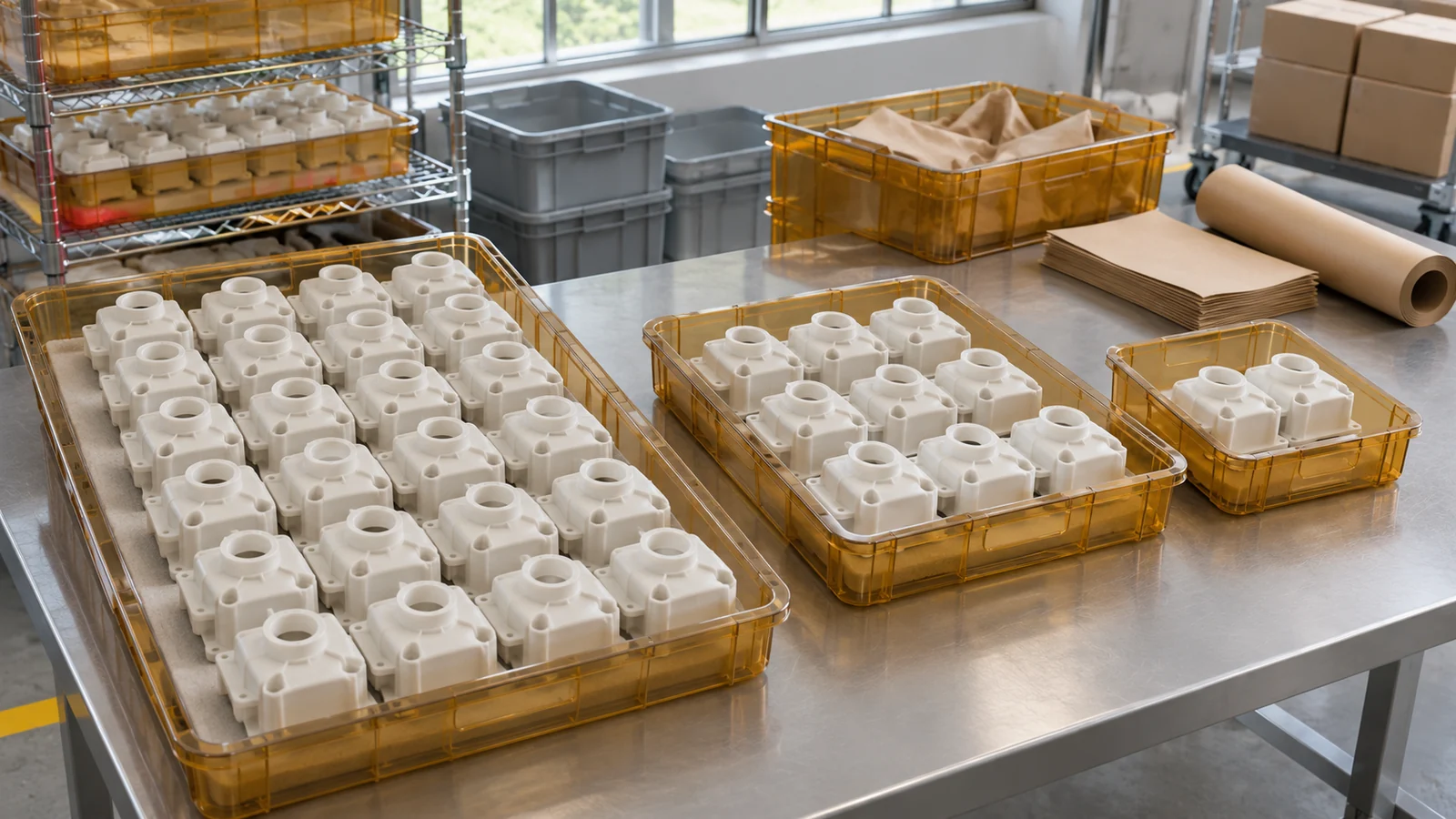
A large lot can lower repeated setup exposure but raise inventory, storage, and obsolescence risk. Smaller releases may be preferable when demand is uncertain or design revisions are likely. Low-volume injection molding can be useful for early demand, bridge production, or controlled launches, while recurring demand may support a different production plan.
Compare the volume options
| Order approach | 잠재적 이점 | Trade-off to check |
|---|---|---|
| Small initial lot | Limits early inventory and supports a launch or design learning | Higher setup cost per part or material leftovers |
| Scheduled releases from a larger commitment | Balances production planning with staged deliveries | Storage, ownership, forecast, and revision responsibilities |
| Larger recurring runs | May reduce repeated setup exposure | Cash tied in stock and potential obsolescence |
The table is a discussion framework, not a price formula. Actual economics depend on the tool, resin, order pattern, and what is included in the quote.
Questions to ask before negotiating
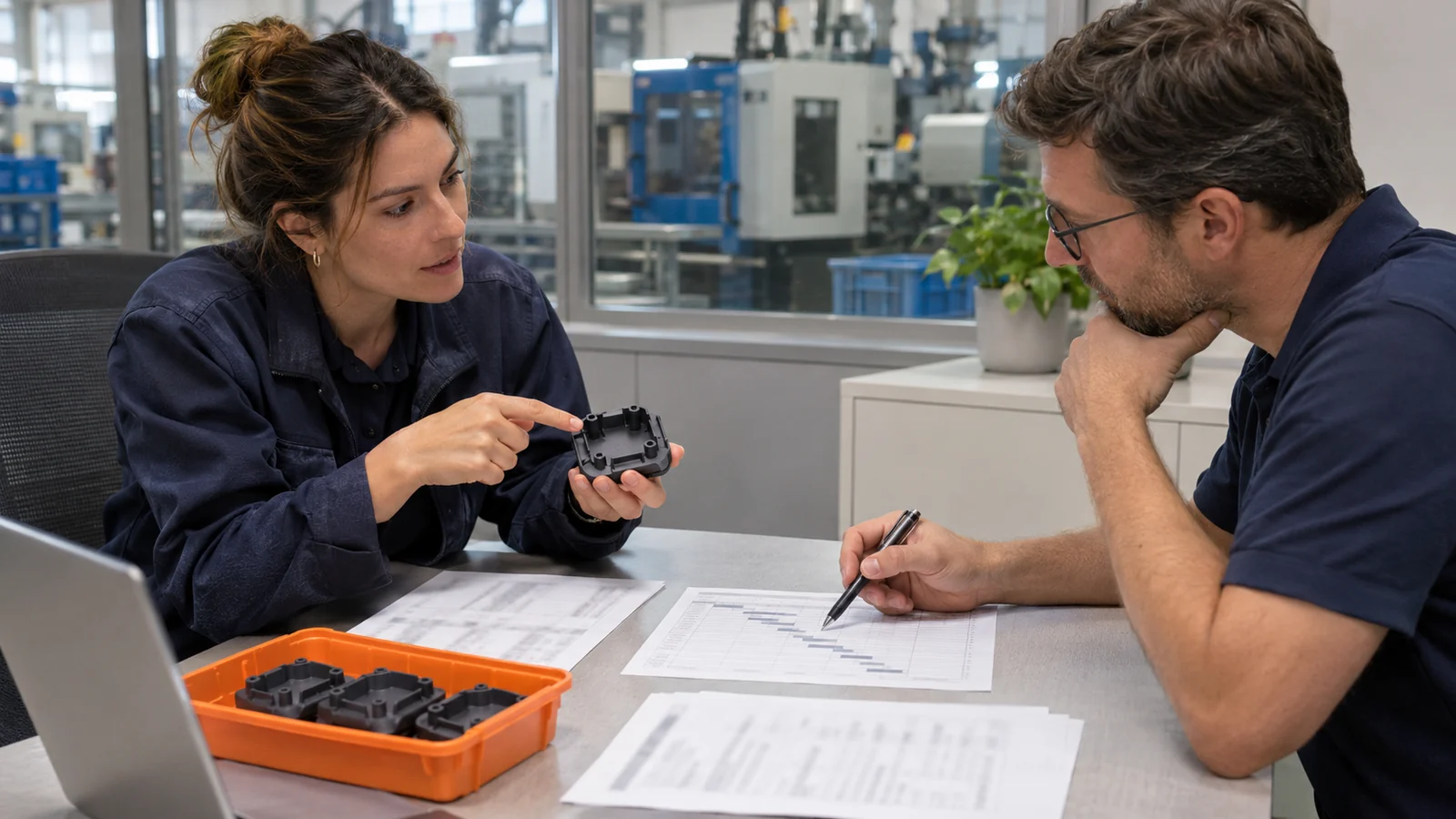
- Is the MOQ a production minimum, a material purchase quantity, or a commercial preference?
- Does the price include tooling, setup, inspection, packaging, and any unused resin?
- Can the project use scheduled releases, and who owns inventory between releases?
- Will resin grade, color, and process approval remain the same across separate runs?
- What happens to pricing if the forecast changes or the part revision changes?
When comparing higher-volume production with smaller batches, compare total landed cost and operational risk—not only the quoted unit price. A useful RFQ states forecast volume, first order, expected release cadence, packaging, and whether demand is firm or provisional.
FAQ
Is there a standard MOQ for every injection molded part?
No. MOQ depends on the tool, material, production schedule, and commercial terms. The supplier should explain the constraint behind the quoted quantity.
Can I order a small quantity after paying for the mold?
Often the tooling investment and the production lot are separate decisions, but small lots may carry additional setup or material costs. Confirm ownership, storage, and maintenance terms for the tool and any remaining resin.
Does a multi-cavity mold always lower the MOQ?
No. More cavities increase output per cycle but do not remove material purchasing, setup, packaging, or inspection constraints. The cavity count should match expected demand and the part’s filling and quality requirements.
What information helps obtain a realistic MOQ quote?
Provide the annual forecast, initial order, release schedule, material and color, packaging needs, and any expected engineering changes. Ask the supplier to state which assumptions set the minimum.