
A molded component can survive an oven test and still lose its seal under hot operating pressure. The material decision needs to explain that difference before purchasing approves a higher-temperature resin. A high temperature plastic material should be selected by the failure the part cannot tolerate—not by the highest temperature printed on a datasheet. PEEK, PPS, PEI and PPSU can all survive heat, but they respond differently to sustained load, steam, chemicals, flame requirements and molding stress. The correct choice is the grade that meets the real duty cycle after it has been molded into the actual geometry.
Decision in one minute
- Start with PEEK when high temperature, fatigue and aggressive chemistry occur together.
- Start with PPS when dimensional stability, chemical resistance and production economics dominate.
- Start with PEI when flame performance, stiffness and predictable amorphous shrinkage matter.
- Start with PPSU when repeated steam sterilization and impact resistance drive the specification.
In questo articolo:
- Define the real thermal load
- Compare material behavior
- Account for molding constraints
- Match the resin to the failure mode
- Build a validation plan
Temperature alone is not the requirement
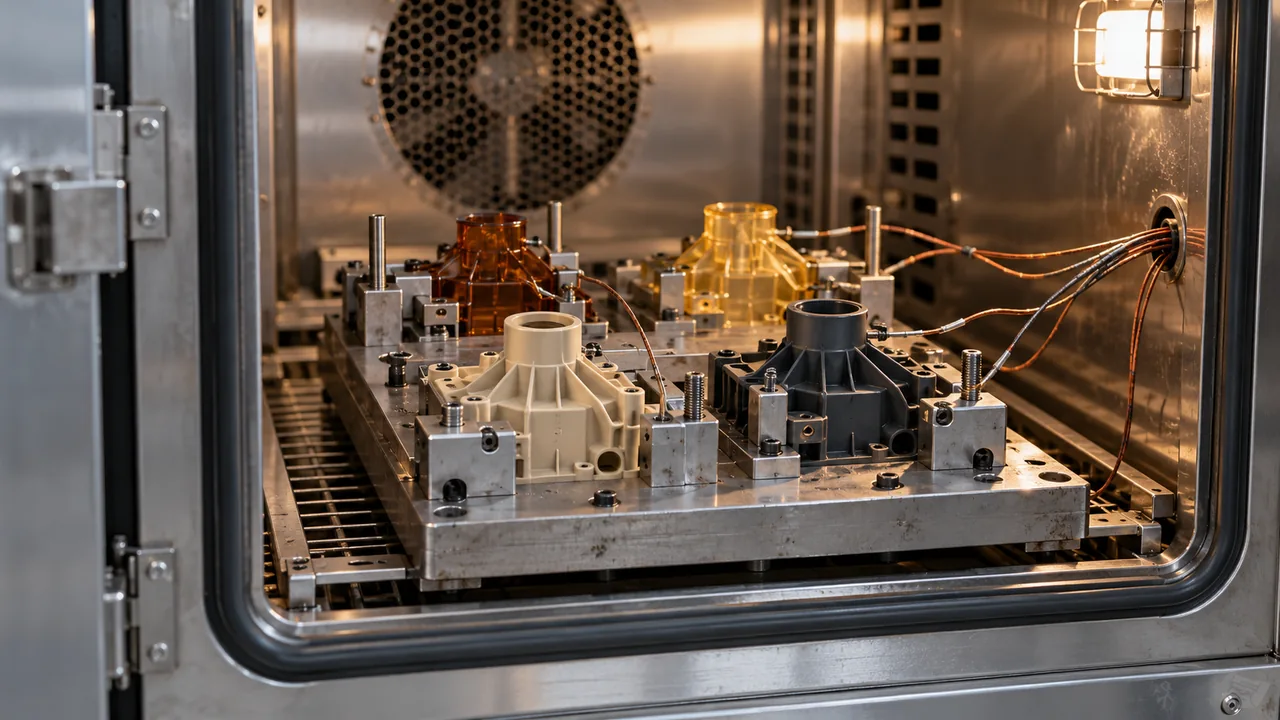
“Operating at 200°C” is incomplete. Engineers also need exposure time, mechanical stress, chemical contact, pressure, sterilization method and acceptable property loss. A resin may tolerate a short thermal peak but creep under continuous load. Another may retain stiffness yet crack after chemical exposure or repeated thermal cycling. A useful thermal profile records normal temperature, peak temperature, time at each level and the load carried during exposure. This separates a harmless cleaning spike from a continuous condition that can relax a boss, distort a seal land or reduce fastener preload. Review creep or stress-relaxation data at the intended time and temperature, then reproduce the worst transition on molded samples. For a valve body, the important measurement may be seal displacement after a hot pressure hold; for an electrical support, it may be retained clearance under fastening load.
Separate the requirement into continuous temperature, short excursions and the temperature at which the part carries its highest load. This prevents a common purchasing mistake: paying for an extreme polymer while overlooking the geometry or environment that actually controls service life. Those requirements call for different tests even at the same nominal operating temperature. Put the acceptance limit on the drawing or validation specification before selecting the polymer. Otherwise, two suppliers can quote technically different solutions while both claim to meet a vague heat-resistance requirement.
A practical high-temperature polymer comparison
| Decision factor | Likely starting point | What must still be verified |
|---|---|---|
| High load at elevated temperature | PEEK or reinforced PEEK | Creep, fiber orientation and notch sensitivity |
| Chemical exposure with tight dimensions | PPS | Weld-line strength and molded crystallinity |
| Flame, smoke and electrical insulation | PEI/Ultem | Exact flame rating, wall thickness and chemical contact |
| Repeated steam sterilization | PPSU or medical PEEK | Cycle count, impact retention and biocompatibility |
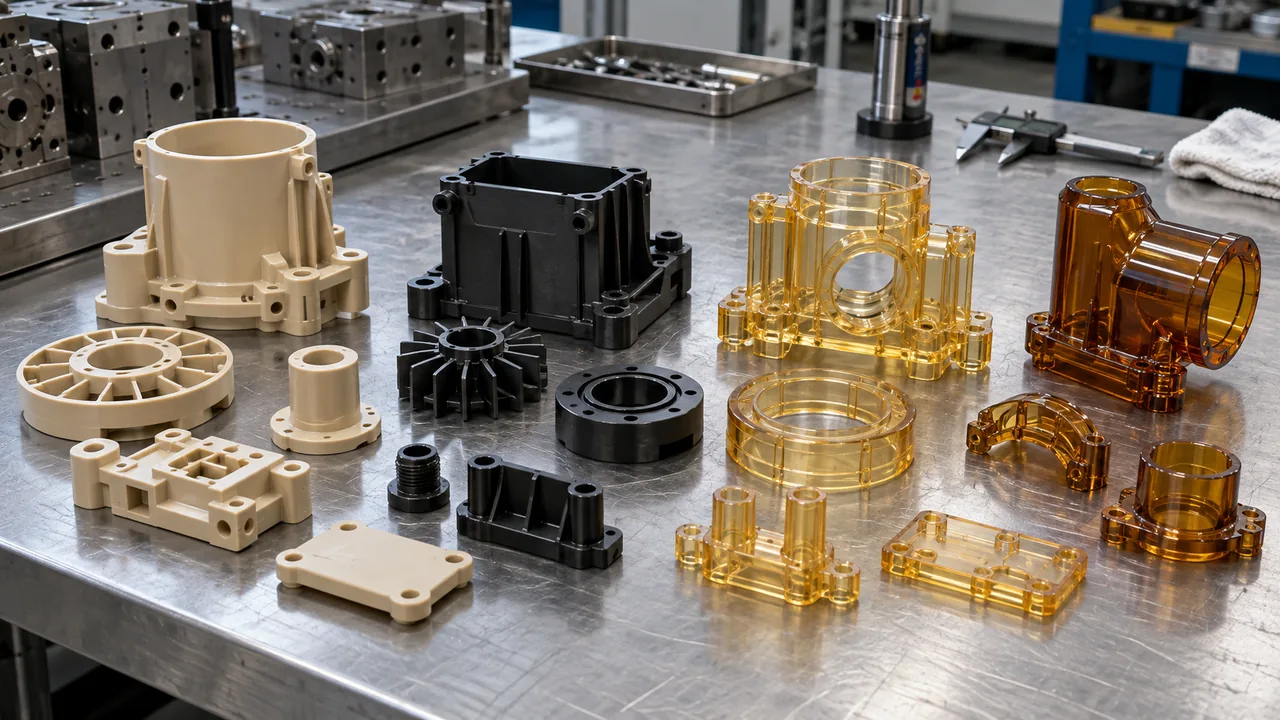
These are screening directions, not interchangeable specifications. Review the supplier grade datasheet and test molded parts under the real load case. Polymer-family names hide major differences in reinforcement, lubricants, impact modifiers, flame packages and regulatory status. A carbon-filled PEEK grade and an unfilled medical PEEK grade can differ more in molding behavior than two families shown in a generic chart. Record the full manufacturer and grade code before tooling shrinkage, validation samples or compliance documents are approved. Use the comparison as a shortlist, then inspect the properties that could disqualify each candidate. A flame rating must match the grade, color and tested thickness; a medical resin designation does not approve a finished device. Keep supplier, publication date, region, units and test method together in the review record. Combining figures from different datasheet editions can create an apparently superior material that no actual grade represents.
The molding window can eliminate a material
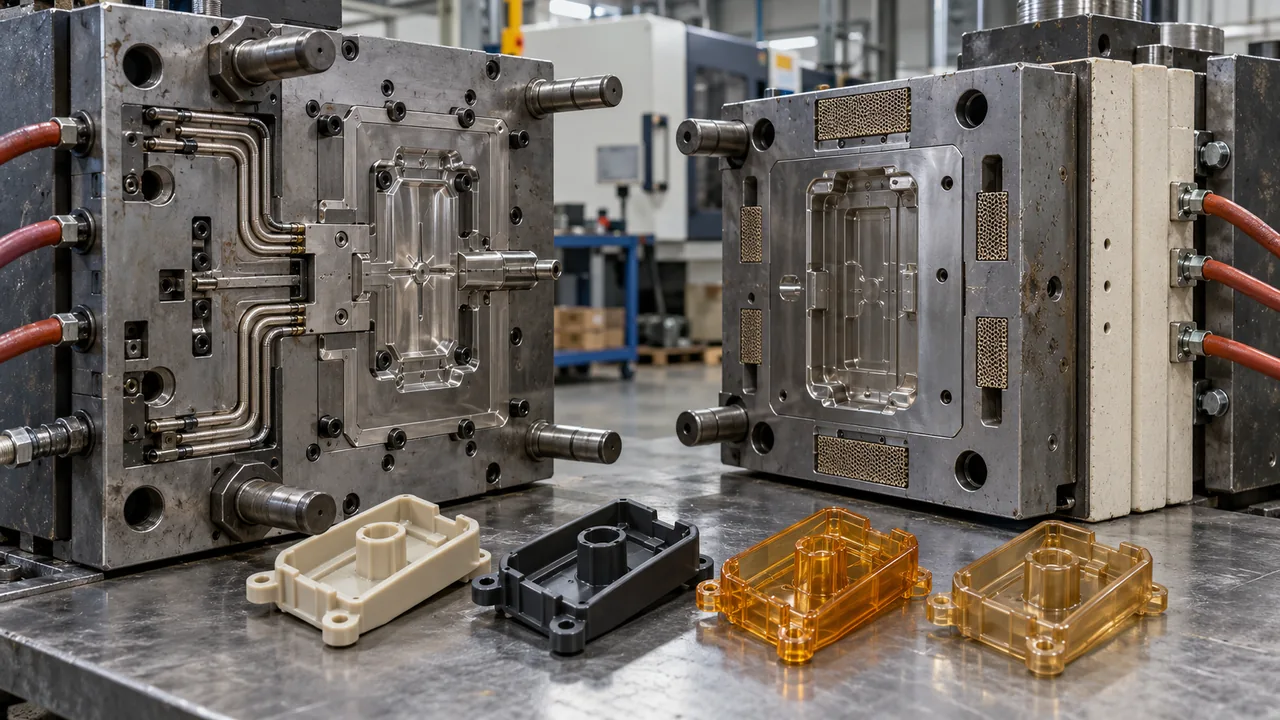
High-performance resins demand more than a hot barrel. Tooling may require oil heating, thermal insulation, hardened cavity steel, controlled residence time and venting that survives abrasive fillers. The production cell must hold the mold surface uniformly hot enough for the selected polymer without overheating seals, platens or nearby equipment. High barrel temperature is only one requirement; the machine also needs suitable screw metallurgy, realistic shot utilization and stable residence time. A large barrel running a small shot can age the polymer before it reaches the gate, while an underpowered heating system creates drifting viscosity. Confirm barrel size, hot-runner limits, mold-heating capacity and safe purge procedures during the quotation review. Ask whether the thermal capability exists at the cavity surface and through a complete production cycle.
This is why material selection belongs inside the High-Temperature Polymer Molding plan. A grade that looks ideal on paper can become the expensive option if the mold cannot achieve thermal balance or if the part needs excessive post-mold correction. A tool that eventually reaches a high temperature may still have cold slides or fluctuating cores. Warm-up time, restart handling and abrasive-grade maintenance all affect the cost of an approved part. These are production constraints to resolve before cutting steel, rather than problems to compensate for by raising injection pressure during trial.
Geometry changes the ranking
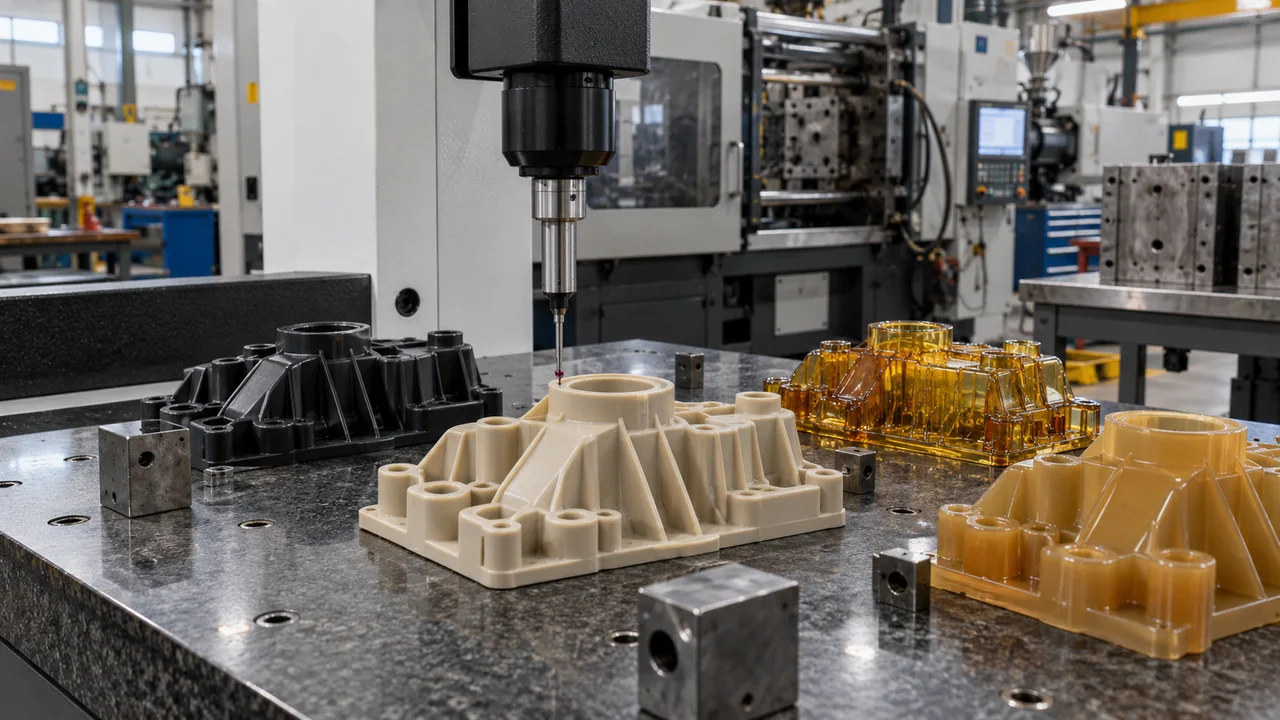
Thin ribs, long flow paths and abrupt thickness changes can reverse the apparent material advantage. Fiber-filled grades may improve stiffness while producing anisotropic shrinkage. Semi-crystalline polymers may deliver superior chemical performance but demand tighter control of cooling and crystallization. Amorphous PEI often shrinks more predictably, yet molded-in stress can reduce chemical durability. Material selection should be repeated after gate position and nominal wall thickness are known because flow orientation controls shrinkage and reinforced-part strength. A resin that passes coupon testing can still fail at a weld line behind a core pin or at a sharp transition near a metal insert. Use representative flow length, weld-line position and local radii in the first molded validation rather than relying on flat plaques. Consider a thin connector with a thick locating boss: the boss cools differently, and the flow around a hole can create a weld line exactly where the part is loaded.
Before freezing the resin, evaluate gate location, weld-line placement, draft, corner radii and fiber orientation. A targeted dell'analisi del flusso nello stampo is useful when the performance-critical area sits far from the gate or when reinforced resin must carry directional loads. Reducing an unnecessary thick section or moving a gate may improve reliability more than purchasing a higher-performing resin. Compare the revised geometry and candidate material together. Material selection and DFM should remain connected until the critical load paths and datums are established.
Choose by unacceptable failure
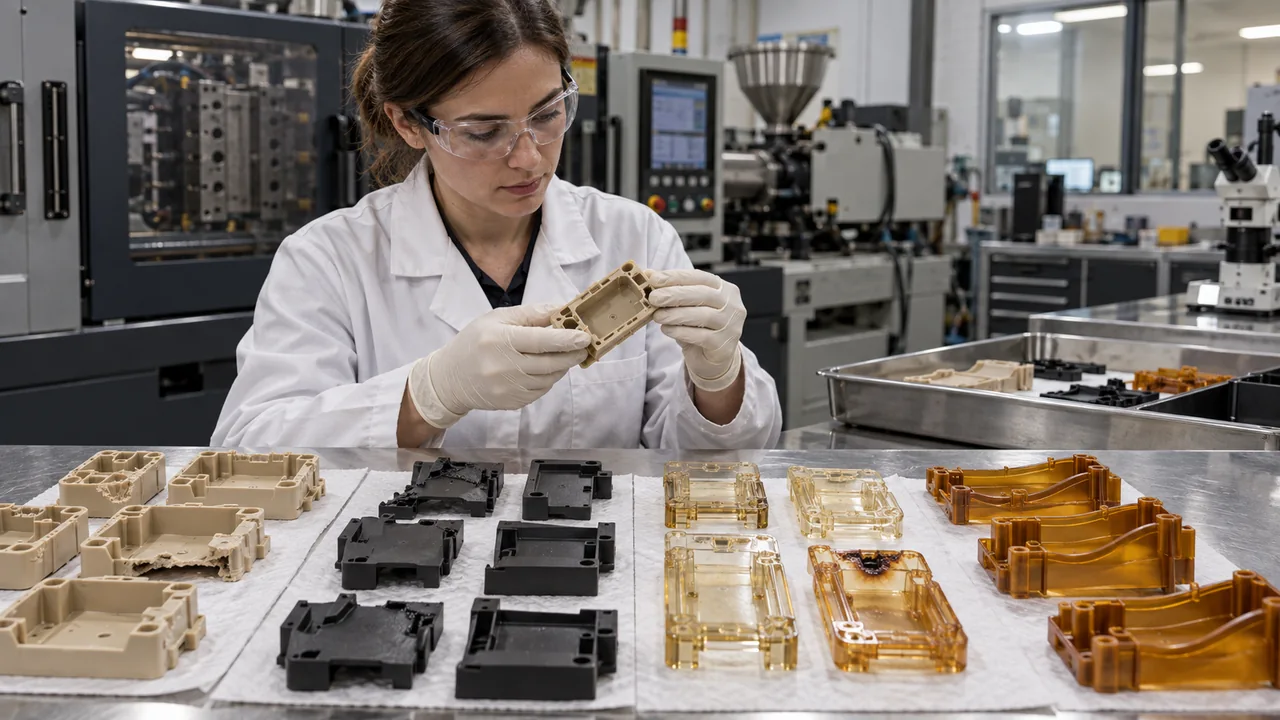
- Creep or loss of clamp load: compare long-term modulus at temperature, not room-temperature tensile strength. Rank failures as safety-critical, function-critical and cosmetic before comparing materials. This prevents a high-temperature grade from being selected to solve discoloration while the more serious risk is long-term leakage or electrical tracking.
- Chemical cracking: test the exact chemical, concentration, temperature and applied stress. Attach a measurable acceptance limit to each high-priority failure so the material review ends with a pass-or-fail decision. Rank safety, sealing, dimensional and appearance failures separately.
- Warpage: compare shrinkage direction, fiber orientation and mold temperature uniformity. Where a part carries fastener load, record residual clamp force; where it transfers fluid, record leakage after conditioning; where it insulates, record the required electrical acceptance. Choose tests that reproduce the assembly, rather than relying only on tensile bars.
- Flame compliance: verify the exact grade and tested wall thickness rather than assuming the polymer family is sufficient. A polymer that remains physically intact can still fail its function through creep, movement or a change at the mating interface.
- Sterilization damage: validate the actual number of autoclave, gamma or chemical cycles.
What buyers should send for a material review
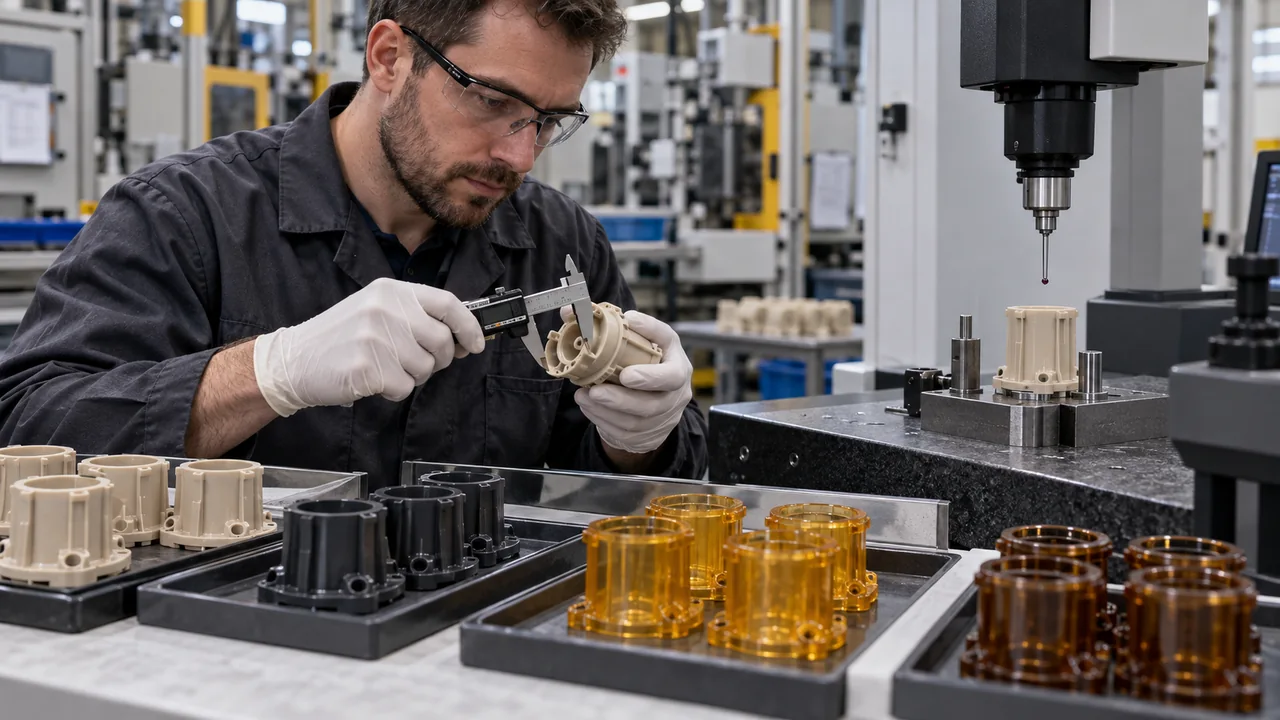
Provide the 3D model, drawing, service temperature profile, mechanical loads, chemicals, expected life, regulatory requirements, annual volume and current failure history. If a resin is already specified, include the full manufacturer and grade designation. This allows the molding team to compare PEEK, PPS and other candidates against one measurable acceptance plan. Qualification should include more than first-off dimensions because crystallinity, fiber orientation and residual stress stabilize only under a repeatable process. Samples from startup, steady production and a planned restart reveal whether the process window is robust enough for purchasing forecasts. Retain cavity identity and process records so a failure can be traced to material, tooling or machine state. Supply a temperature-versus-time profile and identify when maximum stress occurs, not just a maximum temperature. Include fluids encountered during cleaning and maintenance, permitted reinforcement, critical weld-line locations and the proposed measuring condition. Ask for samples from steady production and a restart where consistency is important. The resulting acceptance plan should distinguish resin screening, first-article dimensions and long-term functional qualification; passing one does not automatically demonstrate the others.
Domande frequenti
Is the highest-temperature plastic always the safest choice?
No. It can increase material and processing cost without solving creep, stress concentration, chemical attack or poor moldability. Select against the complete failure mode. Write the required function and acceptance limit first. A lower-cost grade with a verified margin can be a better purchasing choice than a higher-rated family selected without considering the assembly.
Should a material be approved from a datasheet?
A datasheet is appropriate for screening. Final approval should use molded parts from the intended grade, geometry and process window. Keep the exact supplier, grade and datasheet version with the qualification record. Typical specimen values do not certify every production part or authorize an untested material substitution.
Can one high-temperature resin replace metal in every application?
No. Metal replacement depends on load path, temperature, fastening, tolerances and environmental exposure. The component must be redesigned and validated as a polymer part. Review stiffness, creep, fastening and thermal expansion together. Polymer geometry usually needs its own load-path assessment rather than a direct copy of the metal drawing.