
Creating durable, reusable threaded connection points inside plastic structural housings presents significant mechanical engineering challenges. Tapping internal threads directly into soft engineering plastics creates weak screw bosses prone to thread stripping, cross-threading, and stress cracking under dynamic assembly loads. Encapsulating metal fasteners directly during injection molding resolves these structural limitations, providing high-tensile internal threads.

Selecting knurled brass or stainless steel fasteners requires evaluating mechanical interlock geometry, boss wall thickness ratios, and mold shut-off sealing methods. Preventing molten polymer from bleeding into internal blind or through-hole threads ensures clean fastener engagement without secondary thread re-tapping. This technical design guide analyzes knurling mechanics, thread sealing techniques, and pull-out testing standards.
Table des matières
Knurled Brass vs. Stainless Steel Inserts: Mechanical Interlock Design
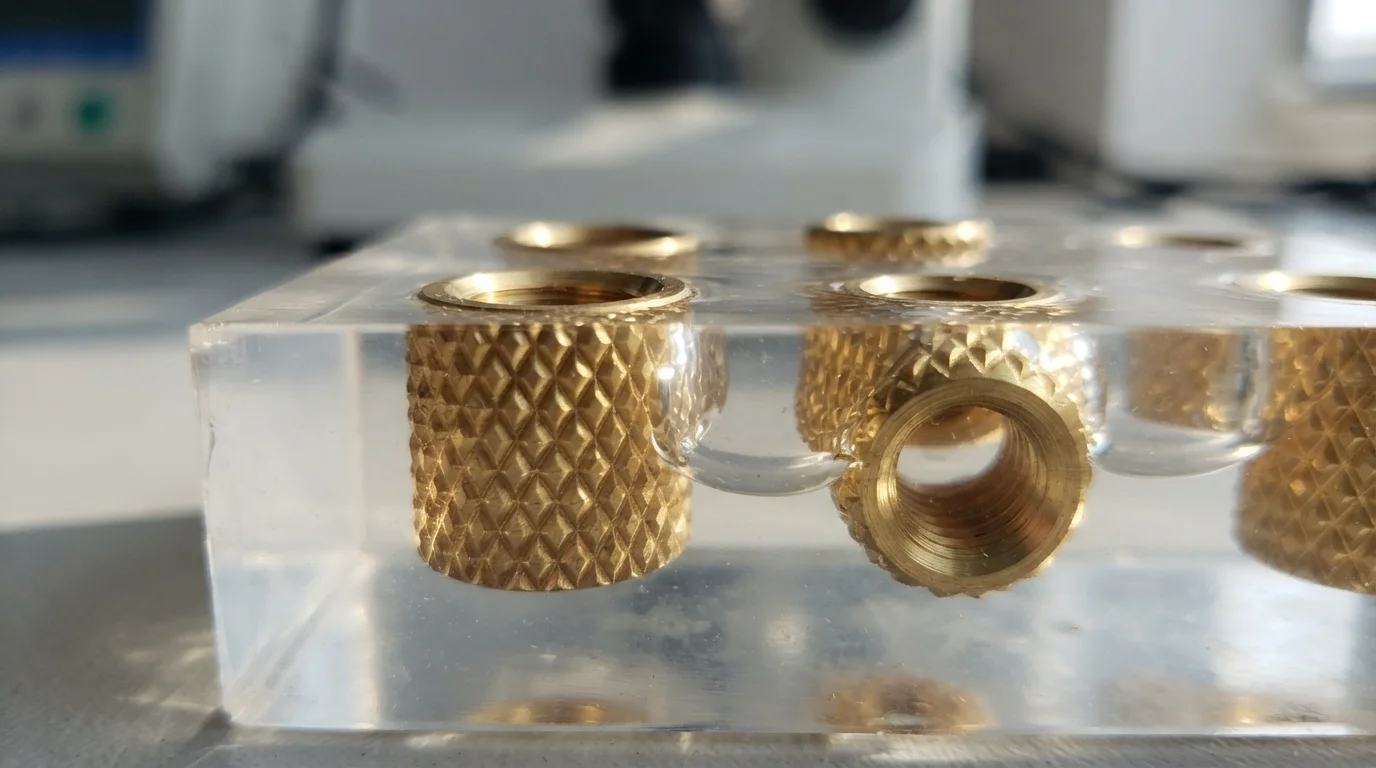
Specifying custom threaded inserts for plastic molding requires matching insert knurling geometry with expected assembly mechanical loads. Pre-molded knurled brass inserts feature external knurl patterns—such as diamond, straight, or helical knurls—that lock into the cooling polymer. Diamond knurling delivers the highest combined resistance against rotational torque and axial force d'arrachement.
Stainless steel inserts offer higher tensile strength and corrosion resistance than brass, making them ideal for marine or chemical environments. Incorporating annular grooves along the insert length enhances axial retention, preventing the fastener from pulling out under high bolt tension. Matching polymer elongation properties in resins like PA66, PBT, ou PC/ABS ensures the plastic wall absorbs hoop stresses without cracking.
| Knurling Geometry | Rotational Torque Resistance | Axial Pull-Out Resistance | Machining Complexity | Primary Fastener Application |
|---|---|---|---|---|
| Diamond Knurl (Cross-Hatched) | Highest (Bidirectional) | High (Interlocking angles) | Standard Turn Processing | Heavy-duty automotive & electronics bosses |
| Straight Knurl + Annular Groove | High (Torsional ribs) | Maximum (Ring undercut) | Low Screw Machining Cost | High axial tension structural assemblies |
| Helical / Herringbone Knurl | Moderate-High | High (Directional locking) | Specialized Tooling Needed | Thin-walled medical diagnostic housings |
Preventing Plastic Ingress into Blind & Through-Hole Threads
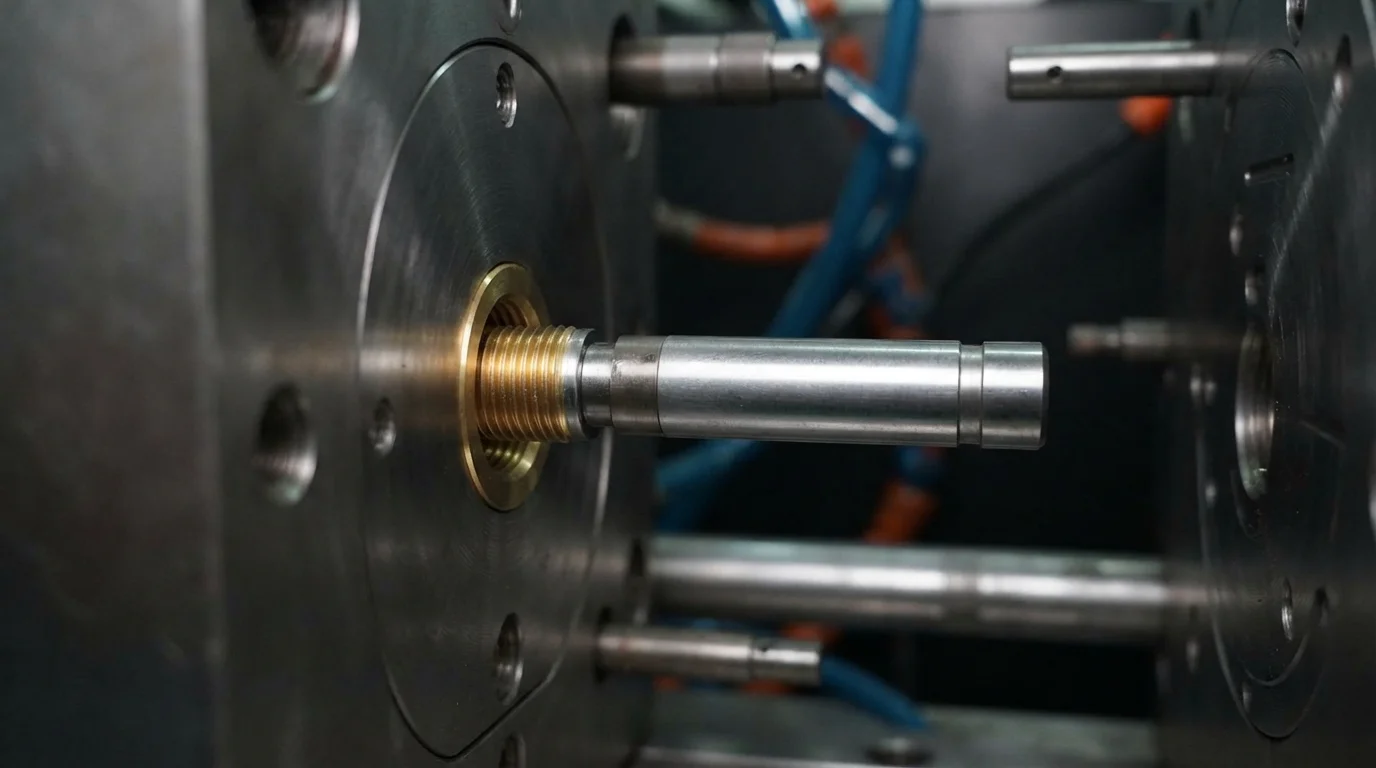
Controlling resin flow around metal fasteners during primary moulage par insertion requires precise tool shut-off land engineering. Molten plastic injected under high pressure bleeds into internal blind or through-hole threads if shut-off steel lands leave microscopic gaps. Resin ingress clogs internal threads, requiring expensive manual tap re-chasing or causing scrapped assemblies.
Tooling engineers utilize ground core locating pins that fit internal thread bores tightly, blocking melt entry during cavity fill. Designing a flat sealing step measuring at least 0.5 mm wide along the insert shoulder creates a positive physical shut-off land barrier. Spring-loaded floating shut-offs compensate for dimensional variations in stamped metal fasteners, maintaining flash-free thread sealing.
Torque-Out and Pull-Out Force Testing Protocols
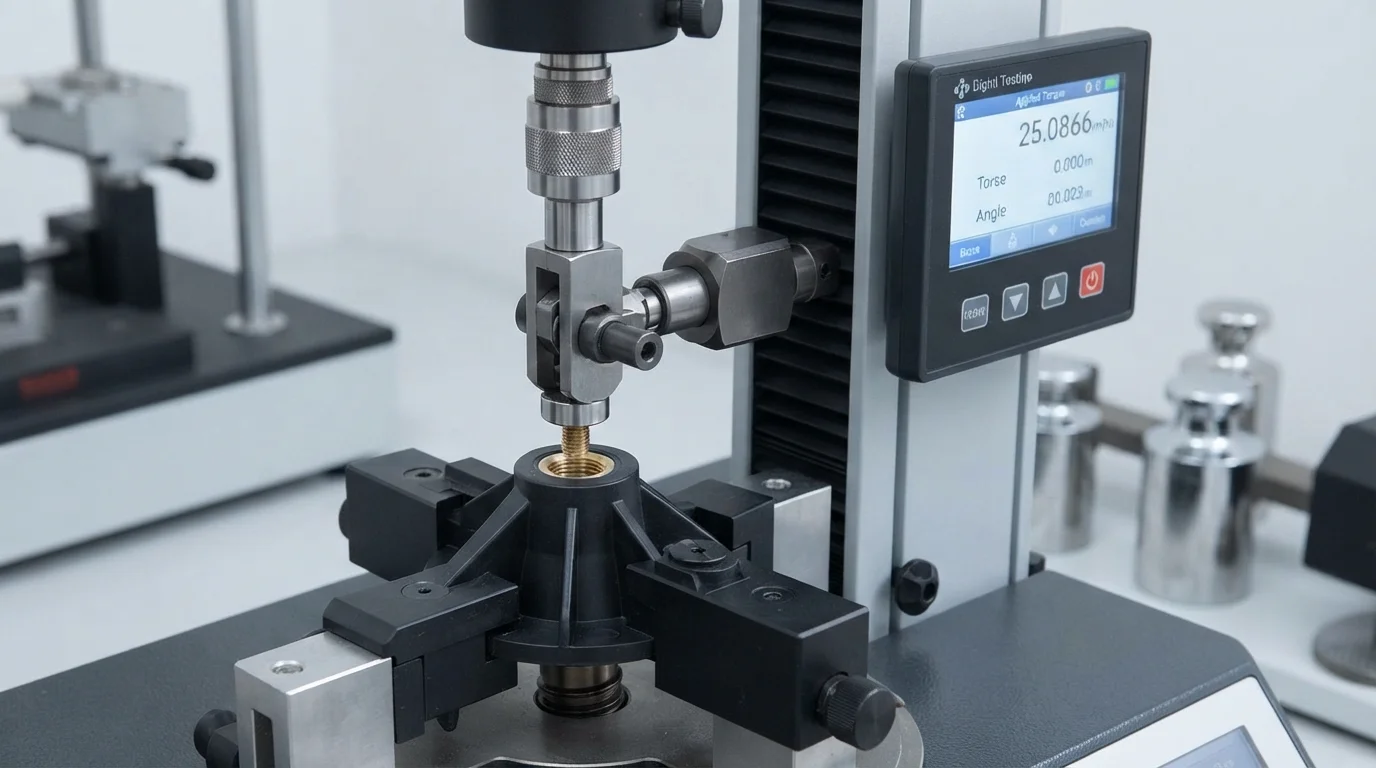
Validating mechanical joint strength requires conducting standardized pull-out and rotational torque-out testing on molded bosses. Axial pull-out testing applies tensile load to the threaded fastener until the surrounding plastic boss wall shears or breaks. Rotational torque testing applies increasing torque using calibrated digital torque wrenches until the metal knurling spins within the plastic matrix.
Optimizing boss wall thickness ratios ensures that plastic enclosures achieve maximum joint performance. Designing plastic boss outer diameters to equal 2.0 to 2.5 times the outer diameter of the metal fastener provides sufficient wall mass. Encapsulating threaded inserts for plastic molding strictly according to these DfM guidelines guarantees long-term assembly reliability.
Questions fréquemment posées (FAQ)
Why is diamond knurling preferred for threaded inserts in plastic molding?
Diamond knurling features crisscrossed diagonal grooves that lock polymer in both rotational and axial directions simultaneously. Straight knurls offer high torque-out resistance but require an additional circumferential annular groove to prevent axial pull-out failure.
How do you prevent plastic resin from bleeding into internal insert threads?
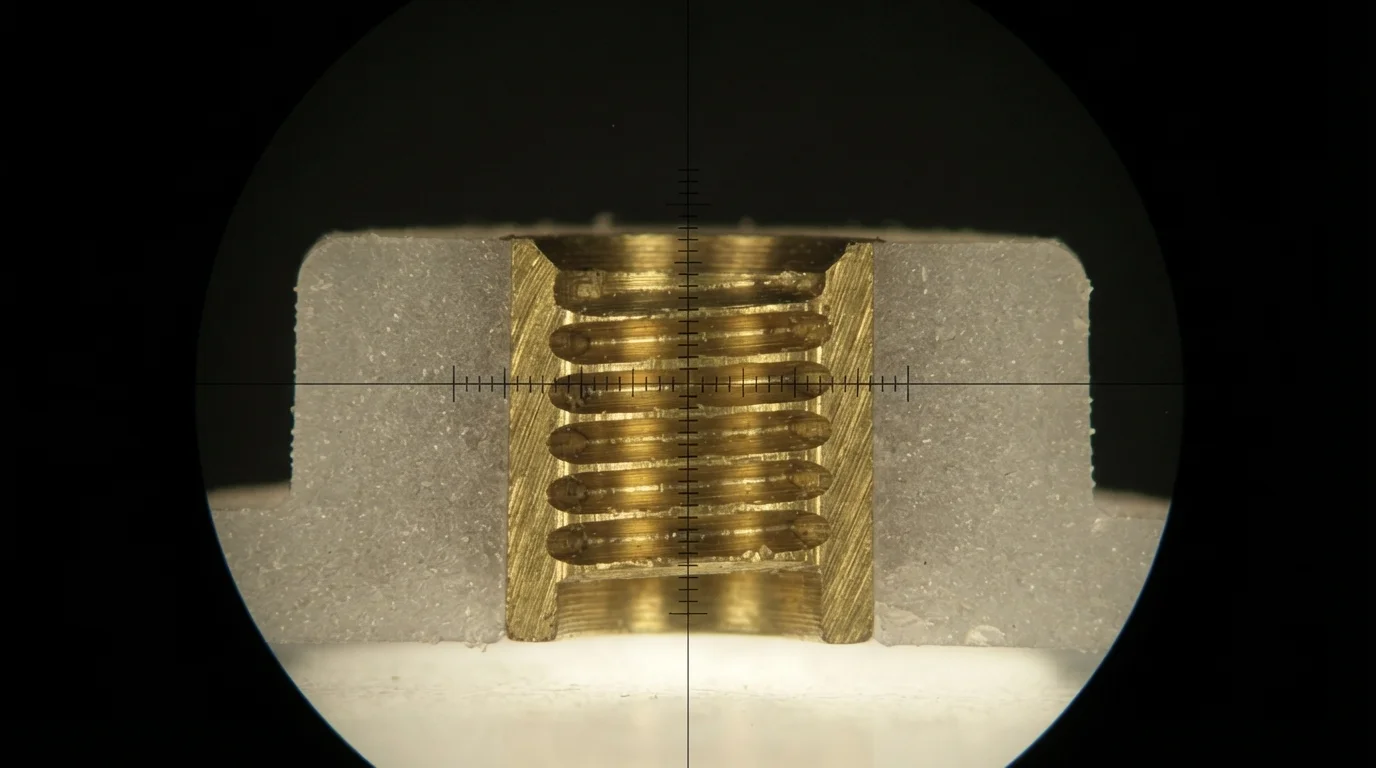
Preventing plastic ingress relies on precision core locating pins and flat sealing land steps. Core pins fit internal thread bores tightly to block melt entry, while a 0.5 mm sealing step on the insert shoulder seals firmly against tool steel under clamp pressure.
What is the recommended plastic boss wall thickness around brass threaded inserts?
Recommended plastic boss outer diameter (OD) should equal 2.0 to 2.5 times the outer diameter of the metal insert. Maintaining this wall thickness ratio ensures sufficient plastic volume to absorb cooling contraction hoop stresses without stress cracking.