
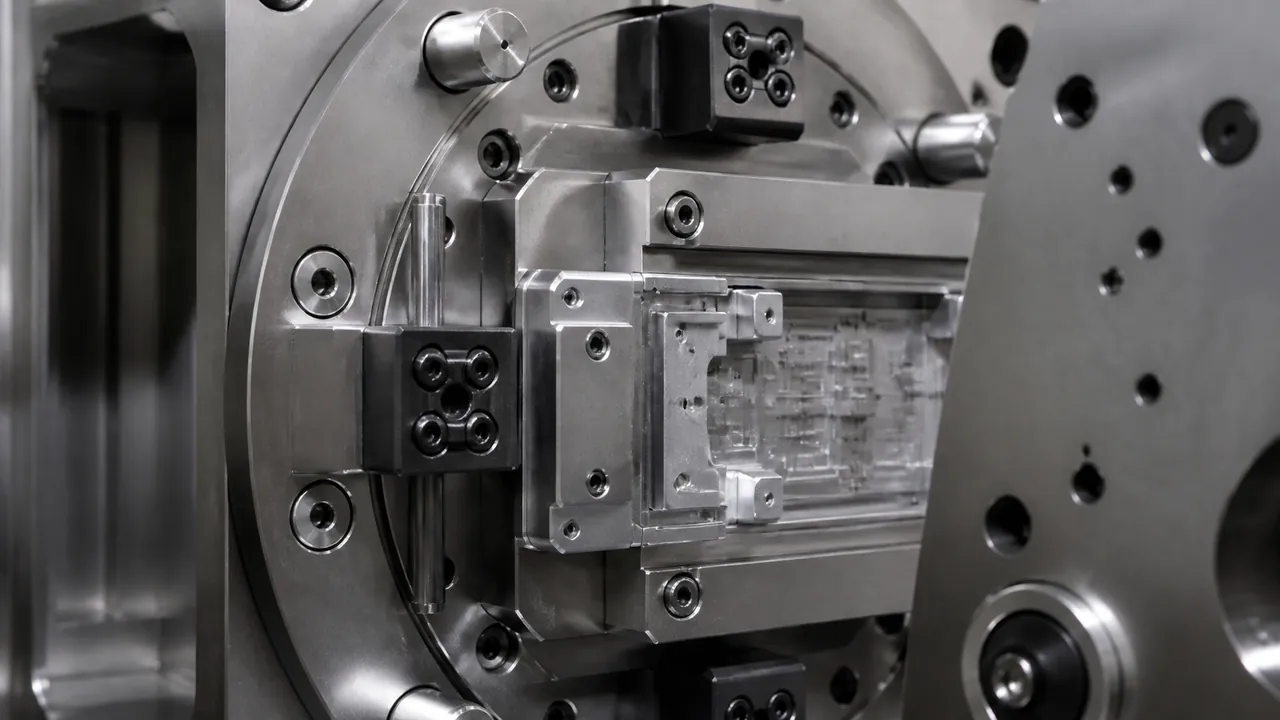
Rotary platen two-shot molding uses a rotating mold component to move a first-shot substrate to a second injection position. It is especially useful when a part needs a repeatable second material or color on defined surfaces and the process can benefit from integrated handling. The platen is not a universal solution: part support, indexing accuracy, machine layout, cooling, and cycle balance must all fit the design.
How a Rotary Platen Two-Shot System Works
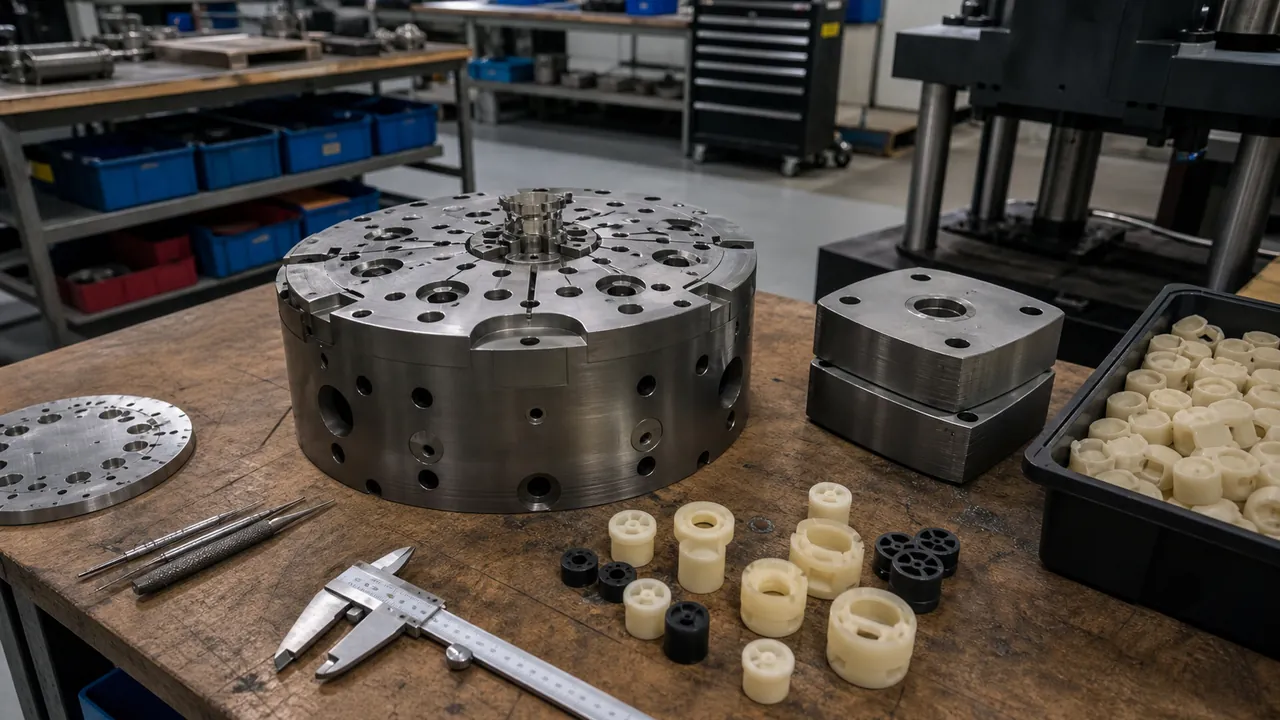
The mold forms a substrate in the first cavity. After opening, a rotary platen indexes the core or mold half to align the substrate with a second cavity. The mold closes again and the second unit injects the next material. The finished part can then be ejected after the next indexing step, depending on the cavity layout and machine sequence.
The arrangement can reduce manual transfer and help maintain registration, but it adds mechanical and control requirements. Review the two-shot molding service context together with the actual component geometry.
Cycle Sequence and Indexing Logic
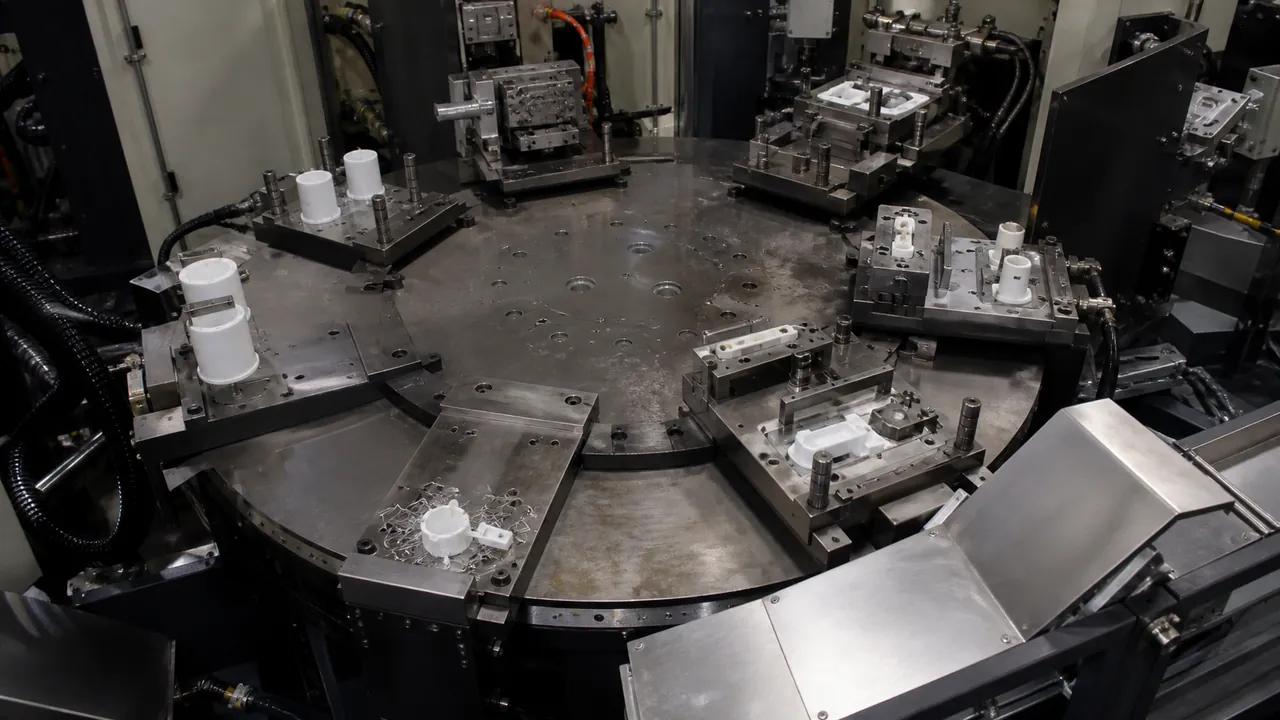
A stable cycle defines injection, packing, cooling, mold opening, indexing, confirmation, mold closing, second-shot injection, and ejection. The index action must be long enough to complete safely but short enough not to dominate the cycle. Multi-cavity tools may run both shots at the same time, which can improve output while making balance and material availability more important.
- Confirm the first-shot part is fully formed and supported.
- Release the mold, index to the next position, and verify the mechanical lock.
- Close the mold without crushing the substrate or trapping flash.
- Inject the second material and inspect the boundary before production release.
Alignment and Part Retention Drive Quality
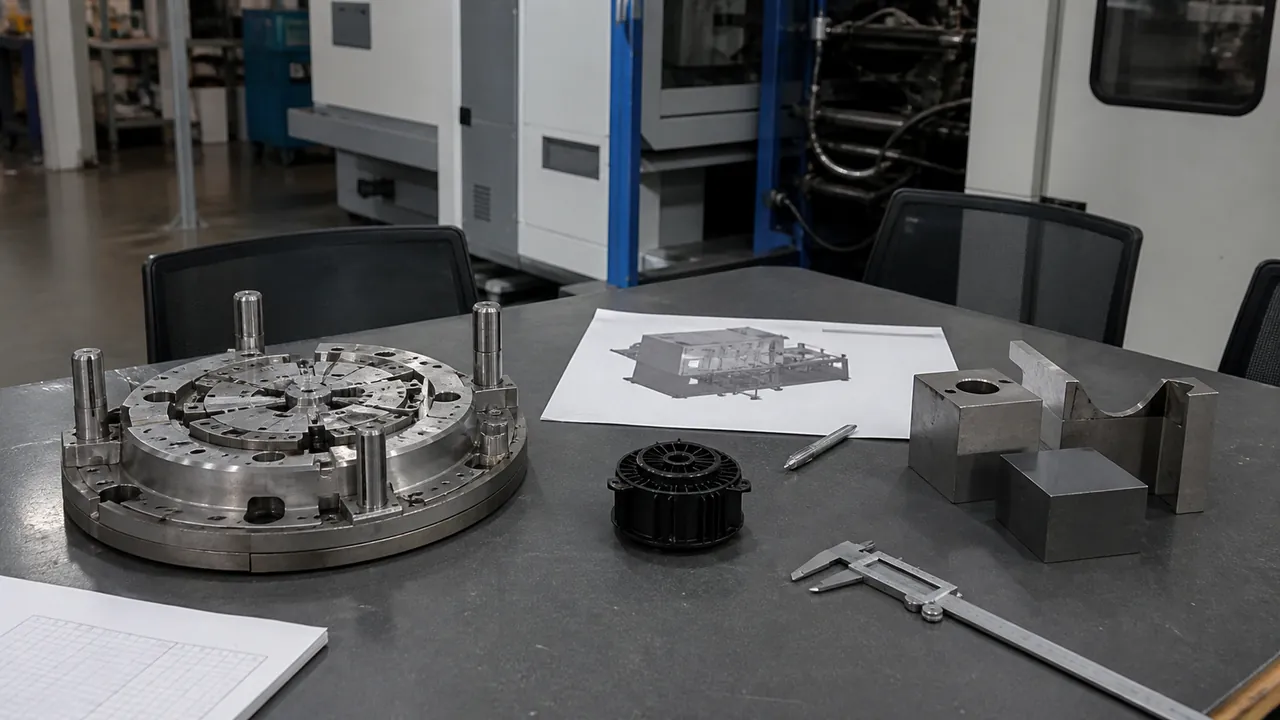
Indexing accuracy matters when the second material must follow a narrow cosmetic or functional boundary. Locating pins, shot-pin locks, guide components, and support features should keep the cavity relationship stable after repeated cycles. The substrate should also be supported away from delicate ribs, sealing lands, and cosmetic surfaces.
Inspect the first-shot reference features before evaluating the second shot. If registration moves, the defect may originate in part shrinkage, ejection, mold wear, or platen locking rather than in the second injection parameters.
Cooling and Ejection Considerations
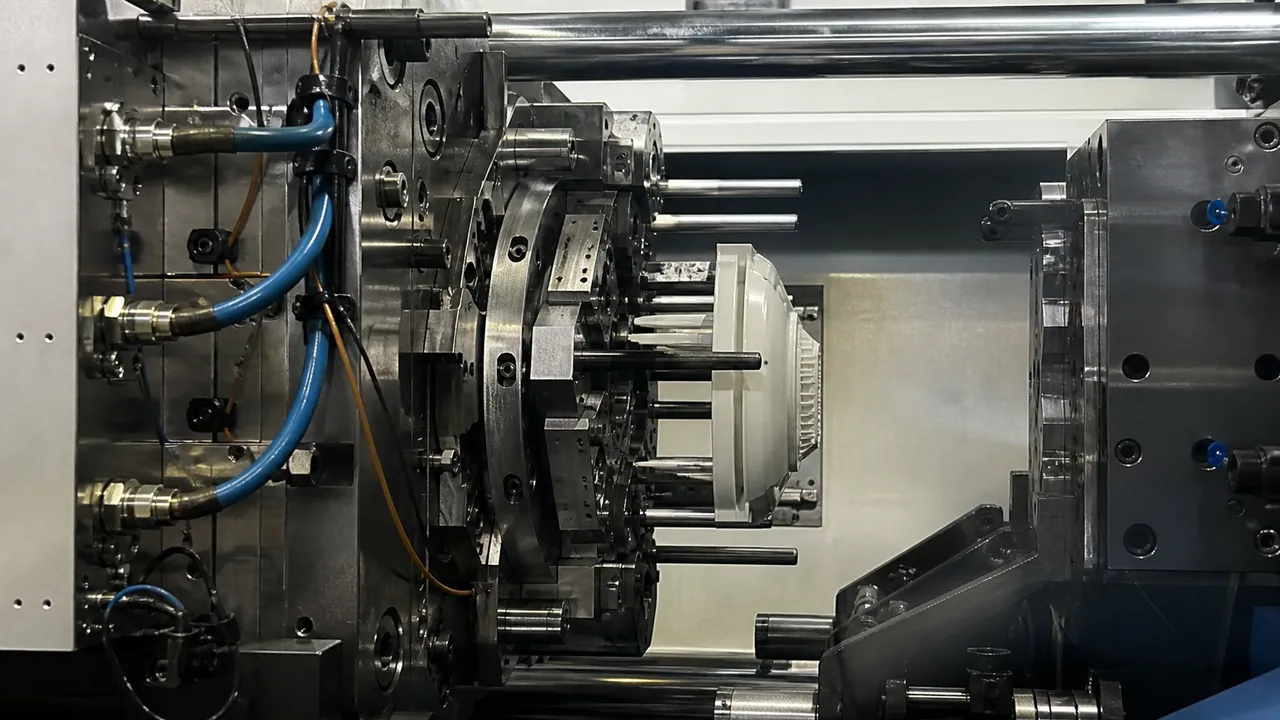
The first-shot substrate may need enough cooling to survive indexing, while the second material may require a different thermal window for bonding or surface quality. Cooling circuits should avoid hot spots near the interface and should leave room for service access. Ejection must release the finished part without peeling, stretching, or marking the second material.
Grade-specific material review is essential when a rigid resin is paired with TPE, TPU, or another elastomer. Use the site’s material compatibility guide as a starting point and validate the selected grades through molded samples.
When a Rotary Platen Arrangement Is a Good Fit
Evaluate a rotary platen when the product needs a defined second material, repeatable visual registration, integrated soft-touch, or a seal formed directly on a rigid substrate. The process is less compelling when the second operation is simple, annual volume is uncertain, or the part can be assembled with little labor and low quality risk.
Compare the full system cost: dedicated tooling, machine time, material handling, inspection, maintenance, assembly reduction, and expected tool life. A two-shot process guide can help align the stage sequence with the buyer’s launch plan.
Information to Provide for a Rotary Platen Quote
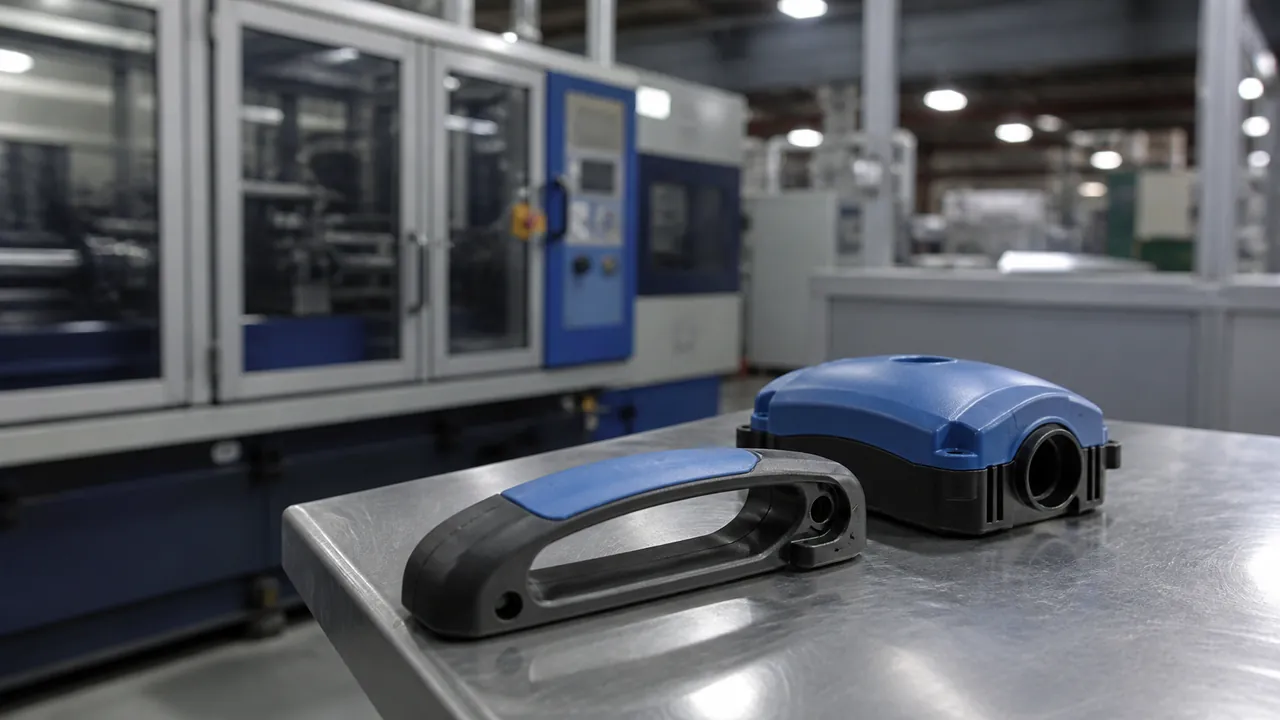
Send CAD, drawings, material grades, annual volume, cycle target, second-shot coverage, critical alignment dimensions, interface tests, cosmetic limits, machine constraints, and launch timing. Ask for the platen indexing sequence, part retention plan, cavity count, cooling concept, ejection method, trial scope, and maintenance assumptions.
Bottom line: rotary platen molding earns its place when indexed movement adds repeatability and removes meaningful assembly or handling work. The right decision comes from the complete cycle and quality plan, not from the mechanism name alone.