
Choosing LSR Injection Molding Materials is not a matter of selecting the softest, clearest, or most widely used silicone. The grade has to match the part’s job, the substrate it touches, the way it will be cured and sterilized, and the acceptance tests that will prove performance. A material decision made only from a data-sheet headline can create problems later in bonding, compression recovery, color stability, or dimensional control.
For a project using Liquid Silicone Rubber (LSR) Molding, begin by translating the product requirement into measurable material functions. This article organizes the selection around those functions so that the grade, tool, and process can be developed together.
Start with the part’s job
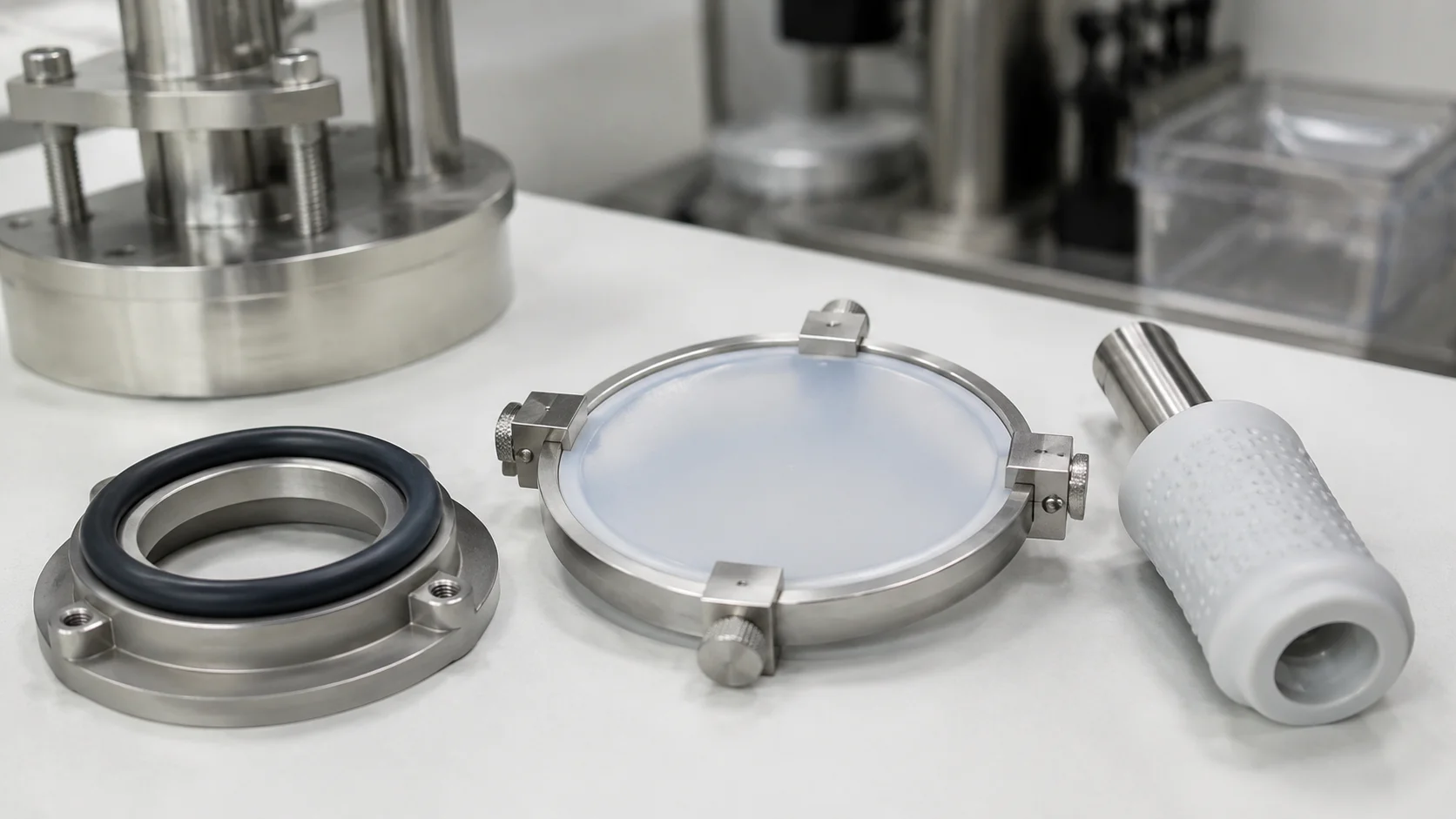
A gasket needs stable compression and sealing recovery. A flexible membrane needs controlled deflection and tear resistance. A grip needs tactile feel, abrasion resistance, and a predictable bond to its substrate. A fluid-contact component may need limits for extractables, cleanliness, and sterilization exposure. These are different priorities, even when the parts are all described as silicone.
| Function | Material questions | Useful validation |
|---|---|---|
| Seal | Hardness, compression set, chemical exposure | Leak and compression-recovery testing |
| Flex | Tear strength, elongation, fatigue behavior | Cycle and tensile testing |
| Bond | Substrate compatibility and cure chemistry | Peel, pull, or torsion test |
| Appearance | Clarity, color stability, surface finish | Defined visual standard and aging review |
Hardness is a design input, not a product identity
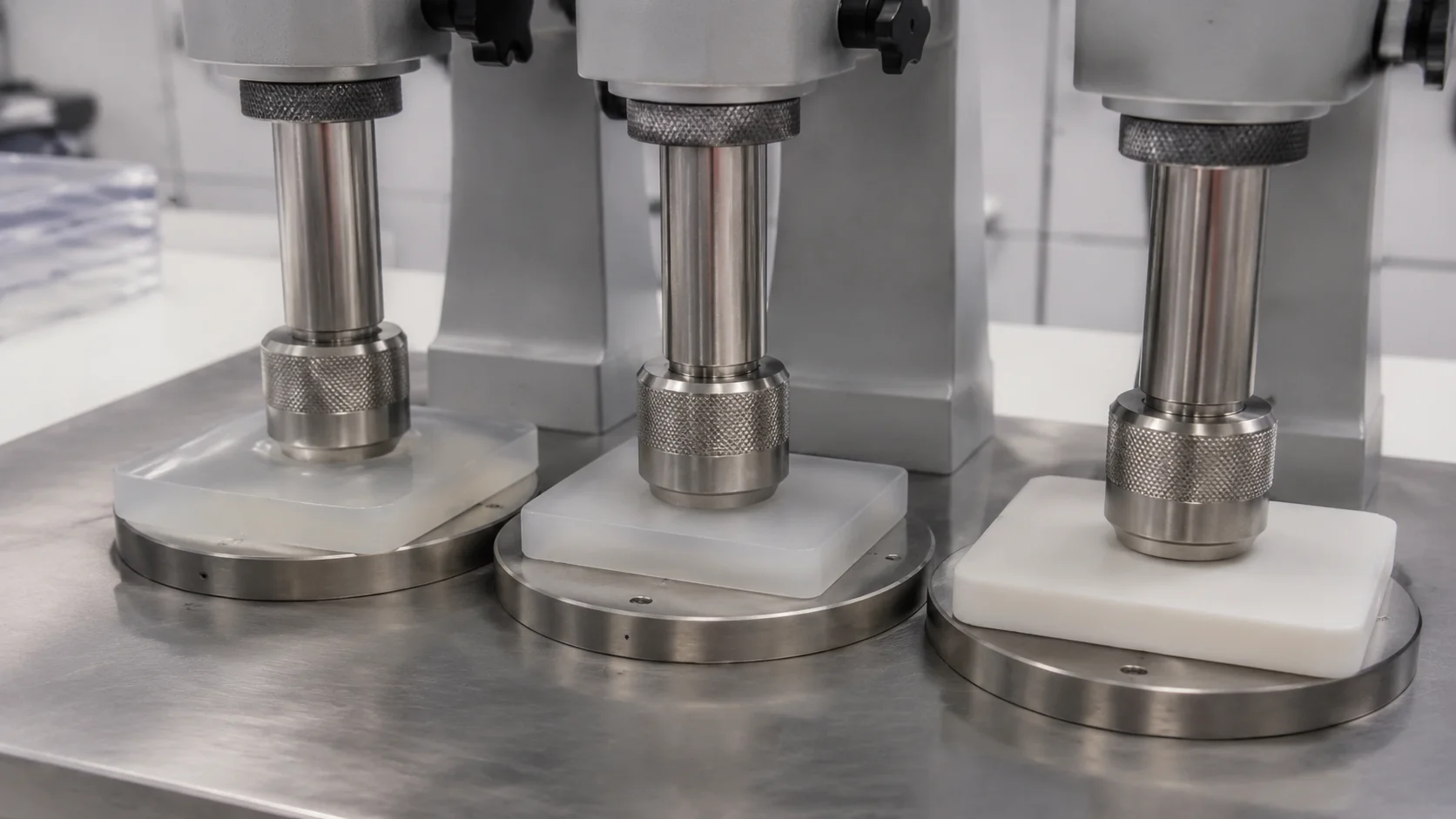
Durometer affects how a part seals, flexes, feels, and releases from the mold, but the same nominal hardness can behave differently in different geometries. A thin lip may be compliant even with a relatively firm grade, while a thick pad can feel rigid because of its section. Specify the actual function, compression, deflection, and recovery requirement alongside a hardness range.
Check whether the grade’s tensile, elongation, tear, compression-set, and temperature data were generated under conditions relevant to your part. Treat published values as comparison data, not as a promise for every molded geometry. The final part must be tested after the process and any required post-treatment.
Match cure chemistry to the application and process
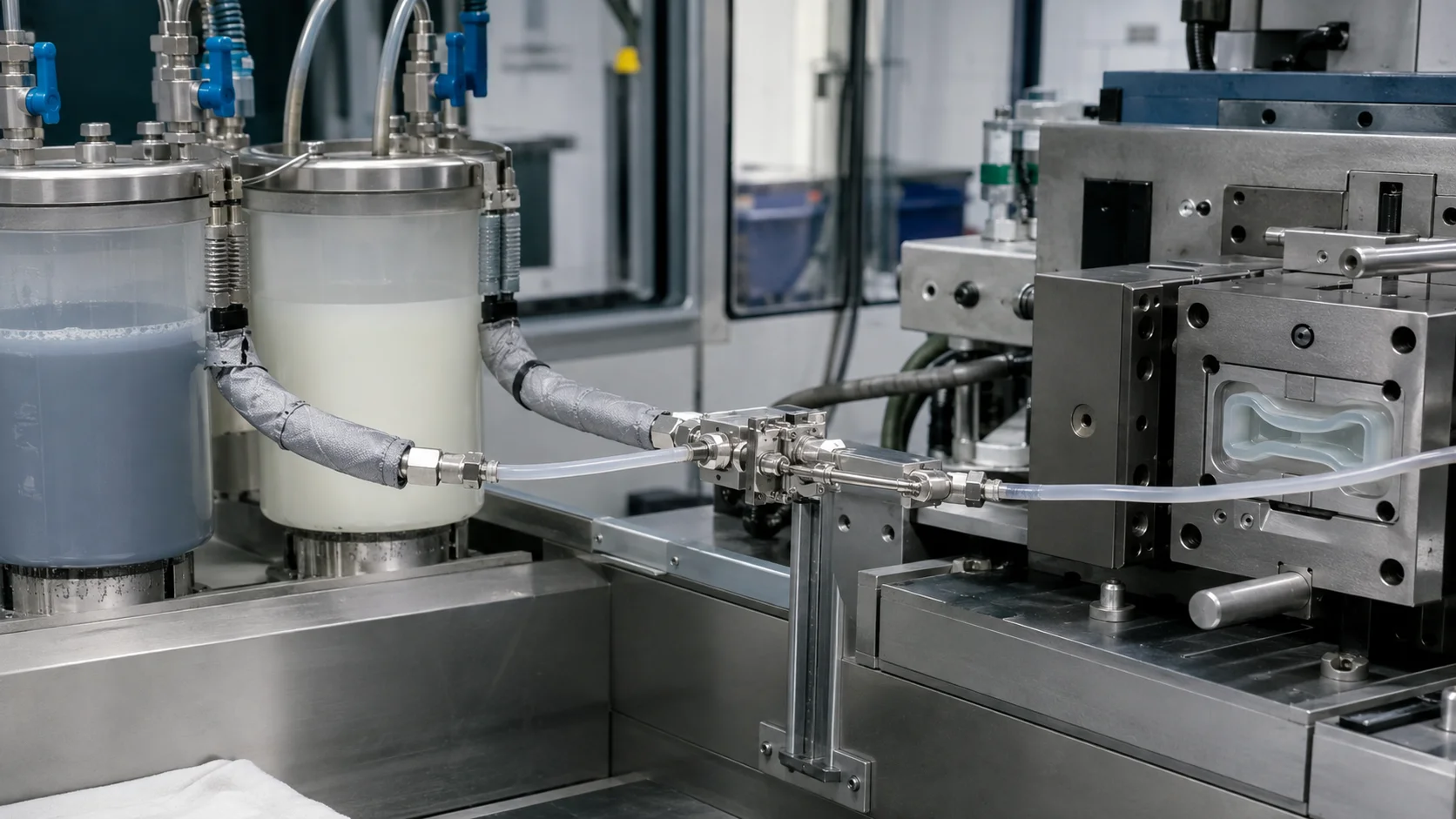
Platinum-cured LSR is common in demanding applications, but the choice still depends on the product specification. Cure speed, mold temperature, pigment system, inhibition sensitivity, post-cure needs, and storage conditions can affect the process window. Keep components separated until metering and mixing, and document the chosen ratio and handling conditions.
- Confirm the supplier’s recommended cure and storage conditions.
- Review any ingredients or surfaces that may inhibit cure.
- Determine whether post-cure changes odor, volatiles, color, or dimensions.
- Validate cure state on the finished geometry rather than on a flat sample alone.
Evaluate bonding as a system
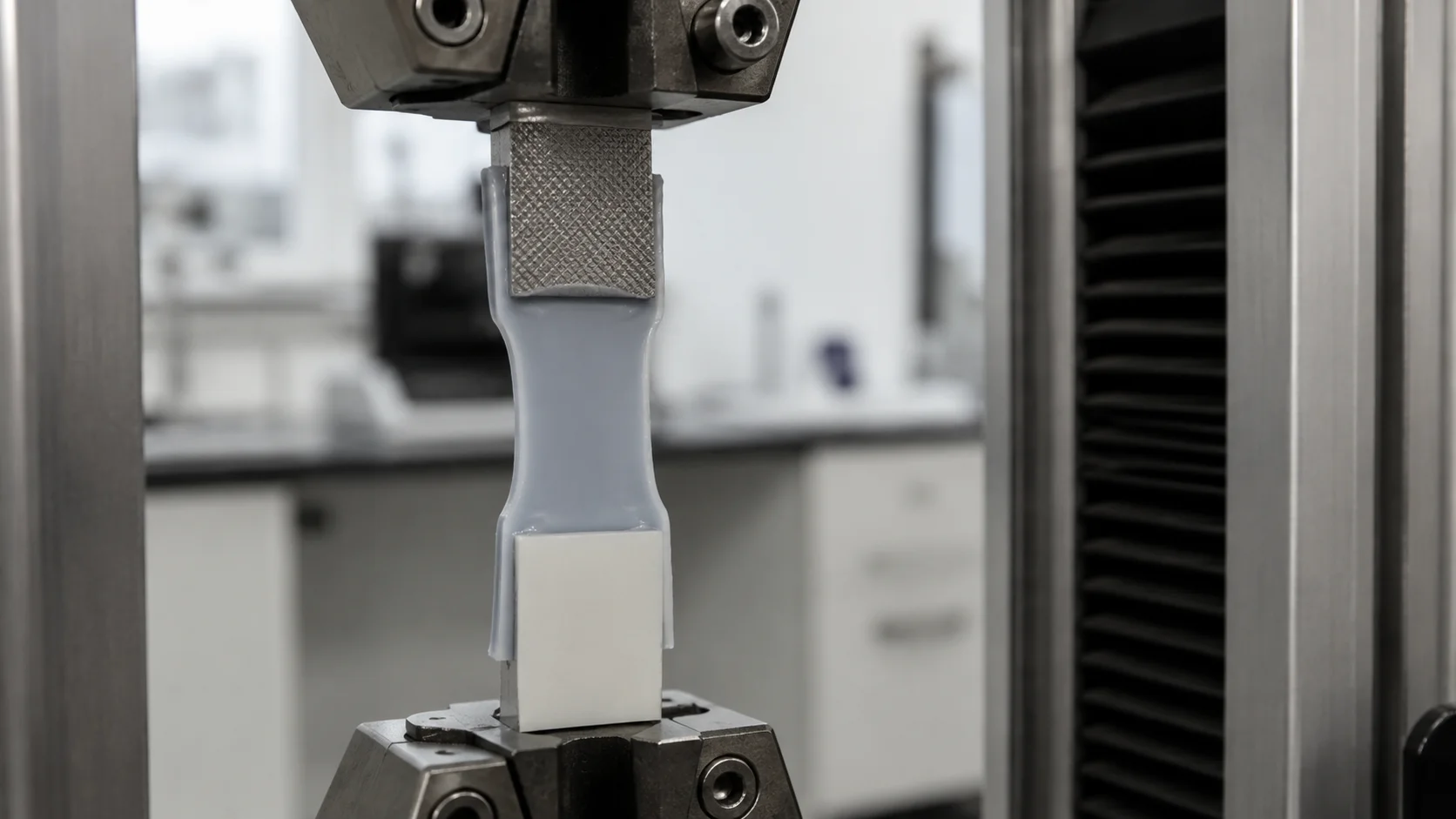
When silicone is molded onto plastic, metal, glass, or another substrate, material choice is only one part of the bond. Surface energy, cleanliness, texture, geometry, primer use, cure temperature, and time all matter. A chemical bond may be strong under one condition but weak after humidity, heat, sterilization, or repeated flexing. A mechanical key, such as a hole, groove, or undercut, may provide a more robust load path when the design allows it.
Ask for bond data on the actual substrate and surface treatment. A supplier’s generic compatibility chart can narrow the options, but it cannot replace testing on the final part. Keep the interface away from flash-prone edges and specify how bond coverage will be inspected.
Separate medical, optical, and general-purpose requirements
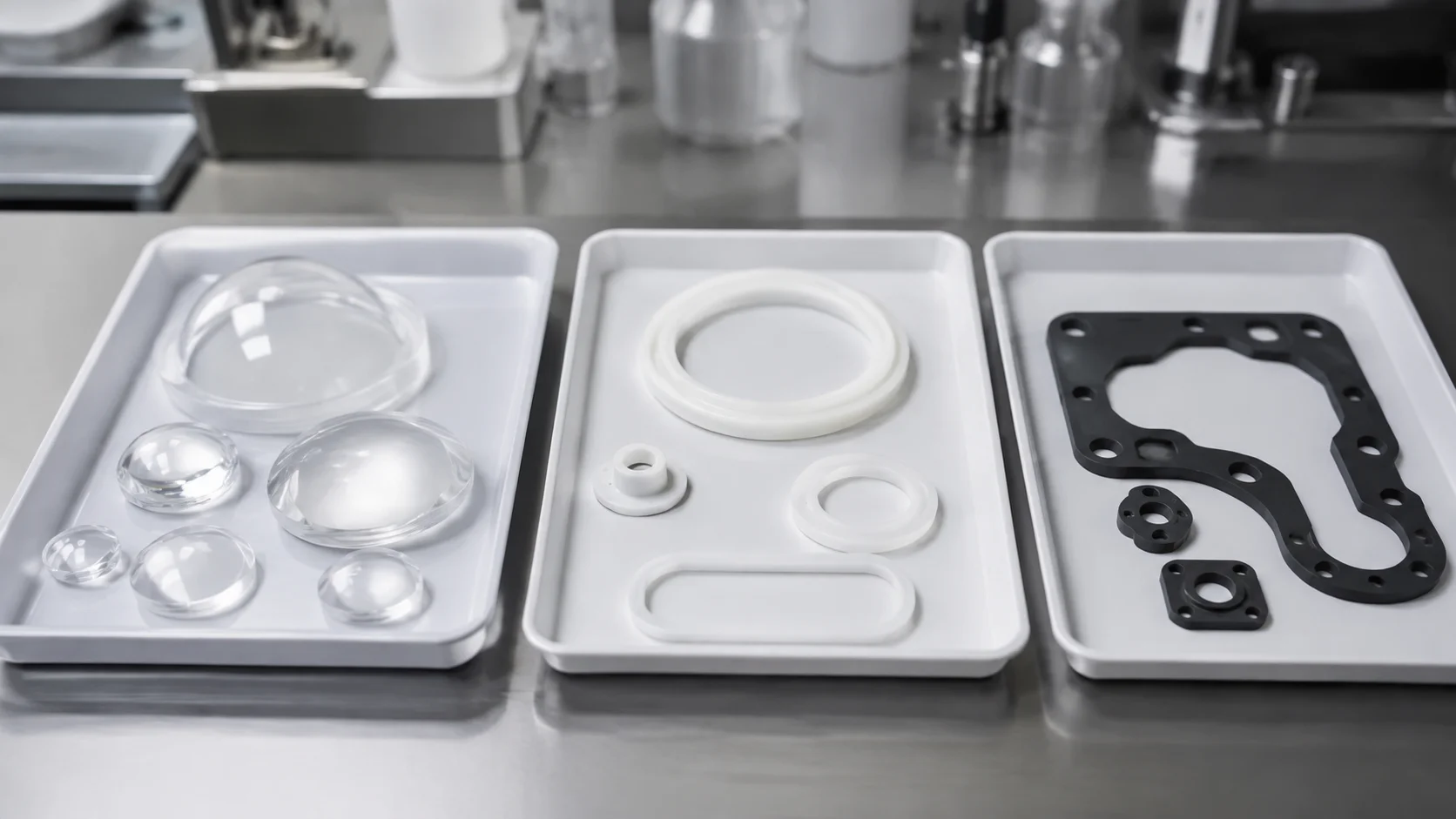
A material selected for a general industrial seal should not be transferred to a fluid-contact or implant-related design without a new qualification review. Medical use can require controlled documentation and biological evaluation; optical use can require exceptional clarity and low visual distortion; electrical use may emphasize dielectric behavior and flame performance. Use the end-use specification to define which grade family is acceptable.
The quality-control framework is useful for linking lot identity and test records to the material decision. If the project needs controlled handling, review the production environment early so cleanliness and packaging expectations are included in the quote and validation plan.
Use a short-list and a written down-select

A practical material review ends with a short-list of two or three candidate grades and a written reason for the selection. Record hardness, cure system, substrate compatibility, expected service environment, post-cure, color or clarity, documentation, and test plan. Then review whether the mold design, gate, venting, and process window support the chosen material.
The best LSR grade is the one that meets the functional requirement with a controllable process and an evidence package appropriate to the product. A structured down-select prevents the common mistake of optimizing one property while quietly sacrificing sealing, adhesion, cleanliness, or long-term stability.