
Thermoplastic Polyurethane (TPU)

Thermoplastic Polyurethane (TPU) is an exceptionally tough elastomer renowned for its outstanding abrasion resistance, high tear strength, low-temperature flexibility, and resistance to oils, greases, and solvents. At Jucheng Precision, an ISO 9001, ISO 13485, and IATF 16949 certified manufacturer, we specialize in high-precision TPU injection molding and 2K overmolding. Utilizing 35+ advanced molding presses (50-650T) and 25+ in-house 5-axis CNC machines, we control TPU’s high hygroscopicity, stickiness, and elastic shrinkage (1.0%-2.0%). We provide a free DFM analysis within 24 hours to optimize draft angles and cooling layout, ensuring zero-defect flexible components verified by Zeiss CMM inspection.

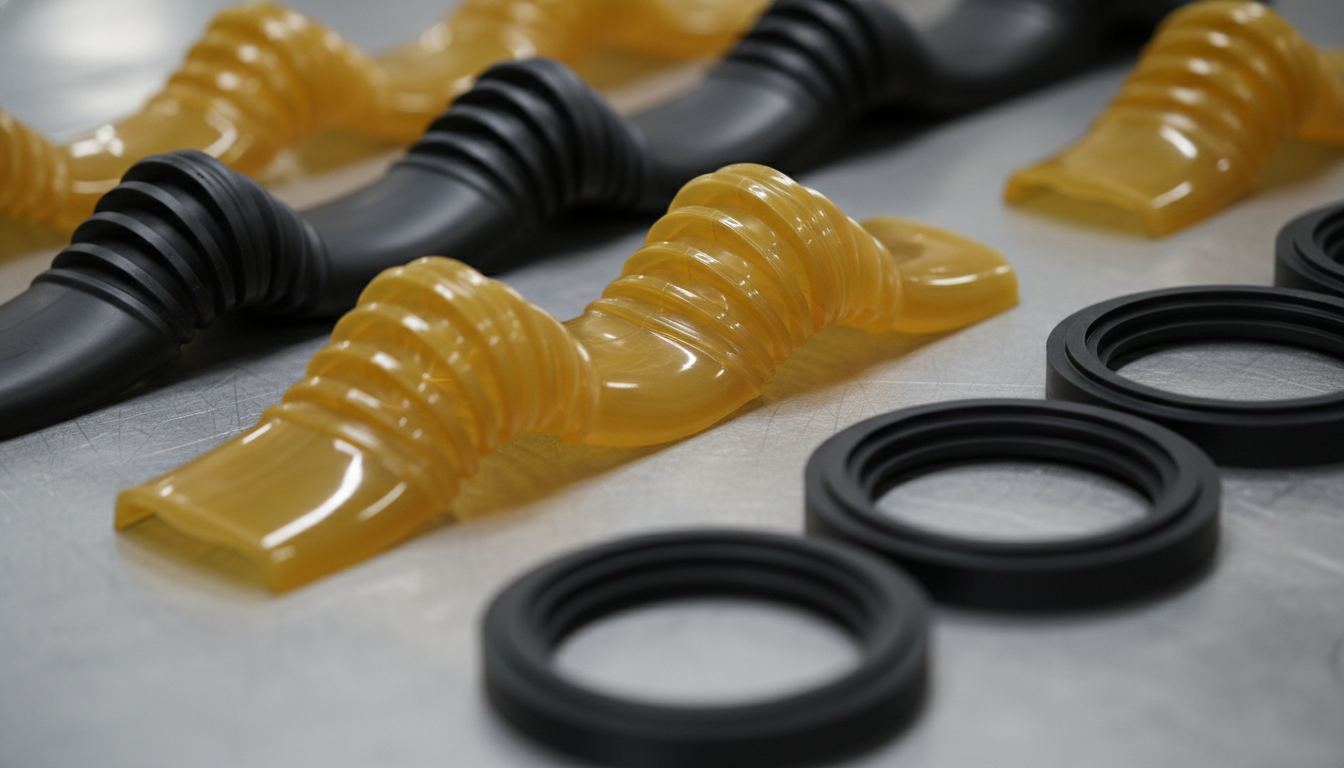
Precision-injection-molded-translucent-and-black-TPU-flexible-boots-and-dynamic-seal-1

Our available materials

TPU-BASF Elastollan 1185A

To withstand rigorous microbial attack, constant hydrolytic exposure, and extreme sub-zero flexing down to -38°C without dynamic mechanical degradation, BASF’s Elastollan 1185A provides a premier unreinforced, polyether-based thermoplastic polyurethane (TPU) matrix. Boasting an ultra-dense structure with 85A Shore A hardness and FDA 21 CFR 177.2600 and NSF Standard 61 certifications, this high-performance grade delivers outstanding tear strength (65-105 kN/m) and exceptional DIN abrasion resistance (25 mm³ loss). Jucheng Precision, under ISO 13485 and IATF 16949 quality systems, specializes in high-precision cleanroom molding of Elastollan 1185A. Supported by our 5-axis CNC-machined S136 stainless steel molds, we control its complex elastic shrinkage (1.0%-2.0%) to deliver flash-free fluid-handling and medical components verified by Zeiss CMM.

READ MORE

TPU-Covestro Desmopan 385S

Combining the extreme mechanical strength of polyester-based polyurethanes with the outstanding hydrolytic stability of polyethers requires a specialized molecular architecture, which Covestro’s Desmopan 385S (belonging to the premium 300 Series) delivers. Boasting a density of 1.20 g/cm³ and a hardness of 85 Shore A, this hydrolysis-stabilized ester grade provides an ultimate tensile strength of 50.5 MPa and extreme DIN abrasion resistance (30 mm³ loss). Jucheng Precision, operating under ISO 9001 and IATF 16949 certified quality systems, specializes in precision molding of Desmopan 385S. Using S136 stainless steel molds polished on 5-axis CNCs, we control its complex 1.0% to 2.0% elastic shrinkage, ensuring zero-defect dynamic seal components verified by Zeiss CMM.

READ MORE

TPU-Lubrizol Estane 58211

Achieving high elastic recovery and reliable flame retardancy without corrosive halogens in heavy-duty industrial seals and dynamic cable jackets requires a highly stabilized polyether matrix, which Lubrizol’s ESTANE® 58211 (ZHF 58211) delivers. Featuring a density of 1.29 g/cm³ and a hardness of 91A Shore A, this non-halogenated flame-retardant (NHFR) TPU provides exceptional tear strength (84 kN/m) and robust low-temperature flexibility. Jucheng Precision, under ISO 9001 and IATF 16949 quality frameworks, specializes in precision injection molding of Estane 58211. Utilizing 5-axis CNC-machined tooling, we optimize gating and manage its high shrinkage (1.0%-2.0%) to prevent sink marks on heavy structural ribs, verified by Zeiss CMM.

READ MORE

TPU-Lubrizol Estane GP72DB

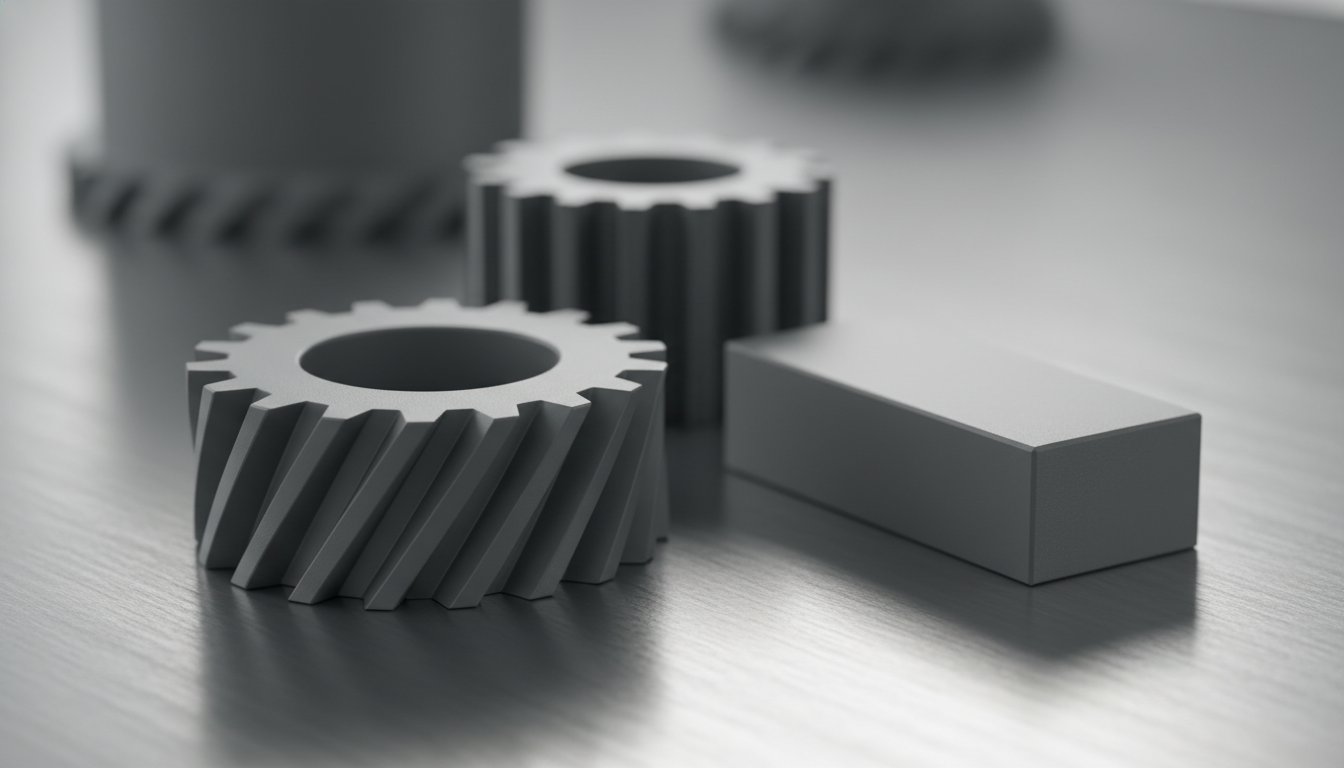
To bridge the performance gap between soft elastomers and rigid engineering plastics under high load-bearing fatigue and intense sliding wear, Lubrizol’s ESTANE® GP72DB provides a revolutionary aromatic polyester-based thermoplastic polyurethane (TPU). Boasting an exceptionally high engineering hardness of 68 Shore D and a density of 1.24 g/cm³, this structural grade delivers an ultimate tensile strength of 42.0 MPa and extreme tear strength up to 240 kN/m. Jucheng Precision, under IATF 16949 and ISO 9001 quality systems, specializes in high-precision molding of Estane GP72DB. Backed by five-axis CNC-machined H13 tooling, we control its complex 1.0%-2.0% shrinkage to prevent warpage, delivering flash-free heavy-duty gears verified by Zeiss CMM.

READ MORE

Comprehensive TPU Grades & Brands We Mold

We process premium Thermoplastic Polyurethane resins from leading global chemical producers, catering to applications requiring ultimate tear resistance, oil barriers, and low-temperature flexibility:

TPU Material Class Typical Brand & Grade Key Characteristics & Advantages
Polyester-based TPU • Lubrizol Estane 58211 / 58212
• BASF Elastollan C 85 A / S 90 A
• Covestro Desmopan 487
Ultimate abrasion resistance, outstanding tensile strength, and excellent resistance to oils, greases, and fuels. Highly suited for dynamic mechanical seals, gears, and automotive bellows.
Polyether-based TPU • Lubrizol Estane 58300
• BASF Elastollan 1185 A
• Covestro Desmopan 385S / 9385
Outstanding hydrolytic stability, superior low-temperature flexibility, and excellent resistance to microbes and fungus. Preferred for medical-grade parts, outdoor seals, and plumbing components.
High Hardness / Specialty • Lubrizol Estane GP72DB
• Wanhua Wanthane WDP-95A
Formulated to exhibit high durometer values (60D–80D) or reinforced with glass fibers to enhance load-bearing capacity and rigidity while retaining high toughness. Engineered for heavy-duty caster wheels and protective covers.

Applicable Molding Processes for TPU

TPU’s exceptional mechanical strength and robust chemical bonding characteristics support high-performance molding setups:

Molding Process Process Suitability & Application
Standard Injection Molding Excellent. Highly suitable for dynamic seals, expansion bellows, wear rings, industrial wheels, and protective cases.
Overmolding (Multi-Shot) Excellent. TPU is often overmolded over rigid engineering plastics (such as polycarbonate, ABS, and nylon) to provide high-impact, abrasion-resistant outer bumpers.
Insert Molding Good. Allows precision encapsulation of metal shafts, bearing sleeves, and structural brackets directly inside dynamic TPU wheel treads.

Thermoplastic Polyurethane (TPU) Injection Molding Guide

TPU is a hygroscopic elastomer that requires highly experienced processing and tooling controls to prevent sticking, warpage, or hydrolytic degradation:

  • Rigorous Pre-Drying: TPU absorbs atmospheric moisture aggressively. Moisture causes hydrolytic degradation of polymer chains, resulting in surface splay, bubbles, and a major loss of tensile strength. We pre-dry the raw resin in desiccant dryers at 100°C–110°C (212°F–230°F) for 3–4 hours, keeping moisture strictly below 0.02%.
  • Melt Temperature: Kept within a narrow processing range, typically 190°C to 225°C (374°F to 437°F). Exceeding 230°C will degrade the polyurethane structure, leading to low viscosity and severe flashing.
  • Low Mold Temperature: Maintained cold between 15°C and 40°C (59°F to 104°F) using pressurized water chillers. Rapid cooling is mandatory to prevent the soft elastomeric part from sticking to the mold core.
  • Ejection and Draft Optimization: Due to TPU’s high elasticity and stickiness, draft angles must be kept large (minimum 2° to 3°). We apply vapor-honed or bead-blasted textures on core/cavity surfaces and implement broad ejector pins or stripper plates to ensure clean release.
  • High Elastic Shrinkage: TPU exhibits high shrinkage (typically 1.0% to 2.0% depending on durometer hardness). Our tooling division scales mold cavities precisely to compensate for this shrinkage.

Key Application Industries for Molded TPU Parts

  • Automotive Powertrains & Chassis (IATF 16949 Certified): Protective shock-absorbing boots, steering rack bellows, vibration-damping grommets, dust covers, and wear-resistant sealing ring cores.
  • Industrial Machinery & Fluid Systems: High-pressure oil seals, hydraulic gaskets, dynamic couplings, drive belts, heavy-duty caster wheel treads, and wear blocks.
  • Consumer Electronics & Wearables: Protective shock-proof phone bumper cases, smart-watch bands, wearable straps, and durable soft-touch bumpers.
  • Medical Device Components (ISO 13485 Compliant): Biocompatible fluid tubing connectors, soft-touch medical instrument handles, diagnostic device protective casings, and elastic membranes.

Material Properties

Density 1.12 - 1.25 g/cm³
Hardness Range 60A - 80D Shore A / Shore D
Tensile Strength at Break 25 - 45 MPa
Tensile Elongation at Break 350 - 650 %
Tear Strength 40 - 120 kN/m
Taber Abrasion Loss (H22, 1kg) 10 - 45 mg
Compression Set (23°C, 22h) 20 - 40 %
Melting Temperature 185 - 21 °C
Linear Mold Shrinkage 1.0 - 2.0 %
Dielectric Strength 18 - 25 kV/mm
Volume Resistivity 1.0E+12 Ohm·cm
Maximum Part Size 800 x 600 mm
Minimum Part Size 1 x 1 mm