
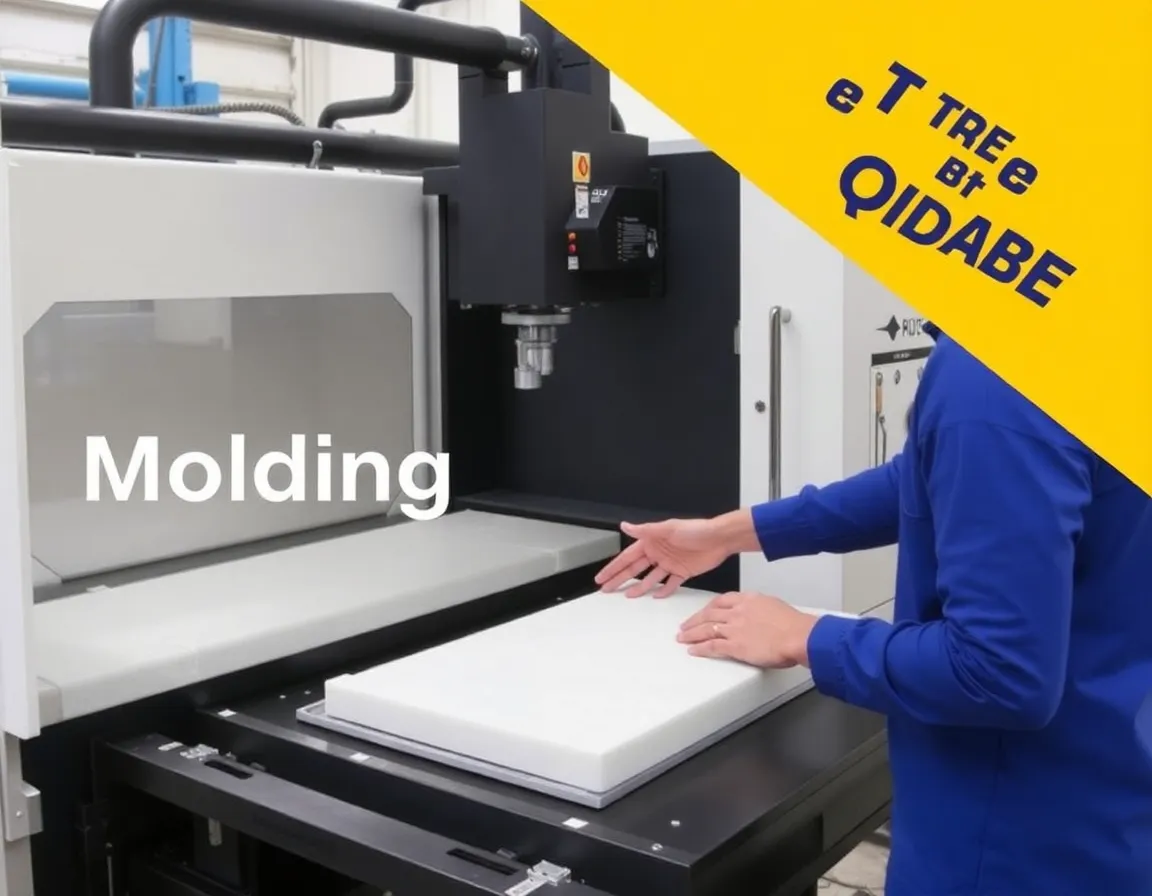
Securing a high volume molding quote is one of the most consequential steps in bringing a manufactured product to market. Whether you are producing thousands of injection-molded components or millions of units, the quote you receive from a molder directly shapes your unit economics, your cash flow, and your long-term competitiveness. Yet many product teams treat the quoting process as a simple price request rather than a strategic negotiation. The result is often inflated costs, hidden fees, and missed opportunities to engineer savings into the project from the start.
This article breaks down what a high volume molding quote actually includes, how the process works, and—most importantly—five practical cost-saving tips you can apply immediately to reduce your per-part price without sacrificing quality.
Understanding the High Volume Molding Quote
A high volume molding quote is a detailed cost estimate provided by a contract manufacturer or molder for producing a large quantity of parts—typically tens of thousands to millions of units—using processes such as injection molding, compression molding, or blow molding. Unlike low volume quotes, which often prioritize tooling amortization and flexibility, high volume quotes are driven by cycle time, material efficiency, machine utilization, and automation.
Most professional quotes are built from several cost components:
- Tooling and setup costs: The cost of designing and building molds, dies, and fixtures, often amortized across the production run.
- Material costs: Resin, additives, and colorants, calculated by shot weight plus estimated scrap.
- Machine and labor costs: Hourly press rates multiplied by cycle time, plus operator and quality inspection labor.
- Secondary operations: Assembly, painting, ultrasonic welding, printing, and packaging.
- Overhead and margin: Facility costs, quality systems, logistics, and the molder's profit.
How the Quoting Process Works
The process usually begins when you send a request for quotation (RFQ) along with 3D CAD files, 2D drawings, material specifications, tolerance requirements, and projected annual volumes. The molder performs a design-for-manufacturability (DFM) review, estimates cycle time and cavitation, calculates material usage, and then assembles a price per part plus one-time costs. A strong quote will also specify assumptions—such as scrap rates, machine tonnage, and payment terms—so you can compare vendors on equal footing.
Why High Volume Quotes Deserve Extra Scrutiny
Small errors in a high volume quote compound dramatically. A five-cent discrepancy per part on a two-million-unit order equals $100,000. That is why experienced buyers negotiate hard on high volume programs and why the tips below matter so much.
Tip 1: Optimize Part Design Before You Request a Quote
The single largest lever for reducing a high volume molding quote is the part design itself. Molders price what they see on your drawings, so any inefficiency in the design becomes a permanent cost in every unit you produce.
Conduct a DFM Review Early
Ask your molder—or an independent design firm—to perform a design-for-manufacturability review before finalizing the RFQ. A DFM review can reveal opportunities such as:
- Reducing wall thickness to shorten cooling time, which is often the largest portion of the cycle.
- Eliminating unnecessary undercuts that require complex, expensive tooling with slides or lifters.
- Consolidating multiple parts into a single molded component to reduce assembly labor.
- Adding draft angles and generous radii to improve ejection and reduce scrap.
- Standardizing features across product variants so one mold can serve multiple SKUs.
Design for the Right Cavitation
Cavitation—the number of parts produced per mold cycle—has a major impact on unit price. Higher cavitation spreads machine time across more parts, lowering the cost per unit, but it also raises tooling costs and requires larger presses. Work with your molder to find the cavitation level that balances tooling investment against per-part savings for your specific volume.
Tip 2: Get Material Costs Under Control
Material typically represents 30 to 60 percent of the cost of an injection-molded part, so it is the second-biggest lever after design. A high volume molding quote that specifies an over-engineered resin or an unnecessarily expensive grade is leaving money on the table.
Specify Only the Performance You Need
Review your material specification with fresh eyes. Do you truly need a high-temperature engineering resin, or would a commodity grade with an additive package perform adequately? Can you use a regrind blend where the application permits? Every downgrade in material class that still meets functional requirements translates directly into savings across millions of parts.
Leverage Volume Pricing and Resin Selection
- Negotiate resin pricing separately or ask the molder to pass through material savings when commodity prices fall.
- Consider alternative suppliers and equivalent grades—a different resin manufacturer's comparable grade may cost less.
- Reduce scrap and regrind losses by improving runner design and hot runner systems, which also lowers material waste.
- Buy resin directly as a customer-furnished material if you have the purchasing power to secure better rates.
Tip 3: Optimize Tooling and Cycle Time
Tooling is a one-time cost, but it determines cycle time, scrap rate, and automation potential for the entire life of the program. Smart tooling decisions can pay for themselves many times over in a high volume quote.
Invest in the Right Mold, Not the Cheapest One
A low-cost mold built from softer steel may save money upfront but can wear out, require more maintenance, and produce inconsistent parts over a multi-million-unit run. For high volume programs, specify hardened tool steel, proper cooling channel design, and hot runner systems where justified. These investments reduce cycle time and downtime, which the molder will reflect in a lower per-part price.
Shorten Cycle Time Wherever Possible
Cycle time is the heartbeat of molding economics. Conformal cooling channels, optimized gate locations, and efficient ejection systems can shave seconds off every cycle—seconds that multiply into substantial savings at high volume. Ask your molder to quote cycle time explicitly and to explain what design features drive it.
Clarify Tooling Ownership and Amortization
Confirm in writing who owns the tool, how tooling costs are amortized, and whether you can move the tool to another molder if needed. Clear tooling terms protect your leverage and prevent surprise charges later.
Tip 4: Negotiate Volume Tiers and Payment Terms
High volume molding quotes are rarely final offers. Molders expect negotiation, especially on large programs, and the structure of your agreement can matter as much as the headline price.
Request Tiered Pricing
Ask for pricing broken into volume tiers—for example, 50,000, 250,000, and 1,000,000 units. Tiered pricing gives you visibility into how costs decline with volume and creates incentives to consolidate orders. It also helps you plan cash flow and forecast landed cost accurately.
Structure Payment Terms Strategically
- Negotiate tooling payment milestones tied to design approval, first article inspection, and production launch.
- Ask about early payment discounts or extended terms that improve your working capital position.
- Clarify what is included—packaging, freight, quality certificates, and spare parts—so the quote reflects the true landed cost.
- Lock in price validity periods and agree on a mechanism for resin price adjustments.
Compare Quotes on Total Cost, Not Unit Price
The lowest per-part price is meaningless if it excludes freight, packaging, or secondary operations. Build a total-cost comparison that includes tooling, logistics, quality costs, and expected scrap, then negotiate from that complete picture.
Tip 5: Build a Long-Term Partnership and Audit the Numbers
The final tip is cultural rather than technical: treat your molder as a partner and verify the numbers behind the quote. Molders respond to transparency and long-term commitments with better pricing and priority scheduling.
Share Forecasts and Commit to Volumes
Provide realistic annual and multi-year forecasts. A molder who can plan capacity around your program can quote more aggressively than one pricing for uncertainty. Where possible, offer a volume commitment in exchange for price concessions or tooling support.
Request a Cost Breakdown
Ask for a detailed cost breakdown—material, machine time, labor, overhead, and margin. Not every molder will share full details, but most will discuss the major drivers. Understanding where the money goes lets you target negotiations effectively and spot anomalies.
Audit and Re-Quote Periodically
- Review actual versus quoted scrap rates and cycle times after production stabilizes.
- Re-quote every 12 to 24 months or when volumes change significantly.
- Track resin market indices and invoke price-adjustment clauses when appropriate.
- Visit the facility to confirm the process, automation, and quality systems match what was quoted.
Putting It All Together
A high volume molding quote is not a single number to accept or reject—it is a window into the entire manufacturing relationship. By optimizing part design before the RFQ, controlling material specifications, investing in the right tooling and cycle time, negotiating volume tiers and payment terms, and building a transparent long-term partnership, you can reduce your per-part cost significantly while protecting quality and supply reliability.
Start with a DFM review, request tiered pricing with a clear cost breakdown, and compare vendors on total landed cost rather than unit price alone. Applied consistently, these five cost-saving tips turn the quoting process from a routine purchasing task into a genuine competitive advantage—one that pays dividends on every unit you produce.