
Heat Transfer Printing
Heat transfer printing transfers a prepared decorative or identification layer onto a part using a compatible combination of heat, pressure and contact time. It can provide detailed graphics without printing each color directly on the molded component. The plastic substrate and transfer system must be matched, while the fixture must support the printing surface without changing the part shape.
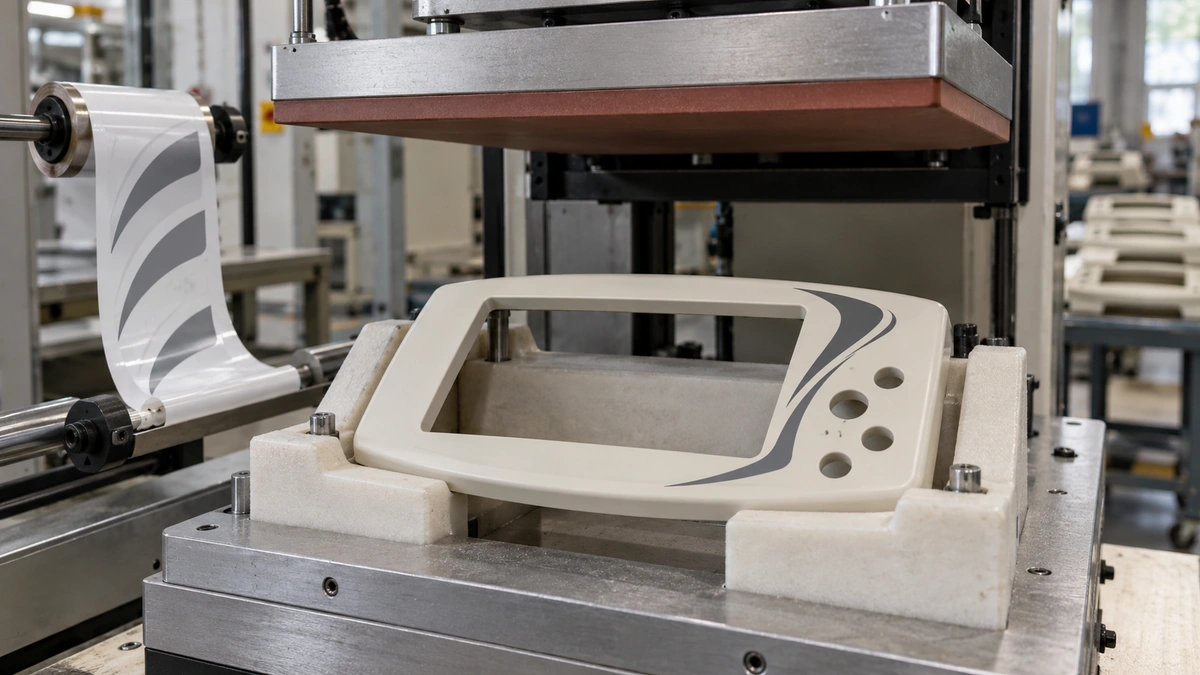
Artwork is only one part of the specification
A graphic that works on a flat proof may not transfer cleanly to a curved housing. Define the printed area on the three-dimensional part, including its relationship to buttons, edges and assembly datums. Artwork approval and position approval are separate decisions.
Specify color references and any critical fine features. If the design includes a machine-readable identifier, verify the finished mark on the actual substrate rather than relying on the original digital artwork.
What determines a workable transfer?
| Factor | Review before sampling |
|---|---|
| Resin and surface | Compatibility with the transfer layer and any pretreatment |
| Geometry | Contact across the full image without bridging a recess |
| Heat exposure | Risk of distortion or cosmetic change |
| Part support | A nest that backs the print zone without imprinting it |
The relationship between temperature, pressure and time is specific to the material system. More heat is not an automatic remedy for weak transfer: it may distort a wall or damage an existing finish. Establish settings using representative molded parts and the intended transfer material.
Approve the decoration in its final condition
- Check image completeness, edge definition and registration against the part.
- Evaluate adhesion with the agreed method after the required conditioning.
- Expose samples to handling, cleaning or abrasion representative of use.
- Verify that nearby fits and cosmetic surfaces remain acceptable.
Packaging matters after decoration. Face-to-face contact or inappropriate protective film can damage an otherwise acceptable graphic before assembly. Define how printed surfaces will be separated and handled.
Questions about changing the design
Can one transfer fit every part contour?
No. Compound curvature and deep features can prevent uniform contact. The image boundary may need adjustment or a different decoration method.
Is a new artwork revision only a file change?
Review registration, color and legibility again, particularly if fine lines or critical identifiers change.
Plan decoration with the molded component
Compare surface-finish options and confirm the substrate through plastic injection molding. For a quotation, provide editable artwork, CAD, resin grade, annual demand and the required exposure tests.