
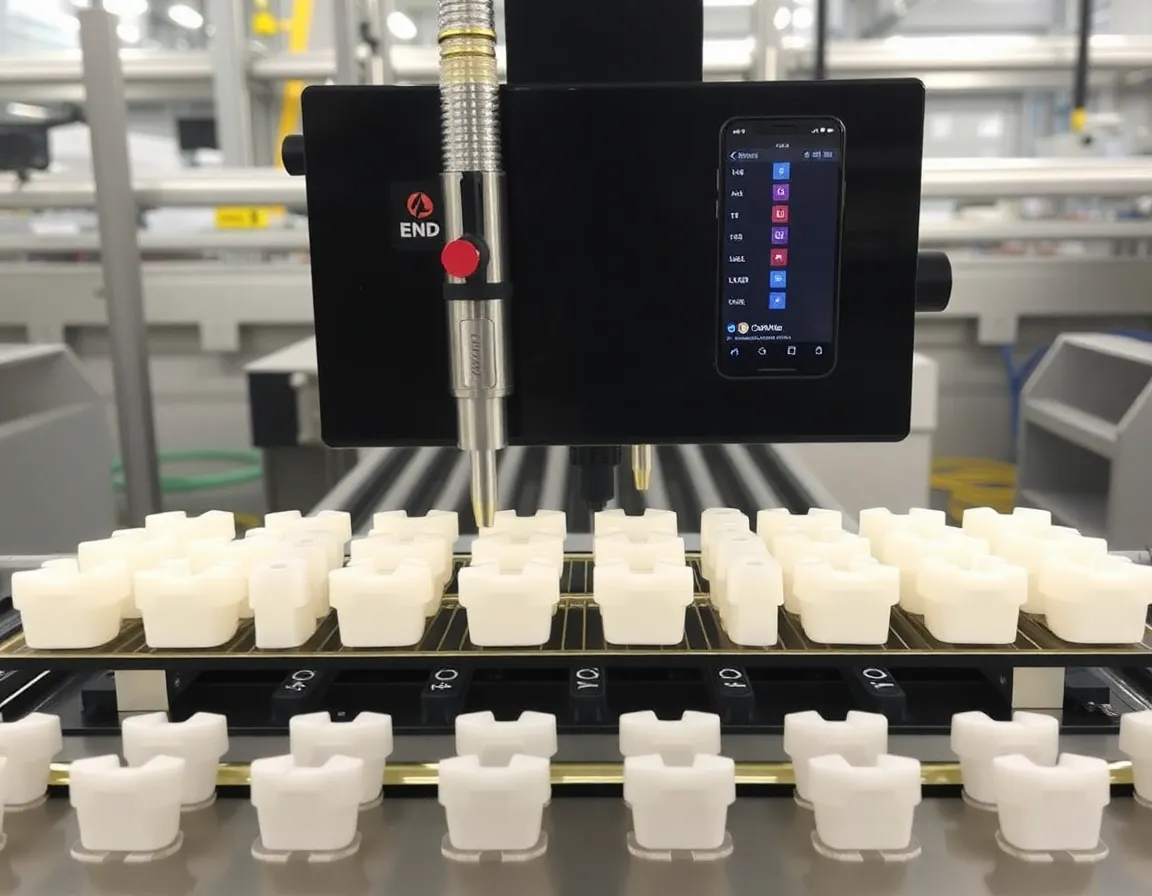
Product recalls are among the most expensive and reputation-damaging events a manufacturer can face. For companies that produce or rely on plastic components—whether for automotive, medical devices, electronics, or consumer goods—the complexity of modern supply chains makes recalls both more likely and more costly. Plastic part traceability systems have emerged as a powerful solution, enabling manufacturers to identify, isolate, and address quality issues with surgical precision. The result is a dramatic reduction in recall scope, cost, and brand damage.
What Is a Plastic Part Traceability System?
A plastic part traceability system is a structured framework of technologies, processes, and data practices that allows manufacturers to track the complete lifecycle of a plastic component—from raw material pellets to finished assembly and end-of-life. It answers critical questions: Where did this part come from? Who made it? When? With what materials? Under what conditions? And, crucially, where did it go?
Unlike generic inventory tracking, plastic part traceability accounts for the unique characteristics of polymer manufacturing. Plastic parts are often produced through injection molding, extrusion, blow molding, or thermoforming, each of which involves variables such as melt temperature, cycle time, mold cavity, and resin batch. A robust traceability system captures these variables and links them to specific parts or production lots.
Core Components of a Traceability System
- Unique identifiers: QR codes, barcodes, RFID tags, or laser-etched data matrix codes applied to parts, molds, or packaging.
- Data capture tools: Scanners, sensors, and machine vision systems that record production parameters in real time.
- Centralized database: A digital repository (often cloud-based) that stores material certificates, machine logs, operator IDs, and quality inspection results.
- Integration layer: Software that connects ERP, MES, and supplier systems to create a seamless chain of custody.
- Analytics and reporting: Tools that allow rapid querying, root-cause analysis, and recall simulation.
When these components work together, a manufacturer can trace a defective part back to a specific mold cavity, resin lot, or shift—and forward to every product that contains it.
How Traceability Cuts Recall Costs
The financial impact of a recall is staggering. According to industry studies, the average recall cost for a single product line can range from hundreds of thousands to tens of millions of dollars. These costs include regulatory fines, legal fees, reverse logistics, replacement parts, customer notifications, and lost sales. Traceability systems attack these costs from multiple angles.
1. Narrowing Recall Scope
Without traceability, a manufacturer facing a defect often has no choice but to recall every part produced over a broad time window—or even an entire production year. With traceability, the recall can be limited to the exact affected batch. For example, if a plastic clip fails because of a contaminated resin lot, the system can identify every part made from that lot and exclude thousands of unaffected units. Narrowing the scope directly reduces the number of recalled units, the cost of replacements, and the logistical burden.
2. Accelerating Root-Cause Analysis
Time is money during a recall. Every day spent investigating a defect prolongs the recall event, increases regulatory pressure, and erodes customer trust. Traceability systems provide instant access to production data, allowing engineers to pinpoint the root cause within hours instead of weeks. They can correlate defects with specific machine settings, operator shifts, mold maintenance records, or raw material suppliers. Faster root-cause analysis means faster corrective action and faster recall closure.
3. Reducing Regulatory Penalties
Regulatory bodies such as the FDA, NHTSA, and CPSC consider the speed and thoroughness of a recall when assessing penalties. A company that can demonstrate a robust traceability system—and that used it to quickly identify and remove defective products—is often viewed more favorably. In some cases, regulators may allow a "controlled recall" that targets only affected lots, avoiding the harshest penalties associated with broad, slow-moving recalls.
4. Minimizing Reverse Logistics and Disposal Costs
Recalling a product involves shipping it back, inspecting it, and either repairing, replacing, or disposing of it. These reverse logistics costs scale linearly with the number of recalled units. By isolating only defective parts, traceability can cut reverse logistics costs by 50% or more. It also reduces the environmental and financial burden of scrapping perfectly good plastic parts.
5. Protecting Brand Reputation and Customer Loyalty
While not a direct cost, reputational damage often exceeds the tangible expenses of a recall. A swift, precise recall demonstrates competence and accountability. Customers are more likely to forgive a company that handles a recall well than one that issues a broad, chaotic recall. Traceability systems enable clear, targeted communication: "Only parts with lot number X are affected." This transparency builds trust and reduces the likelihood of long-term sales losses.
6. Lowering Insurance Premiums
Product liability insurance providers increasingly recognize that manufacturers with strong traceability systems present lower risk. Some insurers offer reduced premiums or more favorable terms to companies that can prove they have end-to-end traceability. Over time, these savings can offset the initial investment in traceability technology.
Applications Across Industries
Plastic part traceability is not limited to one sector. Its benefits apply wherever plastic components are used in safety-critical or regulated products.
Automotive
Modern vehicles contain thousands of plastic parts, from interior trim to under-hood connectors. A defective plastic fuel line or brake component can trigger a massive recall. Traceability systems allow automakers to trace a faulty part to a specific injection molding machine and shift, then recall only the affected vehicles. Companies like BMW and Toyota have invested heavily in part-level traceability to meet safety and regulatory demands.
Dispositivi Medici
Plastic syringes, IV connectors, and implantable device housings must meet stringent FDA requirements. A single contaminated resin batch can compromise thousands of devices. Traceability systems enable medical device manufacturers to quarantine affected units before they reach patients, avoiding costly Class I recalls and protecting patient safety.
Elettronica
Plastic housings, connectors, and insulators are ubiquitous in consumer electronics. When a plastic part fails—due to brittleness, discoloration, or dimensional error—traceability allows brands to identify the specific production run and notify only affected customers. This precision reduces warranty costs and preserves shelf availability of unaffected products.
Consumer Goods
From toys to kitchenware, plastic parts are subject to safety regulations. Traceability helps manufacturers comply with CPSIA and other standards, and it enables rapid, targeted recalls when issues arise. Retailers increasingly demand traceability data from suppliers, making it a prerequisite for doing business.
Best Practices for Implementing a Traceability System
Building an effective plastic part traceability system requires more than buying software. It demands a strategic approach that integrates people, processes, and technology.
Start with a Clear Data Strategy
Define what data you need to capture, at what granularity, and for how long. For plastic parts, essential data includes resin lot numbers, mold cavity IDs, machine parameters, operator IDs, inspection results, and shipping records. Decide whether you need part-level, batch-level, or pallet-level traceability—each has different cost and complexity implications.
Standardize Identifiers and Formats
Use globally unique identifiers (e.g., GS1 standards) to avoid collisions and ensure interoperability with suppliers and customers. Standardize label formats, data fields, and communication protocols so that data flows smoothly across systems.
Integrate with Existing Systems
Traceability should not be a standalone silo. Integrate it with your ERP, MES, QMS, and supplier relationship management systems. This integration enables automatic data capture, reduces manual errors, and provides a single source of truth.
Train Employees and Suppliers
Traceability fails if people do not follow procedures. Train machine operators, quality inspectors, and warehouse staff on scanning, labeling, and data entry. Extend training to suppliers so they understand your traceability requirements and can provide the necessary material certifications and lot codes.
Conduct Regular Recall Simulations
Test your traceability system by running mock recalls. Can you identify all affected parts within one hour? Can you trace them to specific customers? Simulations reveal gaps in data, process, or technology before a real recall occurs. Treat them as continuous improvement exercises.
Leverage Automation and IoT
Manual data entry is slow and error-prone. Use automated data capture—barcode scanners, RFID readers, machine vision, and IoT sensors—to record production parameters without human intervention. Automation increases data accuracy and reduces the labor burden of traceability.
Ensure Data Security and Privacy
Traceability data can be sensitive, especially when it reveals supplier relationships or proprietary formulations. Implement access controls, encryption, and audit trails to protect data. Comply with data privacy regulations such as GDPR when handling personal data of operators or customers.
The Future of Plastic Part Traceability
Traceability technology is evolving rapidly. Emerging trends include blockchain for tamper-proof supply chain records, digital twins that simulate recall scenarios, and AI-driven analytics that predict quality issues before they occur. As regulations tighten and consumers demand greater transparency, traceability will shift from a competitive advantage to a baseline requirement.
For manufacturers of plastic parts, the message is clear: investing in traceability is not just about avoiding recalls—it is about building a resilient, efficient, and trustworthy operation. The cost savings from narrower recalls, faster investigations, and lower insurance premiums quickly outweigh the implementation costs. In an era of complex global supply chains, traceability is the smartest insurance policy a manufacturer can buy.
By adopting a comprehensive plastic part traceability system, companies can turn a potential crisis into a controlled event, protect their bottom line, and preserve the trust of customers and regulators alike. The question is no longer whether to implement traceability, but how quickly it can be done.