
Sub-millimeter plastic molding is feasible only after “small” is converted into a specific geometry and a measurable function. A part may be several millimeters wide yet contain a 0.15 mm wall, a deep narrow slot, or a seal edge that controls the project. Conversely, a sub-millimeter part with simple proportions may be easier than a larger component filled with difficult microfeatures.
The right question is not a universal minimum size. It is whether the hardest feature can be tooled, filled, vented, released, handled, and measured with an acceptable process window.
Feasibility gates
Define What Is Actually Sub-Millimeter
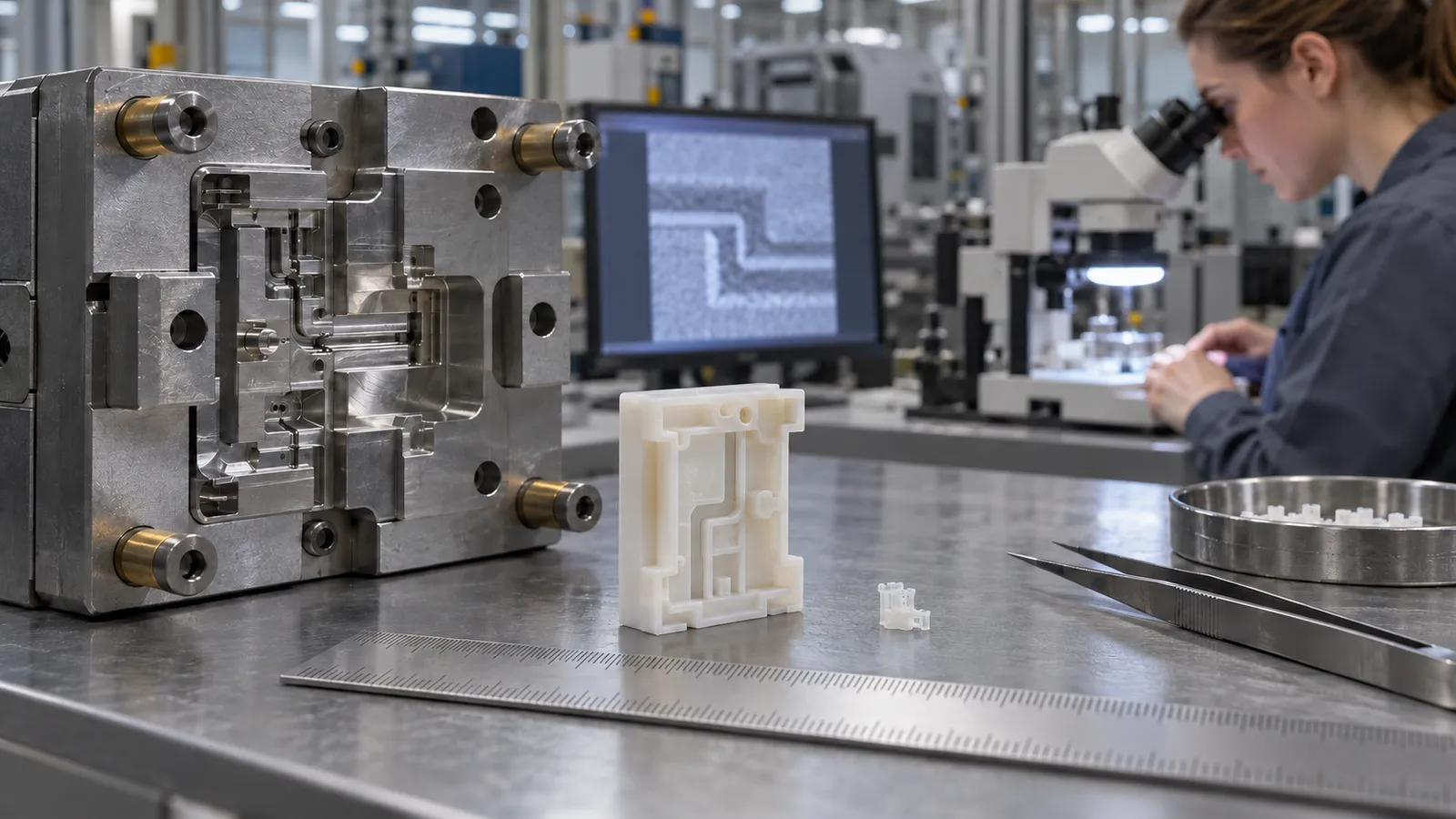
List the overall mass and envelope, then identify the smallest wall, rib, hole, pin, groove, gate, vent, shutoff, and permitted flash. Add the longest flow distance to the smallest section. These details reveal where scale changes the manufacturing problem.
Functional context comes next. A narrow slot that only provides clearance has a different risk from a channel that meters fluid. A tiny boss used for optical alignment needs a different datum and inspection strategy from a decorative texture. Mark each microfeature as functional, assembly, sealing, optical, or noncritical.
Finally, define the acceptable condition. “No flash” is not measurable. State where flash is prohibited, the allowable witness zone, and the inspection magnification. The same applies to burrs, gate vestige, and ejector marks.
Use Feature Ratios, Not One Minimum Number
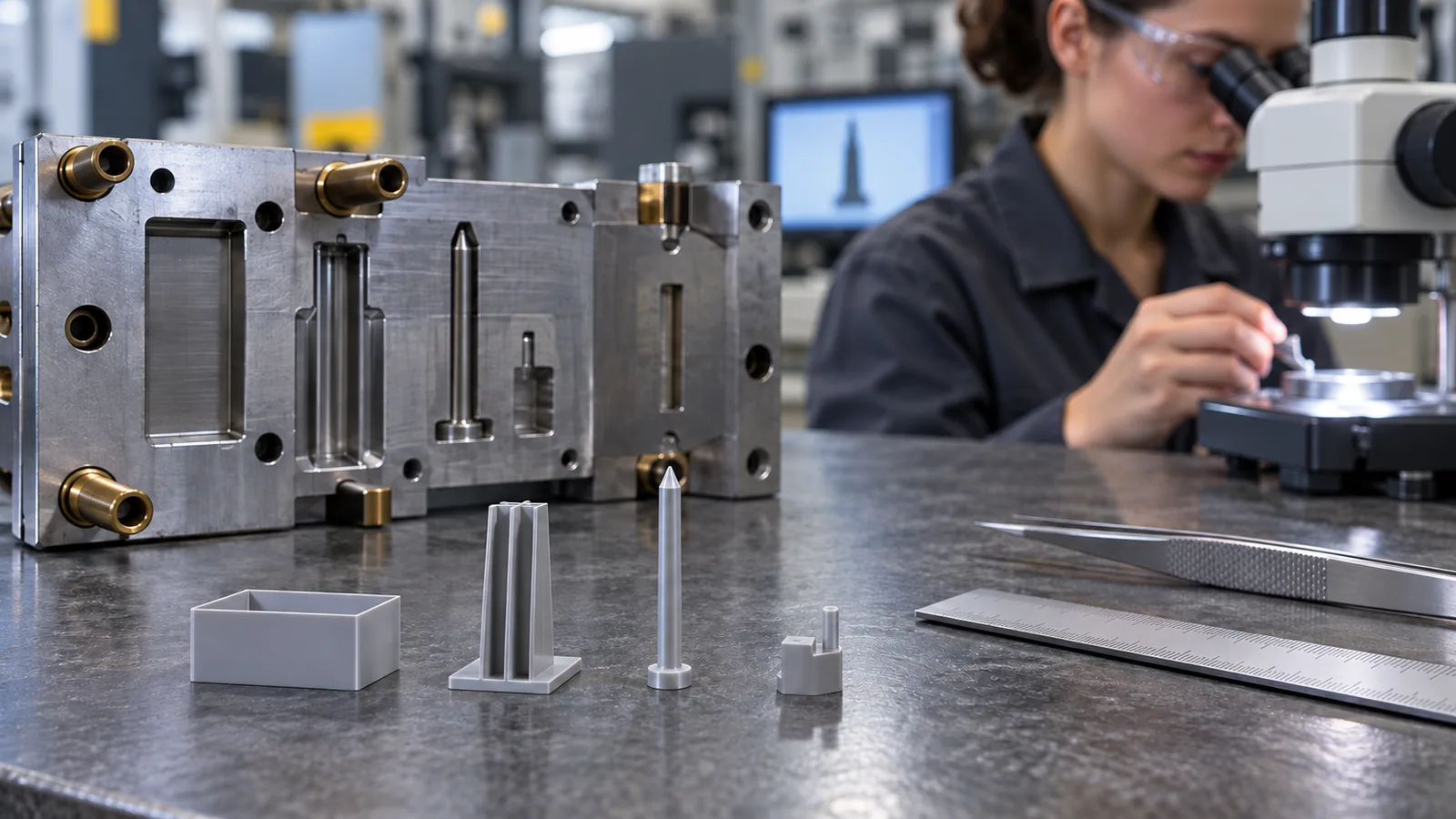
Manufacturability depends on relationships such as flow length to thickness, rib height to width, pin diameter to length, and draft to contact depth. Long slender steel features may deflect or break. Deep plastic walls may grip the core during cooling. A nominal dimension without its aspect ratio hides these effects.
| Feature | Useful relationship | Typical failure direction |
|---|---|---|
| Thin wall | Flow length versus wall thickness | Freeze-off, hesitation, orientation |
| Deep rib or slot | Depth versus width and draft | Incomplete fill, trapped gas, drag |
| Slender core pin | Unsupported length versus diameter | Deflection, eccentricity, breakage |
| Fine shutoff | Contact area, angle, pressure and wear | Flash, mismatch, maintenance drift |
Test the Hardest Flow Path First
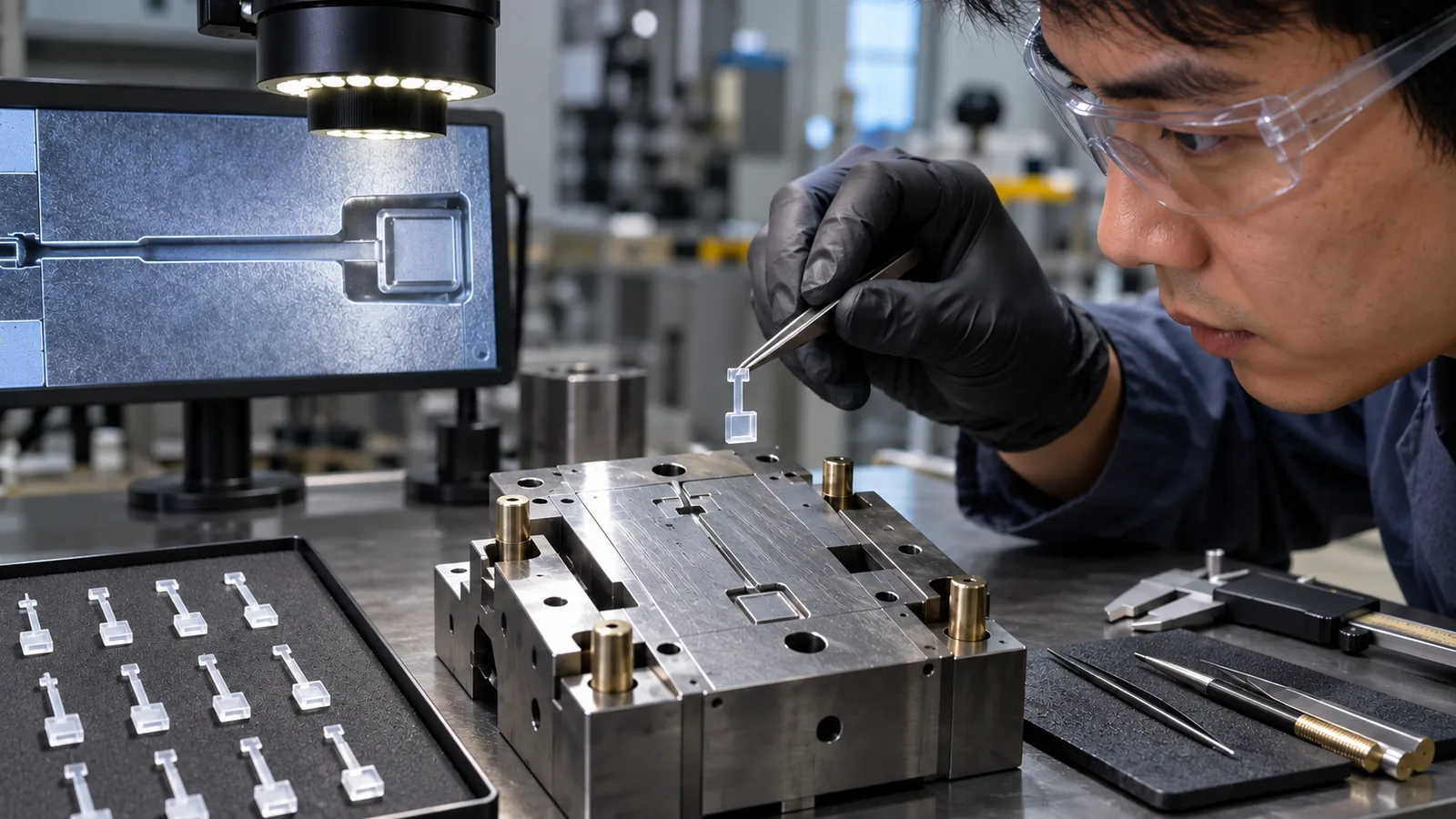
A feasibility review should isolate the feature most likely to lose heat, trap gas, or create an unbalanced pressure requirement. Gate position and runner volume influence whether a small, stable shot reaches that feature. A dell'analisi del flusso nello stampo can compare likely fill order and air traps, but physical trials still need to confirm replication and flash margin.
Use short-shot evidence, cavity pressure where practical, and feature-level microscopy. If the last-fill microfeature improves only when another region flashes, the design has a narrow window. The corrective route may involve wall transition, gate, vent, tool temperature, material, or cavity layout rather than simply more pressure.
The feed system also matters. A tiny part can sit behind a comparatively large runner, which affects material use and thermal history. Runner strategy should be judged with shot repeatability and maintenance, not only theoretical scrap.
Design a Measurement Strategy Before Tolerances

A tolerance has little value if the feature cannot be located and measured repeatably. Optical methods can be affected by focus, edge threshold, translucency, and part orientation. Contact methods may deform a thin feature. CT or other advanced methods may help with inaccessible geometry but still require resolution and datum rules.
- Identify the functional datum and restraint condition.
- Select a method that resolves the tolerance with suitable uncertainty.
- Define edge, profile, and filtering rules.
- Study repeatability on representative molded surfaces.
- Measure by cavity and after the specified conditioning time.
- Correlate dimensions with assembly or functional tests.
Do not tighten a dimension to compensate for an undefined assembly. Build the tolerance chain first, then allocate limits to the features that truly control function.
Decide Whether Standard or Micro Molding Fits

Some sub-millimeter features can run in a well-designed conventional precision mold. Others need dedicated small-shot metering, specialized tooling, controlled handling, or advanced metrology. The decision depends on shot-to-runner ratio, feature scale, material, tolerance, annual volume, and automation needs.
Prototype tooling can answer a focused feasibility question, but it should reproduce the critical gate, vent, surface, and feature conditions. A simplified tool that removes the hardest geometry may produce attractive samples without reducing production risk.
Il Micro stampaggio a iniezione route becomes more compelling as small shot control, microfeatures, gentle release, cavity-specific traceability, and automated part handling dominate the project.
Build a Feasibility Package for Tooling
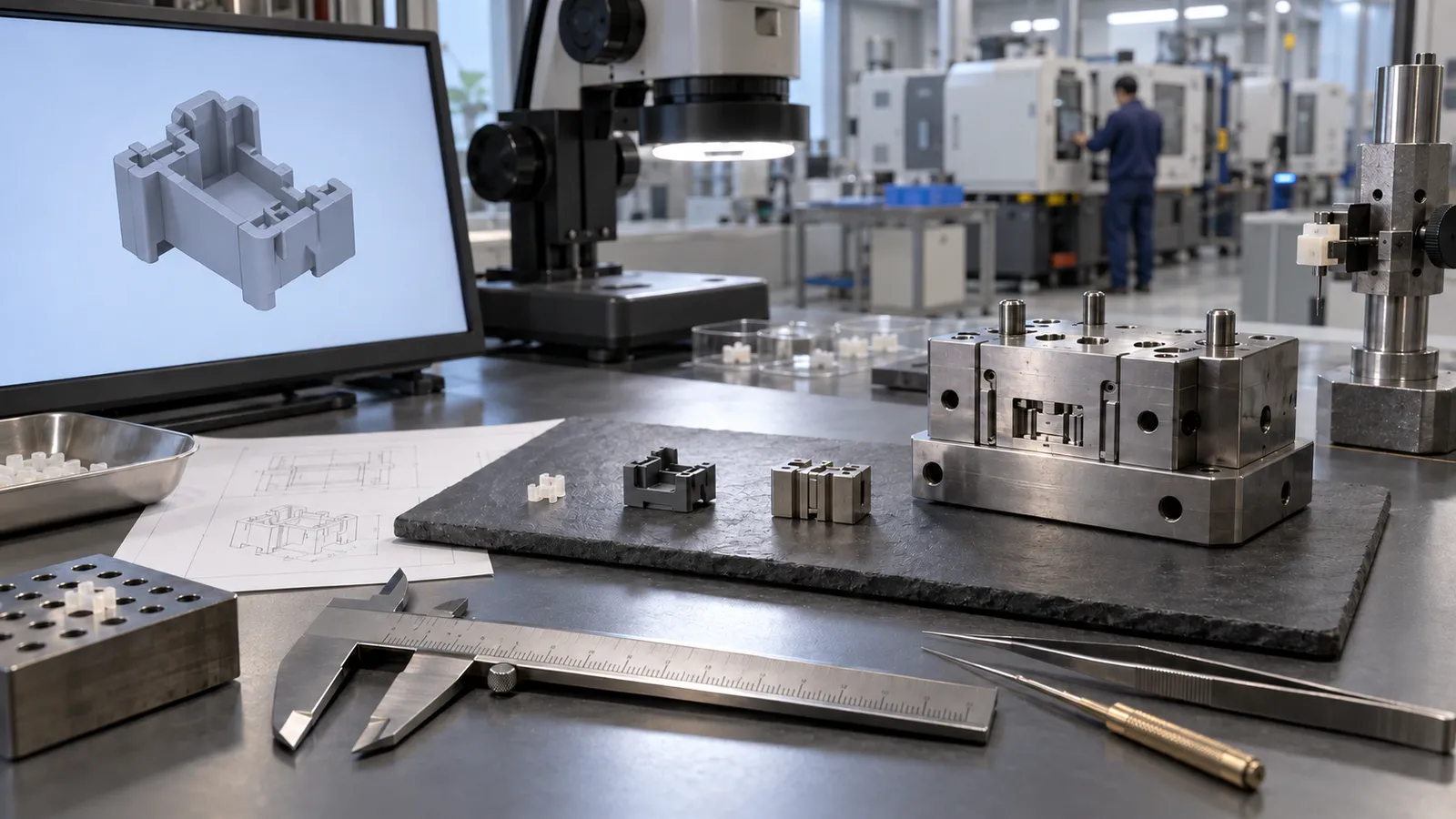
A useful RFQ contains native 3D data, a dimensioned drawing, material grade or performance requirements, annual and lot volume, functional datums, mating parts, acceptable witness areas, cleanliness, packaging, and inspection expectations. Highlight the hardest feature rather than expecting the reviewer to infer it.
Ask for a response that identifies assumptions and risks. Gate concept, parting line, shutoffs, ejector zones, steel-safe dimensions, expected measurement method, and trial plan should be visible before tooling commitment. If a dimension cannot be guaranteed as drawn, it is better to resolve the mechanism early than to negotiate around failed samples.
For low-volume learning, the prototype injection molding route may shorten the evidence cycle when its tool design still represents the functional features.
Include the intended packaging concept as well. A part that passes cavity inspection but cannot be separated, oriented, counted, or shipped without damage has not passed production feasibility.
Domande Frequenti

What is the minimum moldable plastic feature?
There is no universal number. Geometry, material, flow distance, tool construction, venting, release, tolerance, and inspection determine feasibility together.
Does a smaller part always cost less?
No. Tool precision, handling, inspection, runner strategy, and low shot utilization can dominate cost even when resin consumption is small.
Can 3D printing replace a molding trial?
It can test fit or fluid paths, but it may not reproduce molded orientation, shrinkage, gate effects, surface replication, or production material behavior.
Why are deep micro slots difficult?
They combine rapid cooling, trapped-air risk, fragile tool steel, and strong release contact. Width alone does not describe the challenge.
What should be steel-safe?
Dimensions likely to need controlled adjustment after first trials should be reviewed for a steel-safe strategy, provided the change direction and datum relationship permit it.