
Surveying real-world over-moulding applications reveals how multi-material polymer processing eliminates mechanical fasteners while dramatically elevating product durability. Integrating flexible elastomeric layers directly over rigid structural substrates allows engineers to achieve tactile comfort, shock absorption, and hermetic fluid isolation in a single molding cycle. Rather than viewing multi-resin encapsulation as a generic process, top-tier engineering teams tailor specific polymer combinations to distinct environmental demands across automotive, medical, and industrial sectors.
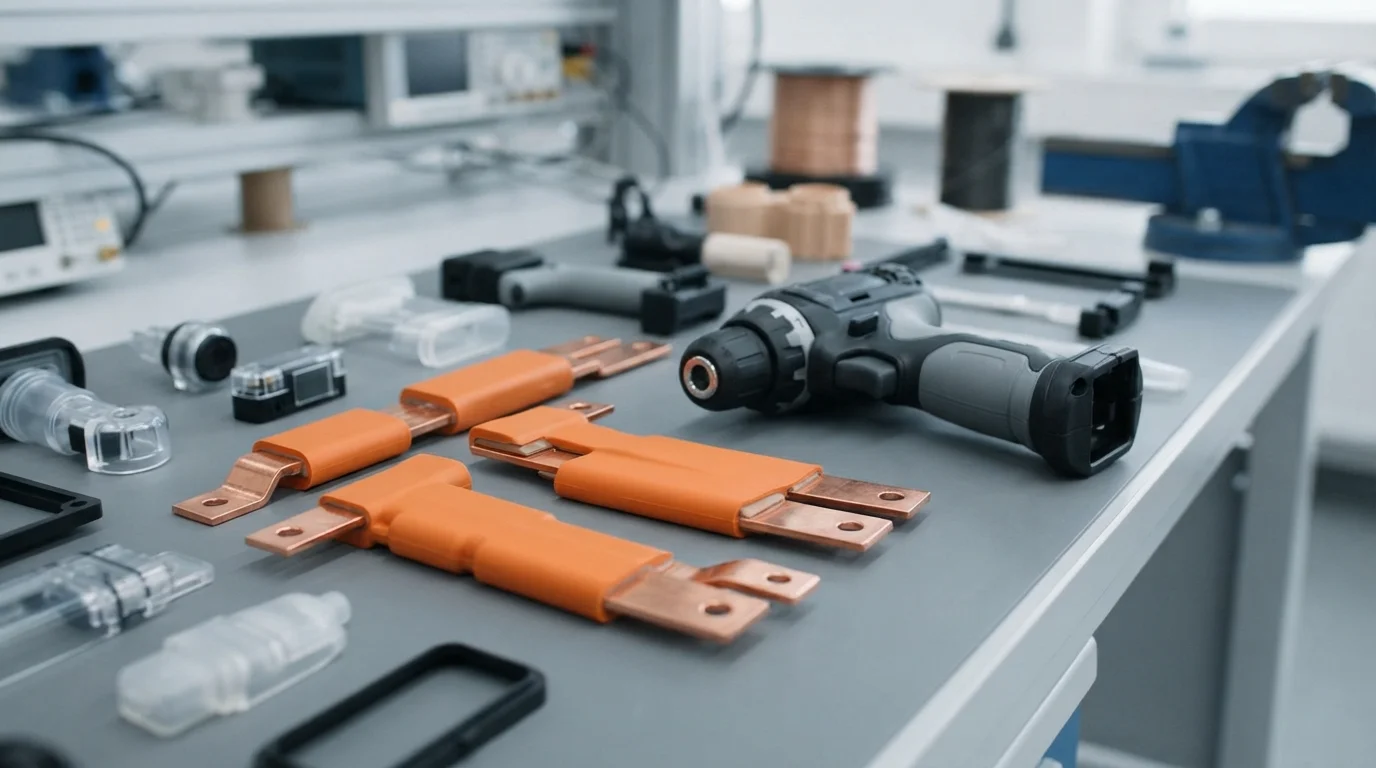
This technical industry showcase analyzes proven multi-material designs, examining material pairing chemistry, failure mode prevention, and production quality standards across three mission-critical sectors.
Medical Devices: Ergonomic Handles & Sterile Sealed Instruments (ISO 13485)
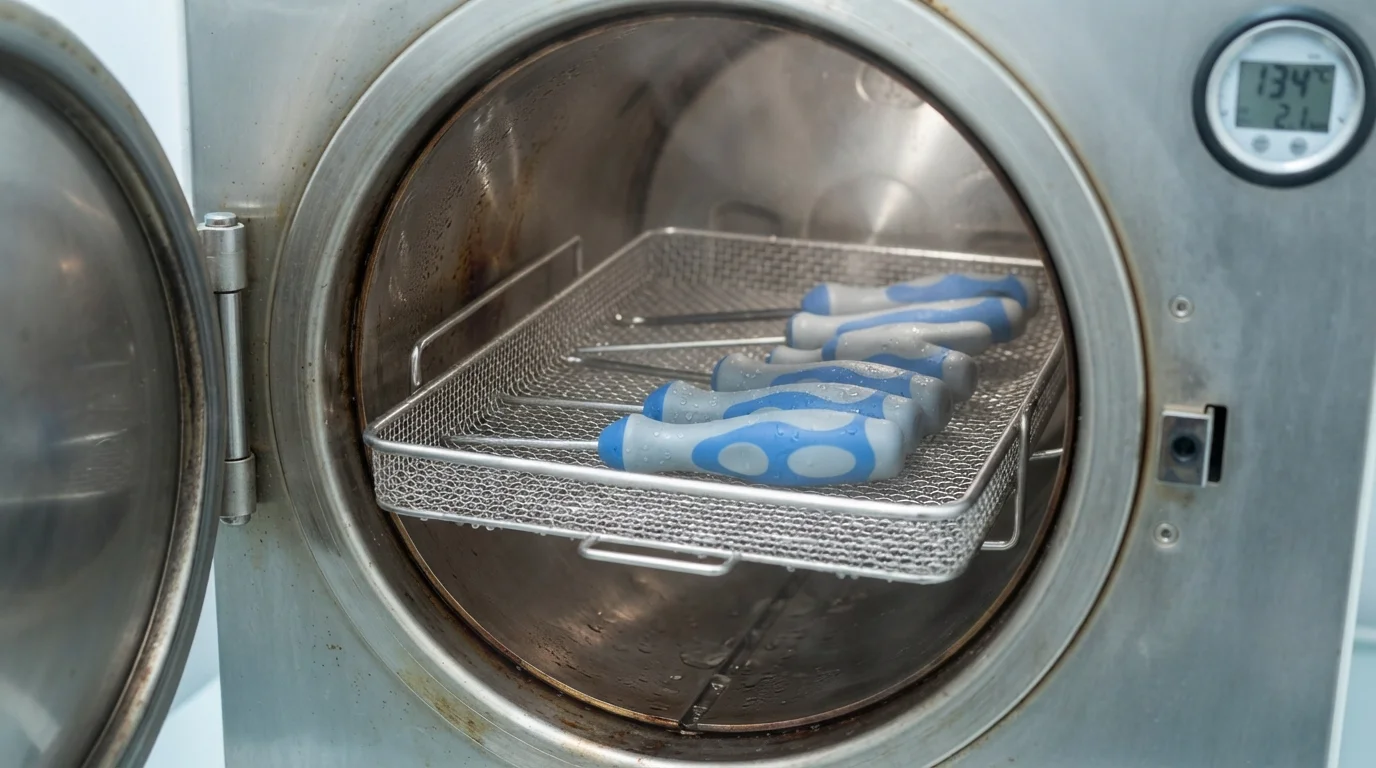
Surgical instrumentation and diagnostic cartridges demand multi-material encapsulation to prevent microbial contamination and improve operator control. Overmolding medical-grade TPE ou en liquid silicone rubber directement sur rigide polycarbonate (PC) optique poignées crée des assemblages sans couture, sans crevasses. L'élimination des coutures empêche l'infiltration de fluides et l'accumulation de charge biologique lors des cycles répétés de stérilisation à la vapeur en autoclave à 134°C. Fonctionnant sous certification ISO 13485 dans une salle blanche de classe ISO 8, garantit que les composants moulés respectent les directives strictes de USP Classe VI et des ISO 10993 biocompatibilité.
Les critères de conception pour l'encapsulation médicale incluent :
- Endurance thermique à l'autoclave—Sélection d'élastomères médicaux qui survivent à des centaines de cycles de stérilisation à la vapeur à haute température sans se fissurer.
- Immunité aux désinfectants chimiques—Formulation de poignées externes résistantes aux essuyages agressifs avec des composés d'ammonium quaternaire et de l'alcool isopropylique.
- Texture tactile antidérapante—Moulage de zones de préhension micro-texturées pour maintenir un retour tactile précis de l'opérateur lors de procédures chirurgicales humides.
Intérieurs automobiles et commandes : boutons, joints et connecteurs haute tension (IATF 16949)
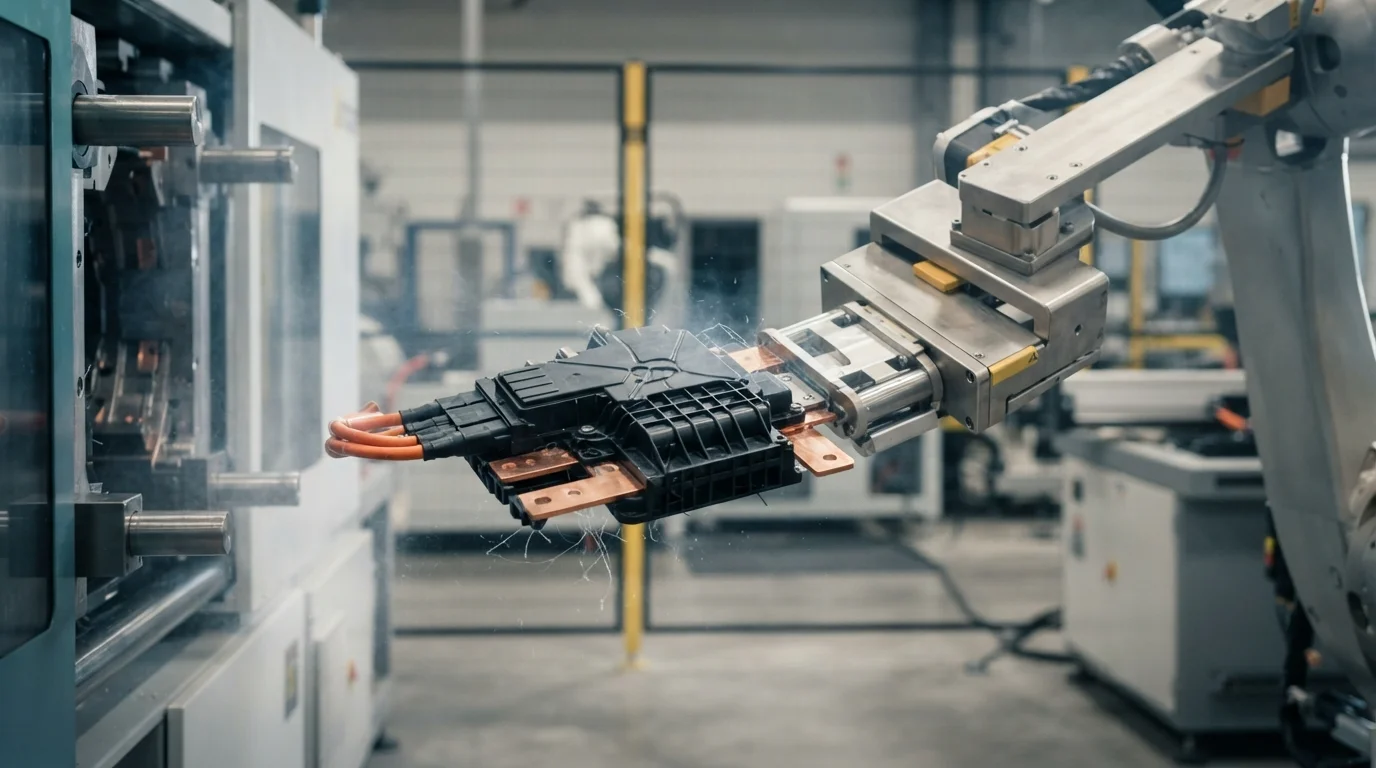
Les habitacles automobiles modernes et les groupes motopropulseurs de véhicules électriques (VE) utilisent un traitement multi-résine pour améliorer le confort tactile et la sécurité électrique. Les boutons de climatisation intérieure combinent des PC/ABS noyaux opaques avec des TPU perimeter grips to produce wear-resistant backlit indicators. High-voltage battery packs encapsulate stamped barres omnibus en cuivre with flame-retardant PA66-GF30, creating permanent dielectric barriers rated for 800V architectures. Operating large-format presses equipped with Sequential Valve Gating (SVG) eliminates visible weld lines on heavy overmolded door trim panels.
Consumer Electronics & Power Tools: Impact-Resistant Soft Rubber Shells
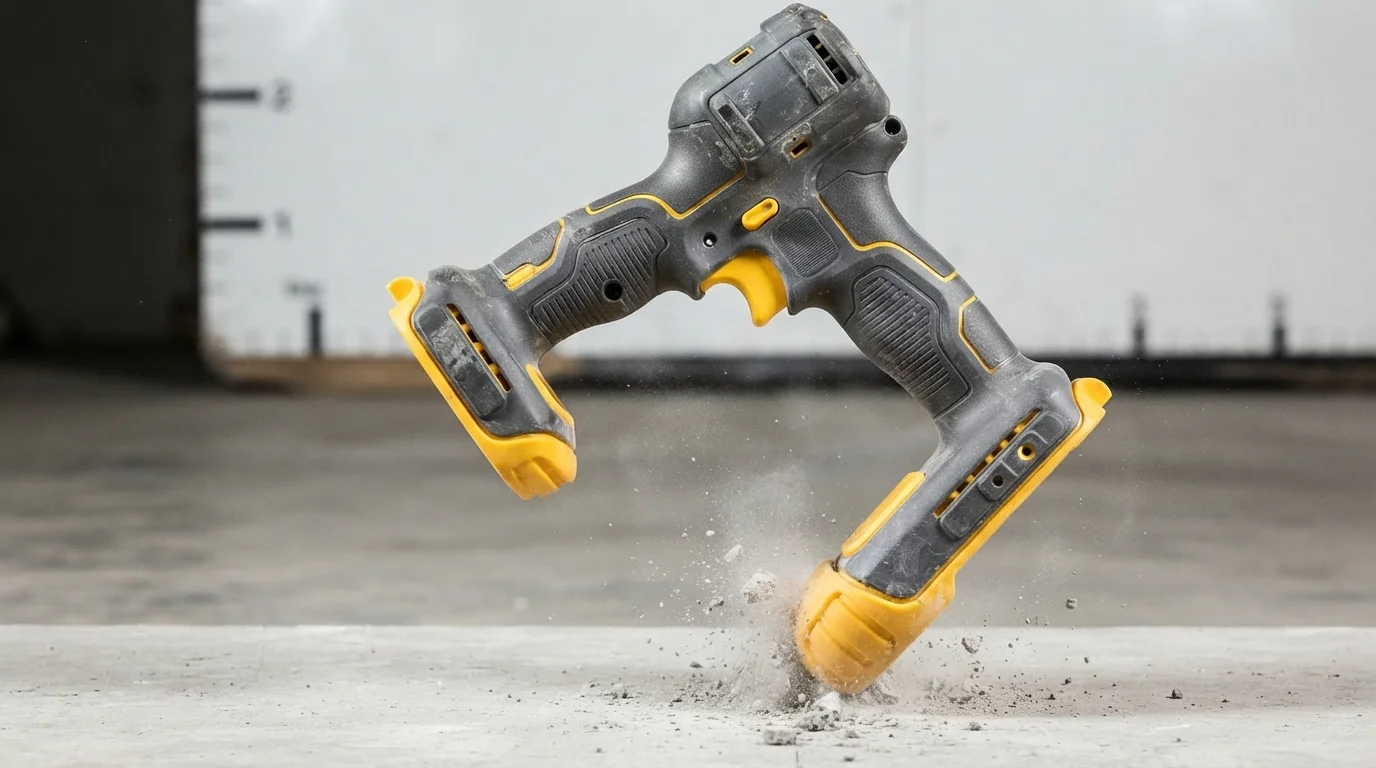
Heavy-duty industrial power tools and handheld barcode scanners must survive repeated two-meter concrete drop tests without mechanical housing rupture. Encapsulating structural ABS frameworks with energy-absorbing Santoprene TPV cushions sensitive internal circuit boards against severe shock loads. Molding continuous elastomeric sealing ribs along housing perimeters delivers IP67 waterproof protection against dust and pressurized water jets. Specifying custom moulage par injection de surmoulage replaces manual rubber gasket insertion, eliminating assembly errors and lowering unit manufacturing costs.
Polymer Matrix Reference: Choosing Materials by Application Sector
Selecting the correct polymer pair requires balancing chemical bonding mechanisms against operating environment stresses. Reviewing proven over-moulding applications highlights how material affinity dictates long-term joint durability. Table 1 below outlines standard polymer combinations across major industrial manufacturing sectors:
| Application Showcase | Structural Substrate | Polymère surmoulé | Primary Performance Metric | Critical Failure Mode Prevented |
|---|---|---|---|---|
| Automotive EV Busbars | Stamped Copper (C11000) | PA66-GF30 (UL94 V-0) | Dielectric isolation (800V) | Prevents electrical arc tracking |
| Medical Scalpel Grips | Polycarbonate (PC) | Medical TPE (USP Class VI) | Sterilizable tactile grip | Prevents bio-burden fluid entrapment |
| Industrial Power Drills | ABS / PC+ABS Alloy | Santoprene TPV (60A) | Drop impact shock absorption | Prevents housing fracture on concrete |
Executing complex over-moulding applications with high-tonnage multi-barrel presses guarantees flash-free boundaries and dimensional repeatability.
Questions fréquemment posées (FAQ)
Why are over-moulding applications growing rapidly in EV battery manufacturing?
Over-moulding encapsulates high-current copper busbars directly inside flame-retardant plastics, creating complete dielectric insulation and IP67 sealing without manual wrapping. Single-step encapsulation improves electrical creepage distances and withstands heavy vehicular vibration.
How do overmolded medical handles survive aggressive hospital disinfectants?
Medical-grade TPE and silicone formulations utilize saturated polymer backbones that resist chemical oxidation from bleach and alcohol wipes. Chemical resistance prevents surface softening, tackiness, or micro-cracking over years of hospital use.
What prevents delamination between rubber and plastic in power tool handles?
Preventing delamination relies on thermal molecular diffusion between compatible resins like ABS and TPE, reinforced by 90-degree mechanical dovetail undercuts in the substrate. Physical locking channels ensure the rubber cannot peel off even under intense cyclic twisting loads.
Can overmolding achieve hermetic airtight seals on electronic sensor housings?
Overmolding achieves IP67 and IP68 waterproof ratings by injecting elastomeric resins like Santoprene TPV directly into precision-engineered perimeter sealing grooves. Contracting elastomer creates a continuous, high-compression seal around lead wires and housing parting lines.
Why is ISO Class 8 cleanroom molding mandatory for medical overmolded parts?
Cleanroom molding controls airborne particulate contamination during multi-material processing. Surgical instruments, fluidic diagnostic cartridges, and respiratory masks require cleanroom encapsulation to satisfy ISO 13485 and USP Class VI medical compliance.
How does tooling shut-off precision affect overmolded part quality?
Tooling shut-off lands clamped under tight fitment tolerances (<0.01mm) prevent soft elastomer melt from bleeding over appearance faces. Sharp 90-degree shut-off steps eliminate razor-thin flash edges that trigger peeling under everyday mechanical wear.