
Las interfaces de electrónica de consumo y de interiores automotrices exigen componentes plásticos multicolores con alto contraste visual y definición nítida de símbolos. Los métodos tradicionales de decoración superficial, como la tampografía o la pintura por pulverización secundaria, sufren desgaste gradual, desprendimiento y rayado a lo largo de años de manipulación diaria. Los botones retroiluminados y los indicadores luminosos enfrentan fugas de luz graves cuando las capas pintadas se descascaran cerca de los bordes de símbolos grabados con láser.
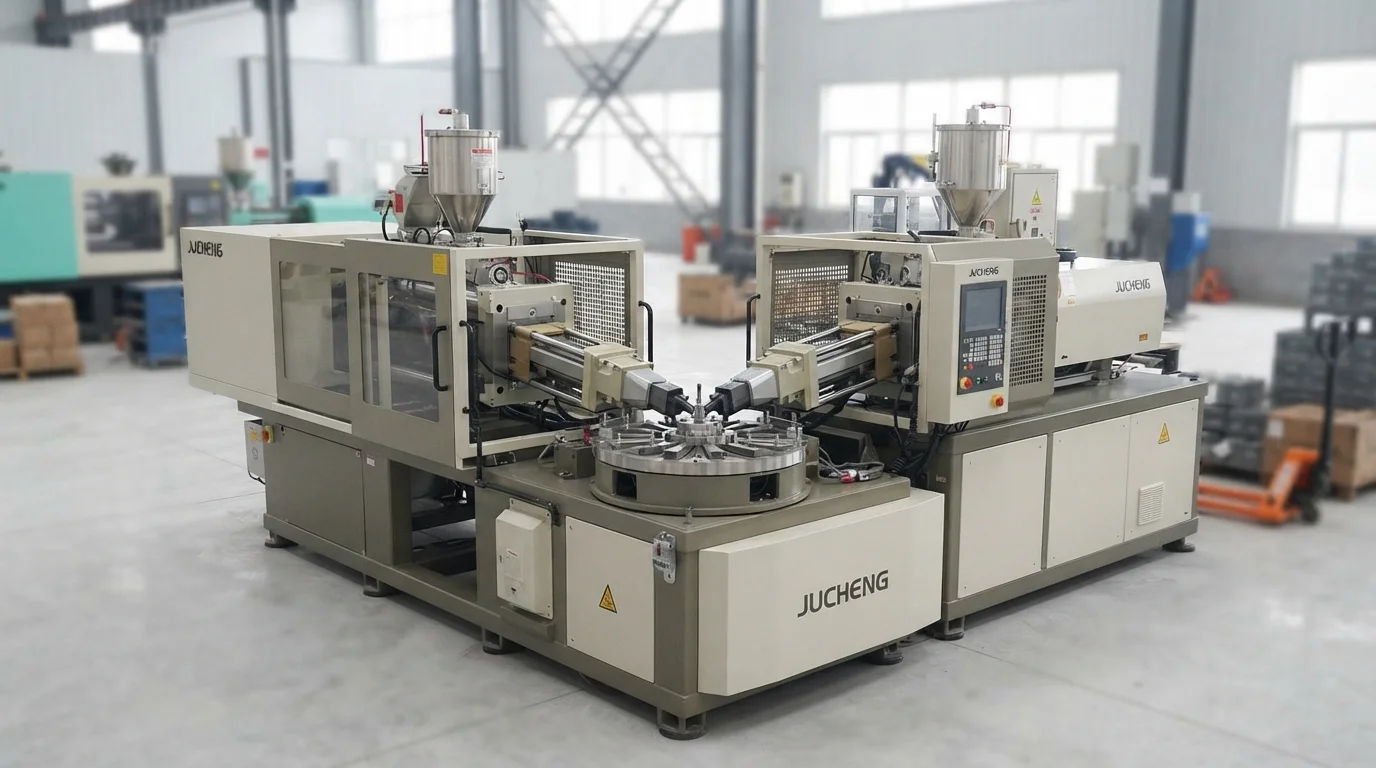
La fusión de múltiples polímeros de color durante el procesamiento primario incorpora permanentemente símbolos de color y ventanas ópticas transparentes en la geometría del componente. Esta guía técnica revisa configuraciones de prensas de múltiples barriles, ingeniería de moldes de indexación rotativa y estrategias de prevención de sangrado de color.
Tabla de contenido
Prensas de múltiples barriles y sistemas de moldes de indexación rotativa
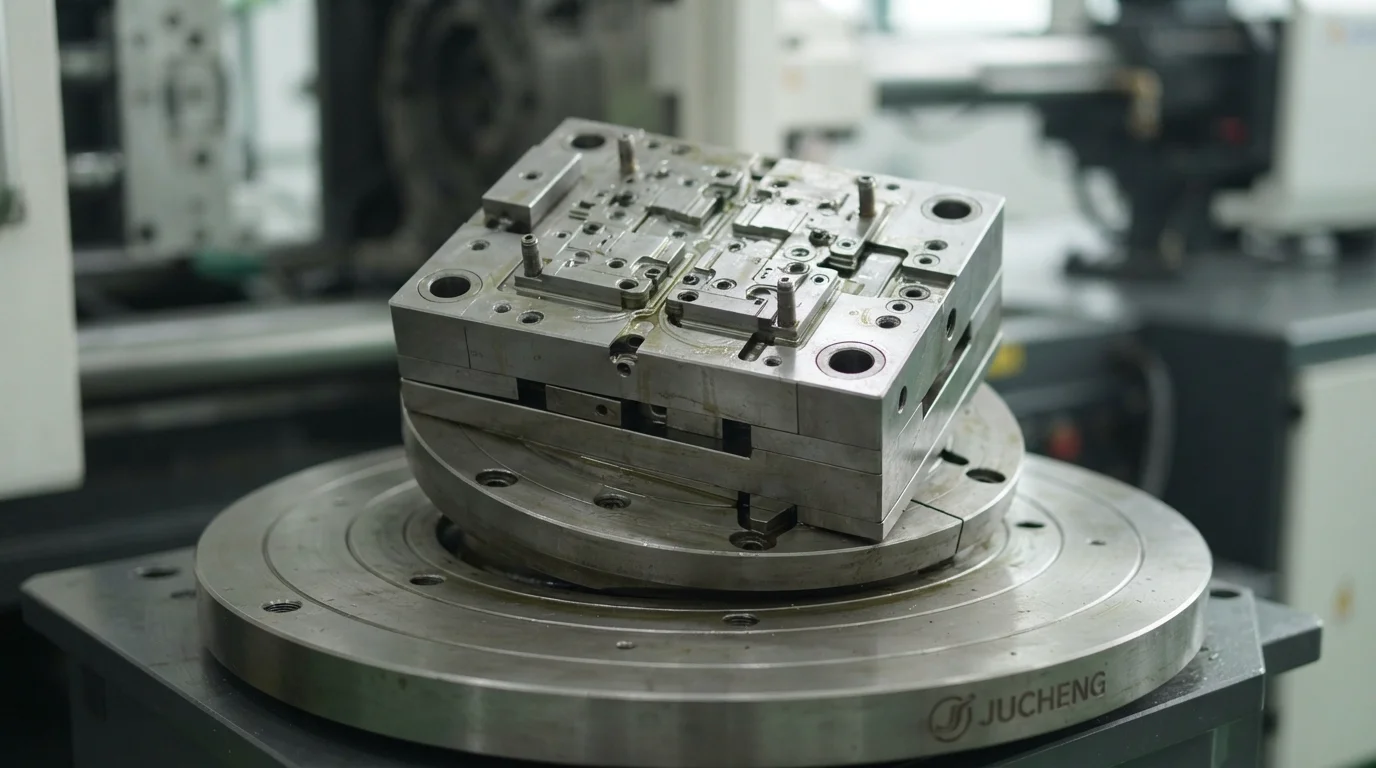
El procesamiento multimaterial se basa en diseños de máquinas especializadas equipadas con barriles de inyección independientes. La ejecución del moldeo por inyección multicolor—a menudo configurado como moldeo de doble disparo (2-Shot) o triple disparo (3-Shot)—utiliza prensas de múltiples barriles que operan de forma concurrente. La integración de sistemas de moldes de indexación rotativa permite que la cavidad del molde o el plato del núcleo giren 180 grados entre las etapas de inyección.
La inyección primaria moldea el marco de color base, después de lo cual el molde gira para posicionar la pieza bajo una segunda boquilla de inyección para el color secundario. La precisión mecánica durante la rotación del molde garantiza una alineación exacta del núcleo, evitando el desajuste de disparos y el rebabeo en los límites. La sincronización de los circuitos de agua de enfriamiento en ambas estaciones del molde optimiza la duración total del ciclo.
Multi-color indexing sequence steps include:
- Primary color injection—Injecting the main structural body color establishes the component foundation.
- Rotary platen indexing—Swiveling the core plate 180 degrees aligns the substrate with the second material barrel.
- Secondary color overmolding—Injecting the second colored resin fills symbol recesses or lens windows.
- Simultaneous part cooling—Cooling both material layers concurrently optimizes cycle times.
Integrated Clear Lenses, Backlit Buttons & Aesthetic Indicators
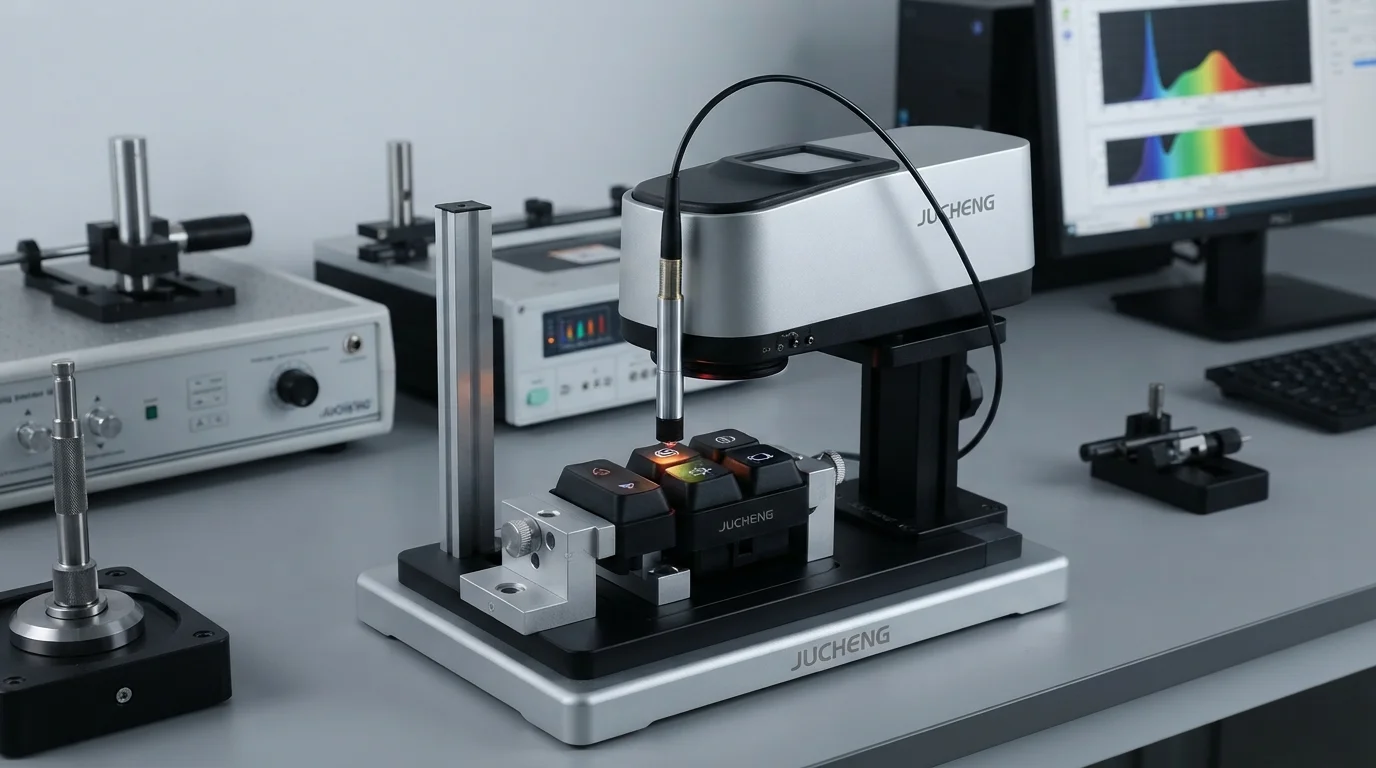
Automotive dashboard controls heavily utilize multi color injection molding to produce wear-resistant backlit buttons. Combining opaque ABS housing frames with transparent policarbonato (PC) o PMMA symbol inserts eliminates the need for surface painting. Light emitted from internal circuit board LEDs travels directly through the embedded clear symbol without light bleeding into surrounding opaque boundaries.
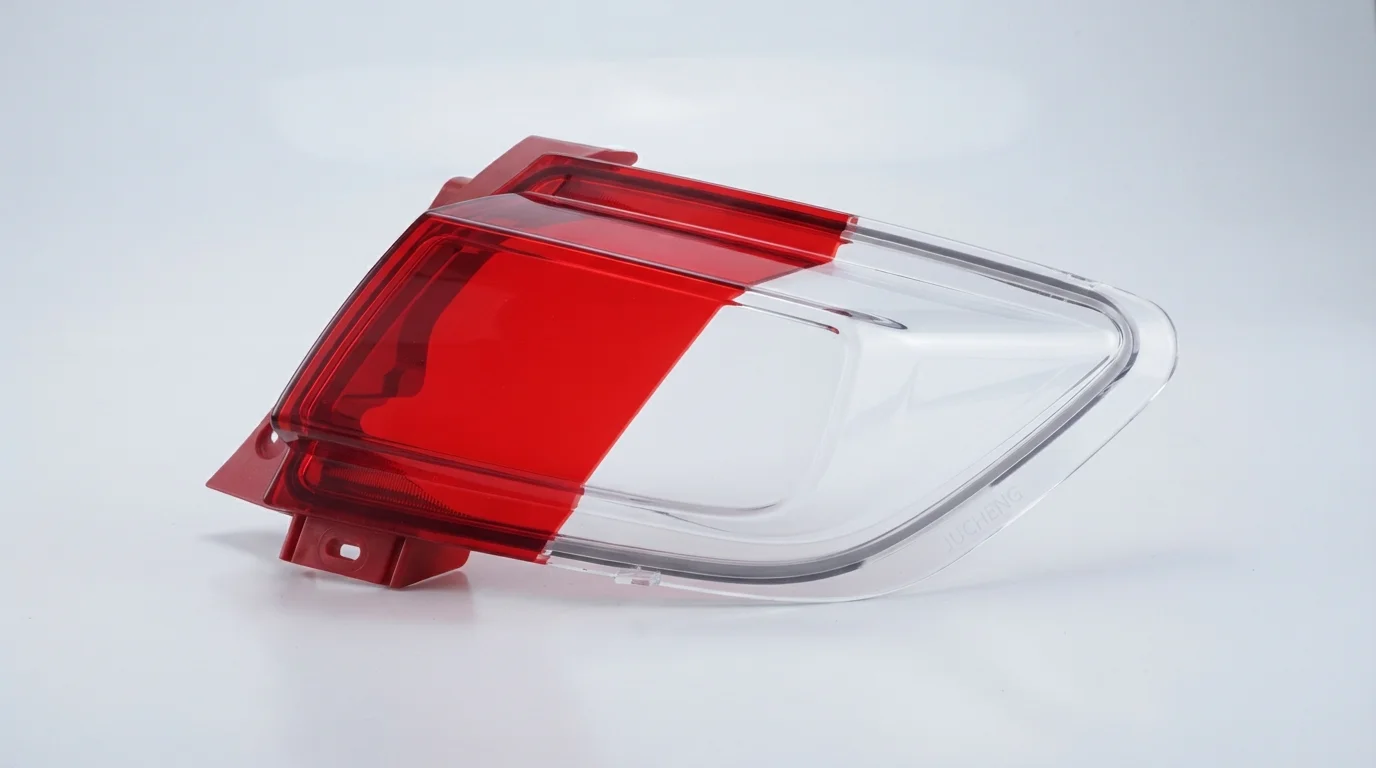
Dual-color tail-lamp lenses combine red, amber, and clear optical layers in a single mold tool, ensuring weather-resistant sealing. Integrating multiple functional colors into one molded component eliminates downstream assembly labor and lowers long-term unit production costs.
Prevención de la migración de color y mantenimiento de líneas de separación nítidas
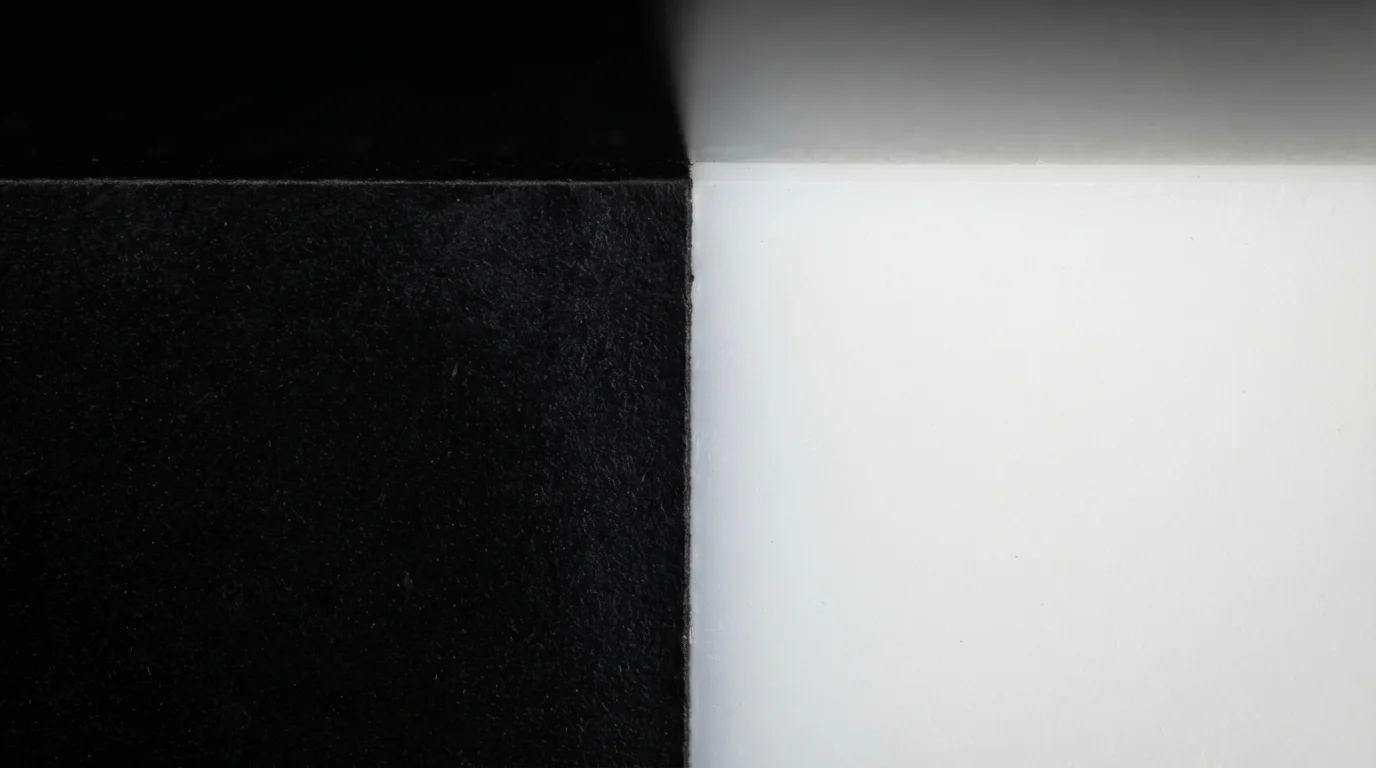
Lograr límites de color nítidos requiere un control estricto sobre el acero de cierre del molde y la reología del fundido. Un ajuste inadecuado de la superficie de cierre permite que el segundo fundido coloreado se desplace sobre la primera inyección, causando un problema estético de migración de color. Los ingenieros de utillaje diseñan las superficies de cierre con tolerancias a nivel de micras e incorporan crestas de corte mecánico afiladas a lo largo de los límites de color.
Igualar las temperaturas del fundido y los perfiles de viscosidad de las resinas coloreadas adyacentes evita el desplazamiento del fluido durante la segunda inyección. La implementación de estos controles de procesamiento durante el moldeo por inyección multicolor garantiza una separación visual nítida en cada lote de producción. La aplicación del procesamiento multiinyección de esta manera eleva la estética del componente a la vez que proporciona soluciones fiables de moldeo por inyección multicolor para aplicaciones exigentes de consumo y automoción.
| Resina del cuerpo principal | Resina de color secundario/lente | Técnica de separación de color | Aplicación estética principal |
|---|---|---|---|
| ABS negro (Polylac PA-757) | PC transparente (Lexan 141R) | Cresta de cierre de 0,01 mm | Botones pulsadores retroiluminados para automoción |
| PMMA óptico rojo | PMMA óptico transparente (Plexiglas 8N) | Indexación de núcleo rotativo | Carcasas de pilotos traseros automotrices bicolor |
| Polipropileno blanco (PP) | Polipropileno azul (PP) | Compuerta de válvula secuencial | Carcasas y tapas para diagnóstico médico |
Preguntas frecuentes (FAQ)
¿Por qué se prefiere el moldeo multicolor sobre la serigrafía secundaria?
Los símbolos serigrafiados se desgastan con el tiempo debido a los aceites de la piel y la fricción. El moldeo multicolor incrusta el símbolo coloreado en todo el espesor de la pared, lo que hace que el gráfico sea permanente e inmune al desgaste superficial o a la limpieza química.
¿Cómo se evita la fuga de luz en botones multicolor retroiluminados?
Prevenir la fuga de luz requiere cierres de molde precisos (tolerancia <0,01 mm) entre la carcasa opaca y el símbolo óptico transparente. El uso de resinas oscuras de alta opacidad para el marco de la carcasa también bloquea la iluminación LED interna dispersa.
¿Se pueden usar diferentes familias de polímeros en el moldeo multicolor?
El uso de polímeros químicamente compatibles como ABS y PC garantiza una fuerte fusión molecular a través de los límites de color. Las resinas incompatibles requieren enclavamientos mecánicos para evitar la separación de capas bajo expansión térmica.