
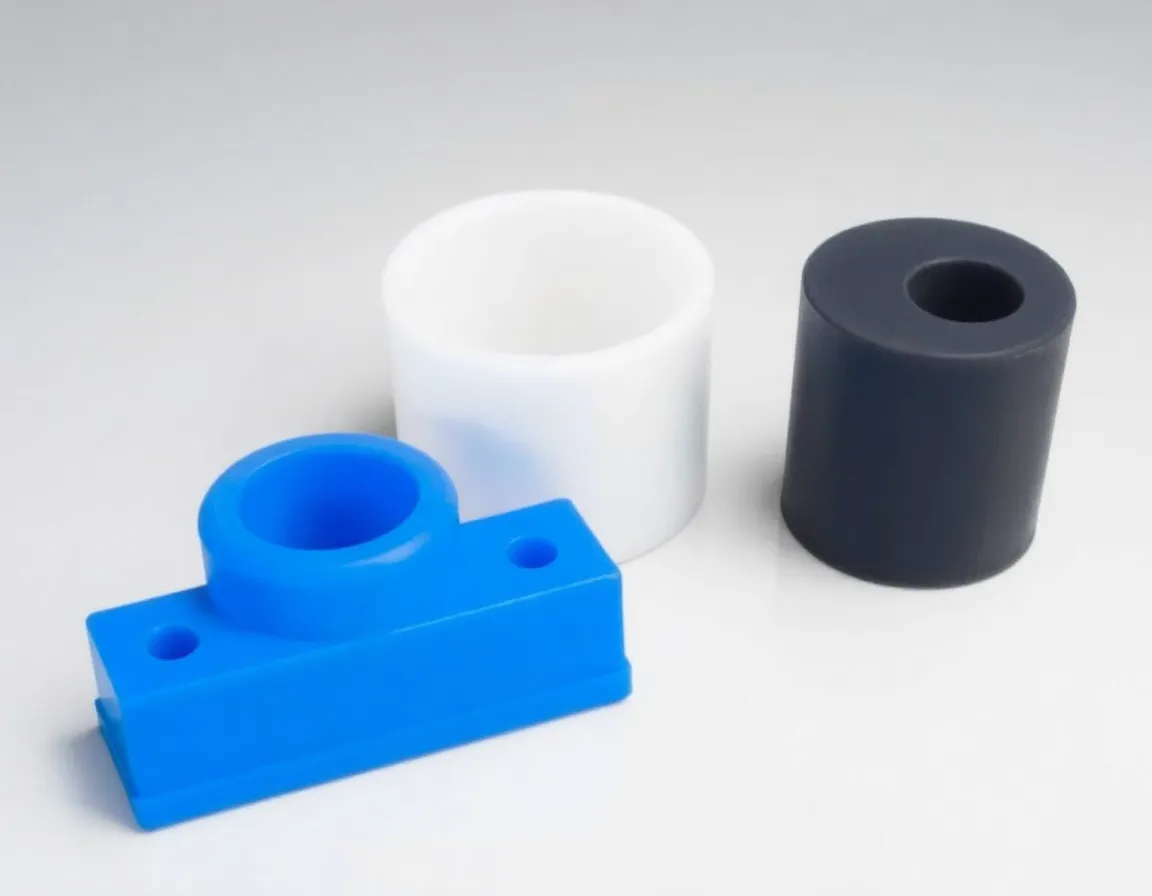
In the world of modern manufacturing, the phrase "close enough" is a recipe for disaster. When you are dealing with components that must withstand extreme heat, chemical exposure, or precise mechanical loads, the margin for error shrinks to mere microns. Custom technical plastic parts are the unsung heroes of industries ranging from aerospace to medical devices, yet specifying them correctly is a complex dance between material science, tooling design, and processing physics.
Whether you are an engineer tasked with sourcing a critical component or a product manager trying to reduce assembly costs, understanding the nuances of custom technical plastics is essential. This article breaks down the seven secrets to getting these parts done right, ensuring performance, durability, and cost-efficiency.
Understanding Custom Technical Plastic Parts
Before diving into the secrets, it is crucial to define what we are discussing. Custom technical plastic parts are not the disposable forks at a picnic or the cheap casing of a novelty toy. These are high-performance components engineered to meet specific mechanical, thermal, chemical, and electrical requirements.
They are typically produced from engineering-grade resins—such as PEEK, PTFE, PPS, Polycarbonate, or Nylon—and are manufactured through processes like CNC machining, injection molding, or compression molding. Unlike commodity plastics, technical plastics retain their properties under stress. They are used to replace metal in weight-sensitive applications or to provide electrical insulation where conductivity would be fatal.
The "custom" aspect implies that a standard catalog part simply won't do. The geometry, tolerance, and material formulation are tailored to a specific application. Getting this right requires more than just a 3D model; it requires a holistic approach to manufacturing.
Secret 1: Material Selection is a Science, Not a Guess
The most common mistake in sourcing custom technical plastic parts is choosing a material based solely on cost or generic "strength." This is a fatal error. The secret to success lies in matching the specific grade of plastic to the application's environment.
Beyond the Data Sheet
Standard data sheets provide values for virgin resin under ideal laboratory conditions. However, real-world performance is different. You must consider:
- Thermal Load: Will the part be exposed to continuous heat or thermal cycling? A material like ABS might warp, whereas PEEK or PPS can withstand temperatures exceeding 250°C.
- Chemical Exposure: Is the part coming into contact with fuels, solvents, or cleaning agents? PTFE (Teflon) is inert to almost everything, while Polycarbonate can be attacked by alkalis.
- Mechanical Stress: Does the part need to flex (impact resistance) or hold its shape (rigidity)?
Furthermore, you must consider additives. Adding glass fiber or carbon fiber to a resin can drastically increase tensile strength and stiffness but may make the part brittle. A professional manufacturer will discuss these trade-offs before cutting any material.
Secret 2: Design for Manufacturability (DFM) is Non-Negotiable
A perfect CAD model on a screen does not always translate to a perfect physical part. The second secret is engaging in rigorous Design for Manufacturability (DFM) analysis. This is the bridge between the design intent and the production reality.
The Geometry of Success
Technical plastics behave differently than metal. They expand and contract at different rates (Coefficient of Thermal Expansion). If you are machining a plastic part, you must account for the fact that the material might "spring back" after the tool passes.
Key DFM considerations for custom technical parts include:
- Wandstärke: In molding, uneven wall thickness leads to sink marks and warping. In machining, thin walls can vibrate and break during cutting.
- Radii and Corners: Sharp internal corners are stress concentrators. They are also difficult to machine. Adding a radius reduces stress and improves tool life.
- Toleranzen: Plastics are not steel. Holding a +/- 0.001 inch tolerance on a plastic part is possible but expensive. Over-tolerancing is the fastest way to inflate costs. Specify tolerances only where functionally necessary.
Secret 3: The Tooling and Machining Strategy
How the part is made dictates its quality. The third secret is selecting the right manufacturing process and understanding the tooling implications.
CNC Machining vs. Injection Molding
If you need 50 parts, injection molding will bankrupt you due to tooling costs. If you need 500,000 parts, CNC machining will bankrupt you due to cycle times. The secret is knowing the break-even point.
For custom technical parts, CNC machining is often preferred for prototypes and bridge production because it allows for design changes without retooling. However, for high-volume production, injection molding is the standard.
Regardless of the process, the tooling must be designed for the plastic. For machining, this means using sharp, polished carbide tools with specific rake angles designed for plastics to prevent melting or chipping. For molding, it means designing a robust mold with proper cooling channels and gates to ensure the plastic fills the cavity before it solidifies.
Secret 4: Mastering Tolerances and Shrinkage
This is where amateurs fail and professionals succeed. Plastics shrink when they cool. The rate of shrinkage varies by material and by the geometry of the part.
The Shrinkage Factor
If you machine a mold cavity to the exact dimensions of the final part, the part will come out too small. The secret is calculating the shrink rate accurately. For semi-crystalline materials like Nylon or PEEK, shrinkage can be as high as 2% to 3%. For amorphous materials like Polycarbonate, it is lower, around 0.5% to 0.7%.
However, shrinkage is not uniform. It is affected by:
- Flow Direction: Plastic shrinks more in the direction of flow than perpendicular to it.
- Wandstärke: Thicker sections cool slower and shrink more.
- Angussposition: The point where plastic enters the mold affects the molecular orientation and subsequent shrinkage.
To get custom technical plastic parts right, you must work with a manufacturer who understands these variables and can adjust the tooling to compensate, rather than trying to fix it after the fact.
Secret 5: Secondary Operations and Assembly
Rarely is a plastic part used in isolation. It usually needs to connect to something else. The fifth secret is planning for secondary operations early in the design phase.
Joining and Finishing
Can you glue it? Ultrasonic welding? Snap fits? Screws? Each method has pros and cons. For example, solvent bonding works well for acrylics but can cause stress cracking in polycarbonates.
If the part requires threading, inserting metal threads (heat-set inserts) is a common practice for technical plastics. However, this requires bosses (raised sections) in the design to accommodate the insert. If you forget to design the boss, you cannot add it later.
Surface finish is another consideration. A smooth surface might be required for hygiene in medical parts, while a textured surface might be needed for grip or to hide cosmetic defects. These finishes are determined by the tooling, not by post-processing paint, so they must be specified upfront.
Secret 6: Quality Control and Inspection
You cannot inspect quality into a part; you must build it in. However, for custom technical parts, rigorous inspection is your safety net. The sixth secret is establishing a metrology plan that matches the criticality of the part.
Beyond the Caliper
For simple parts, calipers and micrometers suffice. For complex technical parts, you need more advanced metrology:
- CMM (Coordinate Measuring Machines): These are the gold standard for verifying geometric dimensions and tolerances (GD&T).
- Optische Komparatoren: Ideal for small, intricate parts where contact measurement might damage the plastic.
- Material Testing: Sometimes you need to verify the material itself. This could involve melt flow index testing or differential scanning calorimetry (DSC) to ensure the polymer hasn't degraded during processing.
A reliable partner will provide First Article Inspection (FAI) reports. This is a detailed report verifying that the first parts off the line meet every specification on the drawing. If they don't, the process is adjusted before mass production begins.
Secret 7: The Partnership Approach
The final and perhaps most important secret is that custom technical plastic parts cannot be sourced effectively through a transactional "quote and buy" relationship. They require a partnership.
Communication is Key
You must communicate the function of the part, not just the dimensions. Tell your manufacturer what the part does. Does it need to seal a gas? Does it need to pivot? Does it need to be transparent?
When the manufacturer understands the "why," they can offer suggestions on the "how." They might suggest a different material that is cheaper and easier to machine, or a design tweak that eliminates a secondary operation. This collaborative approach saves time and money and results in a superior product.
Furthermore, a true partner will be transparent about lead times and potential risks. They will flag a design that is likely to warp before they start cutting metal. They will tell you if a tolerance is unrealistic. This transparency is the hallmark of a professional custom manufacturing service.
Fazit
Creating custom technical plastic parts is a blend of art and engineering. It requires a deep understanding of polymer science, a meticulous approach to design, and a manufacturing partner who prioritizes precision over speed.
By following these seven secrets—selecting the right material, designing for manufacturability, choosing the correct process, accounting for shrinkage, planning secondary operations, enforcing quality control, and fostering a partnership—you can ensure that your components perform flawlessly. In the high-stakes world of technical manufacturing, "done right" is the only acceptable outcome.