
High-voltage electrical architectures in modern clean energy platforms require robust physical protection and dependable dielectric insulation. Mechanical design groups must select engineering resins that prevent external mechanical impact while meeting stringent fire containment criteria. Using polycarbonate blended with acrylonitrile butadiene styrene satisfies these requirements by pairing heat-deflection capabilities with low-temperature impact resilience. This design guide reviews the material physics, warpage prevention mechanics, and mold-flow optimization strategies crucial for scaling up reliable structural components.
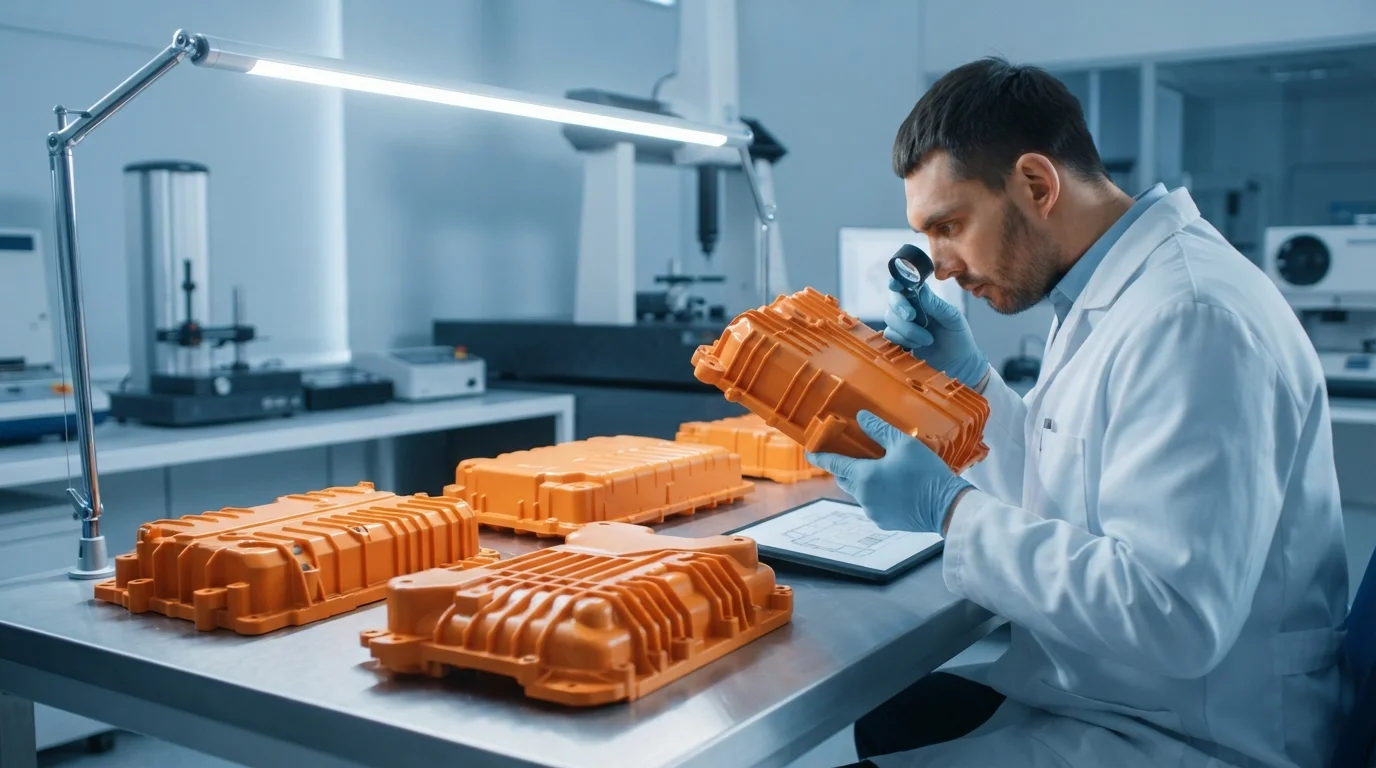
Table of Contents
Structural Engineering for High-Voltage Battery Protection
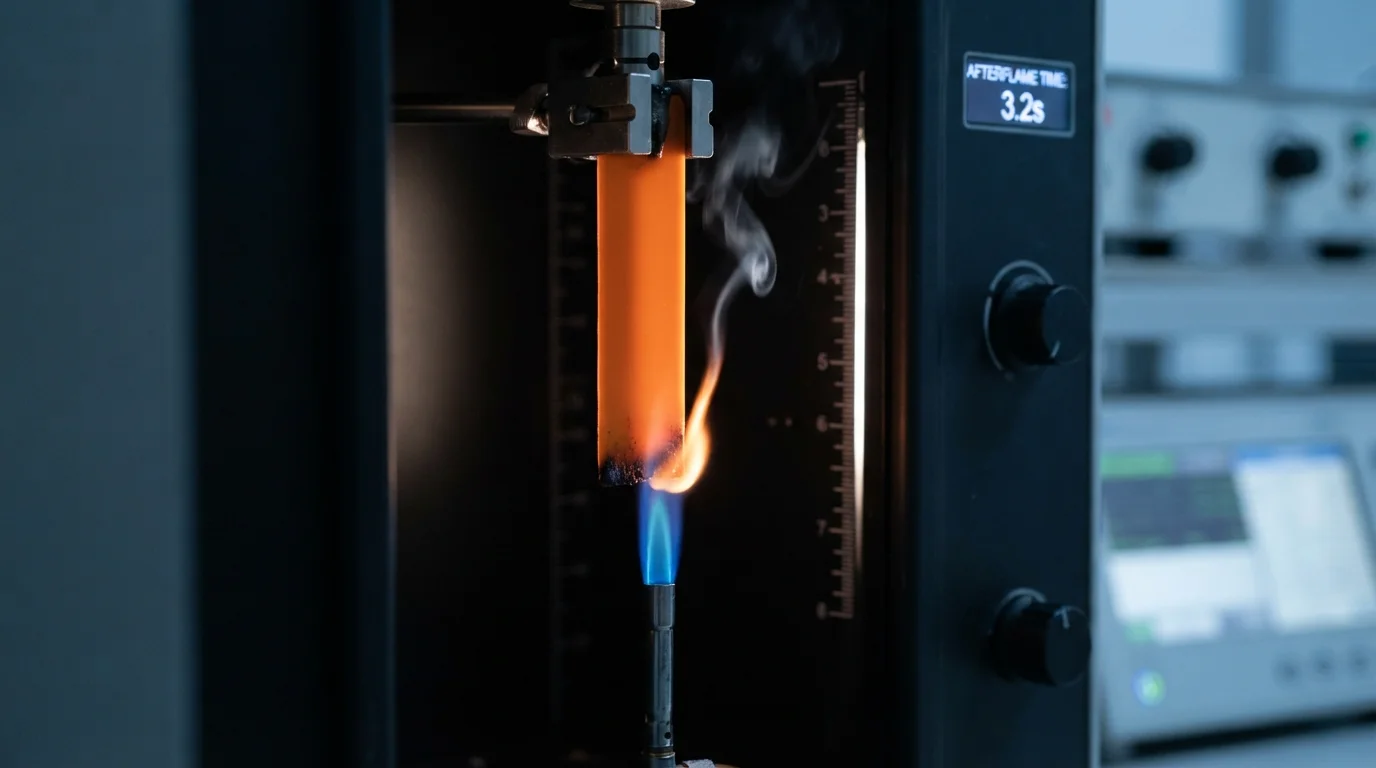
Balancing physical protection and weight targets remains a paramount concern for automotive structure designers. Traditional metallic casings are heavy and require secondary insulation barriers, complicating automated modular assembly. Selecting premium engineering polymers resolves these complications by permitting the design of complex, thin-walled, integrated geometries. Specifically, choosing flame retardant PC ABS battery enclosures provides a robust mechanical shield that isolates internal electrical cells from physical debris and extreme external stresses.
Combining polycarbonate and acrylonitrile butadiene styrene leverages the unique performance strengths of both polymers. Polycarbonate contributes outstanding thermal deflection thresholds and structural stiffness, which are critical when battery stacks experience localized heating. Acrylonitrile butadiene styrene improves the overall melt processability while enhancing mechanical toughness and ductility at sub-zero temperatures. Consequently, components molded from this blend resist stress-cracking during structural load tests.
Flame-retardant performance must conform to standard UL94 V-0 requirements to qualify for high-voltage battery designs. This compliance ensures that the polymer self-extinguishes during a thermal propagation event, containing the local cell failure. Typical flame retardant additives utilized in these engineering compounds are phosphorus-based, providing non-halogenated environmental compliance while preserving the mechanical properties of the base resin matrix. To help engineering groups select the correct formulation, standard material configurations include:
- Unfilled compounds—Amorphous resin configurations deliver maximum low-temperature ductility and pristine cosmetic finishes.
- Glass-reinforced grades—Adding micro-glass fibers increases the elastic modulus and tensile load limits of the structural housing.
- Impact-modified formulations—Specialized elastomers improve energy absorption during high-speed structural crash tests.
- Halogen-free additives—Eco-friendly flame retardants ensure compliance with global environmental regulations.
Minimizing Warpage in Large-Scale PC/ABS Covers
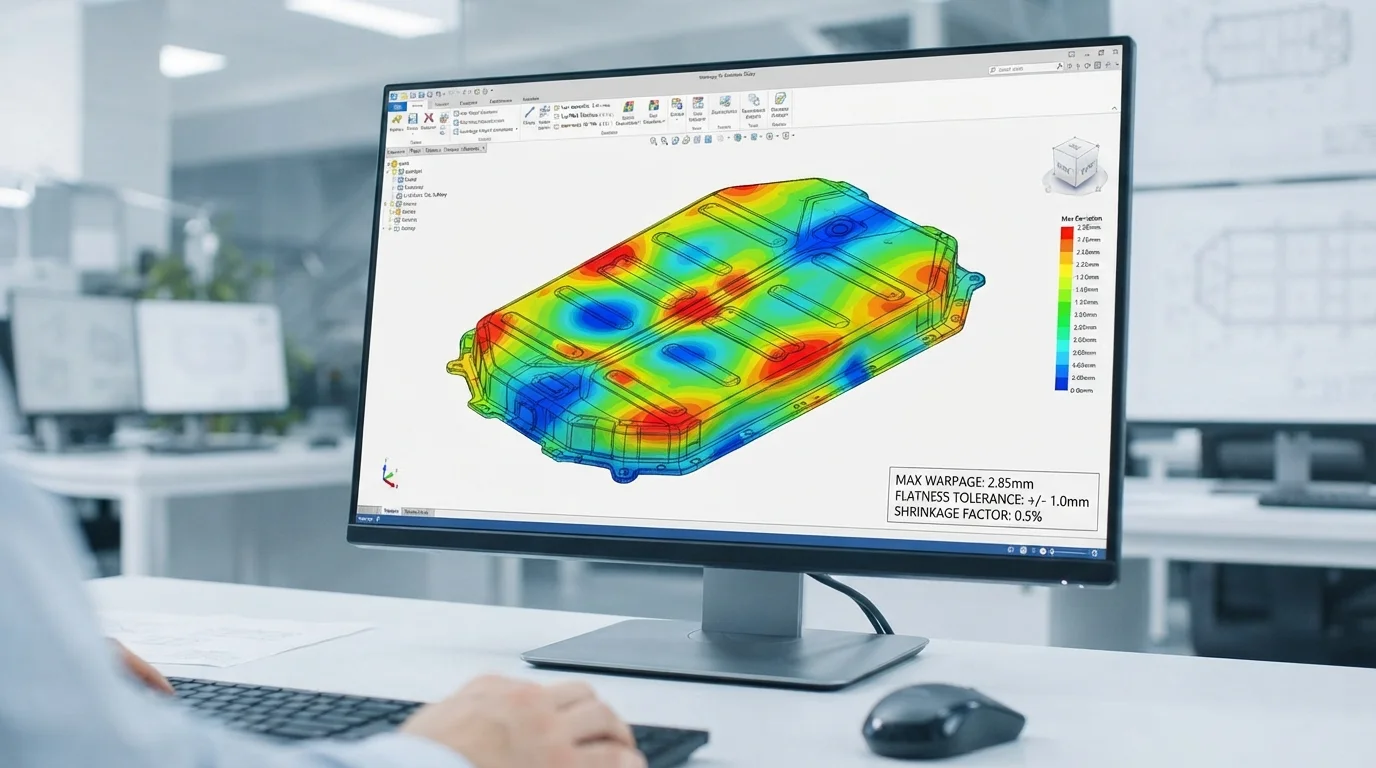
Molding large-scale flat components with thin walls introduces severe challenges regarding dimensional stability and warpage. Differential shrinkage during the cooling cycle causes unequal localized stresses within the polymer structure, leading to post-mold distortion or twisting. Designing large-format flame retardant PC ABS battery enclosures requires careful attention to rib layouts. Designing ribs with a thickness of 50% to 60% of the nominal wall prevents localized sink marks while maximizing overall bending stiffness.
Gate placement and runner design directly influence molecular orientation during cavity filling. Molten PC/ABS contracts more parallel to the flow direction than across it, meaning asymmetrical flow fronts inevitably lead to dimensional warping. Utilizing balanced hot runner systems with multi-point valve gates ensures that the cavity fills symmetrically, distributing clamping forces and pack pressures evenly. Such precise processing steps guarantee that larger flame retardant PC ABS battery enclosures maintain strict perimeter flatness to achieve IP67 environmental sealing during final pack assembly.
Our engineering workflow uses a structured approach to optimize large-format components:
- Wall thickness evaluation—Reviewing cross-sections ensures uniform melt cooling rates and prevents thermal stress concentrations.
- Fiber orientation modeling—Simulating material flow paths maps anisotropic shrinkage behavior prior to steel cutting.
- Clamping pressure profiling—Adjusting machine clamp settings prevents unequal packing across complex part details.
- Thermal cooling balancing—Configuring conformal cooling channels maintains uniform core and cavity steel temperatures.
Whether you require complex internal brackets or outer flame retardant PC ABS battery enclosures, we offer turnkey solutions for all custom plastic battery housings for EV. JUCHENG maintains strict IATF 16949-certified quality systems to support tier-1 automotive programs from prototype to series production. Our engineering group delivers comprehensive DfM reviews within 24 hours to accelerate your product development cycles.
Frequently Asked Questions (FAQ)
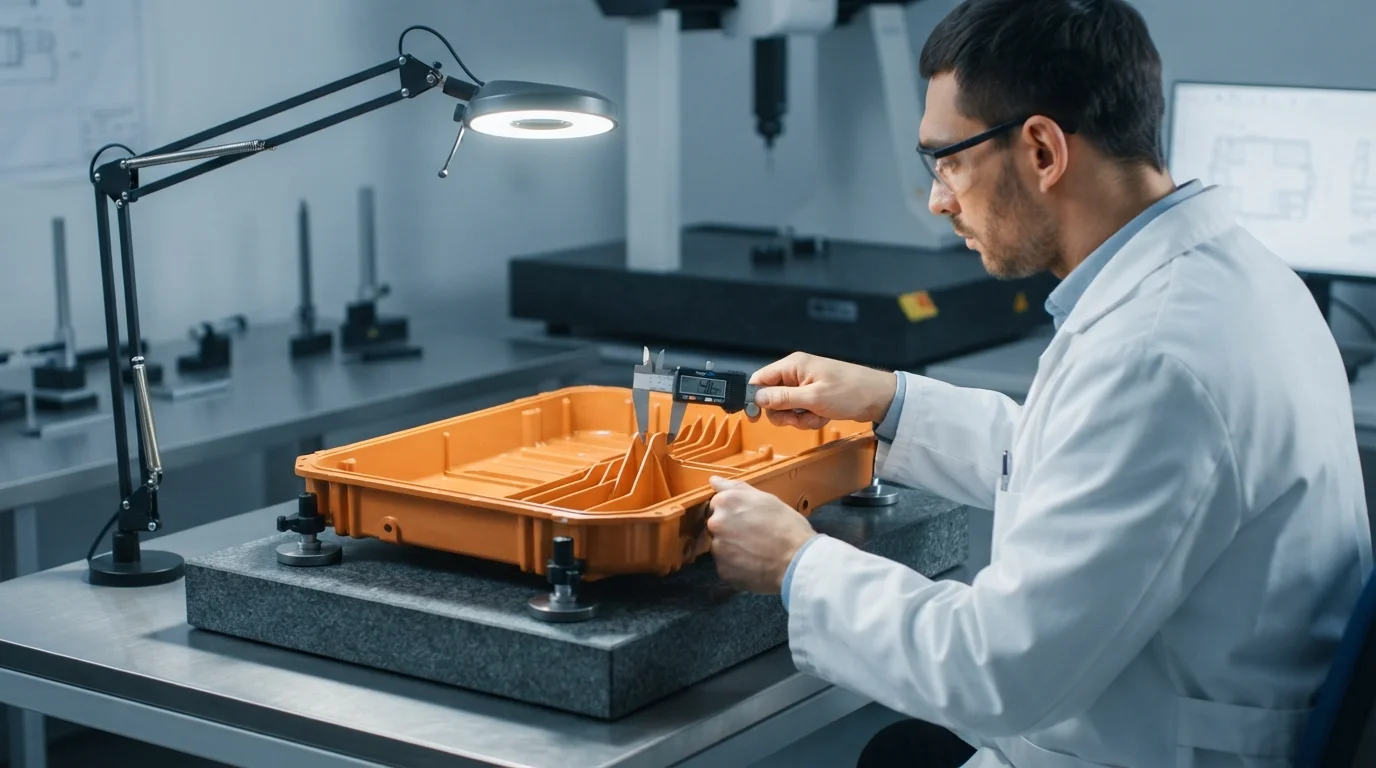
What is the target rib-to-wall thickness ratio for PC/ABS to prevent sink marks?
Rib thickness should remain between 50% and 60% of the nominal wall thickness. Keeping rib dimensions within this range prevents localized mass concentrations, which slow cooling and cause sink marks. Incorporating generous radii at the base of the rib also assists polymer flow and reduces mechanical stress concentrations.
How does molding temperature affect the flame-retardant performance of PC/ABS?
Melt temperatures exceeding 290°C can thermally degrade organic phosphorus flame retardants, reducing UL94 V-0 safety performance. Maintaining processing temperatures between 260°C and 280°C preserves flammability compliance. Proper mold temperature control also ensures high-quality surface finishes.
Can PC/ABS enclosures withstand automotive vibration testing?
Combining PC heat deflection and ABS mechanical toughness creates parts that excel during dynamic vibration tests. Polycarbonate prevents structural fatigue under cyclic loads, while ABS absorbs mechanical energy during high-frequency automotive road testing. Our engineers optimize gating locations to ensure weld lines do not form in high-vibration areas.