
Manufacturing high-volume thin-walled plastic components requires high injection velocities to pack mold cavities before melt freezing occurs. Conventional injection machinery lacks the instantaneous hydraulic response necessary to fill long flow paths with wall thicknesses below 0.8 mm. Specifying high speed injection molding resolves these flow limitations by utilizing hydraulic nitrogen accumulators to drive the injection screw. JUCHENG operates specialized high-speed production cells, producing thin-walled packaging, medical diagnostic cups, and EV battery spacers.
目錄
Accumulator-Assisted Injection Presses & Fast Injection Velocity
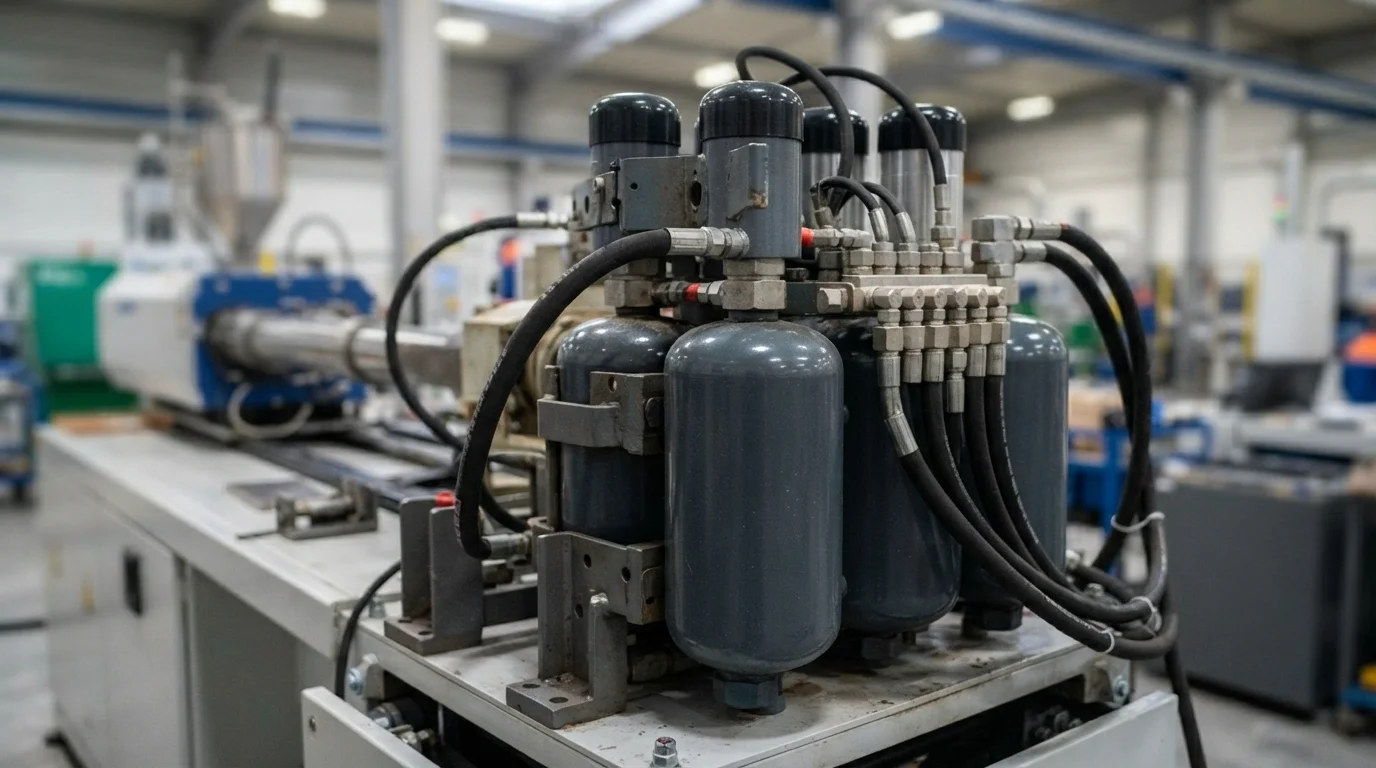
Achieving complete cavity filling in thin-wall geometries requires injection velocities up to 1,000 mm/sec. Equipping injection machinery with accumulator-assisted injection presses supplies instant hydraulic fluid volume during the filling phase. Nitrogen accumulators discharge stored pressure within milliseconds, accelerating the injection screw to peak speed instantly. Ultra-fast filling prevents polymer melt fronts from solidifying prematurely along cold cavity surfaces. Closed-loop pressure transducers monitor melt rheology during every cycle, ensuring immediate switchover from filling speed to holding pressure.
High-speed press operating standards include:
- Nitrogen accumulator discharge—Releasing stored hydraulic oil volume drives the injection screw with extreme initial acceleration.
- Closed-loop response control—Monitoring cavity pressure transducers prevents overpacking and flashing along mold parting lines.
- High clamping force stability—Holding mold core plates shut under intense peak injection pressures prevents parting line flash.
- Fast-acting hydraulic valves—Executing sub-millisecond valve shifts optimizes velocity-to-pressure transfer during filling.
Thin-Wall Packaging & EV Battery Insulation Components (≤0.8 mm)
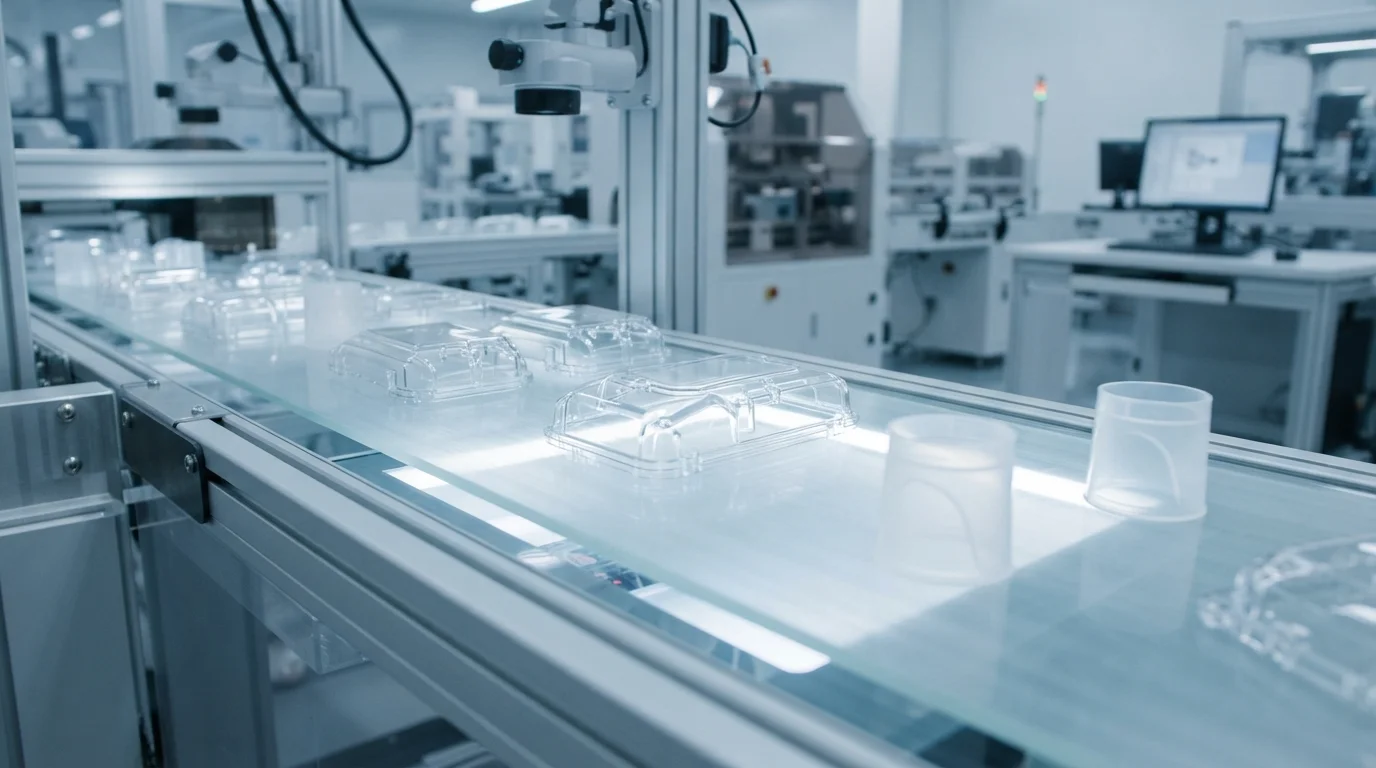
Thin-walled components featured in EV battery spacers and consumer packaging demand high Melt Flow Index (MFI) resins. Processing thermoplastics like high-flow 聚碳酸酯(PC), LCP, PA66, ,以及 polypropylene (PP) requires precise temperature control. High injection speeds generate frictional shear heat within narrow runner gates, reducing resin viscosity dynamically. Lower melt viscosity permits plastic to travel across high flow-length-to-thickness (L/T) ratios exceeding 200:1. Vacuum-assisted cavity evacuation systems draw air out of the mold before injection, preventing micro-bubbles and diesel burns.
| Polymer Resin Grade | MFI Range (g/10min) | Wall Thickness (mm) | Filling Speed (mm/sec) | Primary High-Speed Application |
|---|---|---|---|---|
| PP (Borealis RF365MO) | 35 – 70 | 0.40 – 0.80 mm | 600 – 900 mm/sec | Thin-wall packaging & containers |
| High-Flow PC (Makrolon 2407) | 25 – 55 | 0.60 – 1.00 mm | 500 – 800 mm/sec | Electronic covers & display frames |
| PA66-GF30 (Zytel 70G33L) | 20 – 40 | 0.80 – 1.20 mm | 400 – 700 mm/sec | EV battery module insulation plates |
High-Cavitation Mold Cooling & Hot Runner Balanced Flow
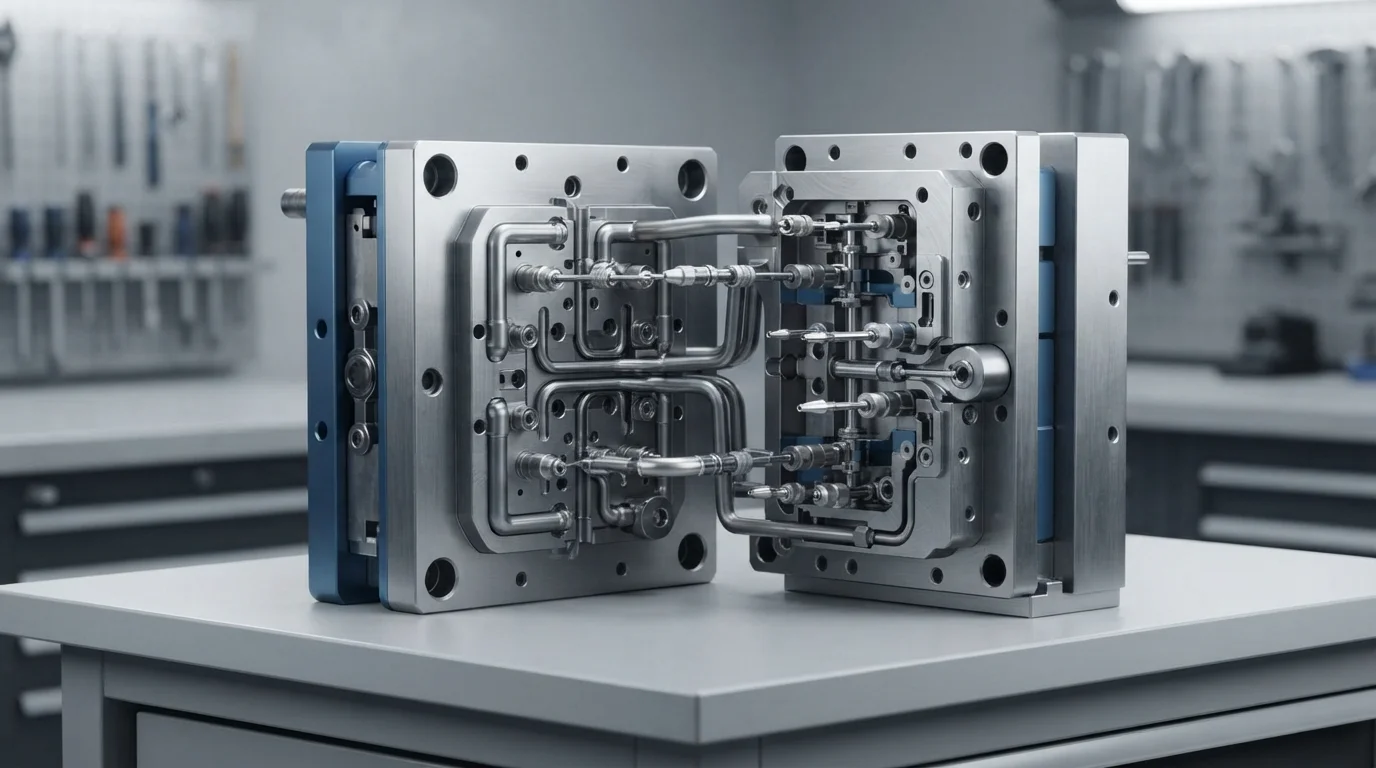
Maximizing production output relies on multi-cavity tooling and optimized thermal management. Integrating hot runner balanced flow manifolds ensures equal melt distribution to every cavity, maintaining uniform part weight. High-cavitation molds require balanced cooling networks to extract heat rapidly from thin polymer walls. Configuring conformal cooling channels close to cavity faces reduces cooling times to under 3 seconds per shot. Executing scientific molding methodology through Decoupled Molding isolates filling speed from packing pressure, maintaining CpK > 1.67 across long production runs.
Frequently Asked Questions (FAQs)
Why is an accumulator needed for high speed injection molding?
Hydraulic accumulators store pressurized nitrogen gas to deliver instant hydraulic oil volume during injection. This instant pressure boost accelerates the screw three times faster than standard hydraulic pumps, filling thin wall cavities before the melt freezes.
What is a typical cycle time for high speed thin-wall molding?
Cycle times for thin-wall packaging and electronic covers typically range from 2 to 6 seconds. High-speed injection, fast cooling water circuits, and automated robotic part extraction minimize cycle duration.
How do you prevent diesel burn marks during ultra-fast injection?
Preventing diesel burns requires integrating precision micro-venting slots measuring 0.015 mm to 0.02 mm along parting lines and using vacuum cavity evacuation. Drawing air out of the tool before injection prevents compressed gas from igniting.