
Giới thiệu: Cuộc cách mạng thầm lặng trong sản xuất chỉnh hình
Trong nhiều thập kỷ, lĩnh vực phẫu thuật chỉnh hình đã bị chi phối bởi kim loại—titan, thép không gỉ và hợp kim coban-crom. Những vật liệu này đã phục vụ bệnh nhân tốt, cung cấp độ bền cần thiết để hỗ trợ xương gãy và thay thế khớp bị mòn. Tuy nhiên, ngành công nghiệp thiết bị y tế hiện đang chứng kiến một sự thay đổi mô hình. Nhựa chỉnh hình, còn được gọi là polyme cấp y tế, đang nhanh chóng nổi lên như tương lai của sản xuất thiết bị y tế. Chúng cung cấp sự kết hợp độc đáo của tính tương thích sinh học, linh hoạt thiết kế và đặc tính hiệu suất mà kim loại không thể sánh kịp. Bài viết này cung cấp một khám phá toàn diện về sản xuất nhựa thiết bị chỉnh hình, chi tiết nó là gì, hoạt động như thế nào, lợi ích quan trọng của nó và các thực hành tốt nhất định hình thế hệ tiếp theo của chăm sóc bệnh nhân.
Sản xuất nhựa chỉnh hình là gì?
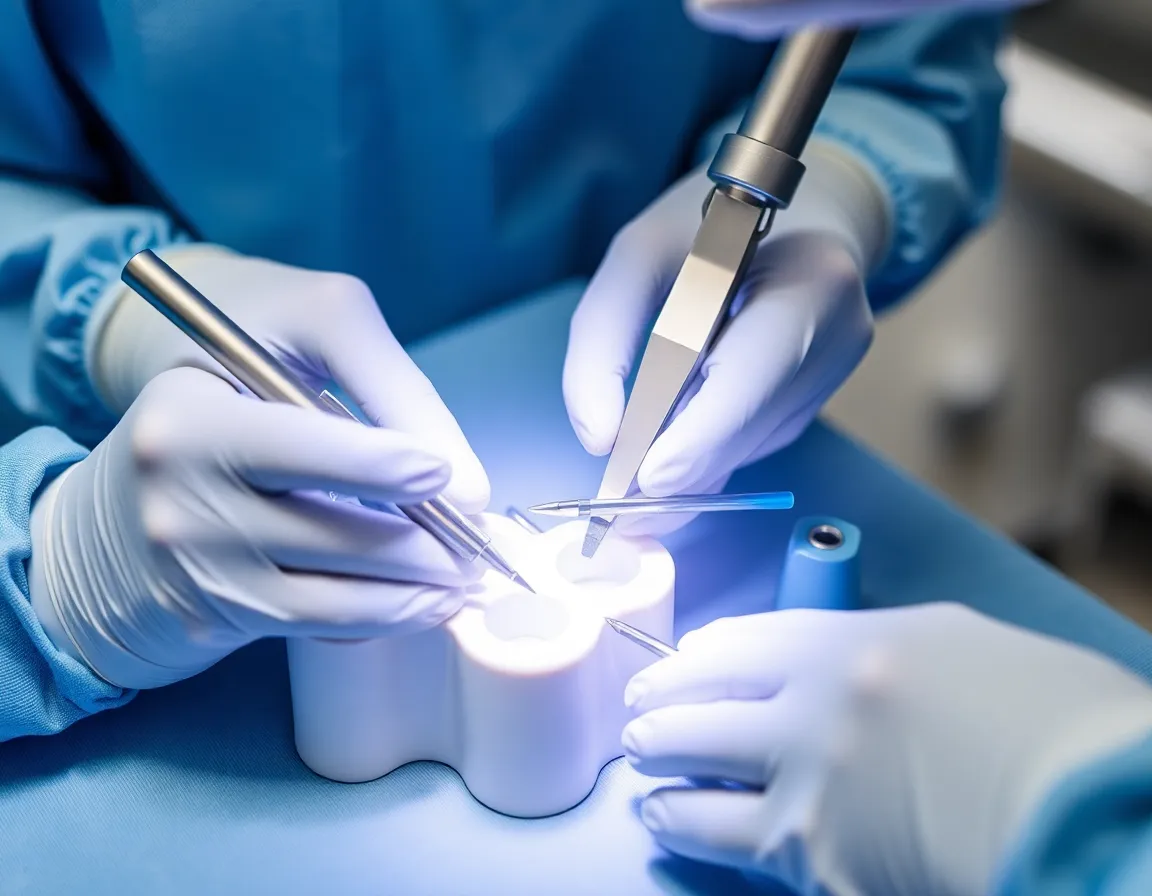
Sản xuất nhựa chỉnh hình đề cập đến quy trình chuyên biệt để thiết kế và sản xuất các thiết bị y tế—như cấy ghép khớp, tấm cố định xương, lồng cột sống và dụng cụ phẫu thuật—sử dụng các loại polymer hiệu suất cao thay vì kim loại truyền thống. Đây không phải là nhựa gia dụng thông thường; chúng là nhựa nhiệt dẻo kỹ thuật tiên tiến và nhựa nhiệt rắn đã được kiểm tra nghiêm ngặt về tính tương thích sinh học, độ bền cơ học và độ ổn định lâu dài trong cơ thể con người.
Vật liệu chính trong nhựa chỉnh hình
Sự thành công của sản xuất nhựa chỉnh hình phụ thuộc vào việc lựa chọn đúng loại polymer. Các vật liệu thường được sử dụng nhất bao gồm:
- PEEK (Polyether Ether Ketone): Một loại nhựa nhiệt dẻo hiệu suất cao được biết đến với độ bền cơ học tuyệt vời, khả năng chống hóa chất và tính thấm quang (trong suốt với tia X). Nó được sử dụng rộng rãi trong lồng hợp nhất cột sống và cố định chấn thương.
- UHMWPE (Polyethylene trọng lượng phân tử siêu cao): Tiêu chuẩn vàng cho các bề mặt chịu lực trong thay khớp háng, khớp gối và khớp vai. Khả năng chống mài mòn đặc biệt và hệ số ma sát thấp của nó mô phỏng sụn tự nhiên.
- PMMA (Polymethyl Methacrylate): Một loại xi măng xương được sử dụng để neo cấy ghép, đặc biệt trong các quy trình thay khớp và tạo hình đốt sống.
- PLA và PLGA (Axit polylactic và Poly(lactic-co-glycolic acid)): Các polymer phân hủy sinh học được sử dụng trong các thiết bị cố định tạm thời như vít và chốt, dần dần tan ra khi xương lành lại.
Quy trình sản xuất nhựa chỉnh hình hoạt động như thế nào
Việc sản xuất nhựa chỉnh hình là một quy trình nhiều giai đoạn, có độ chính xác cao, đòi hỏi tuân thủ nghiêm ngặt các tiêu chuẩn quy định như ISO 13485 và FDA 21 CFR Phần 820. Không giống như gia công kim loại, thường liên quan đến các quy trình trừ (cắt bỏ vật liệu), sản xuất nhựa thường là additive or near-net-shape, reducing waste and enabling complex geometries.
Primary Manufacturing Methods
There are several core techniques used to transform raw polymer pellets or powders into finished orthopedic devices:
- Đúc phun: Molten polymer is injected under high pressure into a precisely machined steel mold. This method is ideal for high-volume production of components like tibial trays or acetabular cups. It offers exceptional repeatability and surface finish.
- Đúc nén: Particularly important for UHMWPE, this process uses heat and pressure to consolidate polymer powder into a solid form. It is critical for achieving the high crystallinity and molecular weight required for wear resistance.
- CNC Machining: For complex, low-volume parts or prototypes, solid blocks of medical-grade plastic are machined using computer-controlled lathes and mills. This is common for custom patient-specific implants.
- 3D Printing (Additive Manufacturing): Techniques like Selective Laser Sintering (SLS) and Fused Deposition Modeling (FDM) are revolutionizing the field. They allow for the creation of porous structures that promote bone ingrowth (osseointegration) and the production of complex lattice geometries impossible with molds or machining.
Post-Processing and Sterilization
Once a part is formed, it undergoes critical post-processing steps. These include annealing to relieve internal stresses, surface polishing to reduce friction, and rigorous cleaning to remove any manufacturing residues. Finally, the device must be sterilized, typically using gamma radiation, ethylene oxide (EtO) gas, or steam autoclaving. The choice of sterilization method is crucial, as some polymers can degrade under high heat or radiation doses.
Benefits of Orthopedic Plastics Over Metals
The shift toward orthopedic plastics is driven by tangible clinical and manufacturing advantages. These benefits are reshaping how surgeons and engineers approach implant design.
1. Enhanced Biocompatibility and Reduced Stress Shielding
Metals are significantly stiffer than human bone. When a metal implant is placed, it bears the majority of the load, causing the surrounding bone to become under-stressed and weaken over time—a phenomenon called stress shielding. Orthopedic plastics, particularly PEEK, have a modulus of elasticity much closer to that of cortical bone. This allows for more physiological load transfer, preserving bone density and reducing the risk of implant loosening or periprosthetic fractures.
2. Radiolucency for Better Post-Operative Imaging
Metal implants create significant artifacts on X-rays, CT scans, and MRIs, obscuring the view of the bone-implant interface and making it difficult to assess healing or detect complications. Orthopedic plastics are radiolucent, meaning they are largely transparent to medical imaging. This allows surgeons to clearly visualize bone growth, fusion status, and potential fractures without interference, leading to more accurate diagnoses.
3. Design Freedom and Weight Reduction
Plastics can be molded, extruded, or printed into shapes that are impossible to achieve with metal. This enables the creation of porous coatings for bone ingrowth, complex internal lattices for reduced stiffness, and patient-specific anatomical geometries. Furthermore, plastic implants are significantly lighter than their metal counterparts, which can reduce surgical trauma and improve patient comfort, especially in large devices like spinal constructs.
4. Wear Resistance and Friction Management
UHMWPE has been the workhorse of joint replacement for over 50 years due to its outstanding wear properties. When used as a bearing surface against a metal or ceramic counterface, it provides exceptionally low friction, minimizing the generation of wear debris—a primary cause of implant failure and osteolysis (bone loss). Advanced cross-linked UHMWPE has further improved this performance, extending implant longevity.
Key Applications in Modern Orthopedics
Orthopedic plastics are not a one-size-fits-all solution; they are specialized for different anatomical and functional requirements. Their applications are expanding rapidly.
Spinal Surgery
PEEK is the dominant material for interbody fusion cages used in spinal surgery. Its radiolucency allows surgeons to assess bone fusion through the implant, while its bone-like stiffness promotes a healthy fusion environment. Carbon fiber-reinforced PEEK is also gaining traction for its enhanced strength and fatigue resistance.
Joint Replacement (Arthroplasty)
In total hip and knee replacements, the bearing surface is almost exclusively UHMWPE or highly cross-linked polyethylene (HXLPE). The metal or ceramic component articulates against this plastic surface. Modern designs also utilize PEEK for tibial trays and patellar components, offering a metal-free alternative that reduces allergic reactions in sensitive patients.
Trauma and Fracture Fixation
Bioresorbable plastics (PLA, PLGA) are increasingly used for screws, pins, and plates in non-load-bearing or low-load applications, such as ankle fractures or pediatric fractures. These devices provide temporary fixation and then dissolve, eliminating the need for a second surgery to remove hardware. This reduces infection risk, recovery time, and overall healthcare costs.
Surgical Instruments and Guides
Beyond implants, high-performance plastics are used to manufacture surgical instruments. PEEK and polysulfone are used for trial implants, cutting blocks, and patient-specific surgical guides (often 3D-printed). These instruments are lightweight, autoclavable, and do not interfere with surgical navigation systems.
Best Practices in Orthopedic Plastic Manufacturing
To ensure safety, efficacy, and regulatory compliance, manufacturers must adhere to a strict set of best practices. Failure to do so can result in device failure, patient harm, and costly recalls.
Lựa chọn và xác nhận vật liệu
The first and most critical step is rigorous material validation. Every polymer batch must be tested for molecular weight, viscosity, purity, and mechanical properties. Manufacturers must work only with suppliers who provide full material traceability and biocompatibility data per ISO 10993 standards.
Process Control and Cleanroom Manufacturing
All orthopedic plastic manufacturing should take place in a controlled environment, typically a certified cleanroom (ISO Class 7 or better). Key parameters—temperature, humidity, injection pressure, cooling rates, and dwell times—must be continuously monitored and recorded. Statistical Process Control (SPC) is employed to detect any deviation before it produces a defective part.
Thiết kế cho khả năng sản xuất (DFM)
Engineers must design implants with the manufacturing process in mind. For injection molding, this means avoiding sharp corners and thin walls that can cause warpage or incomplete fill. For 3D printing, it means optimizing support structures and orientation to minimize post-processing. Collaboration between design engineers and manufacturing engineers is essential to create a product that is both clinically effective and economically viable to produce.
Khả năng tương thích tiệt trùng
Every plastic material has a unique response to sterilization. For example, gamma radiation can cause cross-linking in UHMWPE (which is actually beneficial) but can cause chain scission and embrittlement in other polymers. Manufacturers must validate that the chosen sterilization method does not degrade the material’s mechanical properties or biocompatibility. Packaging must also be designed to maintain sterility until the point of use.
Tuân thủ quy định và tài liệu
Comprehensive documentation is non-negotiable. This includes Device Master Records (DMR), Device History Records (DHR), and detailed risk management files per ISO 14971. Every batch of implants must be fully traceable from raw material to the finished, sterile product. Post-market surveillance is also critical to monitor long-term clinical performance and identify any emerging failure modes.
Challenges and Future Directions
Despite their many advantages, orthopedic plastics are not without challenges. Issues such as creep deformation (gradual shape change under constant load), notch sensitivity, and the potential for oxidative degradation over time require ongoing research. Furthermore, the cost of medical-grade polymers and the specialized manufacturing equipment can be higher than traditional metalworking.
However, the future is bright. Research into bioactive plastics that can release growth factors or antibiotics, self-lubricating composites, và fully resorbable scaffolds for tissue engineering is accelerating. The integration of smart sensors into plastic implants for remote patient monitoring is also on the horizon. As manufacturing technologies like high-resolution 3D printing and automated micro-molding continue to advance, the capabilities of orthopedic plastics will only expand.
Conclusion: A Material Revolution in Patient Care
Orthopedic plastics are not merely an alternative to metals; they represent a fundamental advancement in medical device manufacturing. By offering a unique combination of bone-like mechanical properties, imaging transparency, design flexibility, and biocompatibility, these materials are enabling safer surgeries, faster recoveries, and longer-lasting implants. For manufacturers, mastering the complexities of plastic processing—from material selection to sterilization validation—is the key to success in this rapidly evolving field. As the demand for personalized, high-performance orthopedic solutions grows, one thing is clear: the future of orthopedics is being molded, machined, and printed from plastics.