
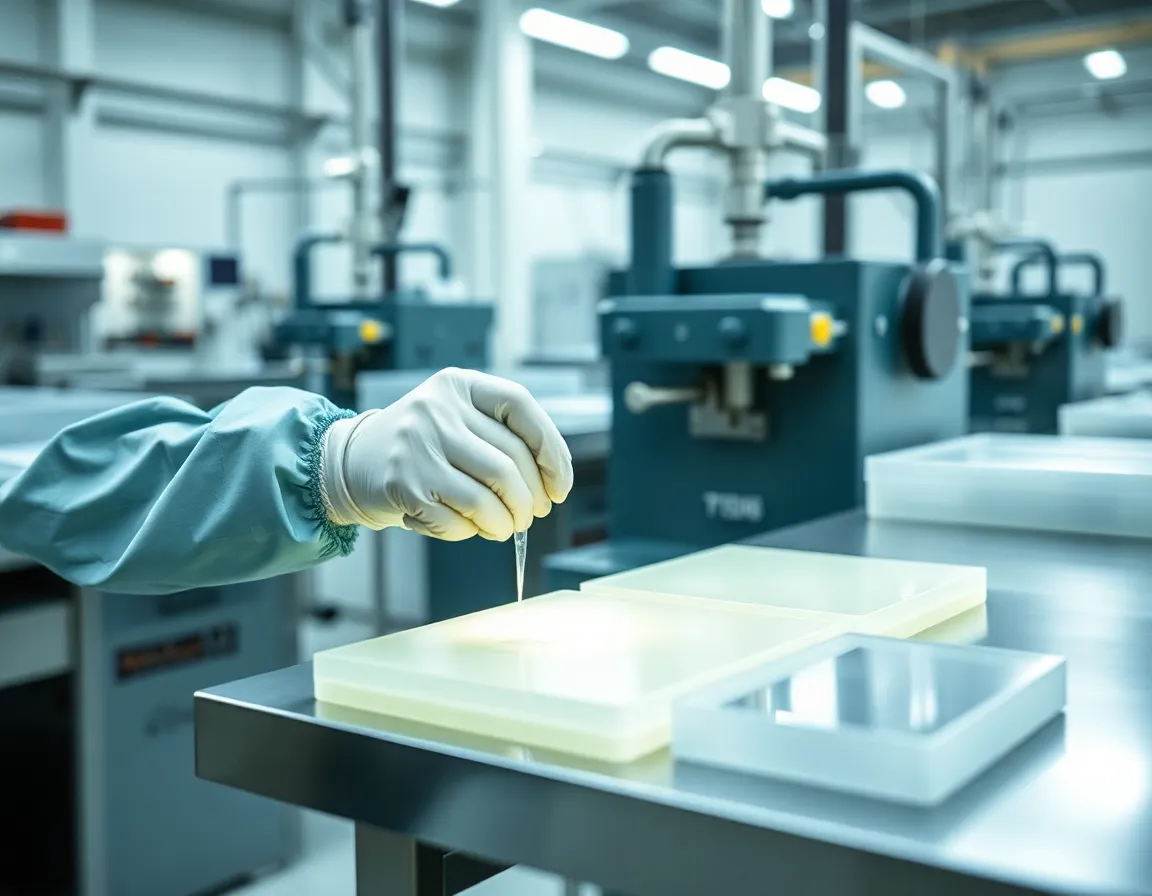
Giới thiệu: Vai trò quan trọng của độ chính xác trong sản xuất y tế
Ngành y tế đòi hỏi mức độ chính xác, độ tin cậy và vô trùng vượt trội trong mọi bộ phận được sử dụng trong thiết bị y tế, thiết bị chẩn đoán và hệ thống phân phối dược phẩm. Trung tâm của hệ sinh thái sản xuất này là ép phun nhựa y tế, một quy trình đã phát triển vượt xa việc sản xuất các bộ phận đơn giản. Ngày nay, đây là một lĩnh vực tinh vi kết hợp khoa học polymer tiên tiến, kỹ thuật vi mô và tuân thủ quy định nghiêm ngặt. Bài viết này khám phá những cải tiến chính đang định hình lại việc ép phun nhựa chính xác trong y tế, xem xét những tiến bộ này đang cải thiện kết quả điều trị cho bệnh nhân, giảm chi phí và tạo điều kiện cho các công nghệ y tế thế hệ mới như thế nào.
Hiểu về ép phun nhựa y tế
Nó là gì và hoạt động như thế nào
Ép phun nhựa y tế là một quy trình sản xuất được thiết kế riêng cho các ứng dụng y tế và dược phẩm. Quy trình này bao gồm việc bơm polyme nhiệt dẻo nóng chảy vào khuôn thép hoặc nhôm được gia công chính xác dưới áp suất cao. Sau khi nguội và đông đặc, khuôn mở ra để đẩy sản phẩm hoàn chỉnh ra ngoài. Không giống như ép phun thông thường, ép phun y tế hoạt động theo các tiêu chuẩn quản lý chất lượng Thực hành sản xuất tốt (GMP) 和 ISO 13485 nghiêm ngặt. Quy trình phải đảm bảo độ lặp lại tuyệt đối, độ chính xác kích thước thường trong phạm vi micron và khả năng tương thích với các phương pháp tiệt trùng như chiếu xạ gamma, ethylene oxide (EtO) hoặc hấp tiệt trùng.
Sự khác biệt chính nằm ở vật liệu được sử dụng. Các polyme cấp y tế—như polycarbonate, polysulfone, polyetheretherketone (PEEK) và cao su silicone lỏng (LSR)—được chọn vì tính tương thích sinh học, khả năng kháng hóa chất và độ bền cơ học. Các vật liệu này phải vượt qua các bài kiểm tra nghiêm ngặt về độc tính tế bào, độ nhạy cảm và tính tương thích máu theo định nghĩa của ISO 10993 tiêu chuẩn.
Sự cần thiết của độ chính xác
Trong y tế, một micron sai lệch có thể khiến bộ phận không sử dụng được. Một đầu nối ống thông không bịt kín hoàn hảo, một thân ống tiêm có đường kính trong không đồng đều, hoặc một dụng cụ phẫu thuật có cạnh sắc có thể dẫn đến hỏng thiết bị, nhiễm trùng hoặc gây thương tích cho bệnh nhân. Ép phun nhựa chính xác giải quyết thách thức này thông qua:
- Thiết kế khuôn dung sai cao: Sử dụng gia công CNC, EDM (gia công phóng điện) và khắc laser để đạt được dung sai chặt chẽ tới ±0,001 inch.
- Hệ thống giám sát quy trình: Cảm biến thời gian thực cho nhiệt độ, áp suất và độ nhớt tự động điều chỉnh các thông số để duy trì tính nhất quán.
- Sản xuất trong phòng sạch: Phòng sạch ISO Class 7 hoặc Class 8 giảm thiểu ô nhiễm hạt trong quá trình ép phun và lắp ráp.
Key Innovations Driving Healthcare Plastic Molding Forward
1. Micro-Molding for Miniaturized Devices
As medical devices shrink—driven by minimally invasive surgery, wearable diagnostics, and implantable sensors—the demand for micro-molding has exploded. This innovation allows manufacturers to produce components weighing less than one gram with feature sizes in the sub-millimeter range. Applications include microfluidic chips for point-of-care testing, tiny gears for robotic surgical tools, and drug-eluting stent structures.
Advancements in mold steel metallurgy and high-speed injection units enable the precise filling of microscopic cavities without flash or voids. Two-shot micro-molding further allows the combination of rigid and flexible polymers in a single part, creating complex seals or hinges without secondary assembly.
2. Liquid Silicone Rubber (LSR) Molding
Liquid silicone rubber has become a material of choice for many healthcare applications due to its exceptional biocompatibility, thermal stability, and flexibility. Innovations in LSR injection molding include cold-runner systems that reduce material waste and automated demolding robots that handle delicate parts without deformation. LSR is now used for neonatal feeding tubes, respiratory masks, drug delivery implants, and surgical drainage components. The ability to overmold LSR onto thermoplastic substrates creates soft-touch grips and airtight seals that improve device ergonomics and performance.
3. Multi-Material and Overmolding Techniques
Modern healthcare devices often require different material properties in a single component—for example, a rigid housing with a soft sealing lip. Multi-material injection molding (also called two-shot or co-injection molding) achieves this by sequentially injecting two different polymers into the same mold cavity. This eliminates the need for adhesive bonding or ultrasonic welding, reducing assembly steps and potential failure points. Innovations in rotary platen technology and core-back molding allow for complex geometries that were previously impossible. Applications include insulin pen bodies, IV connectors, and surgical stapler handles.
4. Real-Time Process Control and Industry 4.0 Integration
The integration of Industry 4.0 principles into healthcare injection molding has revolutionized quality assurance. Smart sensors embedded in molds and injection barrels collect data on every cycle—temperature gradients, injection speed, holding pressure, and cooling rates. Machine learning algorithms analyze this data to predict wear, optimize cycle times, and flag deviations before they produce non-conforming parts. This predictive manufacturing approach reduces scrap rates, shortens validation timelines, and provides full traceability for regulatory audits. Some facilities now use digital twin simulations to test mold designs virtually, cutting development costs by up to 40%.
5. Advanced Surface Engineering for Sterilization Compatibility
One of the greatest challenges in healthcare plastic molding is ensuring that parts survive repeated sterilization cycles without degrading. Innovations in mold surface texturing—such as laser etching and micro-EDM—create surfaces that resist bacterial adhesion and withstand autoclave temperatures. Additionally, new polymer blends incorporate antimicrobial additives like silver ions or copper oxide, which are homogeneously distributed during the molding process to provide lifelong protection against microbial growth. These advancements are critical for reusable surgical instruments, hospital bed components, and diagnostic equipment housings.
Benefits of Precision Plastic Molding in Healthcare
Uncompromising Quality and Safety
The primary benefit of precision healthcare plastic injection molding is the consistent production of parts that meet stringent regulatory requirements. Each component is manufactured under validated processes with documented traceability from raw material lot to final inspection. This reduces the risk of recalls, which in the medical device industry can cost millions and endanger lives. Statistical process control (SPC) ensures that every batch meets dimensional and functional specifications.
Cost-Effectiveness at Scale
While the initial tooling investment for precision molds is significant (often $50,000 to $200,000 per cavity), the per-unit cost drops dramatically at high volumes. Multi-cavity molds can produce hundreds of thousands of identical parts per month with minimal labor. Innovations like hot runner systems reduce material waste, and automated part handling eliminates manual inspection bottlenecks. For high-demand consumables—such as syringes, test tubes, and IV sets—this makes injection molding the most economical manufacturing method available.
Design Flexibility and Complexity
Precision injection molding allows designers to incorporate complex features—undercuts, threads, living hinges, snap-fits, and textured surfaces—directly into the mold. This eliminates costly secondary operations like drilling, tapping, or gluing. Recent innovations in conformal cooling channels (created via 3D-printed mold inserts) enable uniform cooling of complex geometries, reducing cycle times and warpage. This design freedom is particularly valuable for single-use surgical devices where every gram of material and every assembly step must be optimized.
Enhanced Patient Outcomes
Ultimately, the innovations in healthcare plastic molding translate directly to better patient care. Miniaturized implants cause less trauma during insertion. Drug delivery devices with precise metering ensure accurate dosing. Diagnostic cartridges with microfluidic channels provide faster lab results. The reliability of molded components reduces the likelihood of device failure during critical procedures.
Applications Across the Healthcare Spectrum
Precision plastic injection molding serves virtually every sector of healthcare:
- Surgical instruments: Handles, clamps, trocars, and retractors made from sterilizable polymers.
- Drug delivery systems: Pre-filled syringes, auto-injectors, inhalers, and insulin pumps with exacting dimensional tolerances.
- Diagnostic devices: Microfluidic cartridges, test strip housings, and blood collection tubes.
- Implantables: Orthopedic anchors, spinal cages, and dental implants using bioabsorbable or biocompatible polymers.
- Hospital equipment: Housings for ventilators, infusion pumps, and monitoring systems that require impact resistance and chemical resistance.
- Wearable health tech: Sensor enclosures, watch-style monitors, and patch pumps that demand lightweight, skin-friendly materials.
Best Practices for Successful Healthcare Molding Projects
Lựa chọn và xác nhận vật liệu
Begin with a thorough understanding of the device's intended use, sterilization method, and regulatory class. Work closely with polymer suppliers who provide medical-grade resins with documented biocompatibility testing. Always request Bảng dữ liệu an toàn vật liệu (MSDS) 和 FDA Master File references to streamline regulatory submissions.
Thiết kế cho khả năng sản xuất (DFM)
Engage the mold maker early in the design phase. Use DFM principles to ensure uniform wall thickness, adequate draft angles for ejection, and gate placement that minimizes flow lines. Avoid sharp internal corners that create stress concentrations. For micro-molded parts, consider the limitations of mold steel strength and ejection pin placement.
Cleanroom Compliance and Documentation
Select a molding partner with certified cleanroom facilities (ISO Class 7 or better) and a robust quality management system. Ensure that all production runs are accompanied by Device History Records (DHR) 和 Xác nhận quy trình documentation per FDA 21 CFR Part 820. Regular internal audits and supplier audits are essential to maintain compliance.
Prototyping and Iterative Testing
Before committing to production tooling, use rapid prototyping techniques (such as 3D printing or soft tooling) to validate fit, function, and aesthetics. Conduct accelerated aging studies, sterilization validation, and biocompatibility testing on prototype parts. This iterative approach identifies design flaws early, saving time and money in the long run.
Partnering with Specialized Molders
Not all injection molders are equipped for healthcare work. Look for partners with ISO 13485 certification, experience with FDA submissions, and a track record of producing Class II and Class III medical devices. They should offer in-house mold design, tooling maintenance, and secondary operations like ultrasonic welding or pad printing.
Conclusion: The Future of Precision Molding in Healthcare
The innovations in healthcare plastic injection molding are far from static. Emerging trends such as bio-based polymers, 4D-printed molds that change shape over time, and closed-loop AI-driven manufacturing promise to push the boundaries even further. As the global population ages and healthcare demands increase, the need for reliable, cost-effective, and high-precision plastic components will only grow. By embracing these key innovations—micro-molding, LSR technology, smart process control, and advanced materials—manufacturers can deliver the next generation of medical devices that save lives, reduce costs, and improve quality of care. Precision is not just a manufacturing goal; it is a clinical imperative.