
Ép phun hai lần so với ép phun đồng là một lựa chọn quy trình được thúc đẩy bởi cách một chi tiết cần được chế tạo, không phải bởi số lượng màu trong ảnh sản phẩm. Ép hai lần tạo ra một lớp nền ở lần ép đầu tiên và sau đó đặt một vật liệu thứ hai lên các vùng được xác định. Ép đồng tạo ra cấu trúc phân lớp bằng cách kiểm soát dòng chảy của hai vật liệu nóng chảy qua một chuỗi khoang chung. Lựa chọn đúng phụ thuộc vào hiệu suất giao diện, hình học, sản lượng hàng năm, đầu tư khuôn mẫu và các kiểm soát sản xuất có sẵn cho chương trình.
Giải thích về Ép hai lần và Ép đồng
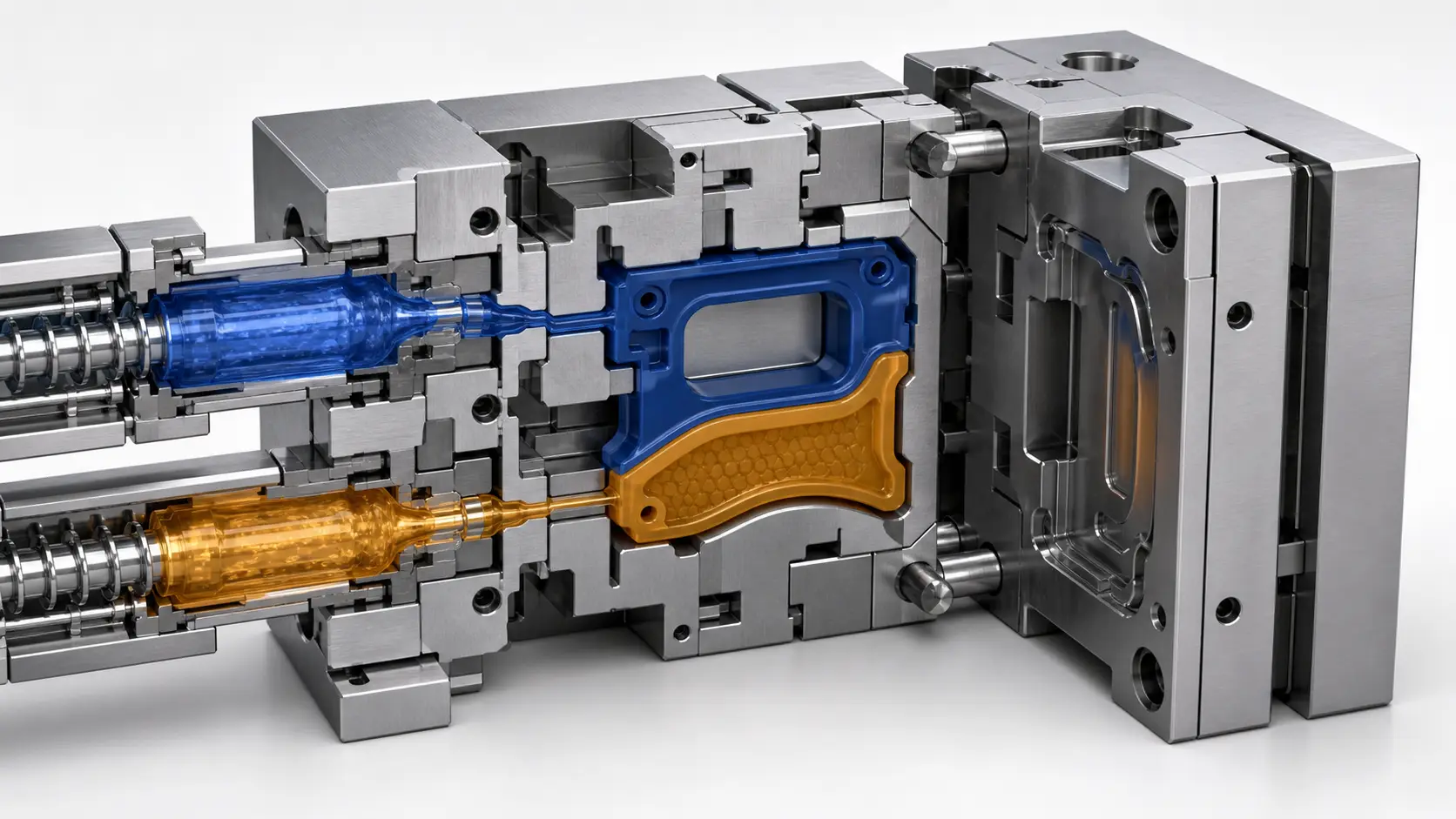
Ép hai lần, còn được gọi là ép 2K hoặc ép đa vật liệu, thường tạo thành một phần của chi tiết trong lần ép đầu tiên và sau đó để lộ các bề mặt được chọn cho lần ép thứ hai. Vật liệu thứ hai có thể thêm độ bám mềm mại, một miếng đệm kín, một màu tương phản hoặc một tính năng chức năng. Tùy thuộc vào thiết kế, lớp nền có thể được đánh chỉ mục trên một bàn xoay hoặc bàn quay, di chuyển bằng hành động rút lõi, hoặc chuyển bên trong khuôn. Kết quả quan trọng là một giao diện được kiểm soát ở các vùng cụ thể của chi tiết.
Ép đồng sử dụng một kiến trúc khác. Hai vật liệu nóng chảy được đưa vào khoang để một vật liệu có thể tạo thành lớp vỏ, một vật liệu khác có thể chiếm phần lõi, hoặc các lớp có thể được sắp xếp theo thiết kế dòng chảy và rào cản cần thiết. Các lớp không tự động tương đương với một bề mặt hai màu có thể nhìn thấy. Độ dày, trình tự và độ ổn định của chúng phụ thuộc vào thiết kế dòng chảy nóng chảy, sắp xếp cổng và vòi phun, hành vi vật liệu và cửa sổ quy trình.
Để có tổng quan về năng lực, hãy xem dịch vụ ép phun hai lần của Jucheng. Nhà cung cấp vẫn nên xem xét hình học CAD thực tế và các cấp nhựa trước khi xác nhận liệu lộ trình ép hai lần hay ép đồng có khả thi hay không.
Kiến trúc quy trình: Ép tuần tự nhiều phát vs. Dòng lõi-vỏ
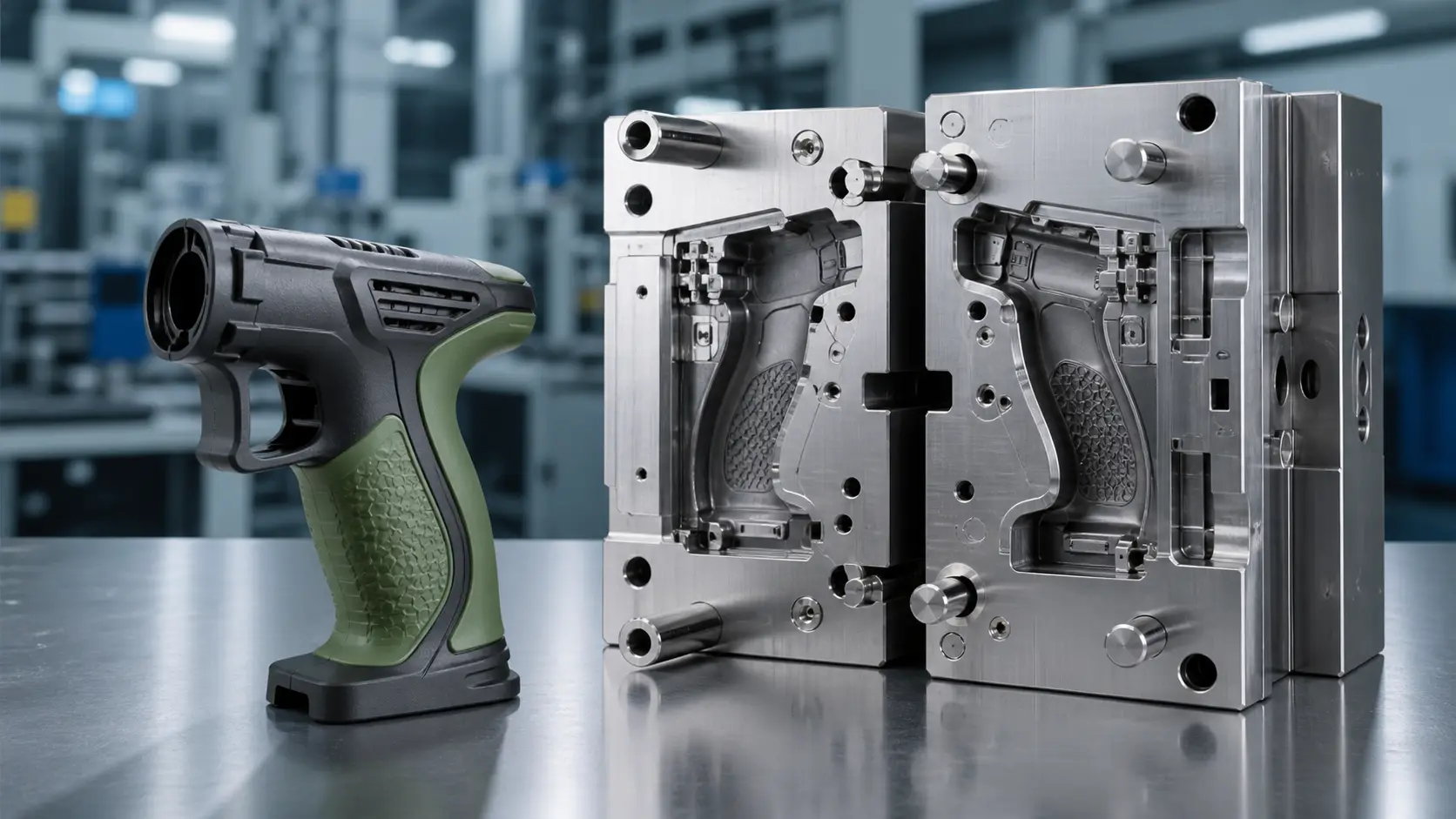
Sự khác biệt hữu ích nhất nằm ở vị trí ranh giới vật liệu. Trong ép hai phát, ranh giới thường được thiết kế xoay quanh một bề mặt, cạnh hoặc đặc điểm mà phát thứ hai phải tiếp cận và giữ. Trong ép đồng phun, ranh giới được tạo ra bên trong đường dòng chảy và có thể ở bên trong, bên ngoài hoặc cả hai. Sự khác biệt đó làm thay đổi khuôn, máy và công việc xác nhận.
| Điểm quyết định | Ép hai phát | Ép đồng phun |
|---|---|---|
| Trình tự vật liệu | Phát thứ nhất tiếp theo là phát thứ hai | Hai dòng nhựa nóng chảy được kiểm soát qua một trình tự khoang chung |
| Chuyển động khuôn | Bàn xoay, bàn quay, lùi lõi hoặc bố trí chuyển tiếp | Bố trí ống góp, vòi phun, rãnh dẫn và kiểm soát lớp chuyên dụng |
| Giao diện vật liệu | Giao diện bề mặt xác định hoặc khóa cơ khí | Giao diện dòng chảy lõi-vỏ hoặc dạng lớp được kiểm soát |
| Giá trị điển hình | Tích hợp một đặc điểm, màu sắc, độ bám hoặc gioăng làm kín cục bộ | Uses layer structure to balance function, material use, or barrier performance |
A two-shot process guide can help explain the sequence in more detail, but it should not be used as a substitute for a tool-specific review. Gate location, venting, cooling, ejection, part retention, and access for the second shot all need to be considered together.
For the sequential molding stages and validation logic, review the step-by-step two-shot molding process article.
Material and Interface Requirements

Material selection should be made by grade and service requirement, not only by resin family. A common two-shot design combines a rigid substrate with a TPE, TPU, or SEBS-based elastomer for grip or sealing. Another uses two rigid materials for a color zone or functional surface. These are examples, not universal combinations. Melt-temperature exposure, shrinkage, surface chemistry, hardness, moisture, and the operating environment determine whether the interface should rely on chemical adhesion, mechanical interlocking, or a separate assembly feature.
Co-injection adds another layer of control: the two melts must form a stable structure during filling, packing, and cooling. Differences in viscosity, melt temperature, shrinkage, and solidification can change the location and thickness of the core. A material pair that looks promising in a datasheet may still require flow analysis, test plaques, or molded samples before tool release.
- Define the function of each material. Separate cosmetic, grip, sealing, structural, barrier, and wear requirements.
- Confirm the interface mechanism. Specify adhesion, interlock geometry, weld-line limits, and the tests that will demonstrate performance.
- Validate the grade pair. Check drying, processing temperatures, colorant or additive effects, and exposure to the final service environment.
Before committing to a tool, compare the proposed grades with the hướng dẫn tương thích vật liệu two-shot and request a sample-based validation plan.
Tooling, Equipment, and Production Economics

Two-shot tooling typically requires a mold that can retain, index, or transfer the first-shot substrate while maintaining registration for the second shot. It also needs two compatible injection units or an equivalent machine arrangement, plus cooling and ejection designed for both stages. Co-injection tooling instead concentrates more of the complexity in the melt-delivery system: the manifold, nozzle, runners, gates, and process controls must create a repeatable layer structure.
Neither process has a universal cost advantage. The commercial comparison should include mold construction, machine availability, cycle balance, material usage, inspection, scrap risk, assembly labor, and expected service life. A practical break-even estimate compares the additional process investment with the avoided assembly or secondary-operation cost over the planned volume. At low volume, a simpler mold plus assembly may be more flexible; at sustained production volume, an integrated process may justify its complexity.
The quotation should identify what is included in tool trials, sampling, color or material qualification, dimensional inspection, maintenance documentation, and production approval. Jucheng’s facility overview provides first-party context for its tooling and molding infrastructure, while the actual recommendation still depends on the customer’s part and grade requirements.
Application Fit and Decision Matrix

Start with the required product architecture. If the second material must occupy a defined visible area or create a precise soft-touch, seal, or color feature, two-shot molding is often the more direct concept to evaluate. If the value comes from a repeatable skin-core structure, internal material reduction, or a layered functional wall, co-injection may be worth investigating.
| Part requirement | First process to evaluate | Reason to investigate it |
|---|---|---|
| Defined soft grip or sealing zone | Ép hai phát | The second material is located on selected surfaces |
| Two visible colors with registration | Ép hai phát | The interface can be designed around a visible boundary |
| Layered skin and core structure | Ép đồng phun | The function depends on internal or wall-thickness layering |
| Simple cosmetic contrast at modest volume | Compare molding with assembly or decoration | A dedicated multi-material tool may not recover its added cost |
The decision becomes stronger when the part’s annual volume, quality plan, and change-control expectations are included from the beginning. A technically possible process can still be a poor commercial choice if the tooling cannot support the expected revisions or if inspection cannot distinguish the required interface defects.
Buyer Checklist for a Reliable Quote
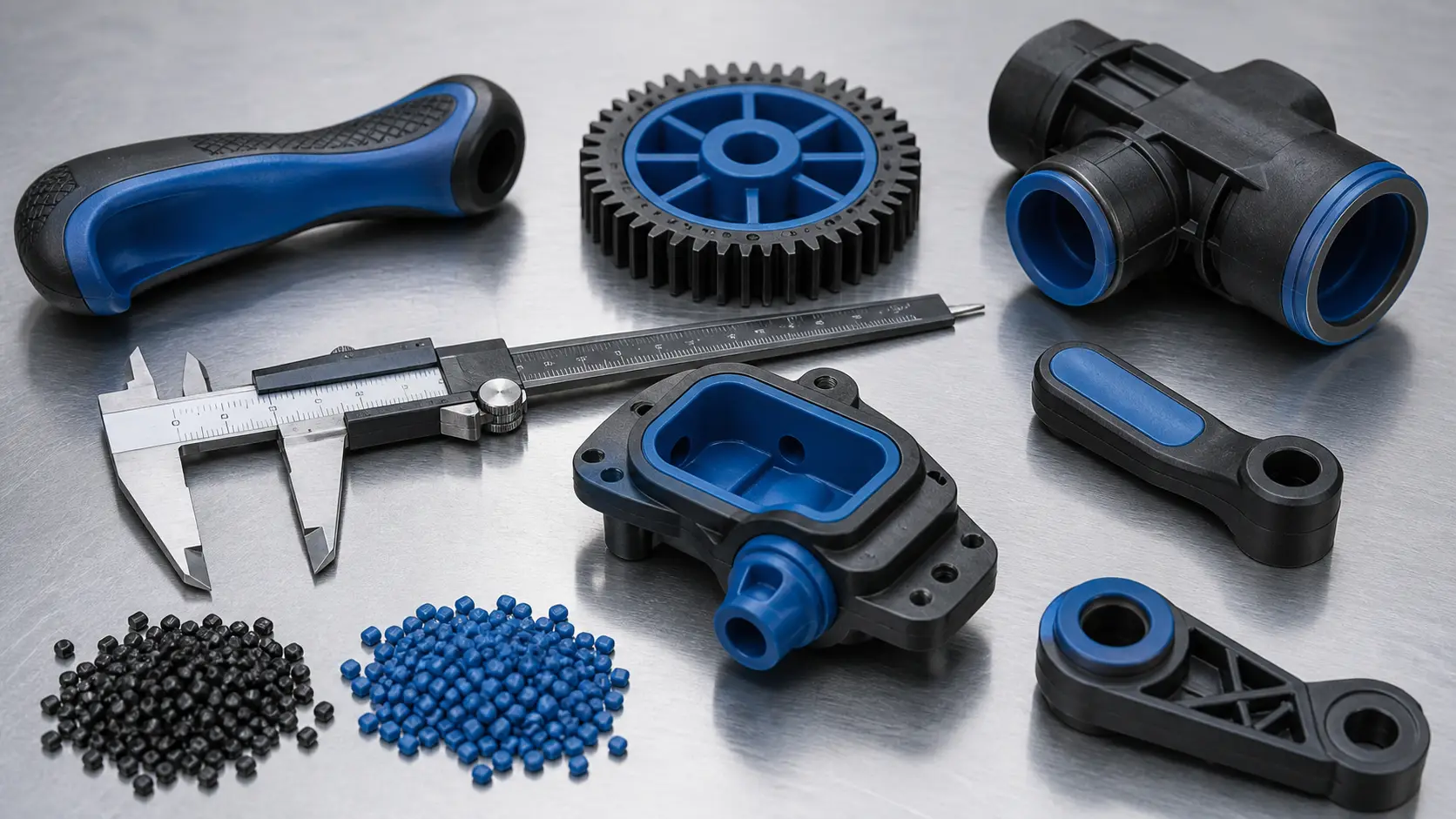
A useful request for quotation lets the supplier evaluate the process rather than guess from a product name. Include:
- 3D CAD, 2D drawings, critical dimensions, draft, wall thickness, and any cosmetic zones.
- Resin manufacturer and grade, color requirements, additives, hardness, and drying limits.
- Required interface performance, sealing or grip targets, environmental exposure, and test method.
- Annual volume, launch timing, forecast changes, packaging needs, and expected tool life.
- Preferred mold architecture, machine constraints, sample quantity, and approval milestones.
- Inspection records, traceability, first-article expectations, and handling of nonconforming parts.
Ask the supplier to state assumptions separately from confirmed capability. Jucheng’s kiểm soát chất lượng của Jucheng describes first-article, in-process, final, and outgoing checks; the project team can use that framework to align inspection records with the customer’s drawing and interface requirements.
Điểm mấu chốt: two-shot molding is usually evaluated when the part needs a defined second material or feature on selected surfaces. Co-injection is evaluated when the product benefits from a controlled layered structure. Compare both against the actual geometry, material grades, volume, tooling plan, and validation method before selecting the process.