
Việc gắn các nắp ngoài, giá đỡ kết cấu hoặc bảng mạch in lên vỏ nhựa đòi hỏi các điểm kết nối ren có độ bền cao. Việc tạo ren trực tiếp vào các trụ nhựa nhiệt dẻo nguyên bản tạo ra các mối nối yếu, dễ bị tuột ren, nứt do ứng suất và mỏi ren dưới các chu kỳ bảo trì lặp lại. Việc tích hợp các chi tiết xiết ren kim loại vào trụ nhựa cung cấp ren trong chắc chắn, có khả năng tiếp nhận vít máy tiêu chuẩn.
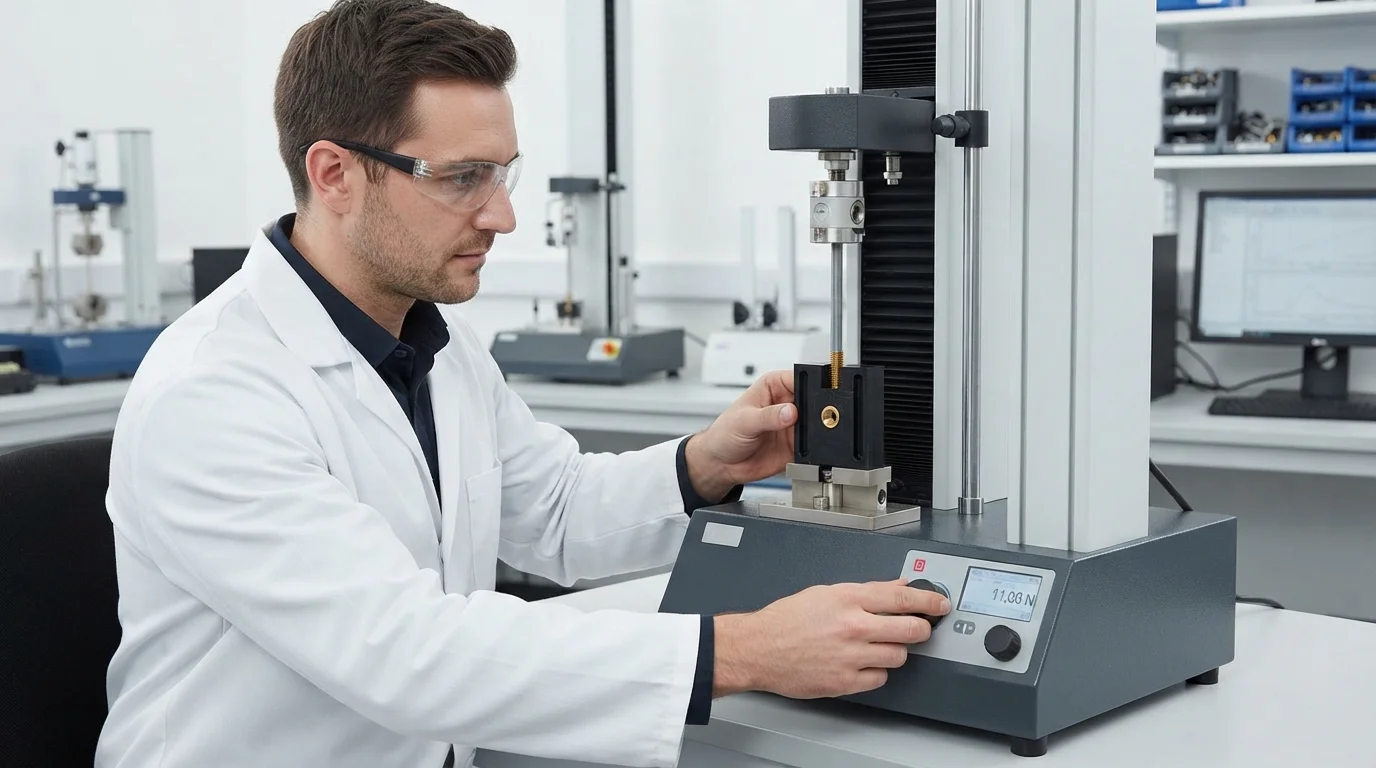
Engineers must choose between pre-placing metal fasteners into the mold core before injection or installing inserts after molding using ultrasonic insertion or a heated tip. Selecting between primary in-mold encapsulation and secondary thermal insertion impacts initial tooling budgets, unit labor costs, and joint mechanical load limits. This technical comparison analyzes structural differences, torque resistance physics, and production economics.
Mục lục
Insert trong khuôn so với chi tiết xiết hàn nhiệt sau đúc
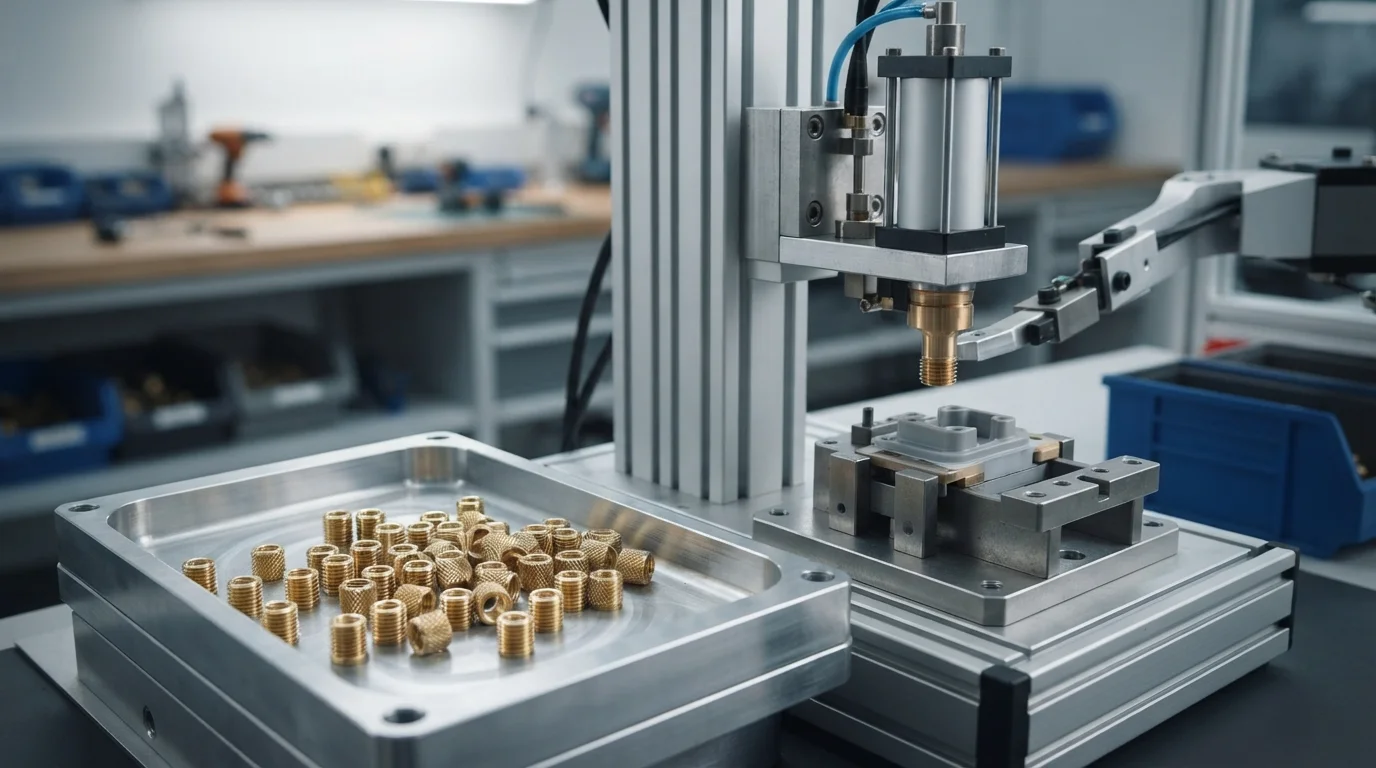
So sánh đúc insert so với hàn nhiệt đòi hỏi đánh giá cơ chế lắp đặt vật lý của từng quy trình. Đặt trước các chi tiết xiết ren 黄铜 or stainless steel fasteners inside the mold cavity before resin injection characterizes primary in-mold encapsulation. Molten thermoplastic flows around the insert’s retention features and can form a mechanical interlock as it cools.
Post-molding hàn nhiệt installs an insert with a heated tip after the boss is molded. Ultrasonic insertion instead uses vibration to heat the plastic locally. In either process, softened resin can flow into the insert’s retention features and solidify around them. Verify the hole design and installation with the selected insert.
So sánh kiểm tra lực chống xoắn & lực kéo tuột
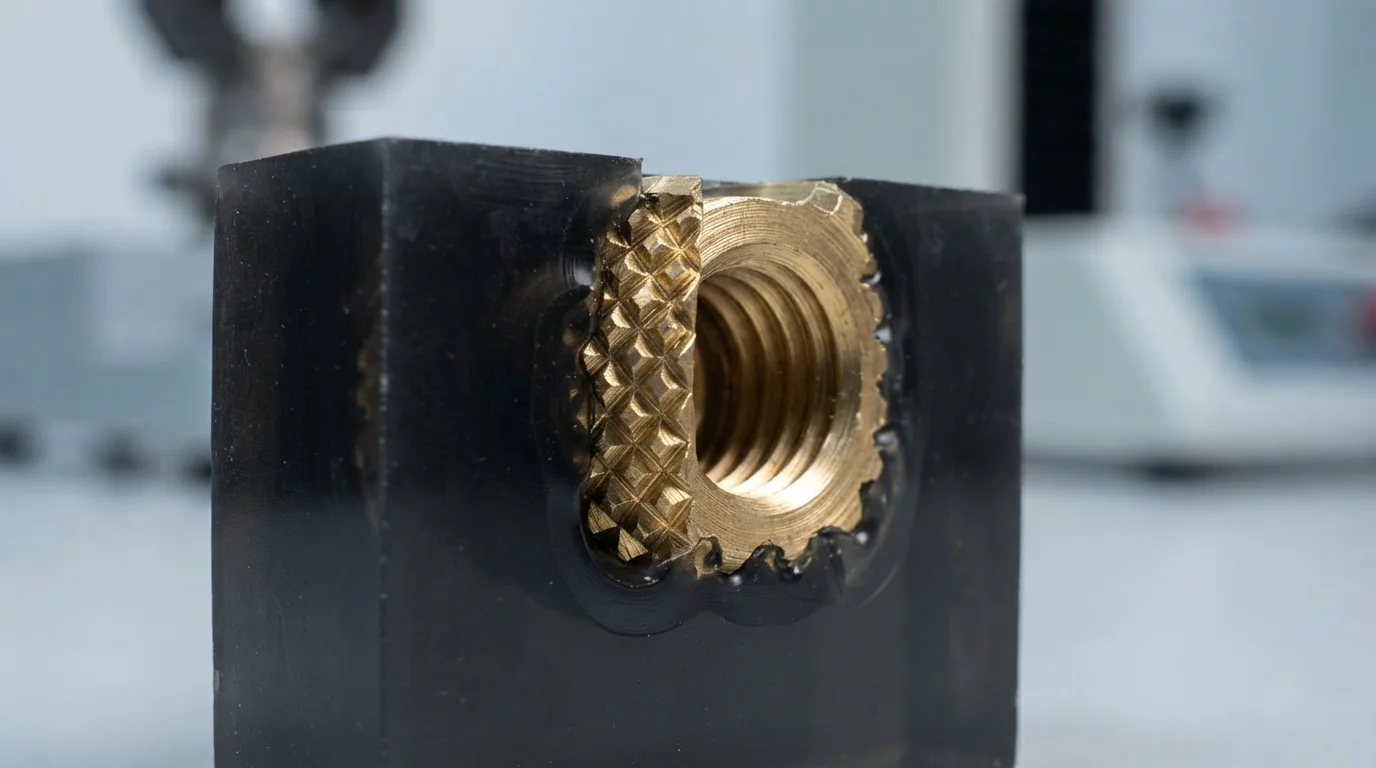
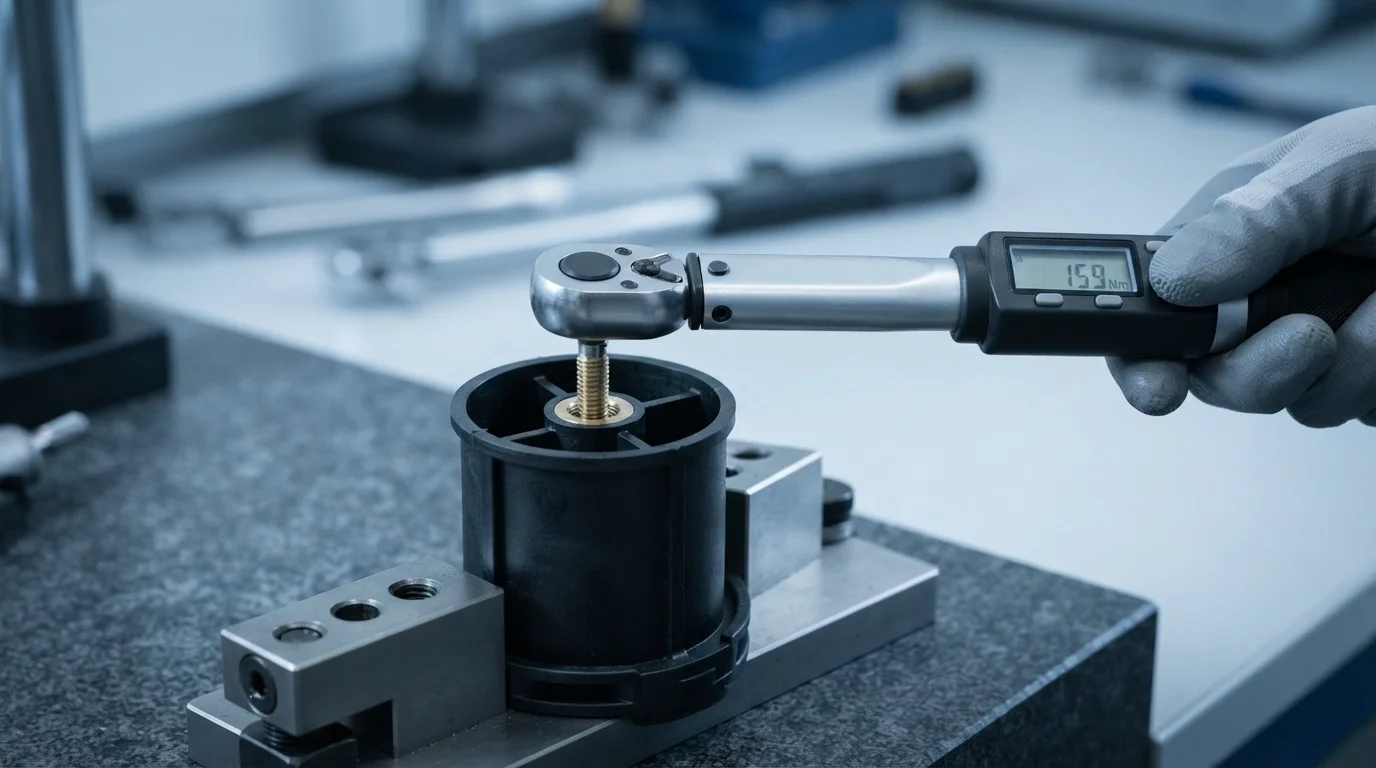
With in-mold placement, molten ABS, polycarbonate (PC), 或 PA66 can flow around the insert’s retention features. Measure lực kéo tuột 和 mô-men xoắn quay resistance on representative parts with the selected resin, boss, insert and mating hardware.
A post-mold insert is not inherently shallow or weaker. Compare heat or ultrasonic insertion with 嵌件成型 using the same resin and comparable bosses and load conditions. Use the correct insert and installation settings for each route, and test against the same retention requirements.
| Thông số cơ học & quy trình | Bao bọc chèn trong khuôn sơ cấp | Gắn nhiệt / siêu âm sau đúc | Khuyến nghị kỹ thuật |
|---|---|---|---|
| Khả năng chống kéo tuột theo trục | Depends on the insert and molded joint | Depends on the insert and installed joint | Measure axial pull-out on representative parts |
| Khả năng chống xoay tuột mô-men xoắn | Depends on insert geometry and resin fill | Depends on boss design and installation | Measure torque-out in the actual assembly |
| Chi phí nhân công lắp ráp thứ cấp | Account for loading and inspection | Account for insertion and inspection | Compare cost per conforming part at the quoted volume |
Kinh tế học giữa tạo mẫu sản lượng thấp và sản xuất sản lượng cao
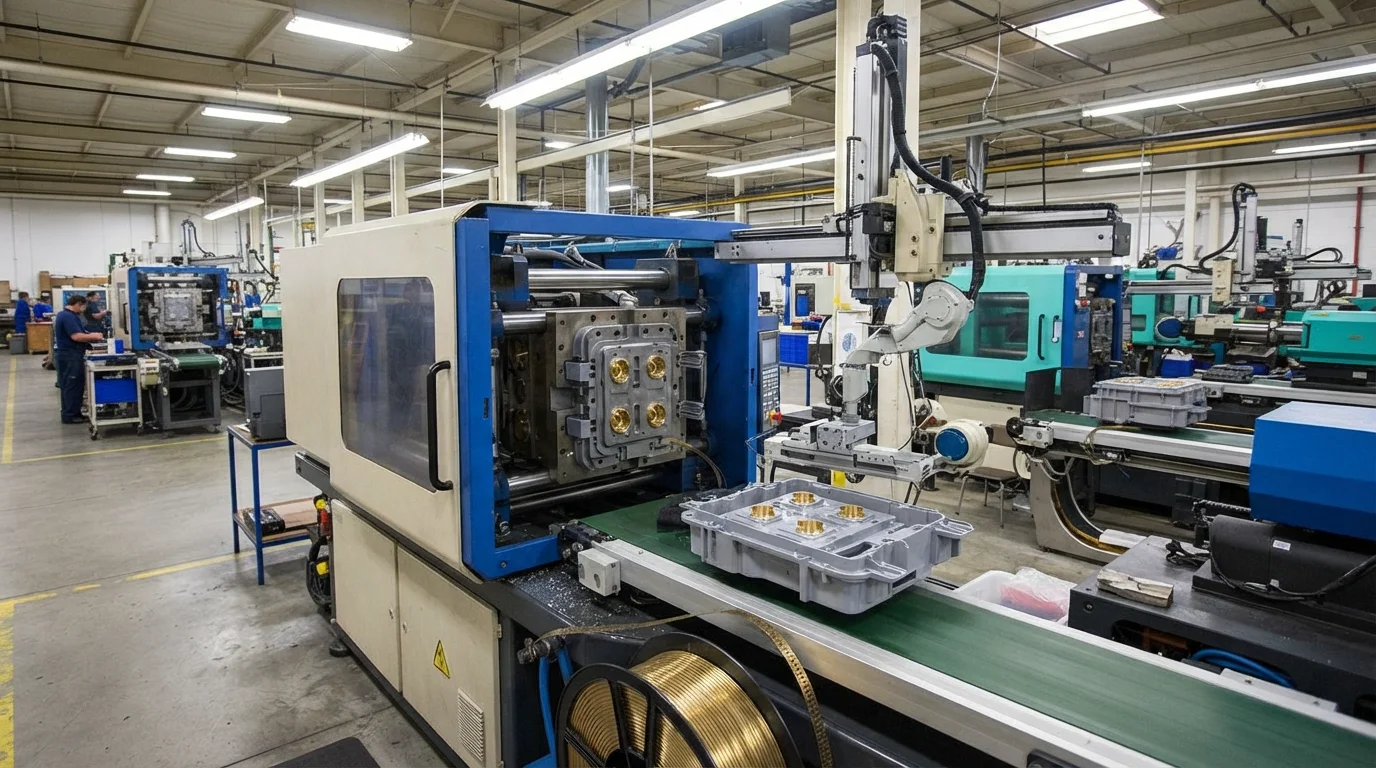
Evaluating project economics requires balancing upfront non-recurring engineering tooling budgets against unit assembly labor costs. Post-mold insertion can simplify the molding tool, but adds an installation step that can be manual or automated. Include its fixtures, cycle, labor and yield in the comparison.
In-mold pre-placement increases initial mold engineering precision requirements to prevent plastic flash on active threads. In-mold placement can remove a separate insertion step but adds loading and may change the molding cycle. Compare tooling amortization, placement, machine time, labor, inspection and yield per conforming part at the quoted volume. There is no universal break-even quantity.
Các câu hỏi thường gặp (FAQ)
Tại sao đúc chèn đạt được lực kéo tuột cao hơn so với ghép nhiệt?
Not necessarily. Either route can meet the retention requirement when the insert, resin, boss and installation are matched to the application. Compare pull-out and torque-out on representative assemblies with the intended hardware and service conditions.
Khi nào nên ưu tiên ghép nhiệt hơn đúc chèn cho các chi tiết kẹp nhựa?
Heat staking can make sense if post-mold installation simplifies the tool or avoids slow in-mold loading. Confirm joint retention, then compare actual installation and molding time, tooling and yield for the quoted quantity.
Làm thế nào để ngăn nhựa rò rỉ vào ren trong trong quá trình chèn trong khuôn?
Việc ngăn nhựa xâm nhập vào các lỗ ren kín hoặc xuyên suốt phụ thuộc vào chốt định vị lõi khuôn chính xác và các bậc chặn kín khít. Các chốt định vị bịt kín lỗ ren bên trong một cách chắc chắn với thép dụng cụ, ngăn polymer nóng chảy xâm nhập trong quá trình ép áp suất cao.