
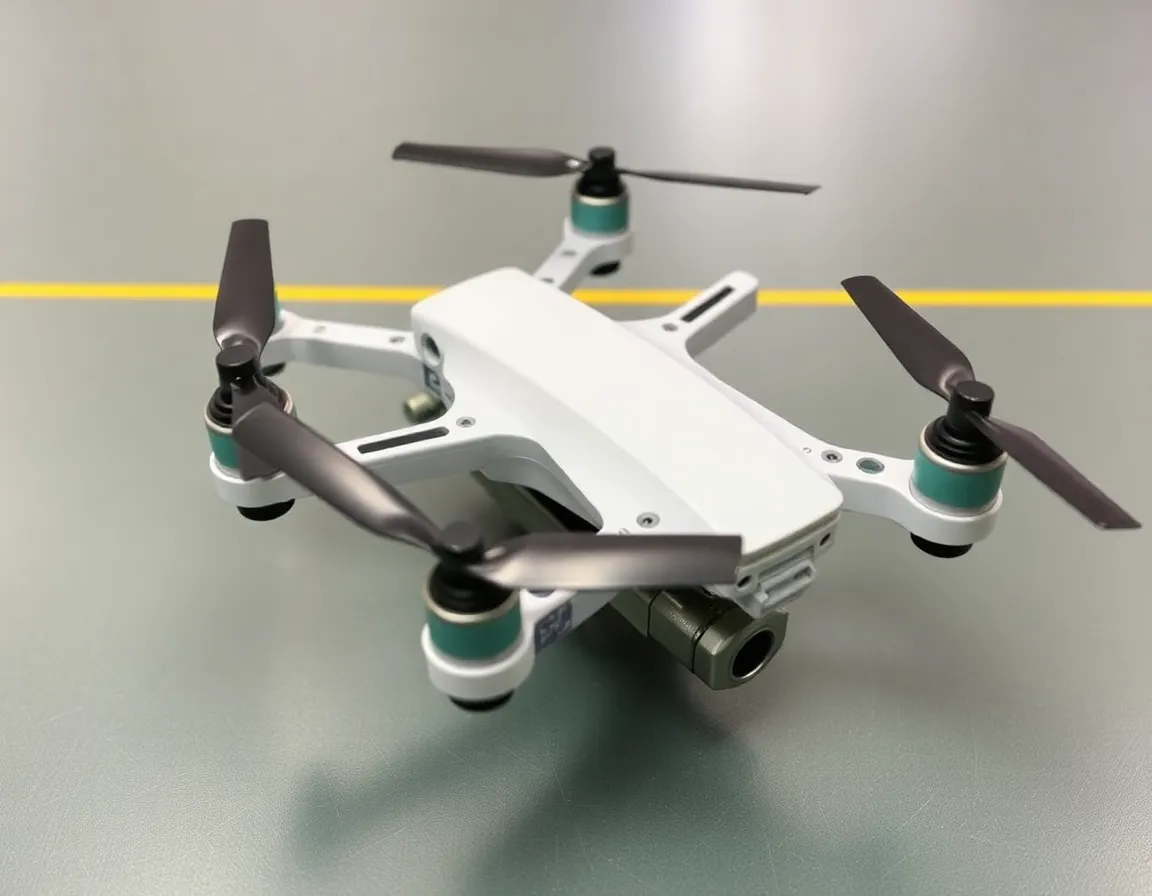
Введение: невидимая основа автономности
Когда мы представляем автономные системы — беспилотные автомобили, дроны доставки, роботизированные комплектовщики на складах или сельскохозяйственные комбайны — мы склонны сосредотачиваться на программном интеллекте: лидары, нейронные сети и алгоритмы слияния данных сенсоров. Однако физическая реальность этих машин гораздо более приземлена. Каждая автономная система представляет собой сочетание электроники и механики, и пластиковые детали, образующие корпус, кожухи, шестерни и конструкционные кронштейны, не являются второстепенными — они являются критически важными несущими компонентами , которые определяют надежность, вес и срок службы. В отличие от потребительской электроники, которую заменяют каждые несколько лет, автономные системы должны работать тысячи часов в суровых, непредсказуемых условиях с минимальным вмешательством человека. Эта эксплуатационная реальность предъявляет беспрецедентные требования к конструкции и долговечности их пластиковых компонентов. В этой статье рассматриваются инженерные нюансы пластиковых деталей автономных систем, от выбора материала до анализа режимов отказов, и описываются наилучшие практики создания деталей, способных выдержать неустанное развитие автономии.
Уникальный расчетный случай нагрузки для пластиков в автономных системах
Проектирование пластиковых деталей для автономных систем принципиально отличается от проектирования для стационарных машин или машин с ручным управлением. Основным отличием является отсутствие человеческого резерва. Человек-оператор может заметить волосяную трещину, деформированную шестерню или поврежденное уплотнение и принять корректирующие меры. Автономная система не может этого сделать. Поэтому при проектировании необходимо предполагать, что каждый пластиковый компонент будет доведен до предела без проверки. Кроме того, автономные системы часто чувствительны к весу (особенно в воздушных или мобильных приложениях), что подталкивает конструкторов к использованию тонкостенных пластиков, но эти же детали должны выдерживать ползучесть, удары и термоциклирование.
Вибрация и усталость при динамических нагрузках
Автономные наземные транспортные средства (AGV) и дроны испытывают непрерывную широкополосную вибрацию от двигателей, неровной местности и ветра. Это не просто вопрос комфорта; это проблема усталостного разрушения . Пластики, в отличие от металлов, обладают вязкоупругой реакцией — они рассеивают энергию в виде тепла при циклических нагрузках. Плохо спроектированный пластиковый монтажный кронштейн для датчика может получить микротрещины после 10 000 часов вибрации, что приведет к внезапному смещению камеры или радара. Конструкторы должны анализировать собственную частоту каждой пластиковой детали и обеспечивать отсутствие резонанса с рабочим диапазоном частот системы. Это часто включает добавление ребер жесткости, усилений или замену полимера на материал с более высоким модулем упругости (например, с неармированного нейлона на нейлон с 30% стекловолокна), чтобы сместить точку резонанса.
Тепловое расширение и сжатие
Автономные системы работают на открытом воздухе, что означает перепады температур от -40°C до +85°C и более. Пластики имеют коэффициент теплового расширения (КТР) в 5-10 раз больше, чем у металлов. Если пластиковый корпус предназначен для удержания металлической вставки или электронной платы, дифференциальное расширение может вызвать внутреннее напряжение, коробление или даже растрескивание на границе раздела. Классический отказ — пластиковый рычаг дрона, который расширяется на солнце и зажимает подшипник двигателя, или AGV для холодной погоды, где пластиковая шестерня сжимается и теряет прессовую посадку на стальном валу. Решение заключается не только в выборе материала, но и в анализе допусков во всем диапазоне рабочих температур. Конструкторы часто используют посадки с зазором, увеличенные монтажные отверстия или податливые защелки, которые могут компенсировать перемещения без передачи разрушающих напряжений.
Выбор материала: за пределами универсальной смолы
Выбор пластиковой смолы — это самое важное решение в проектировании автономных деталей. Недостаточно выбрать "прочный" пластик; необходимо сопоставить свойства полимера с конкретными условиями окружающей среды и механическими нагрузками. Вот разбивка высокопроизводительных материалов, обычно используемых в автономных системах, с их компромиссами по долговечности.
- Поликарбонат (ПК): Отличная ударопрочность и размерная стабильность. Используется для прозрачных крышек датчиков (куполов LiDAR) и защитных корпусов. Однако ПК подвержен растрескиванию под напряжением при воздействии некоторых химических веществ (например, смазок, чистящих растворителей) и обладает умеренной химической стойкостью. Он также желтеет при длительном воздействии УФ-излучения, если не стабилизирован.
- Полиамид (Нейлон 6/66 и ПА12): Отличная износостойкость, прочность и усталостная выносливость. Идеально подходит для шестерен, втулок и движущихся частей. Загвоздка — влагопоглощение— нейлон может набухать до 1-2% во влажных условиях, изменяя размеры и жесткость. Для точных автономных деталей часто предпочитают ПА12 (или биополиамид ПА11) из-за меньшего влагопоглощения.
- Ацеталь (ПОМ): Высокая жесткость, низкое трение и отличная размерная стабильность. Это рабочая лошадка для точных шестерен и скользящих механизмов в роботизированных руках и карданных подвесах камер. ПОМ устойчив к ползучести, но плохо устойчив к сильным кислотам и может выделять формальдегидный газ при чрезмерном нагреве в процессе обработки.
- Polyether Ether Ketone (PEEK): The premium choice for extreme environments. PEEK retains its mechanical properties up to 250°C, resists almost all chemicals, and has exceptional wear resistance. It is used for high-speed bearings, compressor seals, and parts near electric motors. The downside is cost—PEEK can be 10-20 times more expensive than Nylon, and it requires high processing temperatures.
- Liquid Crystal Polymer (LCP): High-temperature stability, very low creep, and excellent dimensional control for thin-walled parts. LCP is used for electrical connectors and sensor housings that must maintain precise geometry despite heat.
Additives and Fillers: The Durability Multipliers
Base polymers rarely meet all requirements alone. Additives are crucial. Glass fibers (10-40% by weight) dramatically increase stiffness and reduce CTE, but they also make the surface rougher and reduce ductility, making parts more prone to catastrophic failure rather than graceful deformation. Carbon fiber provides even higher stiffness and thermal conductivity, which is excellent for dissipating heat from electronic components, but it is abrasive to molds and can create galvanic corrosion when in contact with aluminum. For outdoor systems, UV stabilizers (HALS) are mandatory to prevent embrittlement. For applications near salt water or de-icing chemicals, impact modifiers (e.g., elastomers) must be added to prevent environmental stress cracking. The rule is: never specify a "generic" grade. Always demand a data sheet that lists fatigue endurance limits, creep modulus, and chemical resistance for the specific filled compound.
Durability Engineering: Predicting Failure Before It Happens
Durability is not a single property; it is a system-level behavior. A plastic part fails when its accumulated damage exceeds its material limit. For autonomous systems, the dominant failure modes are creep, fatigue, and environmental degradation. Let’s examine how to engineer against each.
Creep and Stress Relaxation
Creep is the slow, time-dependent deformation of plastic under a constant load. In an autonomous system, this is critical for fasteners and snap-fits. A battery compartment lid held by a plastic snap-fit will loosen over months as the plastic creeps, potentially causing the lid to rattle or open. Similarly, a plastic gear shaft that is pressed onto a motor shaft will lose its interference fit over time. Designers must calculate the apparent modulus at the expected service temperature and lifetime (e.g., 10,000 hours) and use that value in stress calculations, not the short-term modulus from a datasheet. Using metal inserts for threaded connections and designing snap-fits with a high strain-to-creep ratio are common mitigations. For high-load structural parts, consider using thermoset composites (e.g., epoxy/glass laminates) which have negligible creep compared to thermoplastics.
Environmental Stress Cracking (ESC) and Chemical Attack
Autonomous systems are exposed to a cocktail of chemicals: motor oils, hydraulic fluids, battery acid vapors, windshield washer fluid, and agricultural pesticides. Many plastics, especially amorphous ones like PC and ABS, are vulnerable to ESC—where a low-level stress (even residual internal stress from molding) combined with a chemical agent causes rapid cracking. For example, a drone landing on a wet grass field may be exposed to acidic sap that weakens its polycarbonate arm. The best defense is to test the actual plastic against the specific chemical environment using a jig that applies a known strain (e.g., a 1% strain jig) and observe for cracking. In harsh chemical environments, semi-crystalline polymers like POM and PEEK are generally more resistant than amorphous ones. Additionally, surface coatings (e.g., hard-coat silicone or polyurethane) can provide a sacrificial barrier.
Impact and Crashworthiness
While autonomous systems are designed to avoid accidents, they must survive them. A delivery robot that hits a curb or a drone that has a hard landing will subject its plastic parts to high-strain-rate impacts. At high strain rates, many plastics transition from ductile to brittle behavior—this is called the ductile-to-brittle transition. Polycarbonate is famous for being tough, but at -20°C and with a sharp notch, it can shatter. Designers use FEA (Finite Element Analysis) with strain-rate-dependent material models to simulate crash scenarios. The goal is to design for controlled energy absorption: the part should crumple, bend, or crack in a predictable way that protects the expensive electronics inside. This often involves adding sacrificial crush zones, using ductile materials for the outer shell, and ensuring that no sharp internal edges are generated that could puncture a battery.
Manufacturing and Quality Control for Longevity
Even the best design fails if manufacturing introduces defects. For autonomous plastic parts, the primary manufacturing methods are литье под давлением (for high volume) and CNC machining or 3D printing (for low volume and prototyping). Each has specific durability implications.
Injection Molding: The Hidden Weld Lines and Voids
Injection molding is efficient, but it introduces weld lines (where two melt fronts meet) and sink marks (where thick sections cool slower). Weld lines are often the weakest point in a part—they have poor fiber orientation and can be up to 50% weaker than the surrounding material. For a critical gear, a weld line in the tooth root is a guaranteed early failure. Designers must use анализа литьевых процессов to position the gate so that weld lines occur in low-stress areas. Additionally, packing pressure and mold temperature must be tightly controlled to minimize internal voids that act as crack initiation sites. For autonomous systems, 100% inspection is often required, including CT scanning for internal voids or X-ray inspection for critical parts.
Additive Manufacturing (3D Printing) for Spares and Custom Parts
Autonomous systems often operate in the field where a spare part is not readily available. 3D printing offers a solution, but printed parts have anisotropic properties—they are strong in the XY plane but weak in the Z direction (layer adhesion). A printed drone arm that is oriented vertically will have poor strength under bending. For durable printed parts, SLS (Selective Laser Sintering) of Nylon (PA12) is preferred over FDM (Fused Deposition Modeling) because it produces more isotropic parts. However, printed parts are often more porous and have lower fatigue life than molded parts. A best practice is to over-design printed parts by 2-3x safety factor and to perform a post-processing step (e.g., annealing or vapor smoothing) to improve layer bonding and close surface micro-cracks.
Best Practices for Autonomous Plastic Part Design
To consolidate the above, here is a practical checklist for engineers and product managers:
- Define the mission profile first: Specify the exact temperature range, chemical exposure, vibration spectrum, and expected service life (in hours) before choosing a material. Do not skip this step.
- Use a safety factor of 2-3x on long-term properties: Always design using the creep modulus at end-of-life, not the initial tensile modulus. For fatigue, use the endurance limit at 10^7 cycles, not the static strength.
- Design for repairability: Use modular plastic parts that can be replaced without replacing the entire assembly. Design snap-fits that can be released with a tool, and use standard screw bosses with metal threaded inserts.
- Protect against UV and moisture: Even if the plastic is UV-stabilized, consider a painted or coated surface for outdoor use. For internal gearboxes, use sealed housings with desiccant to prevent moisture absorption in Nylon.
- Validate with accelerated life testing: Run prototypes under combined vibration, temperature cycling, and chemical spray for thousands of hours. A 1000-hour test in a chamber is worth more than a million simulations.
- Collaborate with the molder early: The molder can advise on draft angles, wall thickness uniformity (avoid sections thicker than 4mm unless foamed), and gate placement to minimize stress.
Conclusion: The Future of Autonomy is Material
As autonomous systems move from controlled test tracks to public roads, farms, and warehouses, the durability of their plastic parts will become a competitive differentiator. A robot that requires maintenance every 500 hours is not truly autonomous; it is a liability. The engineering community must shift its mindset from treating plastic as a cheap, disposable casing material to treating it as a high-performance structural material that requires rigorous simulation, material science, and manufacturing control. By mastering the interplay of design load cases, advanced polymers, and failure-mode analysis, we can build autonomous systems that are not only intelligent but also physically resilient—capable of operating for years in the dirt, rain, and heat without a human hand to fix them. The next breakthrough in autonomy may not come from a new algorithm, but from a better-engineered gear or a more robust sensor housing. The future is autonomous, and it is made of meticulously engineered plastic.