
A heat-resistant component can remain intact yet move enough to lose alignment or fastening force. The temperature question becomes useful only when the allowed change and applied load are defined. PEEK temperature resistance cannot be reduced to one maximum value. The usable limit depends on exposure time, mechanical load, grade, reinforcement, crystallinity, atmosphere and the property the part must retain. A component that remains intact may still fail because it creeps, loses sealing force or moves outside tolerance.
Dans cet article :
- Separate temperature terms
- Add time and load
- Account for molded crystallinity
- Review thermal cycling
- Define a validation test
Five temperature numbers answer different questions
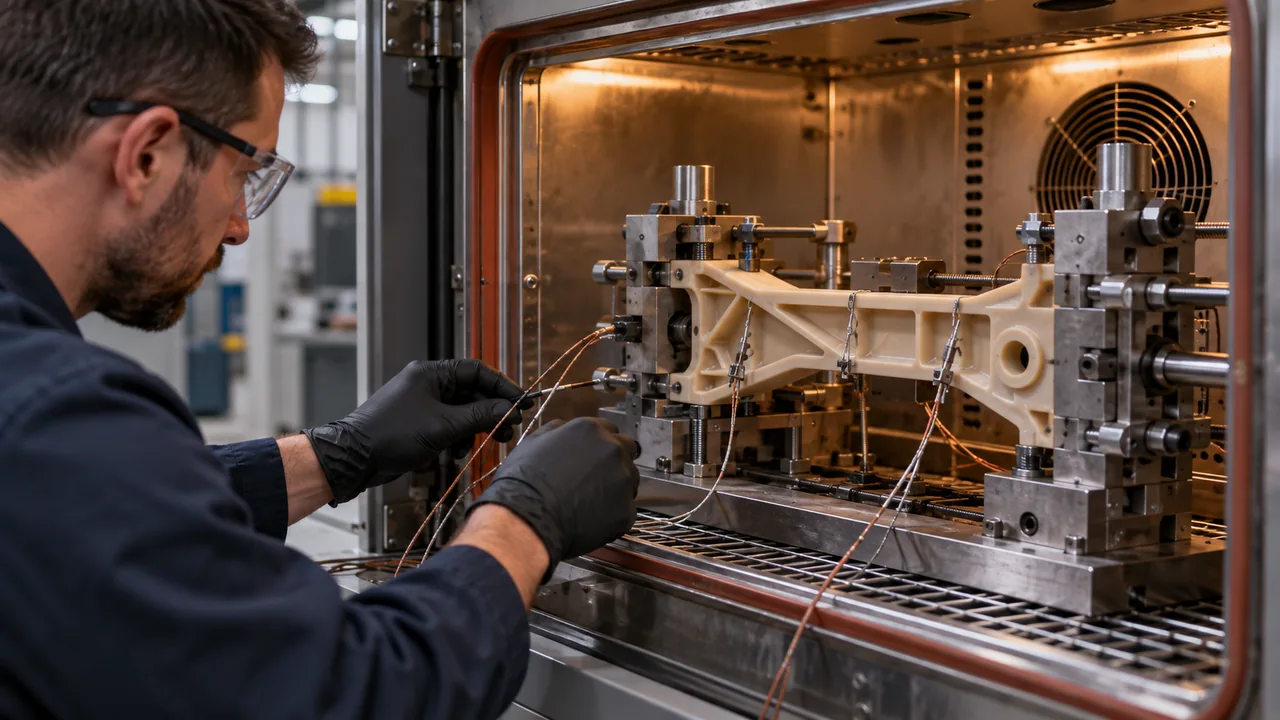
Glass-transition temperature, melting temperature, heat-deflection temperature, continuous-use ratings and short-term peak exposure are not interchangeable. Glass transition describes a change in molecular mobility. Melting temperature marks the crystalline melt. Heat-deflection tests use a defined specimen and load. Long-term ratings depend on a specific property-retention method. Glass transition, melting point, heat-deflection temperature and long-term thermal index describe different material responses. Using one as a universal service limit can overstate or understate performance. Match the published test method to the part load, duration and allowed deformation. A glass-transition value describes increased molecular mobility in the amorphous portion; it does not mean a semi-crystalline PEEK part immediately melts at that temperature.
Ask which value matches the failure mode. A connector may be controlled by dielectric performance, a bracket by creep and a seal carrier by dimensional stability. Conversely, a high melting point does not promise dimensional stability under load below it. HDT is tied to a specific short-term test, and a thermal index relates to defined aging criteria. Use each figure for its stated purpose and identify the remaining service question before treating it as a design limit.
Heat without load is the easy case
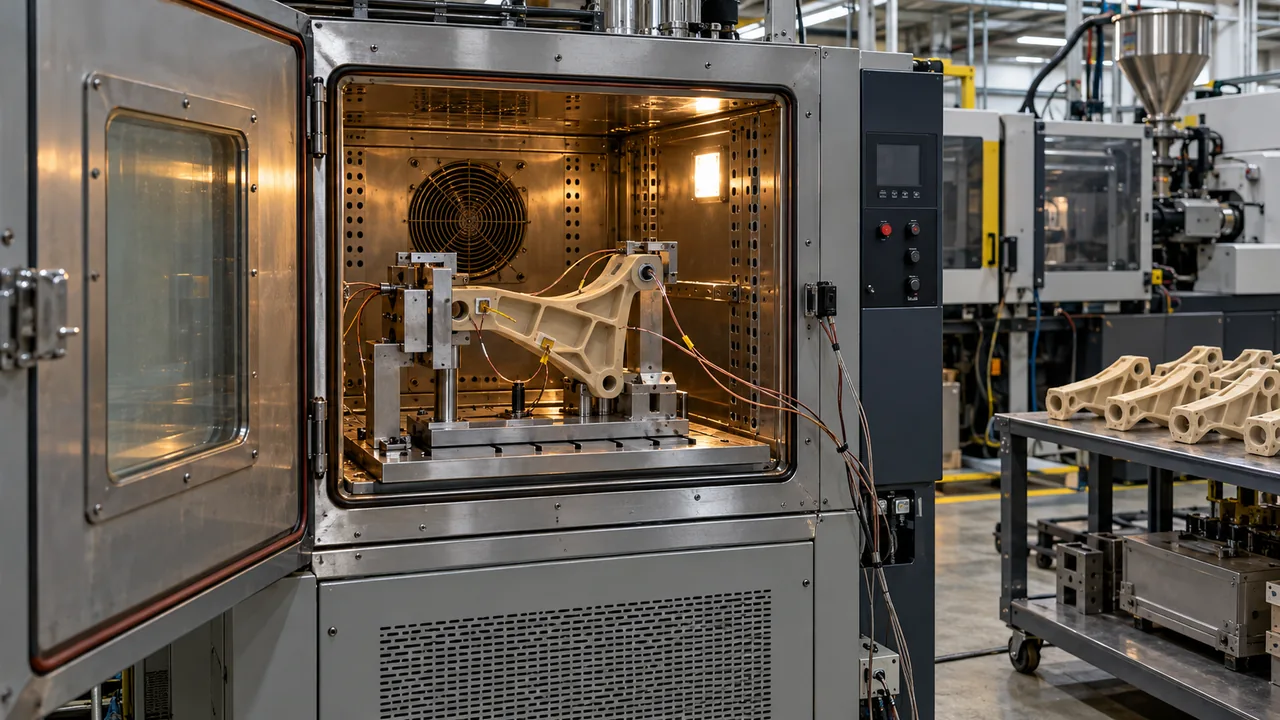
A lightly loaded shield can survive conditions that deform a fastened bracket made from the same grade. Stress accelerates creep, and sharp corners or knit lines concentrate it. Pressure, torque and assembly preload should therefore be included in the thermal requirement. A PEEK component may remain intact at heat yet gradually relax under bolt load, spring force or internal pressure. Small deformation can be a functional failure long before visible melting or fracture. Test retained displacement or clamp force for the required duration. A screw boss can lose preload through stress relaxation while a precision support can change position through creep.
For structural parts, compare modulus and creep data at the operating temperature—not only room-temperature tensile strength. Reinforcement may improve stiffness but introduce directional behavior and different failure at weld lines. Those are different acceptance measurements even when both parts are made from the same grade. Reinforcement, wall thickness and load path alter the response. Apply the intended force or pressure while the part is hot, then record displacement or retained force over time. An unloaded oven test cannot establish how the component will behave in the assembly.
The molding process writes part of the thermal performance
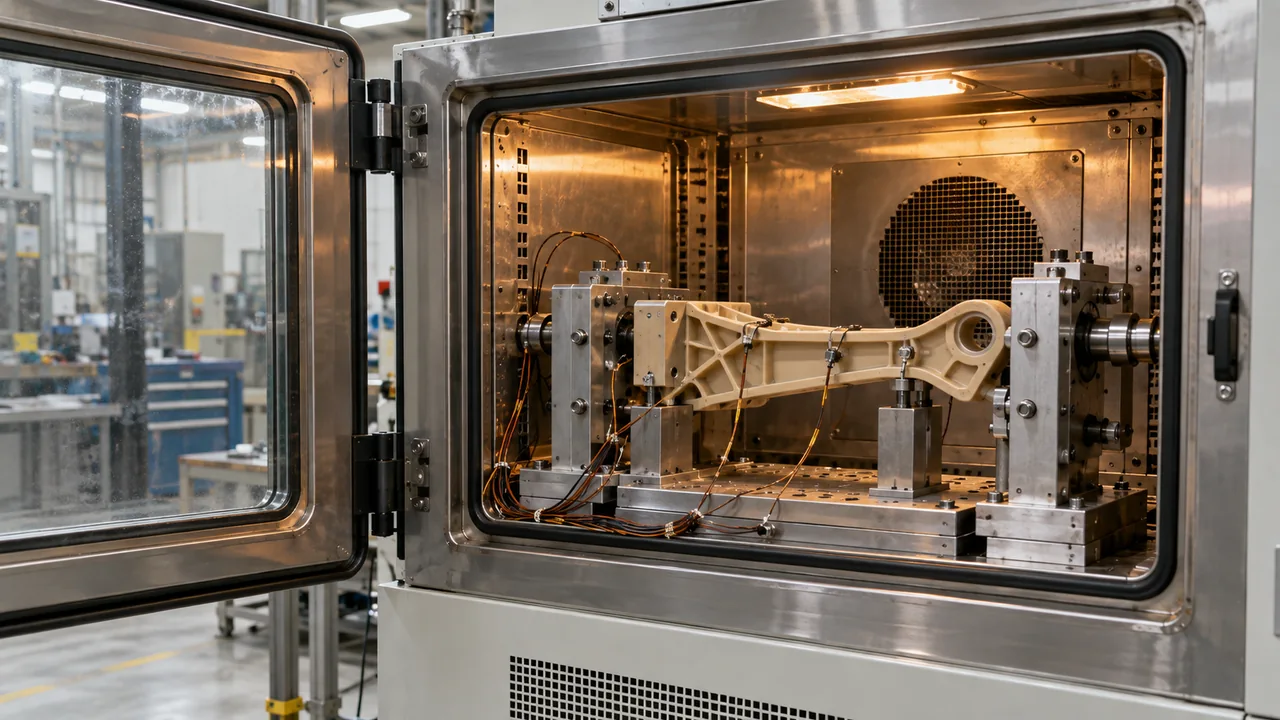
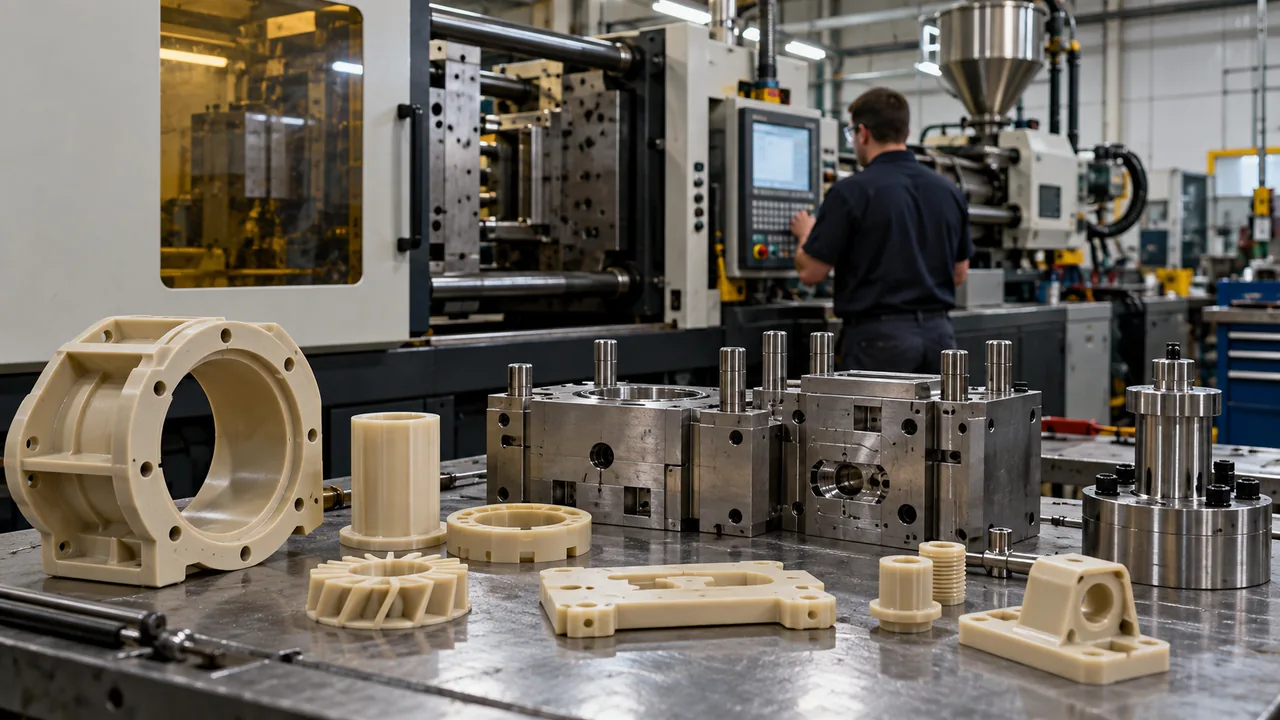
PEEK is semi-crystalline. Mold surface temperature, cooling rate and section thickness influence its morphology and final dimensions. Under-crystallized areas can respond differently during later heat exposure, creating post-mold movement or inconsistent properties. Cooling history determines PEEK crystallinity, which affects dimensions, stiffness and chemical behavior. Uneven wall thickness or cold mold regions can leave one component with different local properties. Check mold-surface uniformity and use thermal analysis when the margin is narrow. Thick and thin regions cool at different rates, and inserts can draw heat from local areas.
A qualified Moulage de polymères haute température process must control the cavity thermal map, not merely the temperature-controller setpoint. Review the exact PEEK material grade because unfilled, glass-filled, carbon-filled and medical formulations do not share one universal window. These differences can produce spatial variation in morphology and post-mold movement. Color and gloss can flag a changed thermal history but cannot quantify it by themselves. Where the application margin is narrow, correlate process records, dimensions and suitable laboratory analysis. Do not assume every part labeled PEEK has the same crystallinity simply because the supplier resin code is unchanged.
Thermal cycling can be more damaging than steady heat
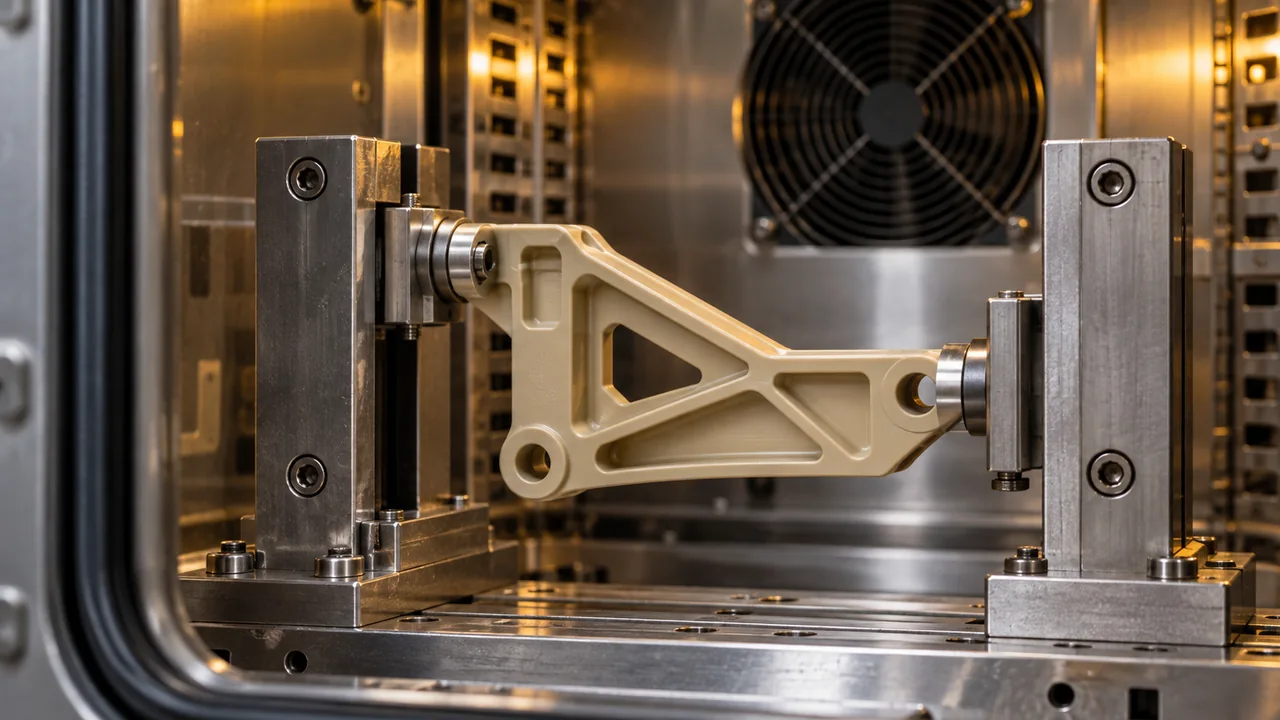
Repeated heating and cooling creates expansion mismatch between polymer, metal inserts, coatings and adjacent components. The result may be cracking around inserts, seal movement, fastener relaxation or progressive warpage even when each temperature extreme appears acceptable. PEEK, metals, adhesives and seals expand at different rates. Repeated heating can pump an insert, loosen a joint or concentrate stress at a sharp corner even when the polymer itself remains stable. Cycle the assembled geometry and inspect preload, cracks and leakage. The most severe condition can occur while temperature changes, rather than at the steady operating point.
Record ramp rate, dwell time, number of cycles and whether load changes during the cycle. For insert-molded assemblies, include metal geometry and surface condition in the test. A metal insert, threaded fastener or seal expands differently from the surrounding polymer and can concentrate stress. Check the ramp, dwell and cooling sequence used in service, including assembly constraints. After cycling, inspect interface movement, cracks, leakage or lost fastening force. A part that survives one hot dwell may still fail after repeated changes between temperatures.
Chemicals and steam alter the answer
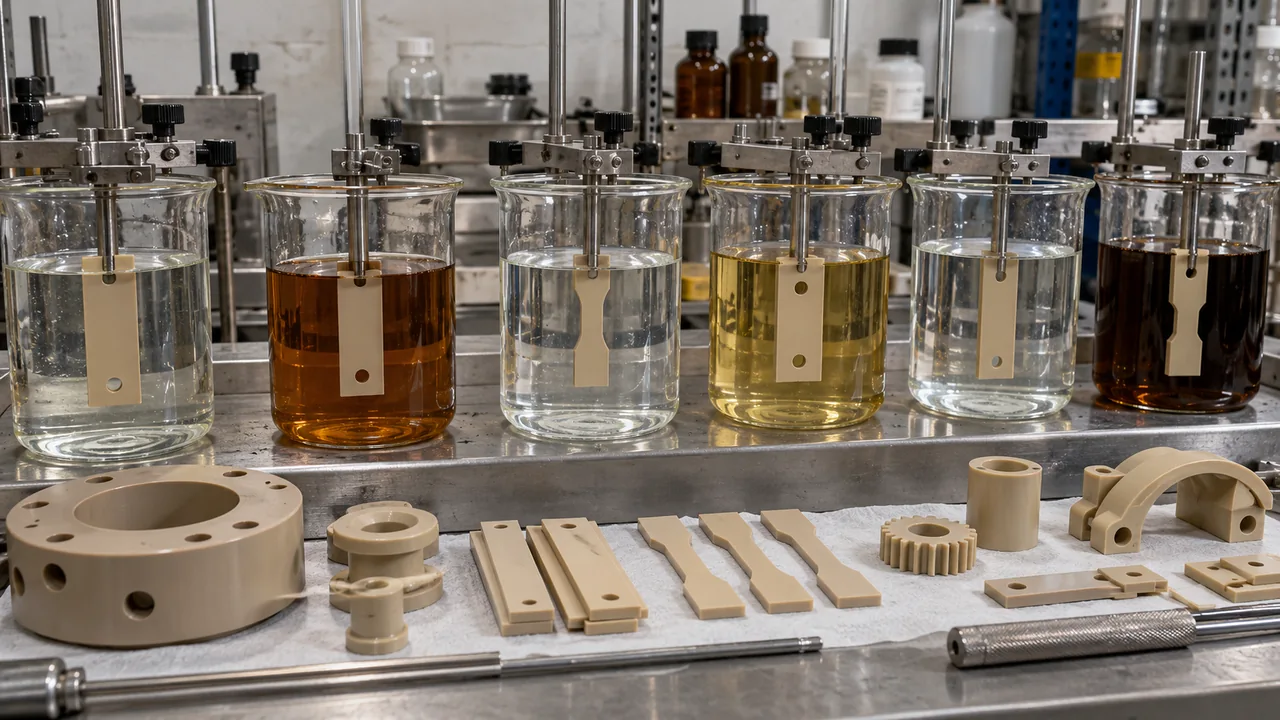
Temperature can accelerate chemical attack, diffusion and hydrolysis. A room-temperature compatibility chart cannot prove performance in hot process fluid or repeated sterilization. Identify the exact chemical, concentration, pressure and contact duration. Steam, fuels, cleaners and process fluids may be more aggressive at elevated temperature. A room-temperature immersion result cannot predict a hot pressurized system. Expose stressed molded samples to the exact concentration and thermal cycle. Steam and pressurized fluids should be evaluated with the exact grade and product function.
Medical and food-contact applications also require the correct certified grade; polymer family performance does not establish regulatory suitability. Cleaning frequency and exposure to chemicals during maintenance can become the limiting condition. Medical or food-contact suitability must be confirmed separately from heat resistance and cannot be inferred from the PEEK family name. Specify what must remain unchanged after conditioning: strength, dimensions, sealing, surface condition or electrical behavior. This turns a broad environmental description into a testable release criterion.
Build the acceptance test around the real job
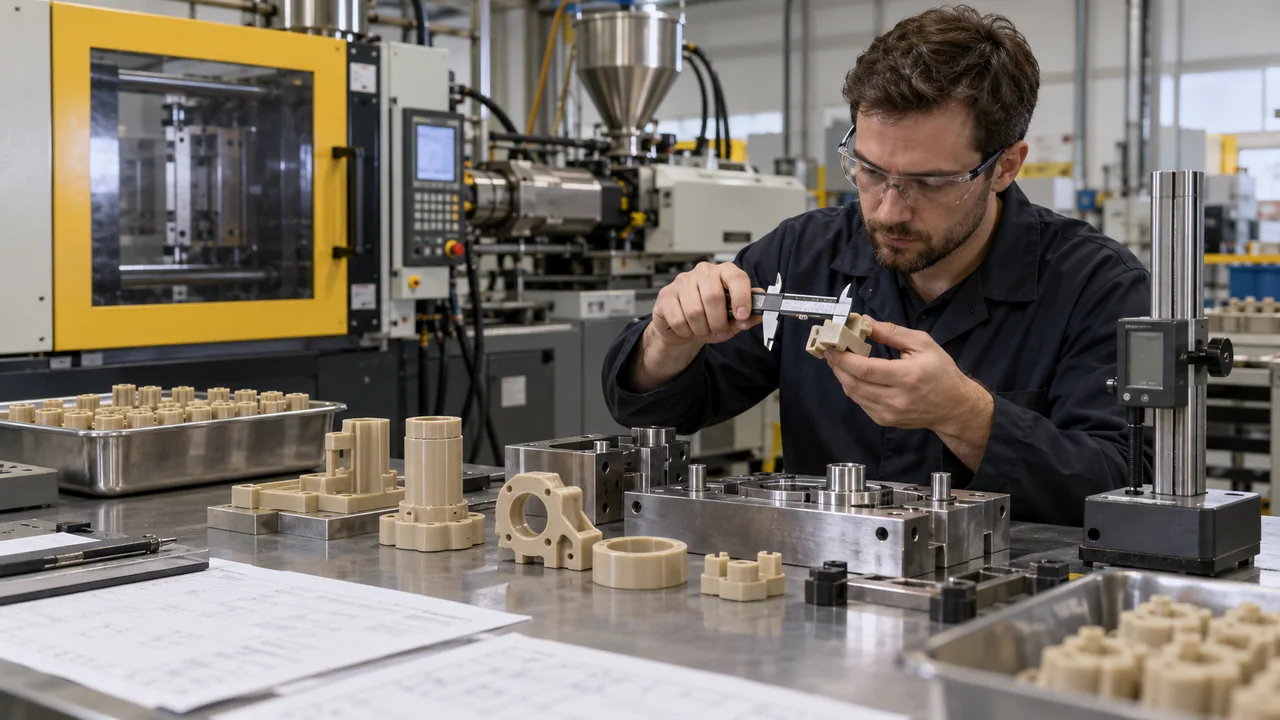
- Condition molded parts using the intended thermal history. Thick plaques, thin ribs and weld-line regions do not share the same morphology or stress state. Testing only supplier coupons can miss the weakest molded location.
- Apply representative mechanical load during exposure. Place validation features at representative flow distance and include restarted production lots. Use specimens from the intended mold, including difficult flow regions and weld lines where relevant.
- Include chemicals, steam or pressure where relevant. Record conditioning, measurement age and cavity number. A validation program should distinguish initial fit, loaded heat exposure and performance after repeated operation.
- Measure dimensions and functional performance while hot and after recovery. Include the approved process window so later production changes do not silently alter the material state. Buyers should receive an acceptance record tied to the actual component and operating condition, rather than an unsupported single maximum-temperature claim.
- Repeat through the required number of cycles.
- Inspect weld lines, inserts and high-stress radii for delayed damage.
Questions fréquentes
What is the maximum operating temperature of PEEK?
There is no grade-independent answer suitable for design release. Use the supplier’s grade data and validate the required property under the actual load, duration and environment. Define whether the quoted limit relates to short exposure, continuous aging or loaded deformation. These require different evidence and cannot be reduced to one universal maximum temperature.
Does carbon-filled PEEK always handle more heat?
Carbon fiber can improve stiffness and dimensional behavior, but it also changes flow orientation, shrinkage and electrical properties. The application must use those changes correctly. Carbon reinforcement changes stiffness and creep behavior, but fiber orientation and weld lines still matter. Compare exact grades under the intended load and temperature instead of treating filler content as a universal temperature upgrade.
Can a cold mold reduce PEEK temperature resistance?
It can produce inadequate or nonuniform crystallization, which may change dimensions and performance during later heat exposure. The effect depends on grade and geometry. Check final dimensions and function afterward, and qualify any proposed annealing cycle separately. Additional heat treatment cannot correct every issue caused by geometry or processing.