
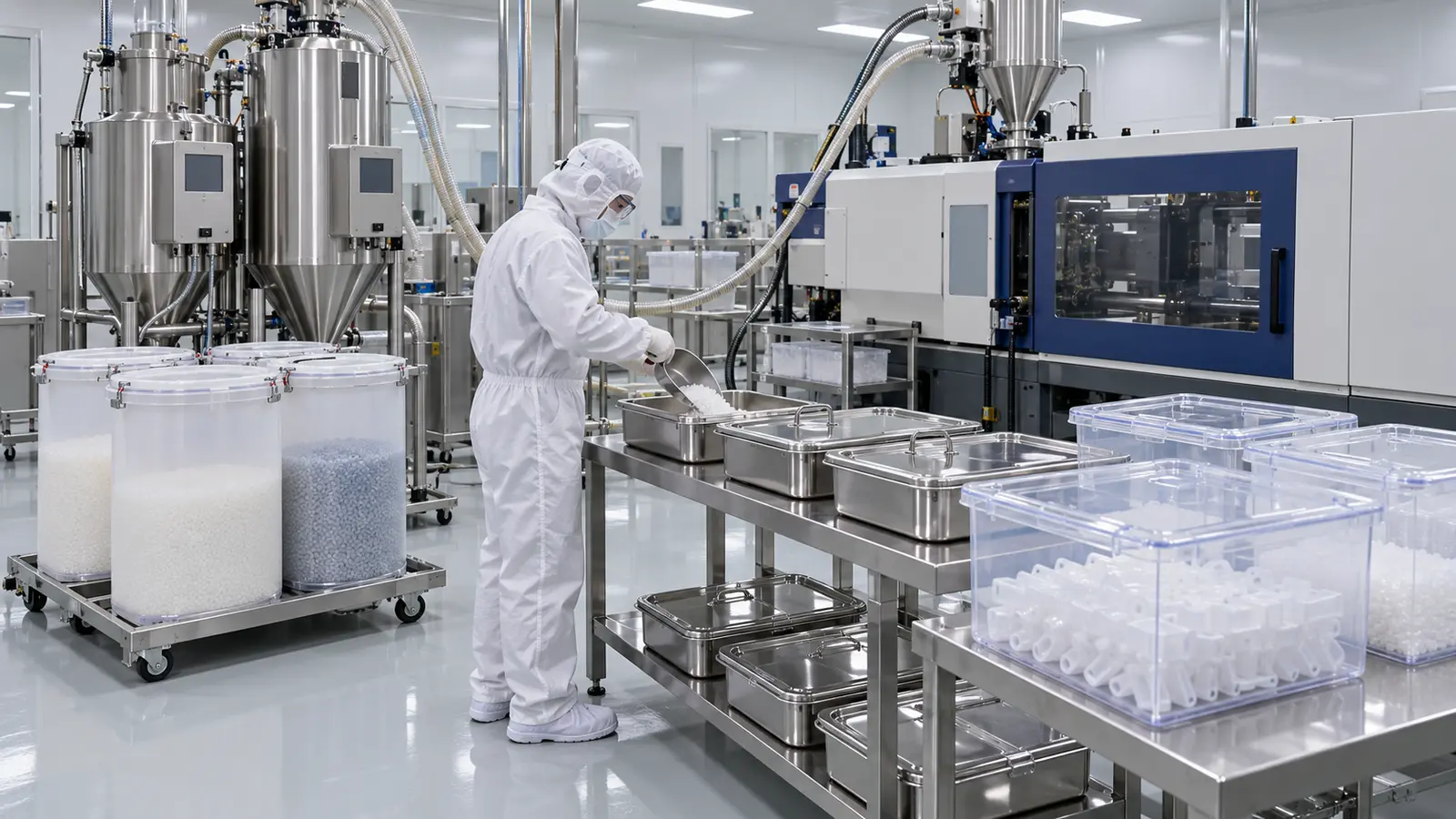
Understanding OEM Plastic Injection Molding: A Primer for Strategic Sourcing
Original Equipment Manufacturer (OEM) plastic injection molding is the backbone of modern mass production, transforming thermoplastic and thermosetting polymers into precise, durable components used in everything from medical devices to automotive interiors. Unlike standard contract manufacturing, OEM molding involves producing parts that are integrated into a final product sold under the buyer’s brand name. This process demands rigorous adherence to dimensional tolerances, material specifications, and surface finish requirements, as the OEM is accountable for the end-user experience. The core of the process involves a high-pressure injection of molten polymer into a steel or aluminum mold cavity, where it cools and solidifies into the desired shape. While the technology is mature, the economics are far from static. Hidden costs—ranging from mold rework to logistics inefficiencies—can erode profit margins by 15% to 30% if not managed proactively. This article dissects five actionable, cost-saving strategies that procurement managers, product engineers, and business owners can implement to maximize ROI without compromising part quality.
Tip #1: Design for Manufacturability (DFM) – Eliminate Waste Before Steel Is Cut
The most significant cost leverage in OEM plastic injection molding occurs before a single pellet of resin is melted. A poorly conceived part design will plague the entire production lifecycle, resulting in expensive mold modifications, longer cycle times, and higher rejection rates. Engaging your molder in a rigorous Design for Manufacturability (DFM) review during the concept phase is not a courtesy—it is a financial necessity. A skilled OEM partner will analyze your CAD files against the mold flow simulation to identify potential defects such as weld lines, sink marks, and air traps.
Key DFM Principles That Directly Reduce Cost
- Uniform Wall Thickness: Avoid abrupt transitions in wall thickness. Thick sections cool slower, leading to warpage and increased cycle time. By maintaining a consistent wall (typically 1.5mm to 3.0mm for most engineering plastics), you reduce cooling time—which accounts for 60-70% of the total cycle—and minimize material usage.
- Draft Angle Optimization: Every vertical surface requires a draft angle (typically 0.5° to 2°) to allow the part to eject cleanly. Insufficient draft causes the part to stick, forcing the operator to use higher ejection force, which can damage the surface finish and slow down the press. Specifying the correct draft angle upfront prevents costly polishing and re-machining of the mold core.
- Radii and Fillet Design: Sharp internal corners create stress concentrations and impede polymer flow. Adding a radius of at least 0.25x the nominal wall thickness improves resin flow, reduces the risk of cracking, and extends mold life by reducing erosion at the corner.
- Undercut Avoidance: Undercuts require complex side-action cams or lifters in the mold. Each moving mechanism adds $5,000 to $15,000 to the mold cost and increases maintenance downtime. Where possible, redesign the part to have a straight pull direction, or accept a secondary machining operation for a low-volume feature.
By investing 40 hours in a collaborative DFM session, you can typically reduce the final mold cost by 10-20% and the per-part price by 5-8%, simply because the mold runs faster and more reliably from day one. Never skip this step to "save time" in the short term.
Tip #2: Strategic Material Selection – Don’t Overpay for Exotic Resins
Material cost represents 30% to 50% of the total unit price in OEM plastic injection molding. Engineers often default to a previously used resin (e.g., ABS or polycarbonate) out of habit, without questioning whether a more economical or process-friendly alternative exists. The key to cost reduction is functional substitution—matching the resin’s mechanical, thermal, and chemical properties to the actual service environment, not the datasheet’s maximum values.
Cost-Saving Material Strategies
First, consider regrind content. If your application is non-critical (e.g., internal clips, spacers, non-visible housings), you can incorporate up to 20-25% of post-industrial regrind (sprues, runners, and rejected parts) without significant property loss. Negotiate with your molder to use regrind for non-aesthetic components, reducing virgin material consumption. Second, evaluate high-flow grades of standard resins. A high-flow polypropylene or nylon will fill a thin-wall cavity more easily, allowing you to reduce the injection pressure and clamp tonnage. This translates to lower energy consumption and the ability to run on a smaller machine, which has a lower hourly rate. Third, look at mineral-filled or glass-filled variants. A 30% glass-filled nylon may allow you to reduce wall thickness by 20% because of its higher stiffness, resulting in less resin used per part and a faster cycle. However, beware—glass-filled resins are abrasive and will shorten mold life. Always calculate the total cost of ownership (resin price + mold wear + cycle time) rather than just the $/lb of the pellet.
Finally, standardize your resin selection across your product line. If you manufacture five different devices, try to consolidate them into two or three base polymers. Bulk purchasing of a single resin grade gives you significant negotiating power with distributors, often yielding a 5-10% price reduction compared to buying multiple specialty grades in smaller quantities.
Tip #3: Optimize Mold Design for Cycle Time Reduction – The Hidden Factory
In OEM plastic injection molding, the mold is not just a tool; it is a heat exchanger. The speed at which you can remove heat from the polymer dictates your cycle time, and cycle time is the single largest driver of conversion cost. A typical molding machine costs between $60 and $150 per hour. If you can shave 5 seconds off a 30-second cycle, you increase output by 16%, effectively lowering your per-part cost without any change in material or labor. The most effective way to achieve this is through قنوات تبريد متوافقة.
Advanced Cooling and Hot Runner Systems
Traditional straight-drilled cooling lines cannot follow the complex contours of a mold cavity. This results in hot spots, which force the operator to extend the cooling phase to prevent warpage. Conformal cooling, created via additive manufacturing (3D-printed metal inserts), allows cooling channels to snake precisely along the part geometry. This can reduce cycle time by 20-35% in complex parts. While the upfront cost of a 3D-printed insert is higher, the payback period is often under six months for high-volume production runs.
Another major decision is hot runner vs. cold runner. A cold runner system creates a solid sprue and runner that must be reground, which adds labor and energy. A hot runner keeps the plastic molten inside the manifold, eliminating runner waste and reducing cycle time because you do not need to wait for the runner to cool. Although hot runner systems add $10,000 to $30,000 to the mold price, they are essential for high-cavitation molds (8, 16, or 32 cavities) using expensive engineering resins. For lower volumes, a cold runner with a submarine or tunnel gate that automatically degates on ejection is more cost-effective, as it avoids the maintenance complexity of hot runner nozzles. Always ask your molder for a cycle time estimate for both options and calculate the break-even volume before committing.
Tip #4: Intelligent Automation and Secondary Operations Integration
Labor is a rising cost in global manufacturing. However, the hidden cost often lies in العمليات الثانوية—the manual tasks performed after the part is ejected: trimming flash, inserting metal components, printing logos, or ultrasonic welding. These operations are frequently outsourced to separate vendors, adding logistics costs, lead time, and quality risks. To cut costs, you must push work upstream into the molding cell.
In-Mold Assembly and Automated Handling
Consider التشكيل بالحقن للإدخالات for metal components. Instead of molding a plastic housing and then pressing in a brass threaded insert in a separate step, you can place the insert robotically into the mold cavity before injection. The plastic shrinks around the insert during cooling, creating a permanent, leak-proof bond. This eliminates the need for a secondary pressing operation and reduces part count and inventory. Similarly, multi-shot molding (two-shot or overmolding) uses a single machine with two barrels to mold a rigid substrate and a soft-touch TPE grip in one continuous cycle. While the mold cost is higher, the cycle time is roughly the same as a single-shot mold, effectively giving you a finished assembled component for the price of a single molding cycle. This eliminates the cost of adhesives, primers, and manual assembly labor.
Furthermore, automate the mundane. A six-axis robot with a vision system can remove the part, trim the gate, and place it on a conveyor for packaging. This reduces operator handling, which minimizes contamination and scratches. While the initial capital expenditure for automation is significant, the reduction in direct labor (often 2-3 operators per press across three shifts) yields a return on investment in 18 months or less. When requesting quotes, ask your molder to provide a "fully automated cell price" versus a "manual operation price." The difference is often negligible per unit at high volumes, but the automated cell offers far better consistency.
Tip #5: Long-Term Partnership and Volume Forecasting – Beyond the Unit Price
The cheapest quote is rarely the most cost-effective over the product’s lifecycle. OEM plastic injection molding is a relationship business. Switching molders frequently incurs transfer costs, validation runs, and potential yield loss. Instead of playing vendors against each other on every purchase order, establish a strategic sourcing agreement with a single, qualified molder. This allows for open-book costing, where the molder shares detailed breakdowns of material, labor, and overhead. In exchange for a guaranteed annual volume, you can lock in a fixed price with a defined annual reduction (typically 3-5%) based on learning curve improvements and operational efficiencies.
Leveraging Data for Cost Reduction
Provide your molder with a rolling 12-month forecast, not just a single purchase order. This enables them to buy resin in bulk at lower spot prices, schedule presses efficiently to avoid downtime, and maintain a safety stock of critical components. When a molder knows they have 500,000 units of work next quarter, they can negotiate a 10% discount on polycarbonate from their distributor. They can also batch similar colored parts together to minimize purging time—a process that wastes material and takes 30-45 minutes per color change. By grouping orders by color and material, you reduce machine downtime and material waste. Additionally, negotiate the ownership of the mold and the maintenance schedule. If you own the mold, you can take it to a different molder if performance slips, but you must also budget for maintenance (typically 2-4% of the mold cost annually). A better approach is to include a "mold maintenance and warranty" clause in the agreement, where the molder is responsible for keeping the tool in prime condition, incentivized by a bonus for achieving a target Overall Equipment Effectiveness (OEE) of 85% or higher.
Finally, consider design for future variants. By planning a modular mold with interchangeable inserts, you can produce a family of parts (different lengths, bosses, or cutouts) using the same base mold base. This drastically reduces the capital expense for new tools and shortens the lead time for new product introductions. A collaborative, transparent relationship with your molder turns them from a supplier into a cost-reduction partner.
Conclusion: The Cumulative Effect of Smart Manufacturing
Cost reduction in OEM plastic injection molding is not a single heroic action but a cumulative series of disciplined decisions. By prioritizing Design for Manufacturability, you eliminate waste at the source. By selecting the right material—not the strongest or the cheapest, but the most appropriate—you optimize performance and price. By investing in advanced cooling and automation, you compress cycle times and reduce labor intensity. And by fostering a transparent, long-term partnership, you unlock pricing stability and process improvements that are invisible in a transactional quote. The manufacturers that thrive in today’s competitive landscape are those that view the molding machine not as a commodity tool, but as a precision instrument capable of delivering value. Apply these five tips rigorously, and you will not only reduce your per-part cost but also improve your product’s quality, consistency, and time-to-market. The ultimate goal is not the cheapest mold or the fastest cycle; it is the lowest total cost of ownership over the product’s entire commercial life.