
EMI/RFI Shielding
Preventing electromagnetic and radio frequency interference in sensitive medical sensors, aerospace instruments, and automotive electronics requires high-performance interior EMI/RFI shielding. Since raw thermoplastics are transparent to electromagnetic waves, we apply highly conductive surface coatings—including nickel, copper, and silver-plated copper spray paints, alongside vacuum PVD sputtered metallization. At Jucheng Precision, we specialize in high-attenuation shielding (ranging from 40 to 80+ dB). By utilizing custom-engineered masking fixtures and precision air-atomized spraying, we secure extremely low sheet resistance (under 1.0 Ohm/sq) and robust adhesion verified by cross-hatch and ASTM D4935 testing.
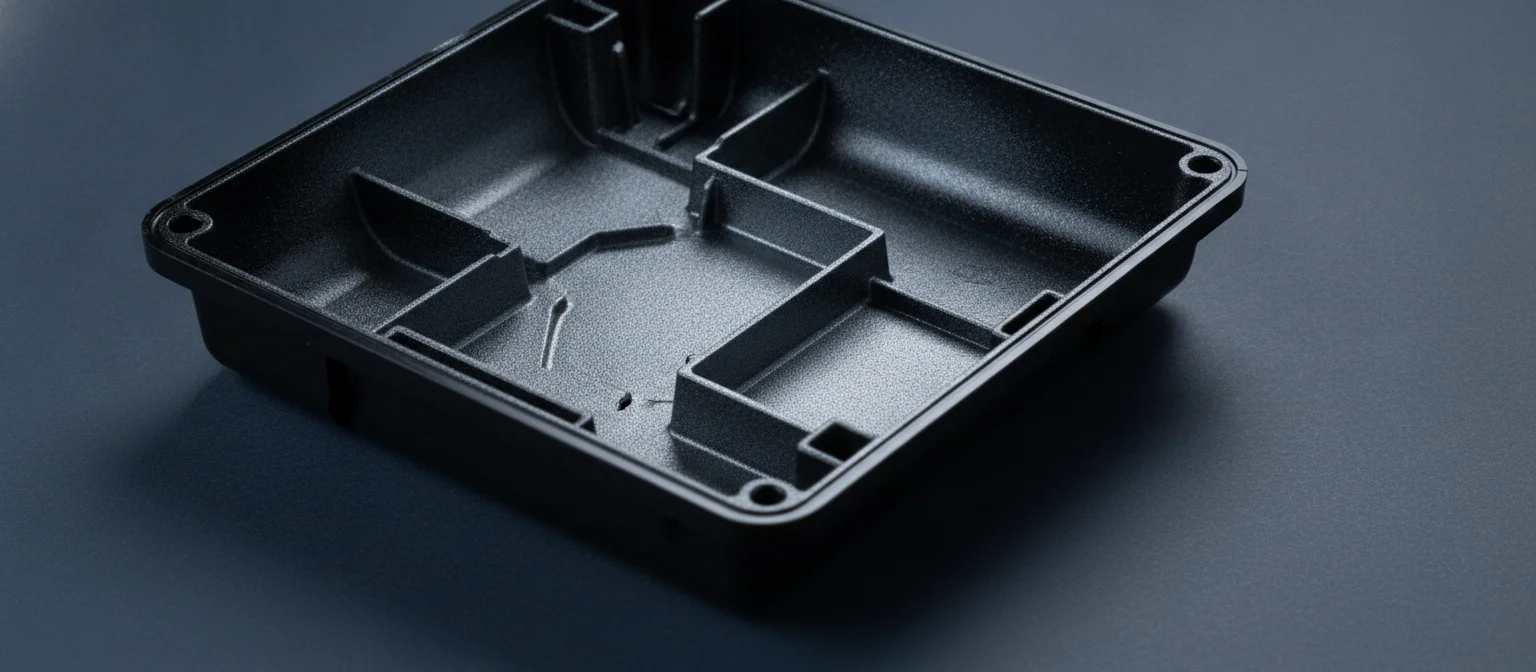
EMI/RFI Shielding Coatings & Attenuation Effectiveness
Raw thermoplastics are naturally transparent to electromagnetic waves. Achieving superior shielding effectiveness requires selecting the correct conductive coating chemistry:
| Shielding Coating Type | Conductive Metallic Pigment | Typical Sheet Resistance | Shielding Effectiveness (SE Range) |
|---|---|---|---|
| Nickel Coating | High-Purity Carbonyl Nickel Powder | < 1.5 Ohm/sq | 40 – 55 dB (Good). Standard industrial grade, cost-effective, highly resistant to oxidation. Used for household appliance housings and standard monitors. |
| Copper / Silver-Copper | Silver-Plated Copper Flakes | < 0.15 Ohm/sq | 60 – 75 dB (Excellent). Outstanding electrical conductivity, high environmental stability. Perfect for medical diagnostics and automotive electronics. |
| Pure Silver Varnish | Premium Micro-Fine Silver Flakes | < 0.015 Ohm/sq | 75 – 90+ dB (Ultimate). Extremely high attenuation in minimal thicknesses. Specified for military sensors, avionics, and sensitive telemetry. |
Substrate Prep, Masking Tolerances & Quality Testing
Conductive coatings must remain restricted to interior part faces, demanding precise masking tooling and rigid adhesion testing:
| Quality Control Parameter | Jucheng Precision Specification | Engineering Adhesiveness & Compliance |
|---|---|---|
| Selective Masking Tolerance | ±0.15 mm Boundary Precision | Ensures conductive overspray does not escape to exterior cosmetic surfaces or interfere with snap-fits and ultrasonic welds. |
| Coating Adhesion | ASTM D3359 Cross-Hatch 5B Rating | Guarantees zero paint peeling or flaking over long-term thermal cycling, preventing loose metallic chips from short-circuiting internal PCBs. |
| Shielding Testing Standard | ASTM D4935 / IEEE 299 Compliant | Ensures rigorous RF attenuation testing inside electromagnetic chambers across frequencies ranging from 10 MHz to 10 GHz. |
Selective Masking & Conductive Adhesion Matrix
Creating a reliable and high-attenuation electrical shielding barrier inside complex plastic housings demands high-precision tooling and surface pre-treatments:
Custom Selective Masking Fixtures
Conductive paints must be restricted to non-visible interior cavities. Any overspray on parting lines or screw-boss faces can ruin cosmetics or cause electrical short-circuits. Jucheng’s tooling division uses 5-axis CNC machines to mill customized metal or silicone masking fixtures. These tools secure a tight, physical seal over mating boundaries, maintaining ±0.15mm edge tolerances.
Eliminating Peeling (Silicone-Free Mold Release Policy)
If conductive paint peels off, loose metallic flakes can drift inside the enclosure and short-circuit electronic components. To secure a permanent 5B cross-hatch rating on ABS/PC-ABS substrates, we strictly enforce a silicone-free mold release policy during injection molding, ensuring all interior part walls are chemically pristine and clean.
Thickness Uniformity & Sheet Resistance Controls
Shielding effectiveness relies on maintaining a continuous conductive path. Any variation in paint thickness can create high-resistance cold spots. We utilize air-atomized spray nozzles and automatic rotation jigs to achieve highly uniform thickness (25–35 µm), keeping sheet resistance strictly below 1.0 Ohm/sq.