
Introduction: The Unseen Backbone of Autonomy
When we envision autonomous systems—self-driving vehicles, delivery drones, robotic warehouse pickers, or agricultural harvesters—we tend to focus on the software intelligence: the LiDAR, the neural networks, and the sensor fusion algorithms. However, the physical reality of these machines is far more grounded. Every autonomous system is a marriage of electronics and mechanics, and the plastic parts that form the chassis, housings, gears, and structural brackets are not afterthoughts—they are critical load-bearing components that dictate reliability, weight, and service life. Unlike consumer electronics, which are replaced every few years, autonomous systems are expected to operate for thousands of hours in harsh, unpredictable environments with minimal human intervention. This operational reality places unprecedented demands on the design and durability of their plastic components. This article explores the engineering nuances of autonomous system plastic parts, from material selection to failure-mode analysis, and outlines best practices for creating parts that survive the relentless march of autonomy.
The Unique Design Load Case for Autonomous Plastics
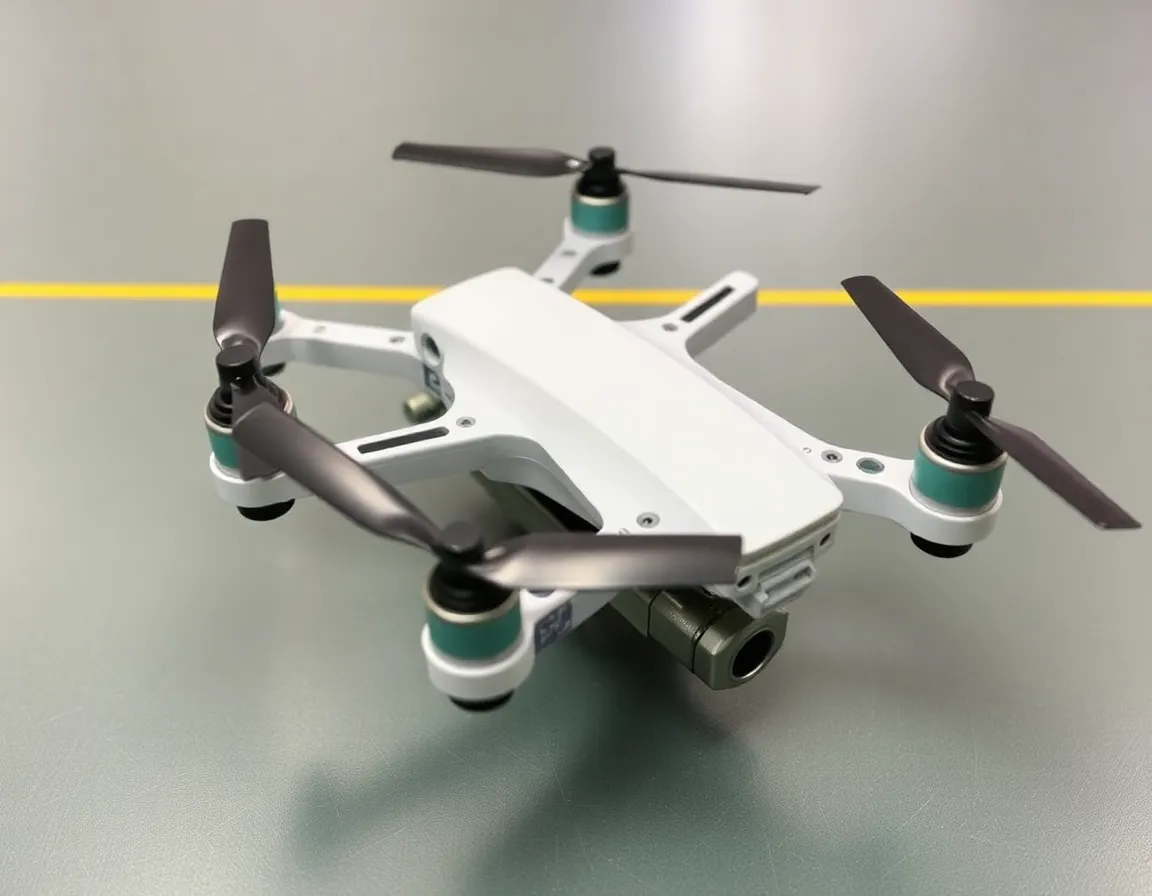
Designing plastic parts for autonomous systems is fundamentally different from designing for static or human-operated machinery. The primary differentiator is the absence of a human fallback. A human operator might notice a hairline crack, a warped gear, or a degraded seal and take corrective action. An autonomous system cannot. Therefore, the design must assume that every plastic component will be pushed to its limit without inspection. Furthermore, autonomous systems are often weight-sensitive (especially in aerial or mobile applications), which pushes designers toward thin-wall plastics, yet these same parts must resist creep, impact, and thermal cycling.
Vibration and Dynamic Load Fatigue
Autonomous ground vehicles (AGVs) and drones experience continuous, broadband vibration from motors, rough terrain, and wind. This isn’t just a comfort issue; it is a fatigue failure issue. Plastics, unlike metals, have a viscoelastic response—they dissipate energy as heat under cyclic loading. A poorly designed plastic mounting bracket for a sensor can develop micro-cracks after 10,000 hours of vibration, leading to a sudden misalignment of a camera or radar. Designers must analyze the natural frequency of every plastic part and ensure it does not resonate with the system’s operational frequency range. This often involves adding gussets, ribs, or changing the polymer to a higher-modulus grade (e.g., from unfilled Nylon to 30% glass-filled Nylon) to shift the resonance point.
Thermal Expansion and Contraction
Autonomous systems operate outdoors, meaning they face temperature swings from -40°C to +85°C or more. Plastics have a coefficient of thermal expansion (CTE) that is 5 to 10 times greater than metals. If a plastic housing is designed to hold a metal insert or an electronic board, the differential expansion can cause internal stress, warpage, or even cracking at the interface. A classic failure is a plastic drone arm that expands in the sun and pinches a motor bearing, or a cold-weather AGV where a plastic gear shrinks and loses its press-fit on a steel shaft. The solution is not just material selection but also tolerance analysis across the full operating temperature range. Designers often use slip-fit interfaces, oversized clearance holes, or compliant snap-fits that can accommodate movement without transmitting destructive stress.
Material Selection: Beyond the Generic Resin
The choice of plastic resin is the single most impactful decision in autonomous part design. It is not enough to pick a "strong" plastic; you must match the polymer’s properties to the specific environmental and mechanical load. Here is a breakdown of high-performance materials commonly used in autonomous systems, with their durability trade-offs.
- Polycarbonate (PC): Excellent impact resistance and dimensional stability. Used for transparent sensor covers (LiDAR domes) and protective housings. However, PC is susceptible to stress cracking when exposed to certain chemicals (e.g., grease, cleaning solvents) and has moderate chemical resistance. It also yellows with prolonged UV exposure unless stabilized.
- Polyamide (Nylon 6/66 & PA12): Outstanding wear resistance, toughness, and fatigue endurance. Ideal for gears, bushings, and moving parts. The catch is moisture absorption—Nylon can swell up to 1-2% in humid conditions, altering dimensions and stiffness. For precision autonomous parts, PA12 (or bio-based PA11) is often preferred due to lower moisture uptake.
- Acetal (POM): High stiffness, low friction, and excellent dimensional stability. It is a workhorse for precision gears and sliding mechanisms in robotic arms and camera gimbals. POM is resistant to creep but has poor resistance to strong acids and can produce formaldehyde gas when heated excessively during processing.
- Polyether Ether Ketone (PEEK): The premium choice for extreme environments. PEEK retains its mechanical properties up to 250°C, resists almost all chemicals, and has exceptional wear resistance. It is used for high-speed bearings, compressor seals, and parts near electric motors. The downside is cost—PEEK can be 10-20 times more expensive than Nylon, and it requires high processing temperatures.
- Liquid Crystal Polymer (LCP): High-temperature stability, very low creep, and excellent dimensional control for thin-walled parts. LCP is used for electrical connectors and sensor housings that must maintain precise geometry despite heat.
Additives and Fillers: The Durability Multipliers
Base polymers rarely meet all requirements alone. Additives are crucial. Glass fibers (10-40% by weight) dramatically increase stiffness and reduce CTE, but they also make the surface rougher and reduce ductility, making parts more prone to catastrophic failure rather than graceful deformation. Carbon fiber provides even higher stiffness and thermal conductivity, which is excellent for dissipating heat from electronic components, but it is abrasive to molds and can create galvanic corrosion when in contact with aluminum. For outdoor systems, UV stabilizers (HALS) are mandatory to prevent embrittlement. For applications near salt water or de-icing chemicals, impact modifiers (e.g., elastomers) must be added to prevent environmental stress cracking. The rule is: never specify a "generic" grade. Always demand a data sheet that lists fatigue endurance limits, creep modulus, and chemical resistance for the specific filled compound.
Durability Engineering: Predicting Failure Before It Happens
Durability is not a single property; it is a system-level behavior. A plastic part fails when its accumulated damage exceeds its material limit. For autonomous systems, the dominant failure modes are creep, fatigue, and environmental degradation. Let’s examine how to engineer against each.
Creep and Stress Relaxation
Creep is the slow, time-dependent deformation of plastic under a constant load. In an autonomous system, this is critical for fasteners and snap-fits. A battery compartment lid held by a plastic snap-fit will loosen over months as the plastic creeps, potentially causing the lid to rattle or open. Similarly, a plastic gear shaft that is pressed onto a motor shaft will lose its interference fit over time. Designers must calculate the apparent modulus at the expected service temperature and lifetime (e.g., 10,000 hours) and use that value in stress calculations, not the short-term modulus from a datasheet. Using metal inserts for threaded connections and designing snap-fits with a high strain-to-creep ratio are common mitigations. For high-load structural parts, consider using thermoset composites (e.g., epoxy/glass laminates) which have negligible creep compared to thermoplastics.
Environmental Stress Cracking (ESC) and Chemical Attack
Autonomous systems are exposed to a cocktail of chemicals: motor oils, hydraulic fluids, battery acid vapors, windshield washer fluid, and agricultural pesticides. Many plastics, especially amorphous ones like PC and ABS, are vulnerable to ESC—where a low-level stress (even residual internal stress from molding) combined with a chemical agent causes rapid cracking. For example, a drone landing on a wet grass field may be exposed to acidic sap that weakens its polycarbonate arm. The best defense is to test the actual plastic against the specific chemical environment using a jig that applies a known strain (e.g., a 1% strain jig) and observe for cracking. In harsh chemical environments, semi-crystalline polymers like POM and PEEK are generally more resistant than amorphous ones. Additionally, surface coatings (e.g., hard-coat silicone or polyurethane) can provide a sacrificial barrier.
Impact and Crashworthiness
While autonomous systems are designed to avoid accidents, they must survive them. A delivery robot that hits a curb or a drone that has a hard landing will subject its plastic parts to high-strain-rate impacts. At high strain rates, many plastics transition from ductile to brittle behavior—this is called the ductile-to-brittle transition. Polycarbonate is famous for being tough, but at -20°C and with a sharp notch, it can shatter. Designers use FEA (Finite Element Analysis) with strain-rate-dependent material models to simulate crash scenarios. The goal is to design for controlled energy absorption: the part should crumple, bend, or crack in a predictable way that protects the expensive electronics inside. This often involves adding sacrificial crush zones, using ductile materials for the outer shell, and ensuring that no sharp internal edges are generated that could puncture a battery.
Manufacturing and Quality Control for Longevity
Even the best design fails if manufacturing introduces defects. For autonomous plastic parts, the primary manufacturing methods are ép phun (for high volume) and CNC machining or 3D printing (for low volume and prototyping). Each has specific durability implications.
Injection Molding: The Hidden Weld Lines and Voids
Injection molding is efficient, but it introduces weld lines (where two melt fronts meet) and sink marks (where thick sections cool slower). Weld lines are often the weakest point in a part—they have poor fiber orientation and can be up to 50% weaker than the surrounding material. For a critical gear, a weld line in the tooth root is a guaranteed early failure. Designers must use phân tích dòng chảy khuôn to position the gate so that weld lines occur in low-stress areas. Additionally, packing pressure and mold temperature must be tightly controlled to minimize internal voids that act as crack initiation sites. For autonomous systems, 100% inspection is often required, including CT scanning for internal voids or X-ray inspection for critical parts.
Additive Manufacturing (3D Printing) for Spares and Custom Parts
Autonomous systems often operate in the field where a spare part is not readily available. 3D printing offers a solution, but printed parts have anisotropic properties—they are strong in the XY plane but weak in the Z direction (layer adhesion). A printed drone arm that is oriented vertically will have poor strength under bending. For durable printed parts, SLS (Selective Laser Sintering) of Nylon (PA12) is preferred over FDM (Fused Deposition Modeling) because it produces more isotropic parts. However, printed parts are often more porous and have lower fatigue life than molded parts. A best practice is to over-design printed parts by 2-3x safety factor and to perform a post-processing step (e.g., annealing or vapor smoothing) to improve layer bonding and close surface micro-cracks.
Best Practices for Autonomous Plastic Part Design
To consolidate the above, here is a practical checklist for engineers and product managers:
- Define the mission profile first: Specify the exact temperature range, chemical exposure, vibration spectrum, and expected service life (in hours) before choosing a material. Do not skip this step.
- Use a safety factor of 2-3x on long-term properties: Always design using the creep modulus at end-of-life, not the initial tensile modulus. For fatigue, use the endurance limit at 10^7 cycles, not the static strength.
- Design for repairability: Use modular plastic parts that can be replaced without replacing the entire assembly. Design snap-fits that can be released with a tool, and use standard screw bosses with metal threaded inserts.
- Protect against UV and moisture: Even if the plastic is UV-stabilized, consider a painted or coated surface for outdoor use. For internal gearboxes, use sealed housings with desiccant to prevent moisture absorption in Nylon.
- Validate with accelerated life testing: Run prototypes under combined vibration, temperature cycling, and chemical spray for thousands of hours. A 1000-hour test in a chamber is worth more than a million simulations.
- Collaborate with the molder early: The molder can advise on draft angles, wall thickness uniformity (avoid sections thicker than 4mm unless foamed), and gate placement to minimize stress.
Conclusion: The Future of Autonomy is Material
As autonomous systems move from controlled test tracks to public roads, farms, and warehouses, the durability of their plastic parts will become a competitive differentiator. A robot that requires maintenance every 500 hours is not truly autonomous; it is a liability. The engineering community must shift its mindset from treating plastic as a cheap, disposable casing material to treating it as a high-performance structural material that requires rigorous simulation, material science, and manufacturing control. By mastering the interplay of design load cases, advanced polymers, and failure-mode analysis, we can build autonomous systems that are not only intelligent but also physically resilient—capable of operating for years in the dirt, rain, and heat without a human hand to fix them. The next breakthrough in autonomy may not come from a new algorithm, but from a better-engineered gear or a more robust sensor housing. The future is autonomous, and it is made of meticulously engineered plastic.