
Family mold cost is not determined by cavity count alone. The quote changes with how different the parts are, how the runner and cooling system must serve them, how much balancing is needed, and whether the production mix makes every shot useful. A lower mold-price estimate can still lead to a higher total cost if one component accumulates as inventory or if the combined tool has a narrow process window.
Where the cost actually sits
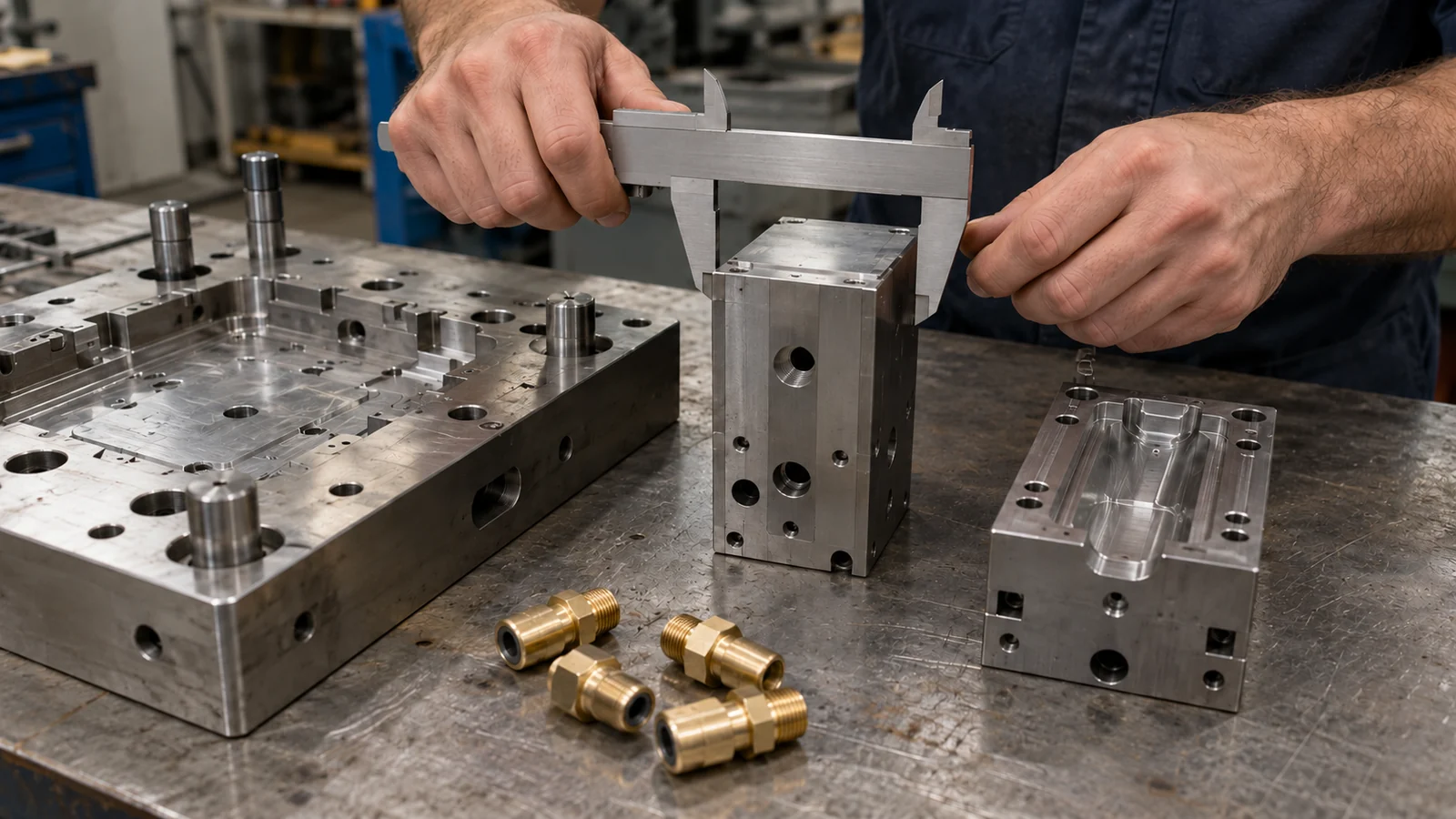
A family mold combines multiple different parts in one tool. Its economics depend on more than steel and machining. Separate the estimate into four buckets so a comparison does not hide operating consequences:
- Tool construction: cavity count, part geometry, mold base, slides or lifters, runner layout, cooling access, and the need for replaceable or independently serviceable details.
- Engineering and validation: gate planning, filling and packing balance, trial adjustments, dimensional checks, and approval of each component.
- Production: cycle constraints, setup, material changes if relevant, scrap exposure, inspection, handling, and packaging.
- Ownership over time: maintenance interruptions, engineering changes, spare inserts, and the cost of keeping parts available when demand shifts.
These are comparison categories, not a universal percentage formula. The actual quote depends on the supplied CAD, resin, appearance and dimensional requirements, order volume, and validation scope. Avoid treating a generic per-cavity multiplier as a reliable estimate.
Why unlike parts change the tool design
Two components in the same assembly may still require different gates, flow lengths, cooling strategies, and ejection arrangements. If their cavity volumes or wall sections differ, the tool designer must determine whether both can be filled and packed within a common process window. That evaluation may involve balancing the runner, adjusting gate restrictions, and planning trials that assess each part separately.
Geometry can also affect tool complexity. A part with side features may need slides; a deep core may complicate cooling or release; a cosmetic face may restrict gate and ejector locations. One difficult component can influence the layout and serviceability of the entire family tool. Share the current revision of every part rather than estimating from an assembly screenshot.
Material differences deserve early attention. Resin grades can call for different drying, melt, mold-temperature, or shrinkage considerations. A family tool should not be priced on the assumption that different materials are automatically compatible. Confirm the molding concept and material plan before comparing tooling quotes.
The production-mix test

The main economic trap is producing a fixed set of parts in a ratio that does not match actual consumption. If a family tool yields one of each component per cycle but the product uses three covers for every bracket, the bracket cavity may drive excess stock. Inventory, storage, and obsolescence can outweigh part of the initial tool savings.
| Demand pattern | What to examine |
|---|---|
| Parts are consumed as one matched kit | Whether packaging and traceability preserve the set after molding. |
| One part has slower demand | How often the tool will make surplus units and how long they remain usable. |
| Demand changes by region or product version | Whether separate tools would let production respond without making unwanted components. |
| One part may be redesigned first | Whether a local insert change is possible or the shared tool would require broader revalidation. |
Use realistic demand by part and revision, not one combined annual volume. Ask the planner to model the number of shots needed for each component and the resulting inventory profile. This simple check often determines whether a shared tool has a practical cost advantage.
Compare routes over the product life
Compare a family mold with separate molds using the same assumptions for annual demand, resin, quality checks, machine time, and engineering changes. One route may reduce initial tooling, while the other may offer scheduling flexibility or isolate maintenance. Neither is automatically cheaper in every program.
A useful decision sequence is: first remove options that cannot meet the process or quality requirements; next test whether the production ratio fits consumption; then compare initial tooling plus expected production and change costs. Keep assumptions visible. If service life, repair frequency, or order profile is unknown, show a range or mark it for confirmation rather than inventing a precise payback point.
For the broader tooling approach and its fit, see family injection mold solutions. The article’s purpose is cost evaluation; detailed cavity compatibility should still be confirmed during design review.
What to include in a cost review
- CAD and drawing revision for each component;
- resin manufacturer and grade, color, and any documented drying or processing requirements;
- annual and release quantities by part, not only total assembly volume;
- critical dimensions, cosmetic zones, inspection methods, and acceptance criteria;
- expected product revisions, service life assumptions, and required validation records.
With these inputs, a quote can explain whether the family mold saves cost through shared tooling or simply shifts cost into production and inventory. If quantities and part revisions are uncertain, record that uncertainty as a decision item instead of treating the first estimate as final.
Câu hỏi thường gặp
Does a family mold cost less than one mold per part?
It may lower initial tooling investment, but the total route also includes process balancing, validation, inventory, maintenance, and engineering changes. Compare both options under the same production assumptions.
What information has the biggest effect on the estimate?
Current CAD for every part, material and grade, demand by component, quality requirements, and expected changes are essential. Missing inputs can make a tooling comparison misleading.
Can the family mold produce parts in different quantities?
A conventional family tool makes its cavities together each shot, so its output ratio is set by the cavity layout. Different demand ratios can create surplus unless the tool concept or production plan addresses them.